NRAO Newsletter
Volume Vol#, Issue Iss#
Day# Month# Year#
NRAO Newsletter
Volume Vol#, Issue Iss# • Day# Month# Year#
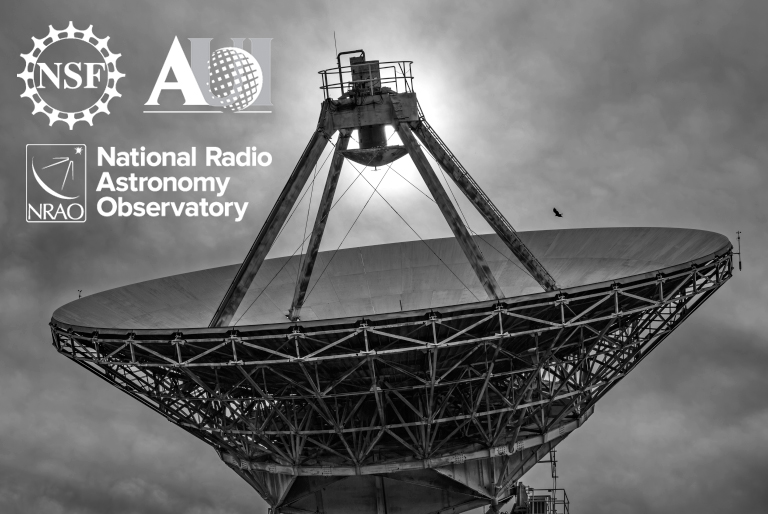 The North Liberty, Iowa station is one antenna element of the U.S. NSF NRAO Very Long Baseline Array (NSF VLBA) making incredible high resolution images of the Universe. (Photo by Jeff Hellerman, U.S. NSF / AUI / NSF NRAO)
Upcoming Science Events

Underlying Assumptions in Early Galaxy Evolution
July 28 - August 1, 2025 | Schoodic Institute, Maine


ADASS 2025
November 9-13, 2025 | Goerlitz, Germany
Science Spotlight: Atomic-to-Molecular Gas Transition in Galaxies

At NRAO, Jansky fellow Dr. Cosima Eibensteiner works on understanding the physical conditions that govern the atomic-to-molecular gas transition in galaxies. Neutral atomic hydrogen (HI) is the most abundant phase of the interstellar medium in the nearby universe, but stars form from molecular gas - making it essential to understand how and where this conversion occurs. In Eibensteiner et al. (2024), she showed that the molecular gas fraction (Rmol=ΣH2/ΣHI) correlates strongly with the midplane dynamical equilibrium pressure across nearby star-forming galaxies, supporting pressure-regulated star formation models.
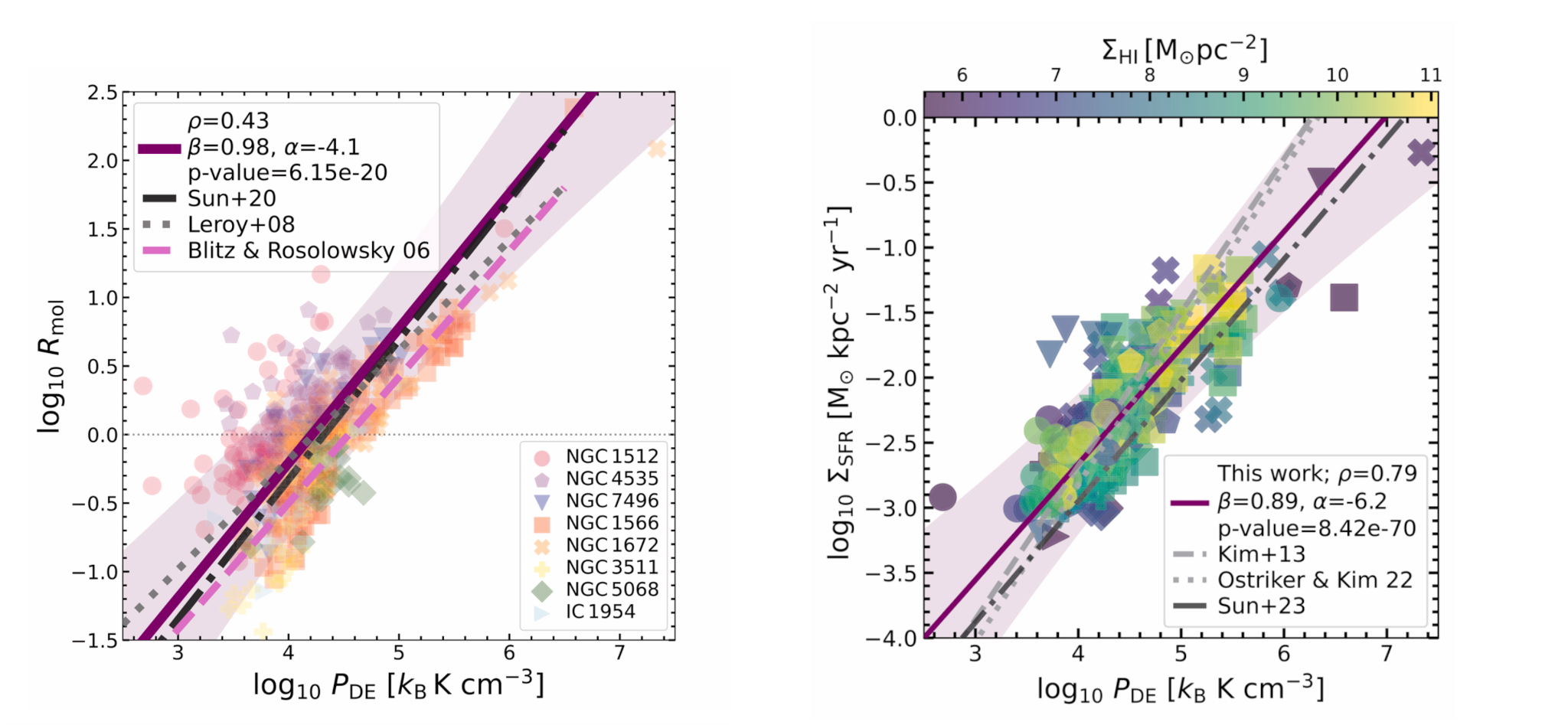
Figure above left: Rmol against PDE. Shown here is an enlarged version of panel 5 from Figure 9, with the fit now performed over the entire sample (purple line) with the corresponding 3σ confidence interval (purple shaded region). The black, grey, and pink lines show literature fits adopted from Sun et al. (2020a), Leroy et al. (2008), and Blitz & Rosolowsky (2006), respectively.
Figure above right: ΣSFR against PDE colorized by ΣHI. The purple line shows our fit over the entire sample with the corresponding 3σ confidence interval. The grey dashed and dotted lines show empirical scaling relations from Kim et al. (2013) and Ostriker & Kim (2022). The black dash-dotted line shows a fit from Sun et al. (2022). We see that low ΣHI is responsible for our shallower fit compared to the literature.
Building on this work, she is currently preparing two follow-up studies for publication: one expands the analysis of Rmol and pressure to a broader sample of galaxies, including lower stellar mass systems (from her ALMA cycle 11 projects), to test how the phase balance behaves across a wider range of environments. The second one focuses on characterizing star formation scaling relations in Local Group HI dominated galaxies using new high-resolution HI data from VLA's Local Group L-Band Survey (LGLBS). Together, these studies aim to deepen our understanding of how local galaxy conditions shape gas properties and regulate star formation in the nearby universe.
She is actively involved in large international collaborations such as PHANGS, LGLBS, and MHONGOOSE, and works closely with colleagues at NRAO (GOALS, SFRS, Starburst Heaters) - visit her website for more details on her research and publications: https://ceibensteiner.com/.
Would you like your science featured in the NRAO Science Newsletter? Email the editor Brian Kent with your recent science publications!
Happy 46th Birthday FITS and AIPS!
Eric W. Greisen (NRAO)

Volume 45, Number 1 of the AIPSLetter has been "published" on the AIPS web site. It celebrates the 46th year since the creation of the FITS format, a generalized format still widely used throughout Astronomy. Shortly after that important meeting at the VLA, we started on the AIPS software project and have worked on it ever since. The latest version is called 31DEC25. The current AIPSLetter is used to report on changes made to that version over the last 6 - 7 months. Among the changes was the addition of a great many different color tables shipped with AIPS, along with verb OFMCOLOR and task OFMPL to provide easy access to them. OFMCOLOR was also added to numerous interactive tasks which, at one stage or another, display images. The venerable uv data editing tasks SPFLG and TVFLG were given the option to auto-zoom the display when possible. System power tables are a powerful tool to help calibrate VLA data, but are usually in need of editing to rid them of RFI and other issues. An experimental task SYHIS was written to enable auto-editing with cutoff levels that vary with spectral window and polarization. Spectral analysis was enhanced in a variety of ways including new support of single spatial pixel "cubes", both in AIPS image files and in text files. Even spectral fitting tasks including XGAUS and ZEMAN can now handle them correctly. New AIPS Memos on spectral index fitting and on the older editing tasks SPFLG, FTFLG, and TVFLG were written. Other memos on the AIPS FITS file format, spectral fitting tasks, and cube visualization tasks had revised editions published. These and all other AIPS documentation are available from the AIPS web site.
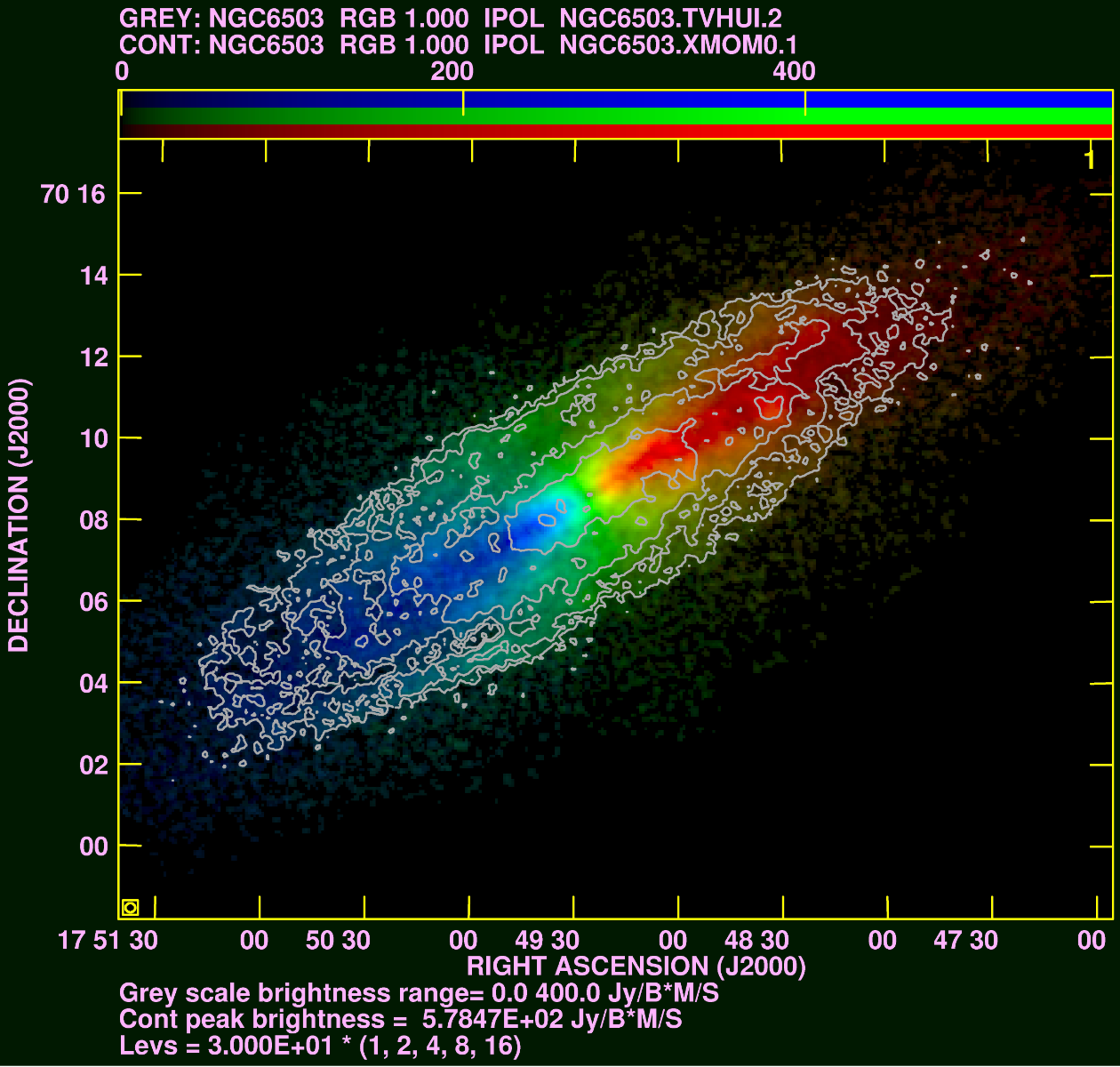
Figure below, right, from the AIPS Cookbook: One of the many tasks in AIPS that has contributed to countless scientific results over four decades. KNTR interprets the output of TVHUI as a three-color RGB image and overlays moment-0 contours. LWPLA adds coloring to the lines, using a less than pure white for both bright and dark contours so that they are not so dominant. Data courtesy of Eric Greisen, Kristine Spekkens, and Gustaaf van Moorsel.
I am aware that many sites are using older versions of AIPS and are reluctant to install a newer version. While this may work for a while, it eventually runs into problems. The "midnight job" that updates the local version cannot work for versions older than 31DEC23 and even that version may not work since NRAO changed the name of the computer that services AIPS rsync requests. Serious errors are usually corrected in both the current version of AIPS and the one immediately preceding it (I.e.31DEC24 now). However, because of operating system upheavals 31DEC23 was hard frozen in June 2024 and it was then not corrected for several semi-significant errors. Versions of AIPS prior to 31DEC23 contain a significant error in amplitude calibration of VLA data which adds a baseline-dependent offset which cannot be corrected by the usual calibration tasks. The error is small but noticeable in high dynamic range imaging. Software enabling data correction for the motion of the Earth's pole and for the ionosphere has received a lot of attention in recent versions. The government web sites that provide such data have changed file names which means that AIPS versions older than 31DEC23 will fail to do these corrections for recent data sets. NASA is changing these web sites again, which may make these functions in 31DEC23 obsolete.
AIPS installation is fairly simple these days and we have not made any changes that require users to change their data files in a very long time. That means that you need not worry about your AIPS data files when doing an AIPS version update. When Apple changed to use their own CPU chip, AIPS was updated to compile on the latest gfortran compilers so it should be easy to compile your own version on any computer. We do make available binary versions of AIPS for Linux 64-bit and for Apple Mac Intel and ARM CPUs.
ALMA News
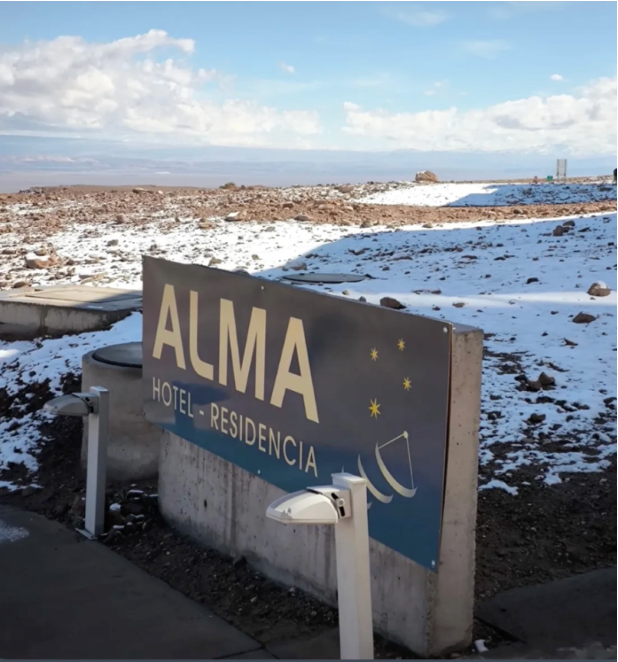
Although many have been suffering intense heat as summer commences in the northern hemisphere, the ALMA site and OSF have had a chilly beginning to austral winter. Photo courtesy of K. Haller (ALMA).
ALMA Status
The array is currently in configuration C-8 with 8.5 km baselines (~0.1” beam at 100GHz) before moving to configurations C-9 (13.9 km baselines) in mid-July and C-10 (16.2 km baselines) at the end of July as winter has clearly arrived at the ALMA site on the high Chajnantor Plateau near the Tropic of Capricorn, with the first snow at the Operations Support Facility in a decade.
ALMA Wideband Sensitivity Upgrade (WSU)
ESO has announced that on 18 June 2025, the 33rd Band 2 receiver was sent to the ALMA Operations Support Facility in Chile, marking the halfway point in the production of the new Band 2 receivers. These new receivers, which are a component of the WSU, cover the frequency range from 67 to 116 GHz, opening a new window from 67-84 GHz as well as covering the Band 3 frequency range. Notably, the new Band 2 will have bandwidths 4 times wider than most current ALMA receivers, which makes the receivers fully compatible with the rest of the Wideband Sensitivity Upgrade components. These receivers will provide superior coverage for spectral scans and improved sensitivity to continuum emission.
In other news, The OSF (Observing Support Facility) Correlator Room (OCRO) Critical Design and Manufacturing Review took place on June 25-26 at the OSF - the review passed, giving the OSF Correlator Room the green light to proceed to construction!
ALMA and NAASC Meetings
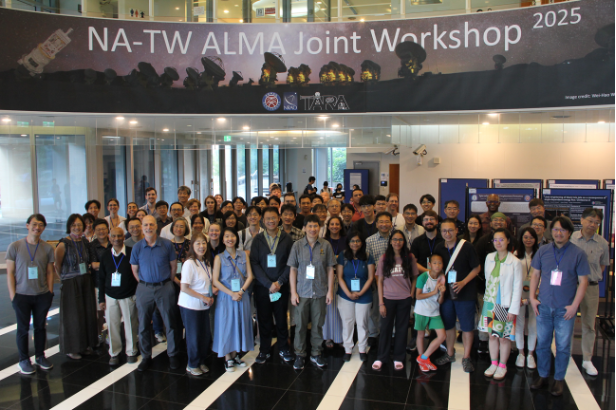 Third North America-Taiwan joint ALMA Science Workshop, June 16-20, Taipei, Taiwan
(from our colleagues at ASIAA) The workshop was successfully held on June 16-19 at ASIAA. The event brought together researchers from across the ALMA partnership to share the latest scientific results and foster collaborations, with particular emphasis on ALMA Band 1 and the upcoming Wideband Sensitivity Upgrade (WSU). The ALMA/NA Development Cycle 1 Study 'ALMA Band 1 Receiver Development Study' (2017) led to an ALMA Development Project implementing Band 1 receivers on ALMA.
Participants, primarily from North America and East Asia, engaged in in-depth exchanges throughout the workshop. The event underscored the strong and growing collaboration between ASIAA/Taiwan and North America, and demonstrated the exciting scientific opportunities that lie ahead for the ALMA community. The NAASC sponsored the participation of two early-career scientists: Parisa Nozari (Queens University) and Eltha Teng (UMD).
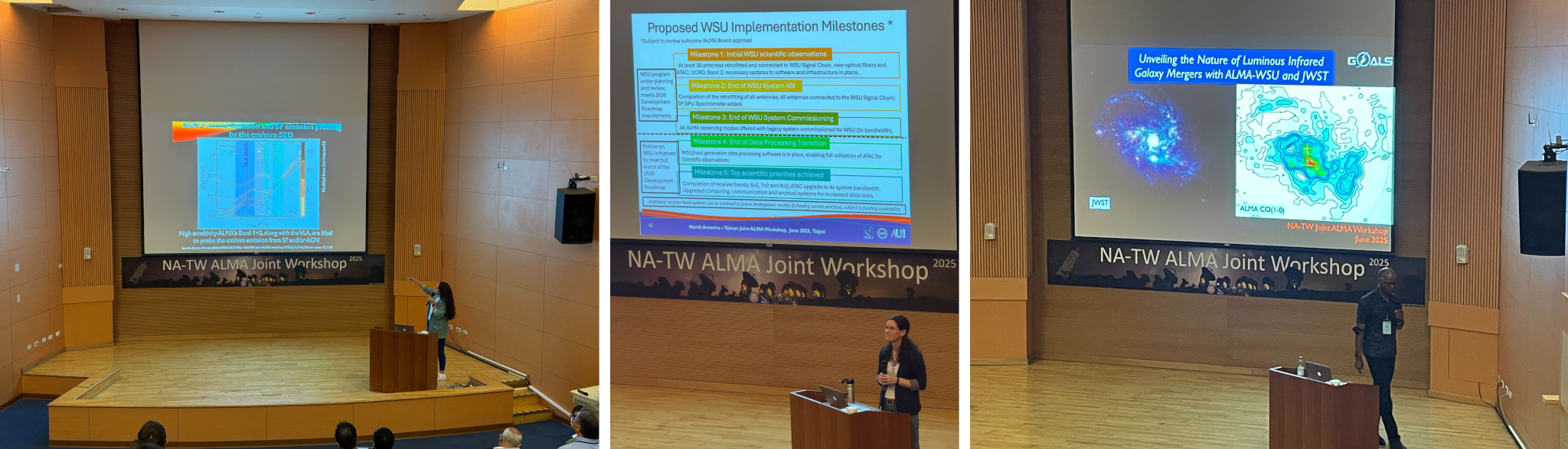
(Below, left to right: From the NAASC - Loreto Barcos-Munoz, Jennifer Donovan Meyer, and Aaron Evans all deliver talks at the ALMA Joint Workshop. Photos courtesy of Adele Plunkett.)
Upcoming Meetings
New Data that Challenge Underlying Assumptions in Early Galaxy Evolution, July 28 - August 1
Acadia National Park, Maine
Registration closed. From the production of the first dust grains to the growth of supermassive black holes, paradigms of galaxy evolution in the z>1 cosmos that were once thought fixed are now contested. Our goal is to reconceptualize our long held assumptions in light of new observations and theory. As galaxy evolution is revitalized, so too is the culture of astronomy through ways of creating, collaborating, and sharing knowledge. This workshop places equal emphasis on challenging scientific paradigms and critically inspecting and bettering our ways of doing science. Participants will be empowered to lead workshops, hacks, and discussions dedicated to topics such as inclusion, advocacy, justice, climate change, science communication, and more.
Global Researchers Converge for the 78th International Symposium on Molecular Spectroscopy
Anthony Remijan (NRAO/GBO)
From June 23–27, 2025, more than 400 researchers gathered in Urbana-Champaign, Illinois, for the 78th annual International Symposium on Molecular Spectroscopy (ISMS)—a premier international conference that continues to be a cornerstone of the molecular spectroscopy community. Renowned for its dynamic, interdisciplinary approach, ISMS offers a unique environment combining world-class plenary talks with interactive parallel sessions, many of which feature contributions from early-career researchers and graduate students.
This year’s symposium showcased a particularly timely and forward-looking focus with the inclusion of a special mini-symposium themed: "Astrochemistry – Laboratory, Computations, and Observations." Anchored by the growing interest surrounding the ALMA Wideband Sensitivity Upgrade (WSU) and the forthcoming Next Generation Very Large Array (ngVLA), this dedicated session drew substantial attention. Over 25% of all abstracts submitted to ISMS this year requested participation in the mini-symposium—demonstrating the scientific community’s eagerness to explore the synergies between advanced laboratory instrumentation and astronomical molecular spectroscopy.
As the sensitivities and bandwidths of observational facilities like ALMA and the ngVLA dramatically increase, so too does the volume of spectroscopic data coming from a myriad of astronomical sources. As such, interpreting this data requires a similarly large increase in the volume, and often precision, of spectroscopic data—a challenge that unites laboratory work, chemical theory, and astronomical observations.
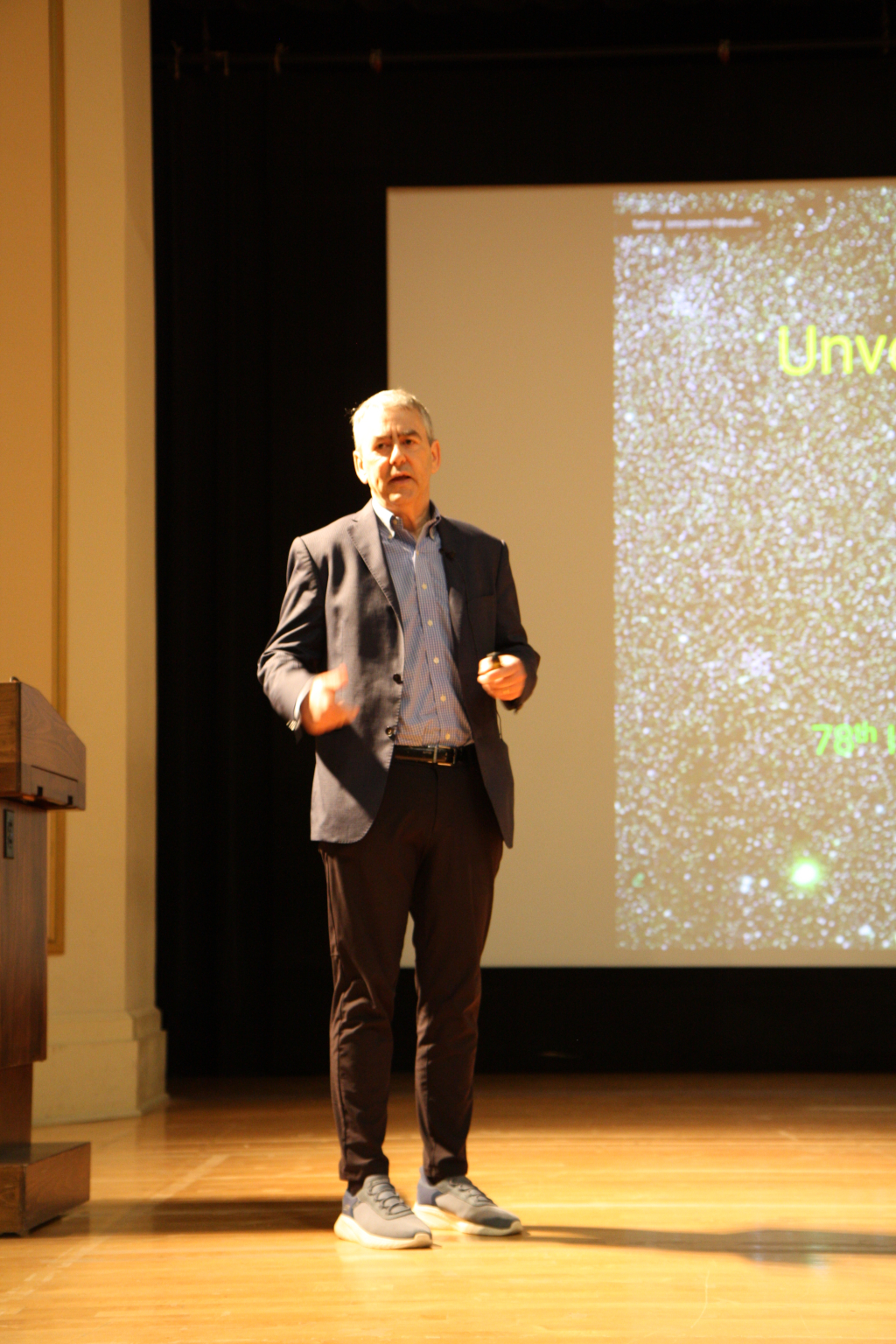
This theme resonated throughout the week and was prominently featured in the symposium's plenary sessions. Dr. Michael C. McCarthy (left) of the Center for Astrophysics | Harvard and Smithsonian delivered a compelling keynote titled "Unveiling the Chemical Complexity of Space," highlighting the vast molecular landscape that remains to be explored and the innovative tools he and his colleagues are developing to enable that exploration. Similarly, Dr. Stephan Schlemmer (below) of the Physikalisches Institut at the University of Cologne addressed the persistent challenge of "Missing Ions in the Laboratory and in Space," underscoring the gaps in laboratory data that are essential for interpreting interstellar chemistry and the cutting-edge action spectroscopy techniques he and his team have invented to close those gaps.
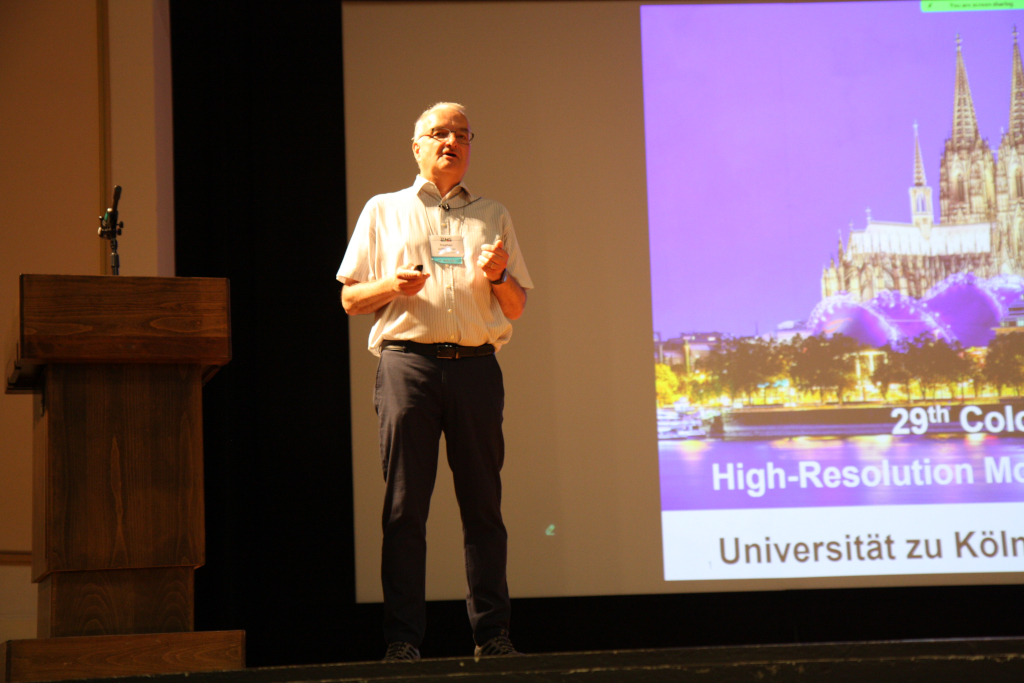
Together, the plenary and mini-symposium sessions underscored a shared vision: bridging the knowledge gap in astrochemistry through close collaboration between laboratory spectroscopy, quantum chemical computations, and next-generation astronomical observations. These interdisciplinary connections are not only advancing the field—they're essential for unlocking the full potential of upcoming astronomical surveys.
Beyond its scientific depth, ISMS continues to be celebrated for its inclusive and collaborative atmosphere. With its low registration costs, open-access philosophy, and emphasis on student and early-career participation, the symposium remains one of the most accessible and supportive venues in the scientific community.
For those interested in exploring this year’s program, abstracts, and recorded content - more information is available at: https://isms.illinois.edu/index.php.
Mark your calendars: the 79th ISMS will take place June 22–26, 2026, with abstract submissions opening in February 2026. Researchers from all corners of the spectroscopy and astrochemistry communities are encouraged to attend and contribute to this vibrant and evolving field.
IEEE International Microwave Symposium 2025 in San Francisco
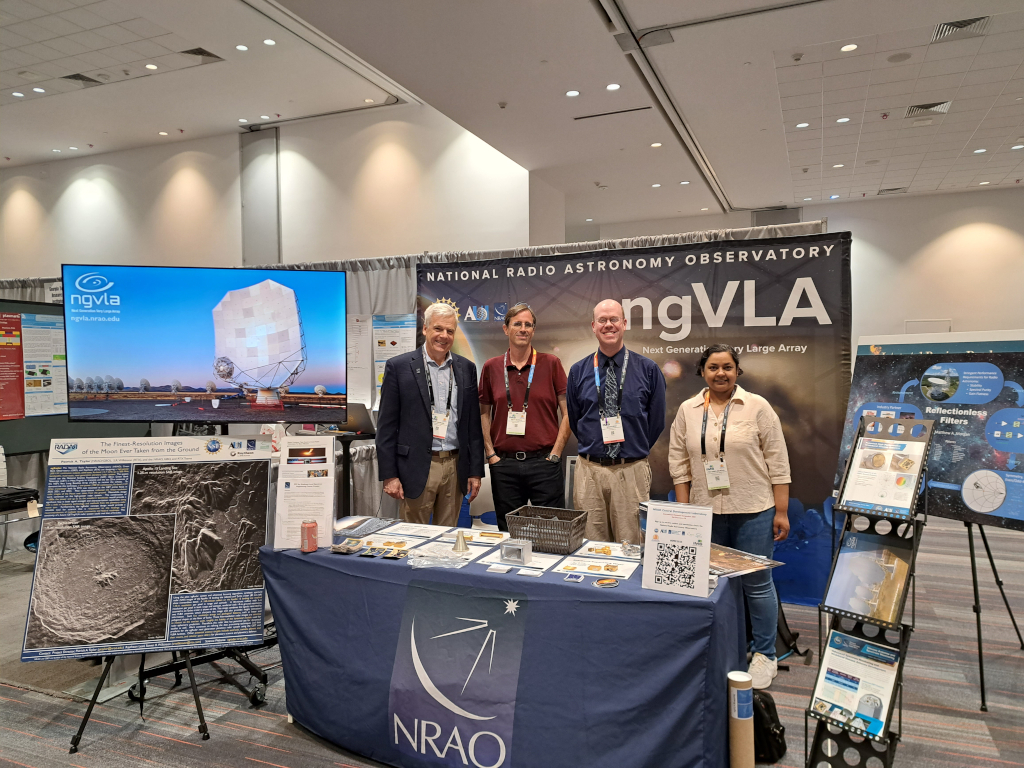
The National Radio Astronomy Observatory Central Development Laboratory took part in the exhibition of the 2025 IEEE MTT-S IMS conference in San Francisco, CA, June 15-20, 2025. Starting in 1952, the IEEE MTT-S International Microwave Symposium (IMS) has become the premier international conference for microwave theory and practice.
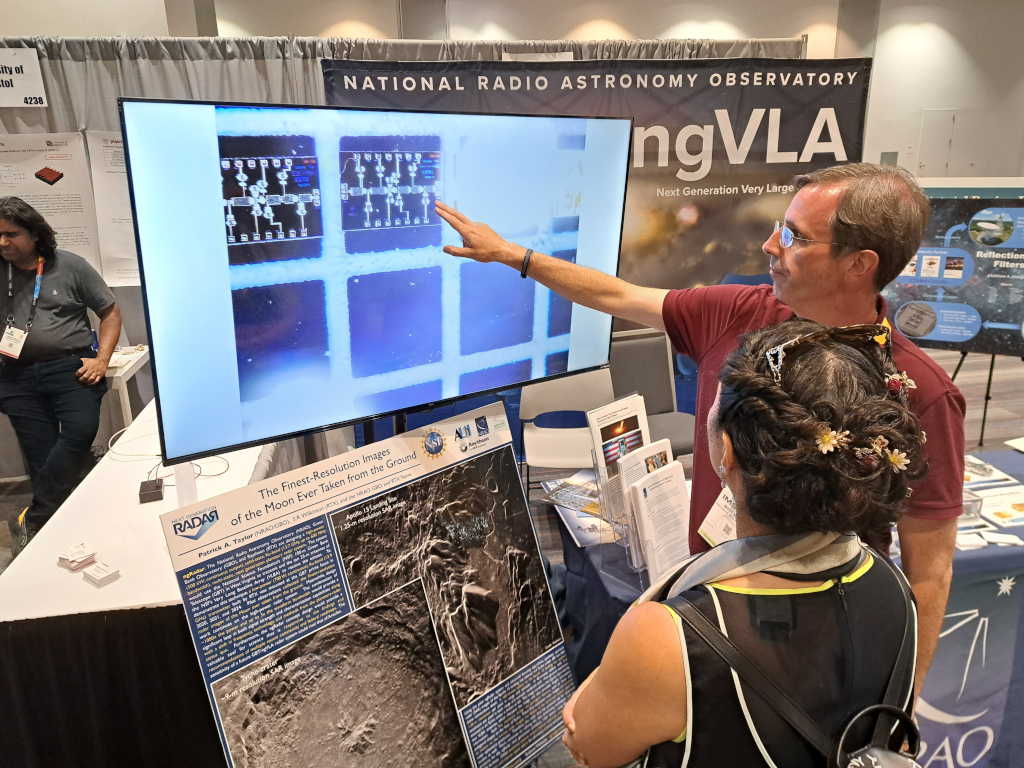
8,000 attendees engaged with observatory staff about the NRAO facilities, engineering development ngRadar, ngVLA, ALMA, and opportunities for students. The membership learned about CDL research, instrumentation for ngVLA, and new microwave RF developments for radio telescopes. The NRAO-CDL exhibition was one of 500 vendors in the Moscone Center.
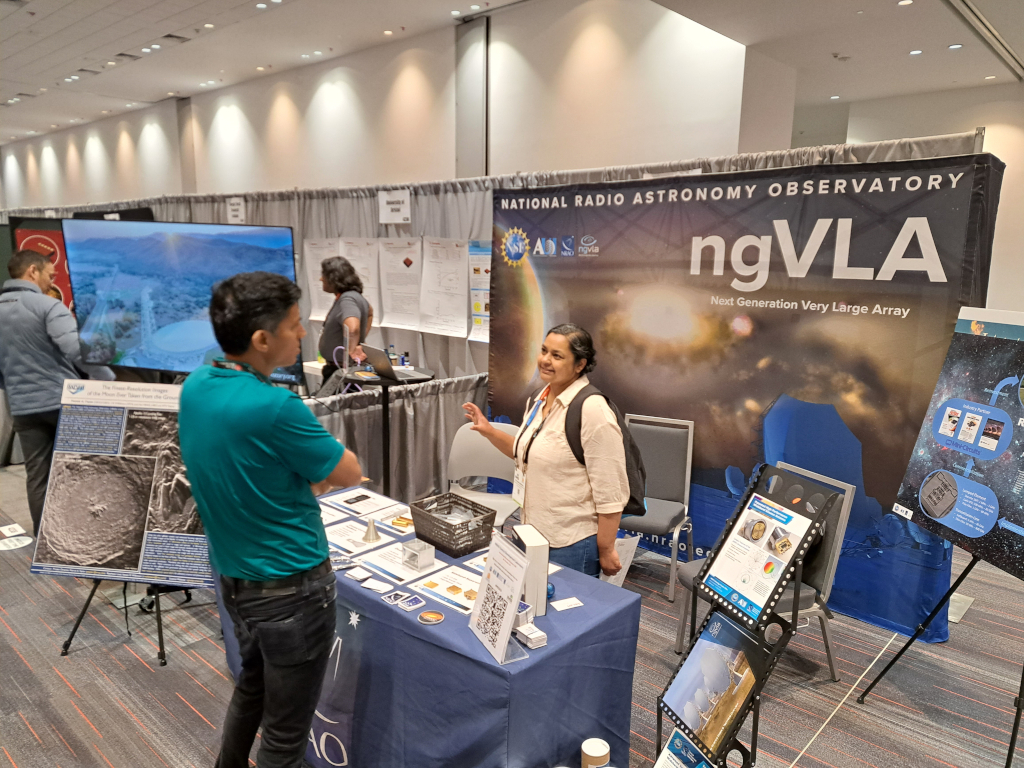
For the first time at IMS, IMS2025 was co-located with the IEEE Hard Tech Venture Summit, a groundbreaking event designed to connect hard tech start-up founders with visionary investors and manufacturers, fostering the growth of next-generation companies. This exciting addition to Microwave Week offered a unique platform for innovation and collaboration, featuring a series of panels and talks led by leaders in the venture capital and small business innovation research communities.
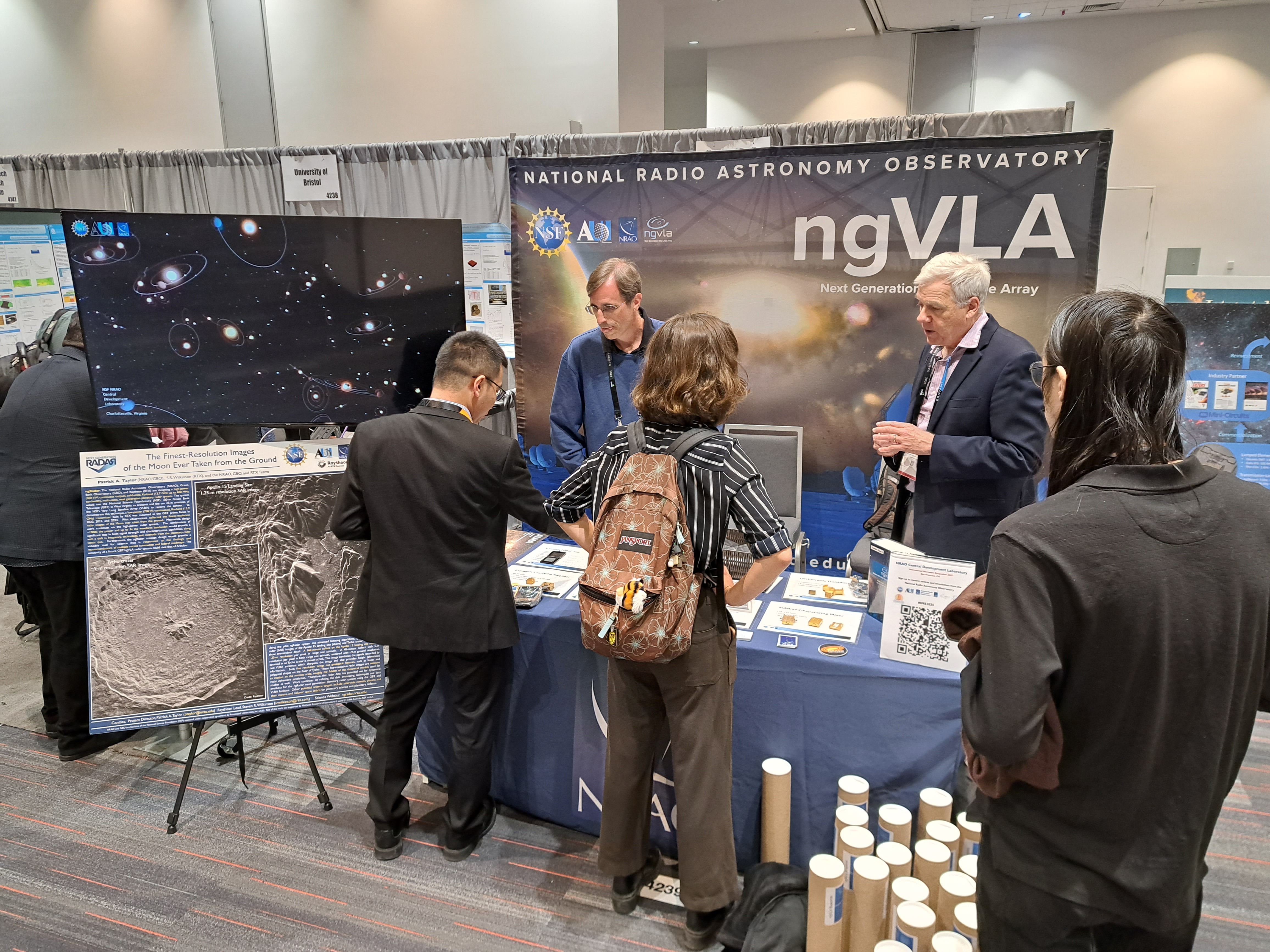
Microwave Week kicked off on Sunday, June 15, 2025 with various informative workshops and boot camps designed to keep participants at the forefront of industry trends or refresh their understanding of microwave fundamentals.
Photos top to bottom: (1) Bert Hawkins, Matt Morgan, Brian Kent, and Priyanka Mondal showcase NRAO-CDL to the RF community in the Research and Development part of the exhibit hall. (2) Matt Morgan uses a macro camera to show the instrumentation components up close on the video display. (3) Priyanka Mondal talks to an engineer from Texas Instruments about low noise amplifiers. (4) Bert Hawkins and Matt Morgan speak to students from Stanford University about education opportunities.
InspiraSTEM Workshop
Michael Sánchez (NRAO/NAASC)
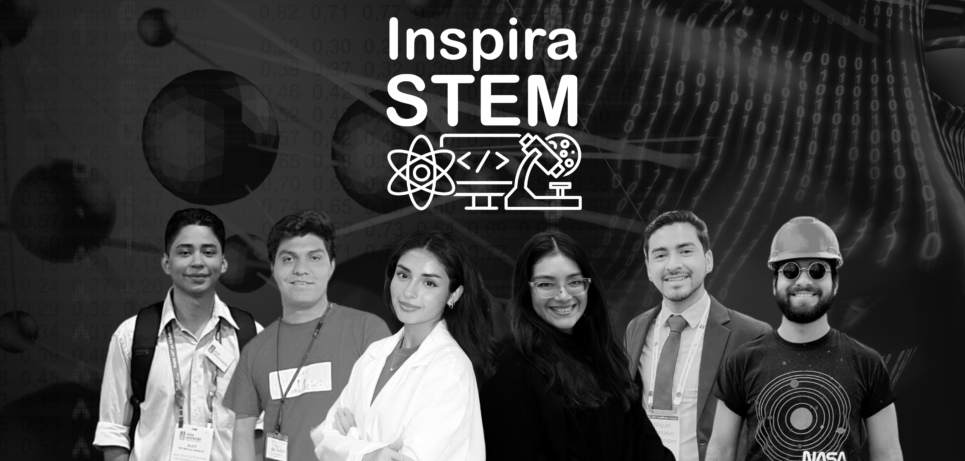
A cohort of Salvadorian scientists living in the U.S. have come together to create InspiraSTEM (website is in Spanish), a 3-day STEM workshop in El Salvador to promote the development of future scientists and professionals in STEM. The 3-day event consists of mentorships, networking events, a poster session, seminars by professionals from NASA and ACS, and six workshops across three main tracks: Computer Science, Biology, and Physics each aimed toward undergraduate STEM students across the country. The workshop will host 100 attendees and take place from July 23-25, 2025, at the Key Institute in San Salvador, El Salvador.
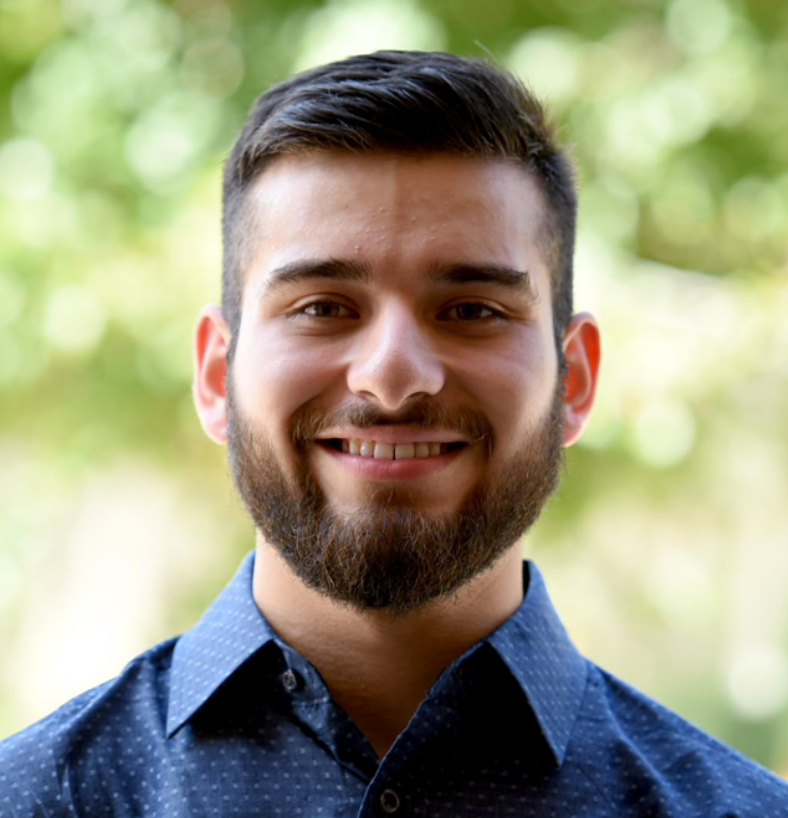
Among the six instructors is first-generation, NAASC Scientific Data Analyst, Michael Sánchez (pictured right). Michael will be leading the Data Analysis portion of the workshop: Discovering the Power of Data Analysis. The participants will learn to organize, analyze, visualize, and interpret data using common scientific Python libraries (pandas, numpy, matplotlib, scipy, statsmodels) to deliver easily-understandable results.
Astrochemistry in the Broadband Era Workshop
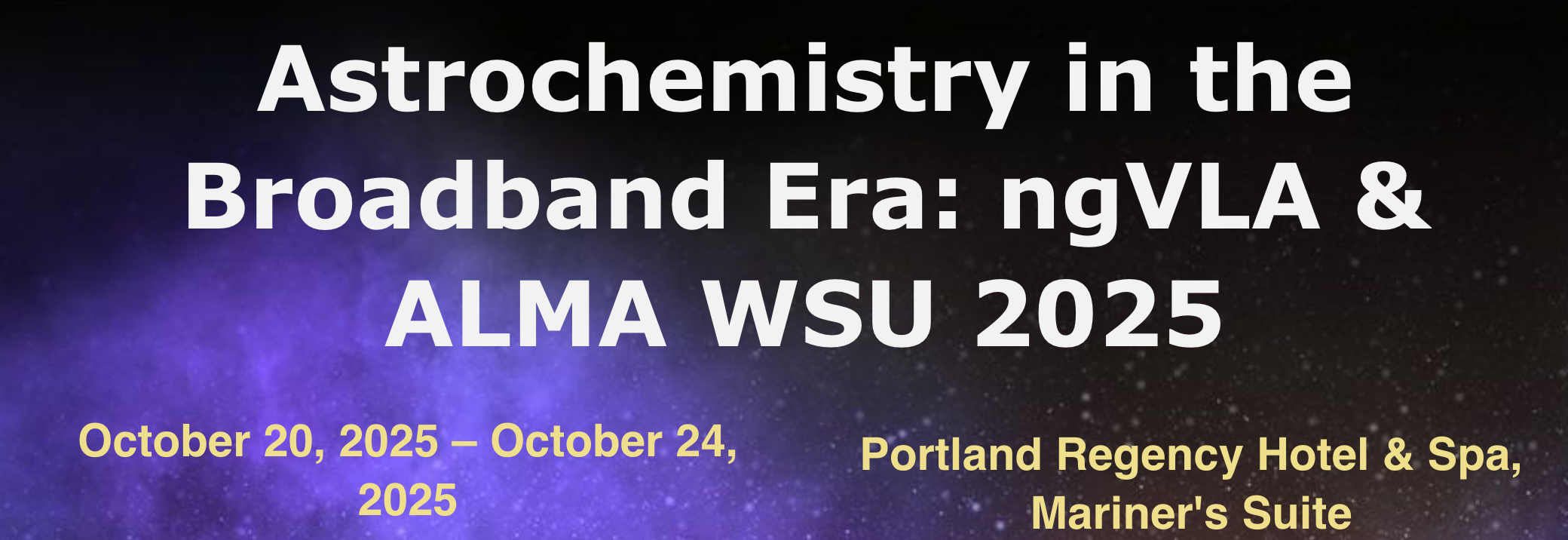
The astrochemical science that can currently be accomplished with radio facilities is fundamentally limited by narrow spectral bandwidths, but we are about to enter a new era of broadband radio astronomy. ALMA (following the Wideband Sensitivity Upgrade, WSU) and the next-generation Very Large Array (ngVLA) will both deliver unprecedented spectral bandwidths while maintaining exquisite spectral resolution and sensitivity. This data quality will transform the field of astrochemistry, but will also require entirely new approaches to data analysis. This workshop is intended to survey the current state of astrochemistry in this specific context, identify high-priority science that can be achieved in the Broadband Era, and develop a community roadmap for approaching these new data challenges.
The structure of this workshop is somewhat different from a normal meeting with most talk slots geared to setting up the daily group discussions. The program will include:
- "Primer" talks on specific topics given by ngVLA/WSU personnel and/or SOC members.
- Invited outlook talks addressing key opportunities and challenges.
- Focused science talks contributed from a small number of attendees.
- A number of hour-long, moderated and guided group discussion sections on big-picture topics.
The workshop will last the full days Tuesday 21 - Thursday 23 October (a preliminary program is available on the website). Participants should plan to arrive on Monday, 20 October and depart on Friday, 24 October. The workshop will take place at the Portland Regency Hotel and Spa in Portland, Maine.
Registration and abstract submission for posters both remain open. Further details are available on the conference website.
ngVLA Project News
New Partnership with the TTU System
On 12 June, NSF NRAO and the Texas Tech University (TTU) System announced a new partnership. Under this arrangement, NRAO will have the opportunity to utilize the TTU System's 3 Rivers Ranch, near Crowell, Texas, as an ngVLA antenna site, with the possibility of future science education and public outreach activities related to the ngVLA. The partnership will provide students, researchers, and the public with unique opportunities to engage with cutting-edge astronomical research.
ngVLA Science - Stellar Wind Physics of the WR Star with the Strongest Known Magnetic Field
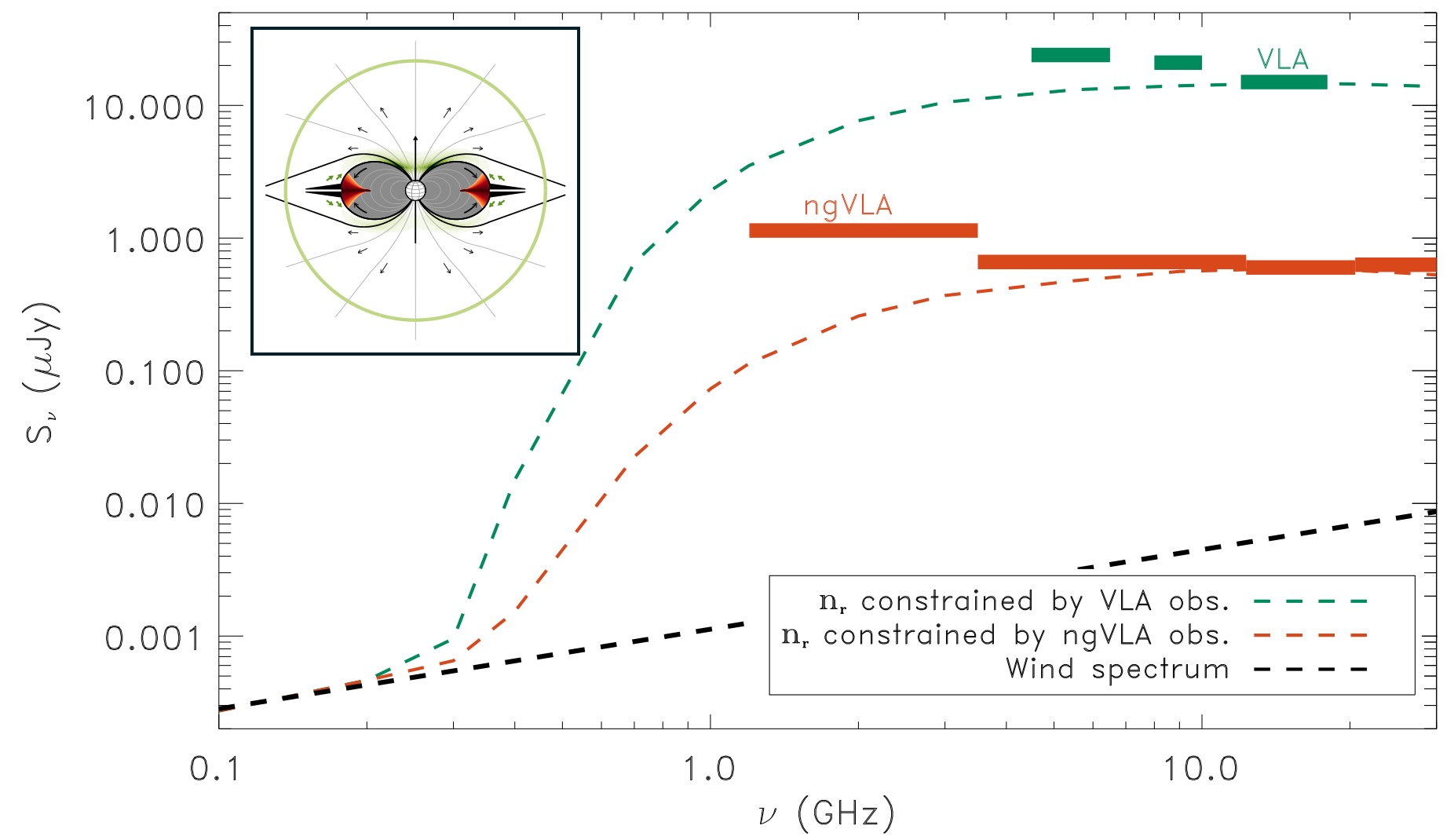
Figure: Dashed lines show model predictions for the radio spectra of the magnetic WR star in the HD45166 binary system. Bars show current VLA or expected ngVLA constraints. Insert shows a cartoon of the adopted magnetospheric model. Adapted from Leto et al. (2025). Click to enlarge.
The mystery of magnetars -- neutron stars with magnetic fields exceeding 1 billion tesla -- remains one of the most intriguing puzzles in astrophysics. Recently, scientists discovered the strongest magnetic field ever observed in a non-degenerate star. In the binary system HD45166, a hot helium star was found to possess a magnetic field of 43 kilogauss (Shenar et al. 2023). Spectroscopically classified as a Wolf-Rayet (WR) star, this object has a mass about twice that of our Sun and is expected to end its life collapsing into a magnetar. But whether this happens hinges on how much mass the star loses through stellar winds before the collapse. If the winds are too strong, they could strip away enough material to reduce the star's mass below the Chandrasekhar limit of 1.4 solar masses, resulting in a white dwarf instead of a magnetar.
How can we determine the strength of stellar winds in such a strongly magnetic WR star? Traditional methods using UV and optical data fall short because the magnetic field confines and influences the stellar wind, complicating the measurements. Our (Leto et al. 2025) alternate approach tackled this challenge by combining XMM-Newton and VLA data. We found that, despite the WR star being a bright X-ray source -- indicative of the magnetic field influencing the wind streams -- it remained undetected at radio wavelengths (see figure).
To explain this puzzling result, we modeled both the X-ray and non-thermal radio data. The XADM model of ud-Doula et al. (2014) was used to reproduce the observed X-ray spectrum. The non-thermal radio emission was calculated using a 3D model of stellar magnetospheres, originally developed by Trigilio et al. (2004) and recently refined with new theoretical insights linking magnetic stars' radio emission to their rotation (Leto et al. 2021, Shultz et al. 2022, Owocki et al. 2022). The 3D model predicts the frequency-dependent effects of the stellar wind's absorption on the non-thermal radio waves generated in the inner magnetospheric regions, closer to the star. Thus the amount of radio emission we detect -- or do not detect -- directly probes how much matter the star is losing. Detecting radio emission would definitively prove that the stellar wind is relatively weak, meaning that this magnetic WR star can retain enough mass to eventually collapse into a magnetar.
Looking ahead, the ngVLA promises a significant step forward in our understanding of winds in hot magnetic stars. The possible detection of non-thermal radio emission from magnetic WR stars, like that in HD45166 (see figure), could provide unprecedented insights into the plasma processes occurring in some of the most magnetized stars in the Universe.
Since 2015 the acronym ngVLA has appeared in 1350+ publications indexed in the SAO/NASA Astrophysics Data System. This article continues a regular feature intended to showcase some of those publications. We are especially interested in showcasing work done by early-career researchers. The collection of showcase articles can be viewed online. Anyone wishing to volunteer to author a feature should contact Joan Wrobel.
VLA+VLBA to ngVLA Transition Report
Eric Murphy, Trish Henning (NRAO), and the Transition Advisory Group
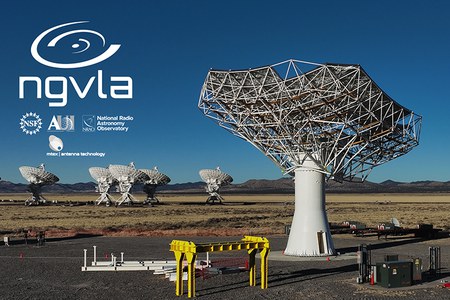
Current construction plans call for the ngVLA to leverage some of the physical infrastructure of both the VLA and the VLBA, potentially drawing on overlapping personnel and information infrastructure. Multiple options can be envisioned for a VLA+VLBA to ngVLA transition. The preliminary transition plan described in this new report presents a reduction that would enable the VLA and VLBA to conduct high-profile science during the construction of the ngVLA in the context of a reduced science portfolio.
Read the new report (arXiv: 2501.06333, ngVLA Memo 132) assembled by the Transition Advisory Group (TAG).
Critical work to support the TAG included staff from the NRAO: Will Armentrout, Walter Brisken, Chris Carilli, Claire Chandler, Poonam Chandra, Paul Demorest, Laura Lockledge, Joe McMullin, Jennifer Donovan Meyer, Amy Mioduszewski, and Joan Wrobel. The NRAO leadership and TAG wish to thank them for their contributions in supporting this effort and report.
VLA Membership
Cyprus Van Inwegen (NRAO)
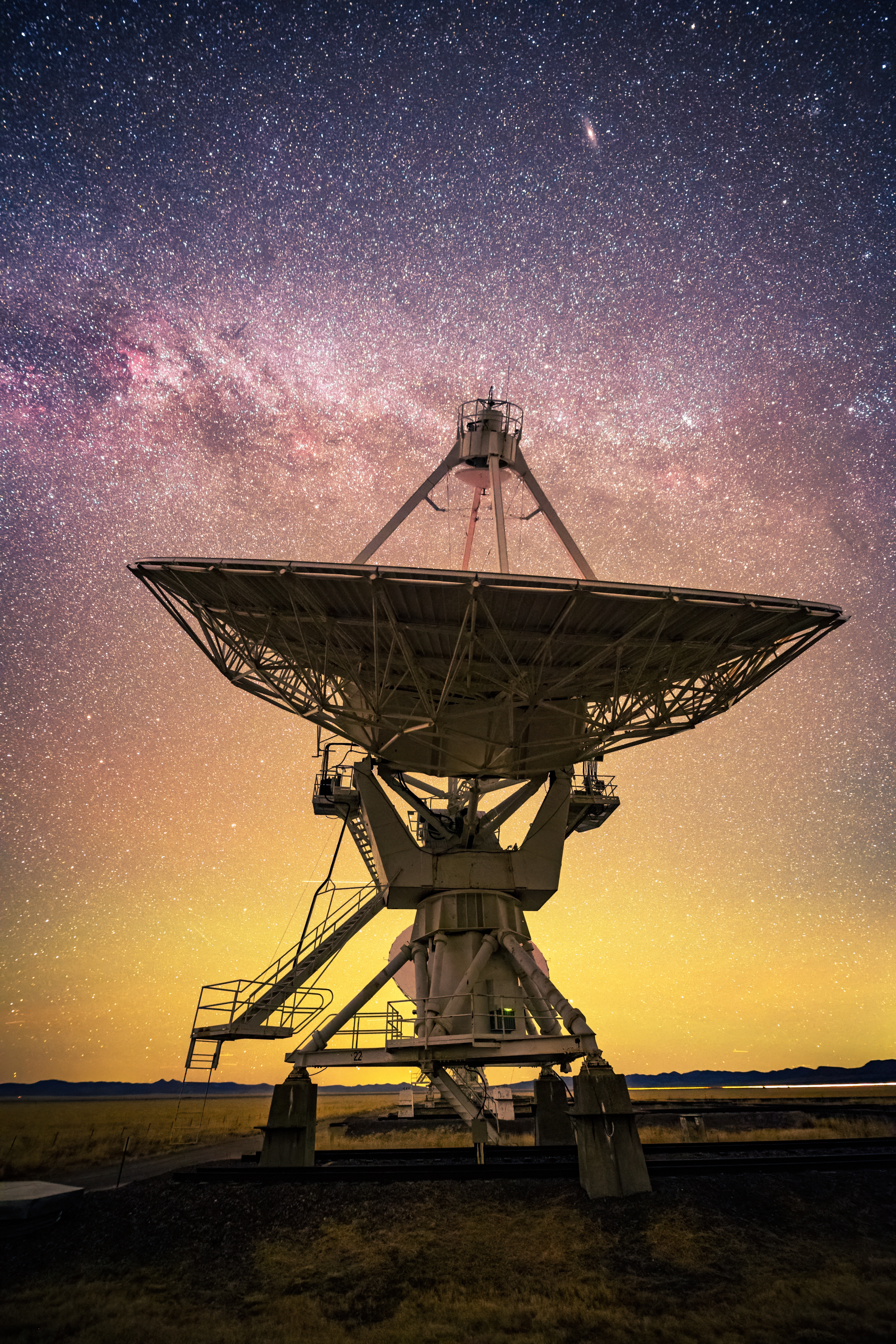
Kids are going to be back in school soon - and we want to get them excited about STEM with a visit to the Very Large Array!
VLA Membership supports our School Bus Fund, which helps cover the transportation costs of field trips so we can bring more K-12 students to the VLA. Become a member and help inspire awe and wonder in the next generation!
Photo of a VLA antenna with the Andromeda Galaxy by Bettymaya Foott (US NSF/AUI/NSF NRAO).
Recent Science Media Releases
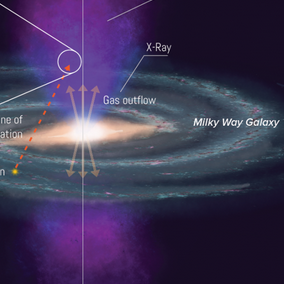 |
Galactic Mystery: How "Ice Cubes" Survive in the Milky Way's Blazing Bubbles |
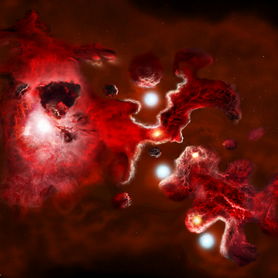 |
ALMA Reveals Stunning Details of Infant Galaxies in the Early Universe |
 |
Protecting the Cosmos: NSF NRAO Leads Critical Spectrum Studies to Safeguard Radio Astronomy |
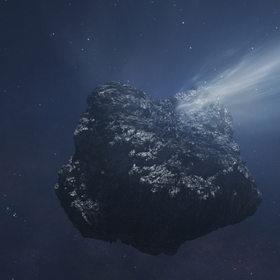 |
Largest Oort Cloud Comet Ever Observed Reveals Its Secrets with ALMA's Powerful Gaze
|
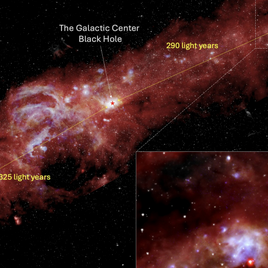 |
Unusual stellar nurseries near our galaxy's center puzzle scientists
|
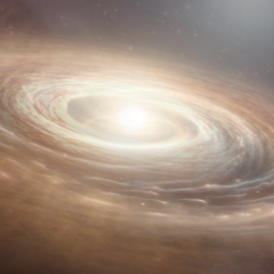 |
ALMA Reveals Lives of Planet-Forming Disks
|
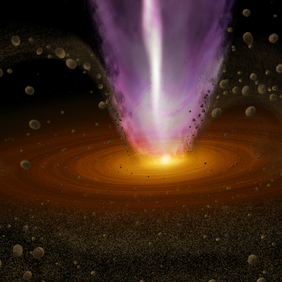 |
Windswept Grains Hold Clues to Planet's Beginnings
|
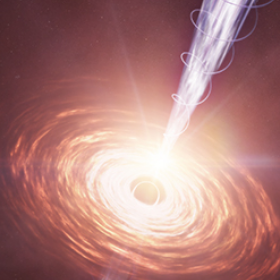 |
Strong Black Hole Jet at Cosmic "Noon"
|
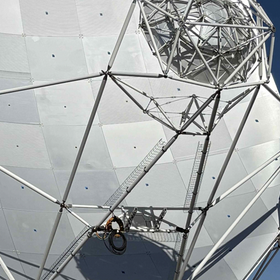 |
Cosmic Alliance in West Texas
|
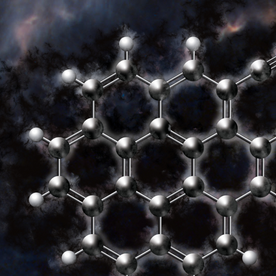 |
Cosmic Chemistry Breakthrough
|
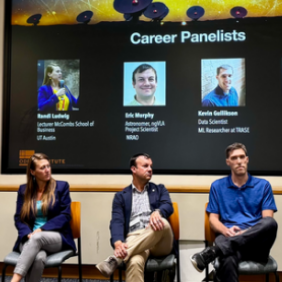 |
Inaugural Cosmic Horizons Conference
|
|
Contact the NRAO press office to share your new and exciting science results. |
From the Archives
Ellen Bouton
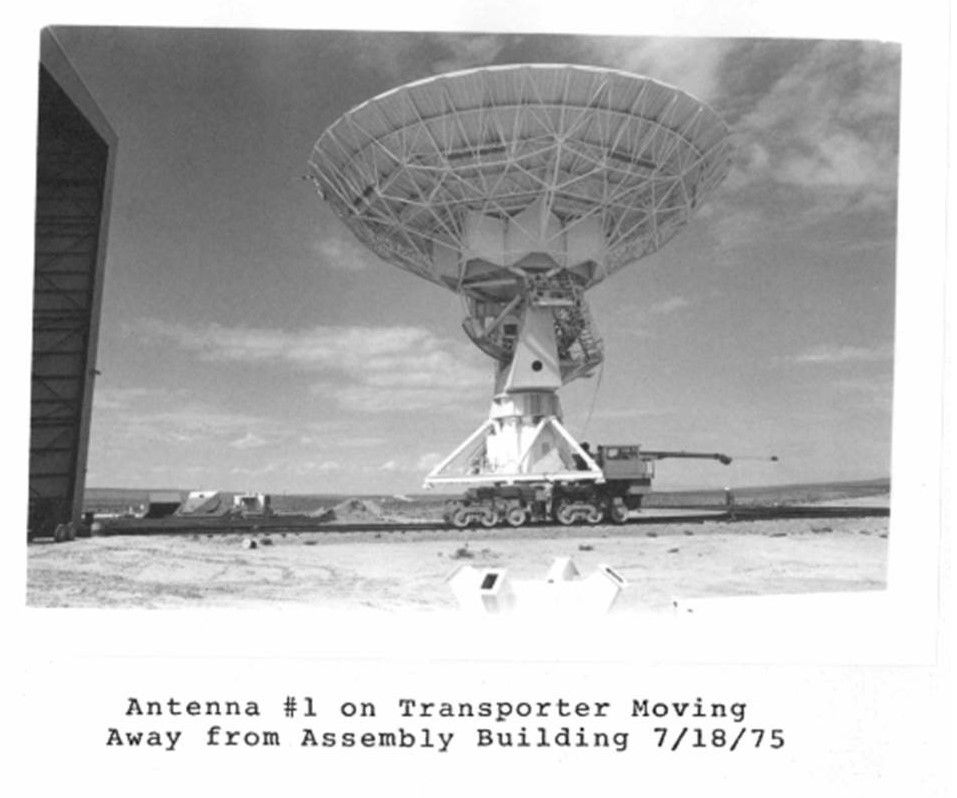
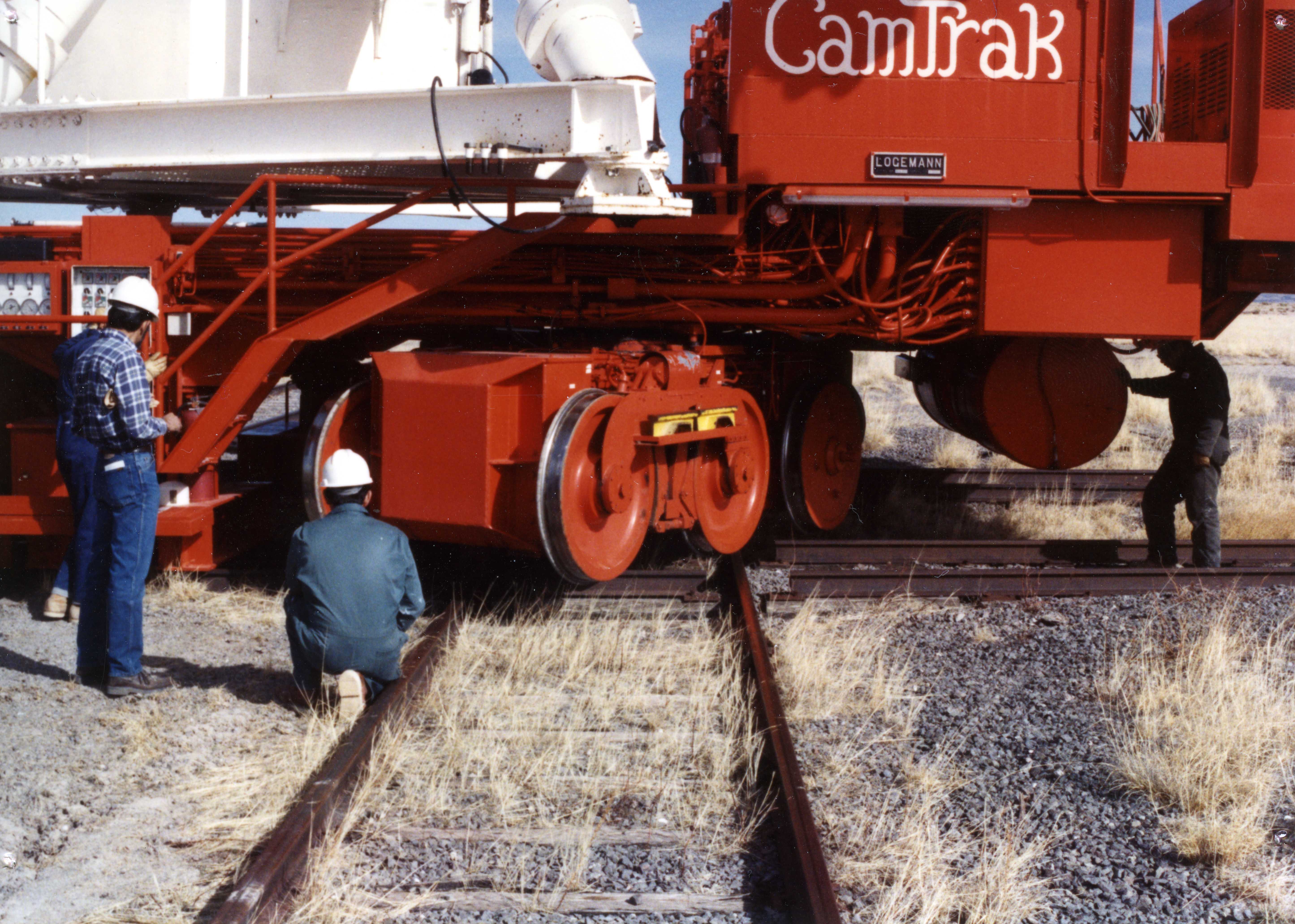
About this month's photographs: Top photo - The very first move of a VLA antenna was 50 years ago, on 18 July 1975, when the transporter moved Antenna #1 away from the Assembly Building. In the bottom photo, taken during the 1000th VLA antenna move on 26 February 1991, CamTrak (AKA Transporter #2) lifts its wheels to turn onto the rail spur to bring antenna 15 towards station DN9, its new location. The transporters are crucial to making the VLA a flexible instrument operating in multiple configurations. A February 11, 1977 memo states, "We tend to underestimate the complexity of the design and construction of the vehicle, which picks up 220-ton antennas and transports them through 90[deg] intersections. That it works as well as it does is an engineering achievement of the first order...." Transporter #1 was named Hein's Trein, honoring long-time NRAO Associate Director Hein Hvatum; Transporter #2, CamTrak, honored Campbell Wade, who helped design the VLA and led the search for and acquisition of the VLA site. Current transporter names are Jack of Diamonds and High Plains Lifter. See additional photographs of the 1000th move; see also a YouTube video explaining how the transporters move the antennas to reconfigure the array.
From the Archives is an ongoing series illustrating NRAO and U.S. radio astronomy history via images selected from our collections of individuals' and institutional papers. If readers have images they believe would be of interest to the Archives, please contact Ellen Bouton.