NRAO Newsletter
Volume Vol#, Issue Iss#
Day# Month# Year#
NRAO Newsletter
Volume Vol#, Issue Iss# • Day# Month# Year#
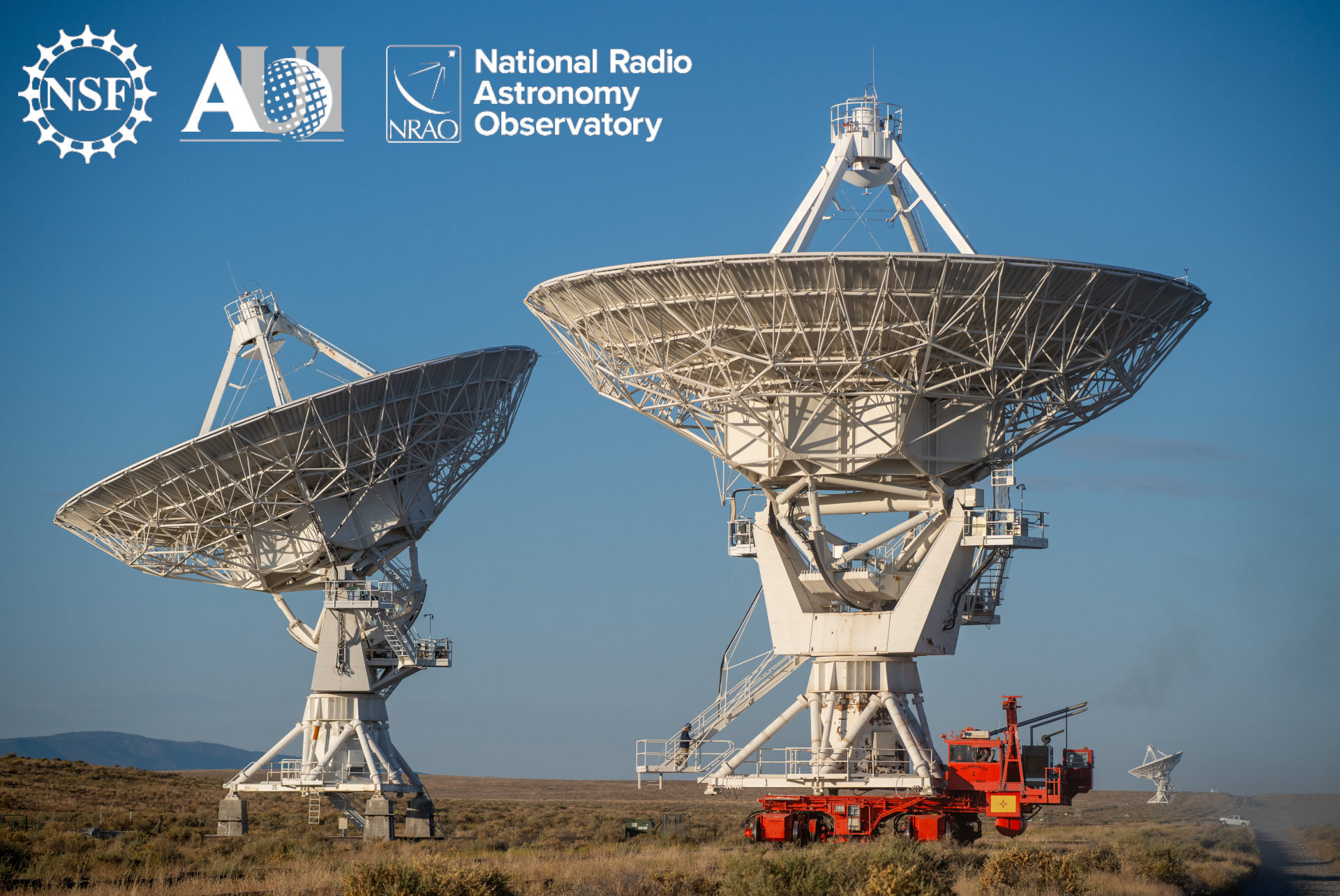 The NSF Karl G. Jansky Very Large Array (NSF VLA) antennas are moved into a new configuration along the west arm in New Mexico. Photo courtesy of Jeff Hellerman (NSF/AUI/NSF NRAO).
Upcoming Science Events

ALMA Workshops
Various - October 2026 | Various

Scintillometry Workshop
October 28-30, 2026 | Ithaca, NY
Astronomical Data Analysis Software and Systems
November 1-5, 2026 | Perth, Australia

ngVLA International Science Conference
November 10-13, 2026 | Sendai, Japan
CosmicAI Virtual Winter School
December 14-23, 2026 | Online

American Astronomical Society 249
January 10-14, 2027 | Salt Lake City, Utah
ALMA at 15 years: Science, Synergies, and the Road Ahead
February 22-26, 2027 | Taipei, Taiwan
Volunteers Needed to Serve on VLA, GBT, & VLBA Science Review Panels

Image by Brian R. Kent (NSF/AUI/NSF NRAO/NSF GBO)
Members of NRAO's Science Review Panels (SRP) play a very important role in identifying the Science Programs for these world-leading radio telescopes. Being a reviewer could help you to:
- Learn what science other astronomers are interested in;
- Get a sense of what makes the most compelling proposals;
- Build your group of professional contacts and potential collaborators;
- Understand the review process for a major observatory.
If you are interested, please apply to be a volunteer SRP member!
Call for Applications - 2027 Jansky Postdoctoral Fellowship Program
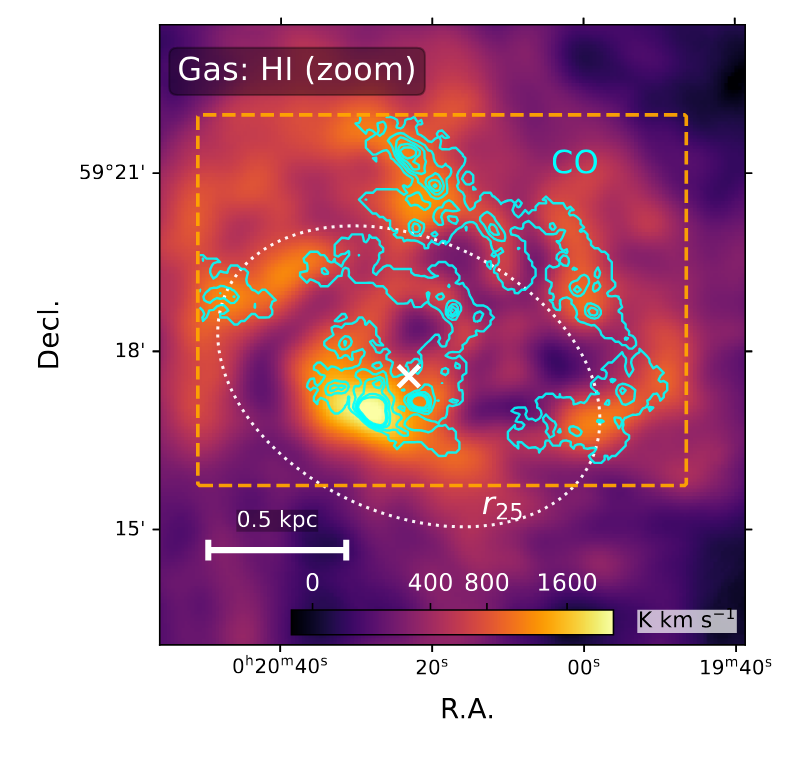
Figure left: IC 10 from Jansky Fellow Dr. Cosima Eibensteiner and collaborators (Eibensteiner et al. 2026). The panel shows the HI measured with the NSF VLA. The dotted circle indicates the optical radius r25. The orange dashed lines show the FoV of CO observations.
The NSF NRAO/GBO invites applications for the 2027 Jansky Fellowship Program. The Jansky Fellowship Program, established almost four decades ago, supports outstanding early career scientists to conduct independent research which exploits NSF NRAO/GBO facilities and contributes to the NSF NRAO's mission. As a Jansky Postdoctoral Fellow, you will have a unique opportunity to contribute to, and learn from, the development and delivery of the largest and most capable radio telescopes in the world. The Jansky Fellowship Program supports projects in radio astronomy and multi-wavelength science, radio astronomy techniques, instrumentation, computation, and theory. Candidates with expertise or interest in NSF NRAO /GBO technological initiatives, such as very long baseline interferometry or Green Bank telescope upgrades, are encouraged to apply.
Appointments may be made at the four internal NSF NRAO/GBO sites (Socorro, NM, Albuquerque, NM, Charlottesville, VA, and Green Bank, WV). Applicants should describe how their research or technical interests couple with the NRAO's mission, telescopes or science. In compelling cases, a 'split appointment' Jansky Fellowship between a U.S. based university and an NRAO site, or a 'non-resident' Jansky Fellowship hosted at a university within the United States, may be offered. Non-resident Jansky Fellows are expected to develop a research program that fosters close ties with the NRAO and describe how residence at their proposed host university will accomplish this.
The figure above shows some of the outstanding research work conducted by the NRAO Jansky Fellows (Eibensteiner et al. 2026). See the program website for more information. Visit the DayForce Careers website to apply. Application deadline for the 2027 program is Wednesday, October 28, 2026.
Science Spotlight: VLA Reveals a Faint Radio Signal from a Supernova Possibly Linked to an Unusual Gravitational-Wave Chirp
On 2025 August 18, the LIGO-Virgo-KAGRA collaboration reported S250818k, a low-significance gravitational-wave (GW) candidate consistent with a binary neutron star merger potentially involving a neutron star below one solar mass. Optical follow-up by the Zwicky Transient Facility identified a transient within the GW localization region whose early emission resembled a kilonova (Kasliwal et al. 2025). Subsequent spectroscopy classified it as the stripped-envelope Type IIb supernova SN 2025ulz, raising questions about its possible connection to the GW candidate.
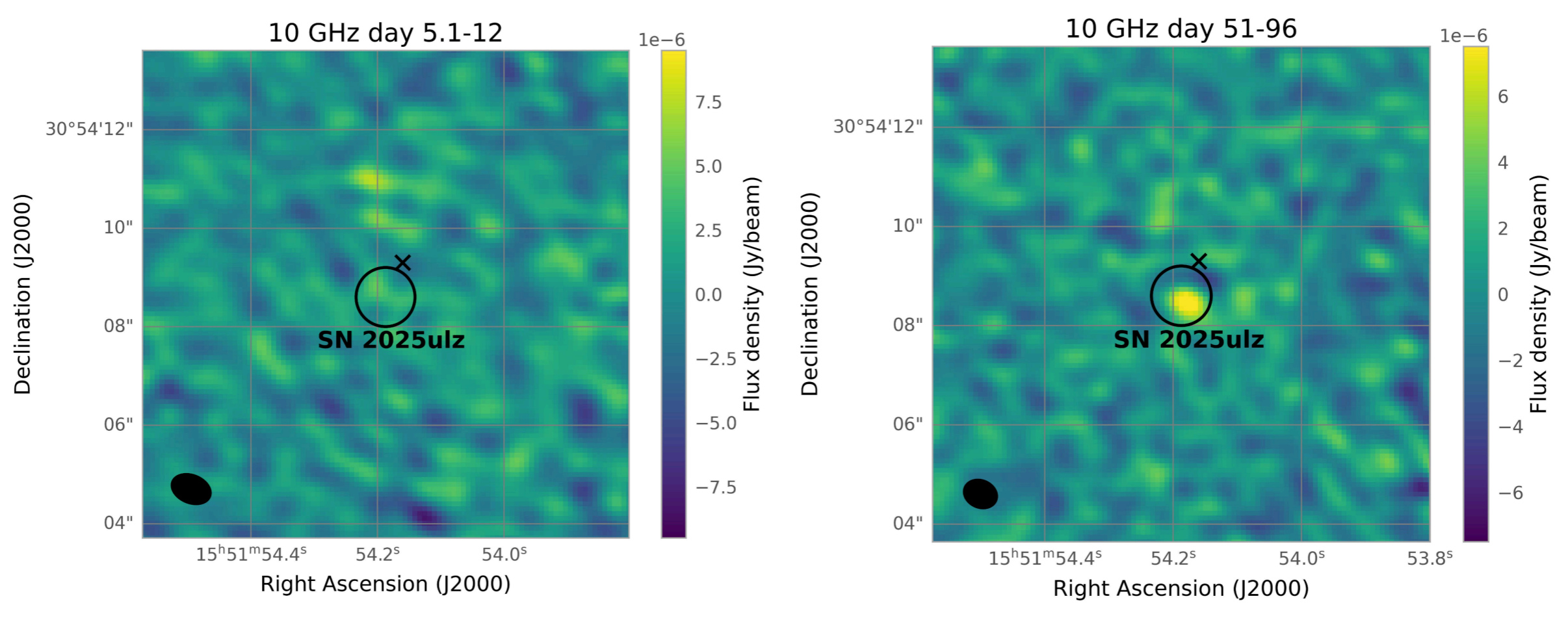
Figure 1 - (Left): Co-added VLA image of SN 2025ulz at 10 GHz from days 5–12 after the S250818k trigger. (Right): Co-added VLA image of SN 2025ulz at 10 GHz from days 51–96 after the S250818k trigger. The black circle is centered on the HST position of SN 2025ulz with radius equal to the nominal FWHM of the VLA synthesized beam (0.6 arcsec). The optical position of the host galaxy SDSS J155154.16+305409.3 is marked with a black cross.
In Identification of a Radio Counterpart to SN 2025ulz in the S250818k Localization Area we present the result of radio observations conducted via the JAGWAR program (VLA/22B-235; PI: Corsi). We obtained deep, multi-band observations of the SN2025ulz field with the Karl G. Jansky Very Large Array, complemented by uGMRT observations and a reanalysis of MeerKAT data. The VLA images revealed a faint radio counterpart at 6-10 GHz. Co-adding the 10 GHz observations from days 51-96 after the GW trigger yielded an approximately 6-sigma detection near the supernova's optical position. SN2025ulz was undetected in earlier radio observations of the field (Figure 1 above, left panel), and its radio emission faded below the detection threshold at later times.
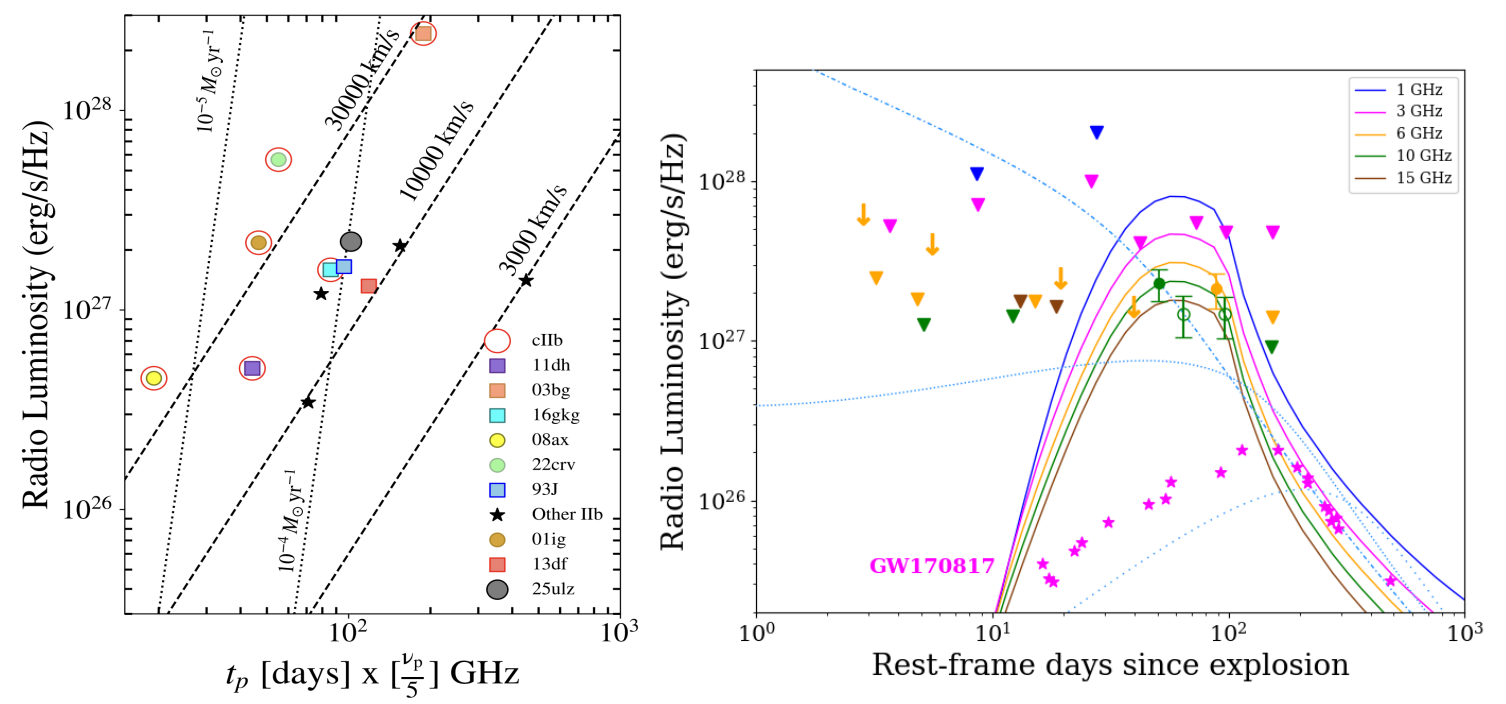
Figure 2 - (Left): Chevalier diagram comparing the inferred peak radio luminosity and frequency-scaled peak time of SN 2025ulz (gray point) with other Type IIb supernovae (Chandra 2025). Lines of constant shock velocity and progenitor mass-loss rate are shown. Open red circles highlight events associated with compact progenitors (cIIb). (Right): Radio observations of SN 2025ulz. We show upper limits (downward triangles) and detections (dots). Light blue dot-dashed, dotted, and densely dotted modeled curves and 6 GHz upper limits (orange arrows) are taken from O'Connor et al. (2025). For comparison, we plot the 3 GHz light curve of GW170817 (magenta stars; Makhathini et al. 2021).
The radio emission provides a window into the explosion’s fastest ejecta. Our observations favor a compact progenitor and a supernova shock speed of approximately 15,000 km/s, consistent with other compact-progenitor Type IIb supernovae (Figure 2, left panel). While the detected radio emission can be interpreted as supernova ejecta interacting with circumstellar material, an off-axis relativistic jet whose radio emission peaks approximately 50–100 days after the trigger also remains viable (Figure 2 above, right panel).
The VLA's sensitivity, angular resolution, and frequency coverage were essential to identifying this faint counterpart. Although the association between SN 2025ulz and S250818k remains unconfirmed, our study demonstrates the value of long-term radio follow-up of interesting GW candidates. If future GW analyses support the association, SN 2025ulz could offer a rare opportunity to investigate proposed links between the collapses of rapidly rotating massive stars and sub-solar-mass neutron stars (Siegel et al. 2022).
Would you like your science or engineering projects featured in the NRAO Science Newsletter? Email the editor Brian Kent with your recent science publications!
ALMA News
Successful close of Cycle 12 and start of Cycle 13
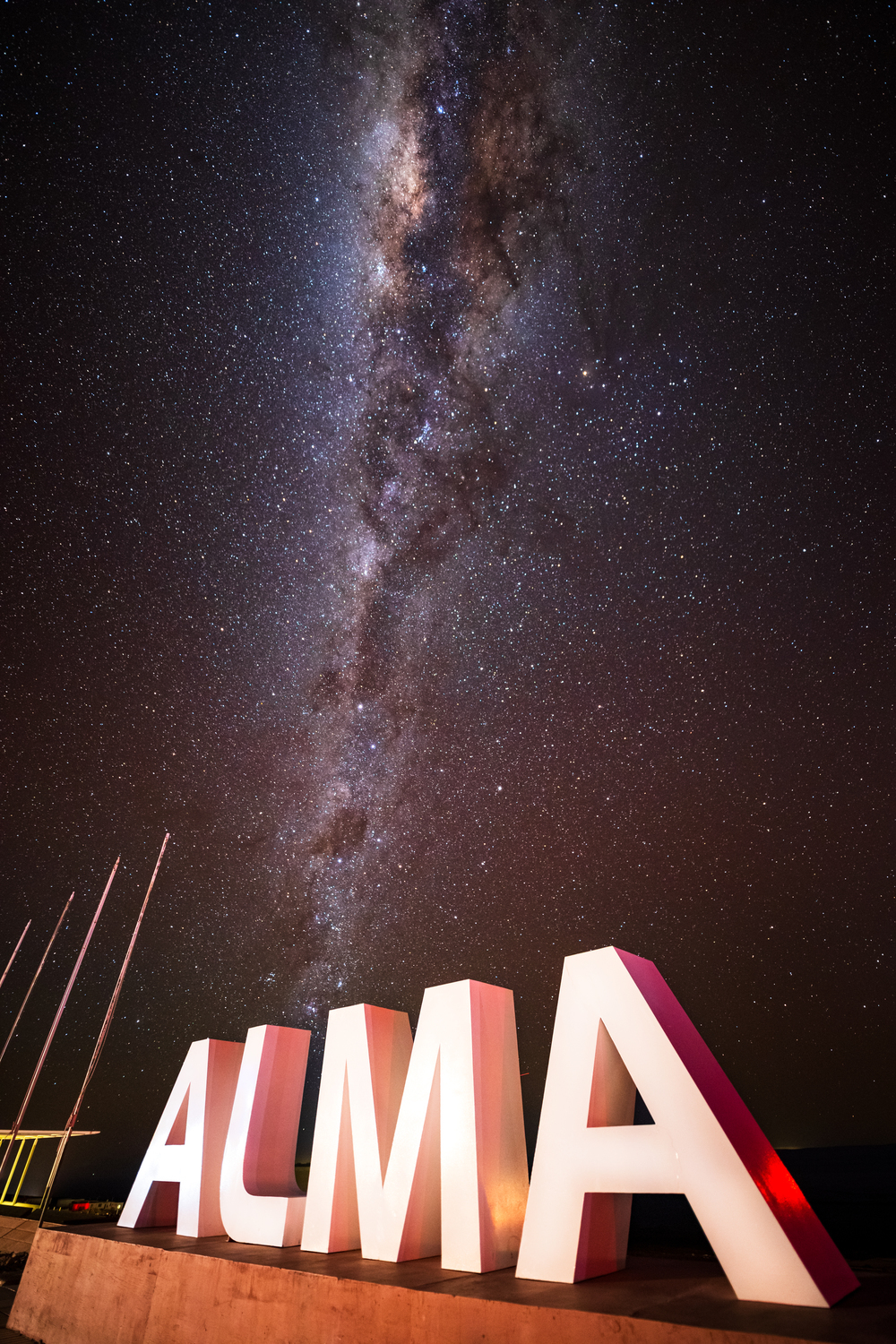
ALMA successfully started Cycle 13 observations during the Chilean afternoon of September 30th. That also marked the successful close of Cycle 12 with another record! During Cycle 12, ALMA successfully acquired and delivered more than 4700 hours of science-quality data (QA0 PASS) with the 12-m Array and set a new record on all three arrays (12-m, 7-m, and Total Power Arrays). This was achieved despite Cycle 12 having the most observing time lost due to weather in the past decade. Following the successes of Cycle 10 and Cycle 11, this achievement further demonstrates the maturity and efficiency of ALMA operations.
The array is in now configuration C-3 (maximum baselines of ~500m) and will continue to contract over the next month.
ALMA User Survey - ALMA Requests Your Feedback!
ALMA is implementing the Wideband Sensitivity Upgrade (WSU) to address the ALMA 2030 Development Roadmap and keep ALMA at the forefront of astronomical discovery. The WSU will bring major observing improvements, including increased instantaneous bandwidth (by at least 2x), improved sensitivity, and higher spectral resolution across wider bandwidths than is currently possible with ALMA.
To help ALMA assess user support needs over the next decade we invite your input via the following survey: ALMA user survey. We encourage input from all current, past, and prospective ALMA users. The survey will remain open until October 31, 2026. This announcement can also be found on the ALMA Science Portal.
Thank you in advance for your contributions to this important process!
ALMA Data Processing/Analysis Workshops for Cycle 13
During October 2026, the NAASC and the Cycle 13 ALMA Ambassadors will host a series of workshops on the processing and analysis of ALMA data, at several locations in the US, Canada and Chile, as detailed in the table below. All local students and researchers are encouraged to attend these events, and no previous ALMA experience is required or necessary. The goal of these events is to train users on basic data processing and analysis techniques that they may need to use ALMA for scientific discovery. Early registration is encouraged, to facilitate tailoring workshop presentations to the interests of the attendees. Lunches will be provided at all these events.
| Ambassador | Workshop Location | Date |
|---|---|---|
| Woorak Choi | McMaster University | October 16, 2026 |
| Nickolas Pingel | Indiana University | October 21, 2026 |
| Maria Galloway-Sprietsma and Nazar Budaiev | University of Florida | October 21, 2026 |
| Carla Cornil-Baïotto | University of Concepción | October 22 and 23, 2026 |
| Teresa Paneque-Carreno | University of Michigan | October 23, 2026 |
| Nazar Budaiev | Columbia University | October 30, 2026 |
Wideband Sensitivity Upgrade
The NAASC will host a special session at the AAS 249th meeting in Salt Lake City, Utah (January 10-14, 2027). Entitled "The trail of complex organics molecules: from molecular clouds to protostars with ALMA-WSU", the session focuses on recent results in the field of ISM chemistry in the Milky Way and beyond. Five invited speakers - C. Brogan (NRAO), M. Requena-Torres (Towson), C. Eibensteiner (NRAO/UVa), M. Bonfand-Caldeira (UVa) and G. Wenzel (MIT) - will discuss these results and highlight the transformative impact of the ALMA Wideband Sensitivity Upgrade (WSU) on such studies.
You can learn more about the scientific impact of the WSU and up-to-date information on the WSU project on the ALMA Observatory WSU webpage; additional resources for the North American community can be found on the NAASC WSU webpage.
ngVLA Project News
ngVLA Scientist (Open Rank) Job Opportunities
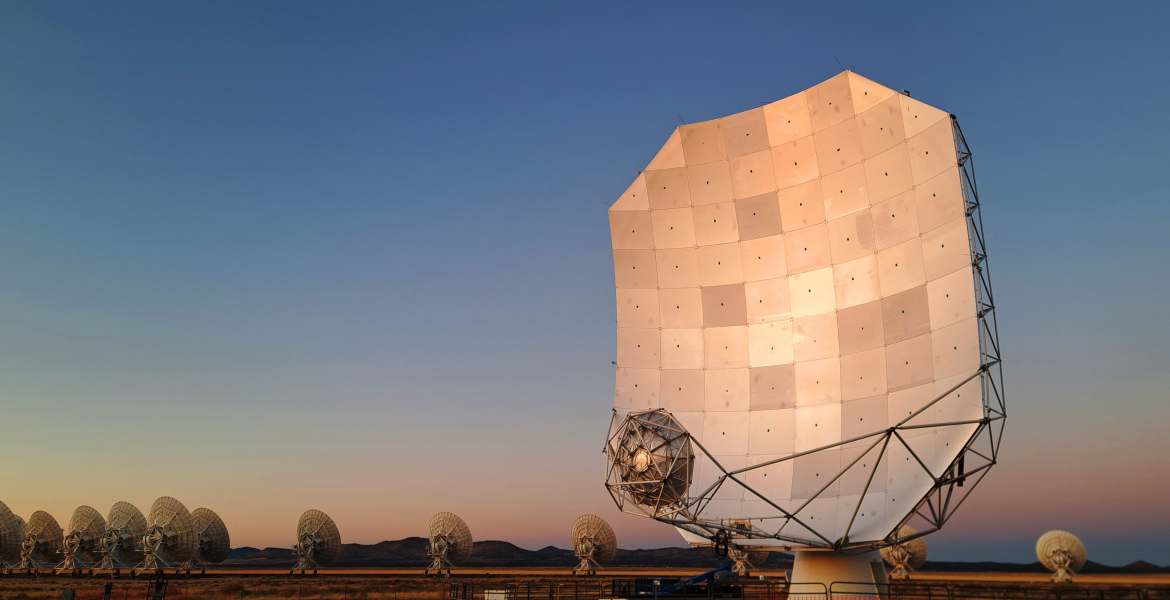
NSF NRAO seeks two Scientists (Open Rank) to join a rapidly growing team to support the ngVLA software design and development effort. The appointee will be expected to spend 75% of their time on functional work as part of the ngVLA Science Support Integrated Product Team (IPT), with the remaining 25% available for independent research. The primary responsibility for this position will be to help develop and maintain detailed software requirements for the ngVLA Computing and Software IPT. Other responsibilities will include, but are not limited to, supporting the development of calibration and operation processes and workflows. Full details appear on the AAS Job Register. Apply by December 1, 2026.
ngVLA Postdoctoral Fellow Job Opportunities
NSF NRAO seeks two Postdoctoral Fellows to join a rapidly growing team to support the ngVLA design and development effort. The primary function of all ngVLA Postdoctoral Fellow positions is to provide a rich opportunity for postdoctoral professional career advancement. The appointee will be expected to spend up to 50% of their time on functional work as part of the ngVLA Science Support Integrated Product Team, with the remaining fraction of their time available for independent research. Full details appear on the AAS Job Register. Apply by December 1, 2026.
New ngVLA Project Director
Please join me in welcoming Stuartt Corder to his new role as ngVLA Project Director. Stuartt brings 15+ years of experience in the leadership, development, commissioning, and operation of major astronomical facilities and programs. His career includes senior leadership positions with ALMA and NSF NRAO, including service as ALMA's Deputy Director and Acting Director. In recent years, he was NSF NOIRLab's Deputy Director and the AURA Mission Scientist for Chile, overseeing daily operations and management for NOIRLab's facilities across both the northern and southern hemispheres.
Stuartt's scientific background in interferometry, planet and star formation, and synthesis imaging further complements the technical and scientific ambitions of the ngVLA. His extensive experience and deep understanding of large-scale astronomical facilities will be significant assets as the ngVLA and the pathfinder instrument advance toward the next stages of their development.
Stuartt will be based in Albuquerque, New Mexico, beginning January 2027.
ngVLA High-resolution Frontier Workshop: Pulsars, Dynamic Universe, and Precision Astrometry

We invite the community to a workshop, March 22-24, 2027, devoted to ngVLA science use cases that require the highest spatial resolution capabilities, hosted at the Johns Hopkins University Bloomberg Center in Washington, DC, USA.
Rationale
The meeting comes at a pivotal moment. The U.S. National Science Foundation (NSF), the NSF NRAO, and the U.S. Naval Observatory recently announced a partnership to build ngVLA pathfinder antennas sited at existing NSF VLBA stations and new U.S. locations, with construction and early operations anticipated before the end of the decade. The pathfinder will deliver high-resolution VLBI observations and operate standalone or folded into the full 263-antenna ngVLA, and it follows successful systems testing of the ngVLA prototype antenna. This workshop will bring together the scientists who will make strategic use of those capabilities, and aims to sharpen the science cases that should shape how they are used.
Scientific Scope
Pulsars, Cosmology, and Fundamental Physics
- Tests of gravity and strong-field relativity, including pulsars in the Galactic Center
- Pulsar timing arrays and the nanohertz gravitational wave background
- Relativity and stellar evolution in compact binaries
- Dark matter and cosmological phase transitions
Exploring the Dynamic Universe
- Transient and variable radio sources
- Multi-messenger astrophysics, including electromagnetic counterparts to gravitational wave events
- Astrophysical plasmas across scales
- Black holes and tidal disruption events
Precision Astrometry
- Galactic dynamics
- Celestial reference frame / geodesy
- AGN jets, intermediate mass black holes, and plasmas
- Global VLBI
Future facilities, methods, and techniques
- High-frequency capabilities
- Novel imaging techniques
- Calibration methods
Format and Goals
The in-person workshop will include invited overviews, contributed talks, posters, and substantial time for discussion. Over three days we aim to sharpen the ngVLA science use cases in light of the pathfinder and its VLBI capabilities; identify the requirements they imply for sensitivity, cadence, rapid response, sub-arraying, commensal observing, and data products; strengthen coordination with the gravitational wave, high-energy, and optical time-domain communities; and foster collaborative work. Students, postdocs, and early-career researchers are especially encouraged to participate.
Key Dates
Registration and abstract submission open on October 20, 2026, and close on December 15, 2026. There will be a cap of 75 participants, so please register and submit your abstract early! Further details will appear soon on the workshop's webpage.
ngVLA Science - Mass Loading the Jets of X-ray Binaries
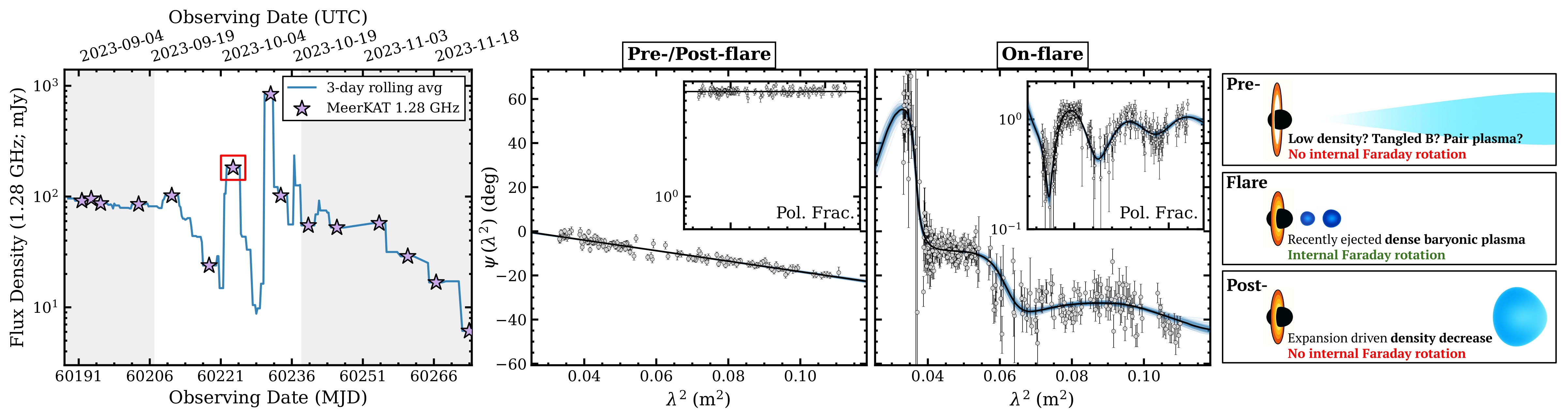
Figure - Left: Red box shows the analysed flare. Middle: Pre-/post-flare and on-flare polarization spectra, showing transient internal Faraday rotation (FR) during the flare. Right: Schematic associating the on-flare behavior with recently launched, dense ejecta. Adapted from Hughes et al. (2026).
Accreting stellar-mass black holes---specifically X-ray binaries (XRBs)---are canonical time-domain laboratories for jet physics. Their plasma outflows evolve through activity cycles lasting around a year, from launch through propagation, deceleration, and interaction with the interstellar medium, providing a real-time view of jet evolution compared with their sluggishly evolving supermassive counterparts in AGN (Fender 2006). Jets in XRBs are bright synchrotron radio sources and are therefore intrinsically linearly polarised, making radio polarimetry a direct probe of their plasma conditions and magnetic-field structure (Wardle et al. 1998; Lyutikov et al. 2005). Despite this, spectropolarimetric studies with detailed physical interpretation remain sparse because the signal is fainter and the calibration more demanding.
In Hughes et al. (2026), we studied the XRB Swift J1727.8-1613 during bright flaring in its discovery outburst. Weekly MeerKAT observations captured the source before, during, and after flares reaching ~1 Jy. This enabled high-precision linear spectropolarimetry and measurements of Faraday rotation (FR), the frequency-dependent rotation of the linear polarization angle caused by propagation through magnetized plasma.
Our focus here is on the flare highlighted in the figure's leftmost panel. Before and after that flare, the polarization behaviour was simple, with the angle varying linearly with wavelength squared and an approximately constant fraction (middle-left panel). During the flare, however, we observed repeated depolarization and repolarization across the band together with strongly non-linear evolution of the polarization angle (middle-right panel), characteristic signatures of internal FR, where the jet plasma rotates its own synchrotron emission. The signatures' coincidence with the flare associates them with the recent launch of new, dense jet components, as shown schematically in the rightmost panel.
Notably, a symmetric electron-positron plasma produces no net FR because the contributions from the two charge species cancel. Thus our FR detection requires a dominant baryonic component within the emitting plasma. Modelling the internal FR constrained the jet mass with new sensitivity to both the synchrotron-emitting and non-emitting particle populations, allowing us to track mass loading through comparison with later-time mass estimates (Savard et al. 2025).
Next-gen arrays such as the ngVLA will substantially expand our ability to perform this type of analysis. FR measurements benefit strongly from low frequencies and broad fractional bandwidths (Brentjens and de Bruyn 2005; Rudnick and Cotton 2023), both provided by ngVLA Band 1. More importantly, rapid flaring limits how far sensitivity can be improved simply by integrating longer, because the source can evolve significantly during an observation. This presently restricts detailed spectropolarimetry to the brightest events. The ngVLA's greatly improved sensitivity on short timescales will widen the accessible XRB population and extend these measurements to fainter relativistic transients, including gamma-ray bursts and tidal disruption events. This opens a route to measuring jet composition and mass loading across a much broader range of accreting and relativistic systems.
Since 2015 the acronym ngVLA has appeared in 1730+ publications indexed in the SciExplorer Data System. This article continues a regular feature intended to showcase some of those publications. We are especially interested in showcasing work done by early-career researchers. The collection of showcase articles can be viewed online. Anyone wishing to volunteer to author a feature should contact Joan Wrobel.
Dr. Rebecca Charbonneau Awarded 2027 Osterbrock Prize

NRAO Adjunct Assistant Scientist, Dr. Rebecca Charbonneau, has been awarded the 2027 Donald E. Osterbrock Book Prize for her widely acclaimed recent book "Mixed Signals: Alien Communication Across the Iron Curtain" which was published in the US in 2025 by Polity. The Osterbrock Prize is awarded biennially by the AAS Historical Division for a book that is judged to best "advance the field of the history of astronomy or to bring to the history of astronomy to light." Rebecca's book, which compares the political, technical, and military environment of the postwar Search for Extraterrestrial intelligence (SETI) and the collaborations by Soviet and American radio astronomers during and after the Cold War, was previously recognized in the London Financial Times and in the New Yorker annual lists of their best books. The research for her book was based largely on her research at the NRAO Archives and on a visit to Russia in 2019.
Rebecca is currently a historian at the American institute of Physics and is also a Research Fellow at the SETI Institute Discovery and Futures Lab. She has held previous appointments at the Harvard Smithsonian Center for Astrophysics, at the University of Virginia and held several NASA Fellowships. At NRAO, she previously served as an Intern at the NRAO Archives, twice as a Graduate Summer Research Assistant, and as a Jansky Post-doctoral Fellow.
Rebecca received her PhD from the University of Cambridge in the History and Philosophy Sciences in 2021 and her MS from Oxford University in 2018.
Dr. Emma Schwartzman Awarded the 2025 NRAO/AUI Outstanding Doctoral Dissertation Award

Dr. Emma Schwartzman received the 2025 NRAO/AUI Outstanding Doctoral Dissertation Award on September 17 at the NRAO Charlottesville, VA headquarters and delivered a lecture, "A Multifrequency Radio Study of Galaxy Cluster Mergers and Multiple Active Galactic Nuclei" based on her thesis research at James Madison University and the US Naval Research Laboratory.
Applications for the 2026 NRAO/AUI Outstanding Doctoral Dissertation Award are open for students who have or will have successfully defended their PhD dissertation during the calendar year 2026. The NRAO Award is based on new radio astronomy data obtained at any facility operated or jointly operated by any U.S. based institution. Applications for the 2026 Award are due by December 15, 2026. Further information on the NRAO Doctoral dissertation award can be found on the Science Website. Queries may be addressed to NRAOPhdAward@nrao.edu.
Podcast: Reflectionless Filter Technology with Dr. Matt Morgan
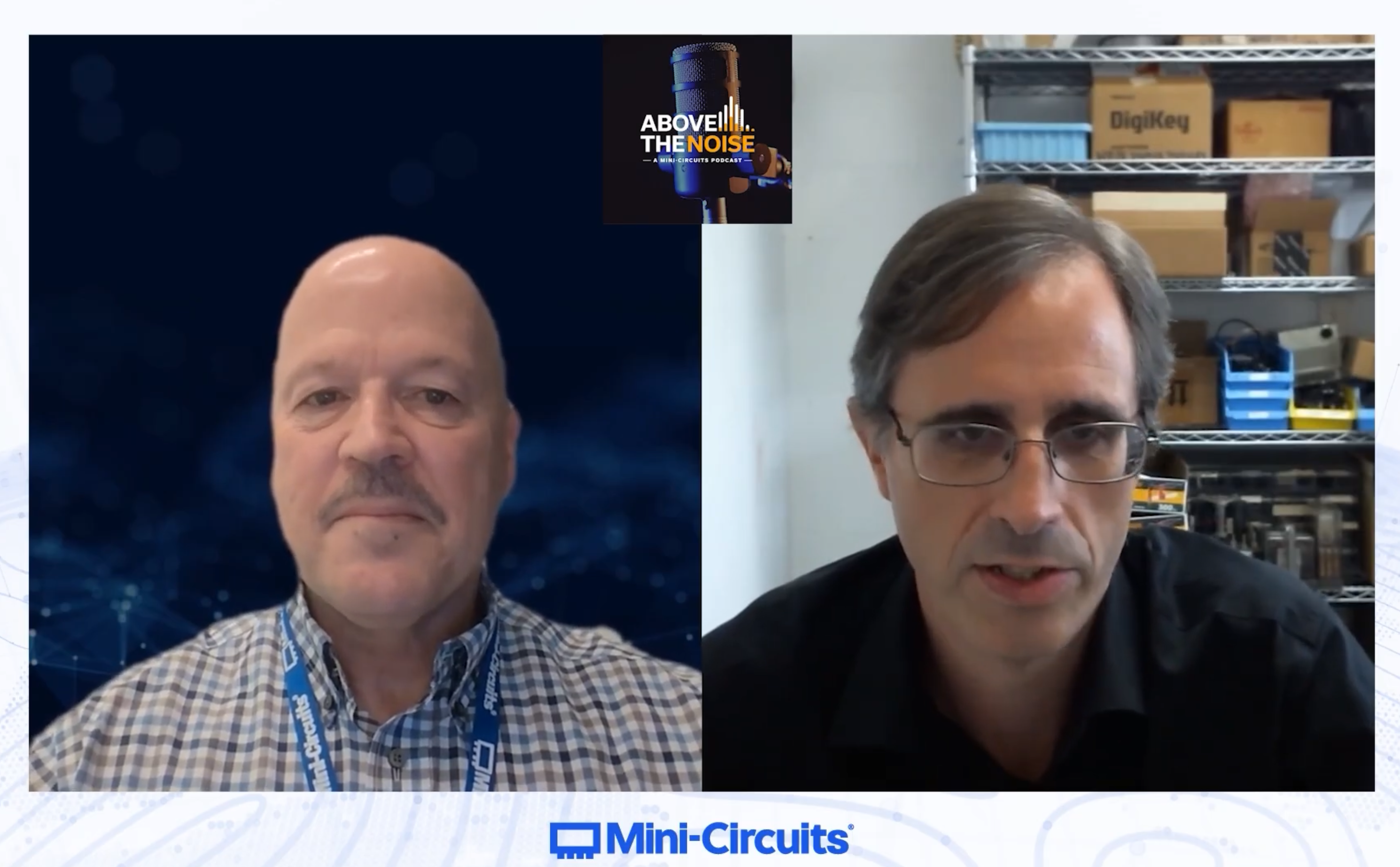
In the third episode of Above the Noise, host Pat Hindle talks with Dr. Matt Morgan, a Scientist/Research Engineer at the NSF National Radio Astronomy Observatory, about reflectionless filter technology he invented and that Mini-Circuits is developing for commercial applications, plus advice on various system design trade-offs.
Watch the episode on YouTube.
NRAO at GNU Radio Con 2026
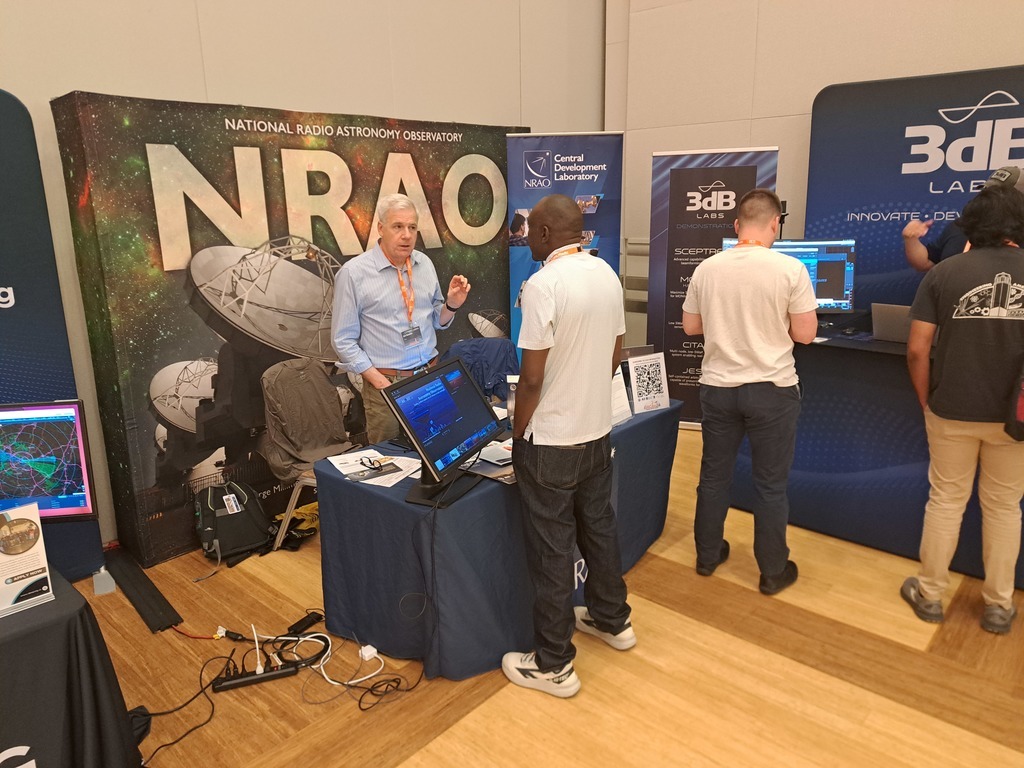
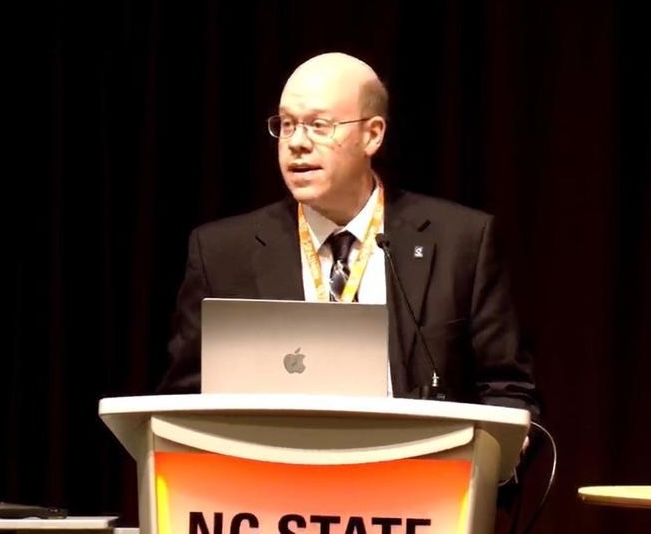
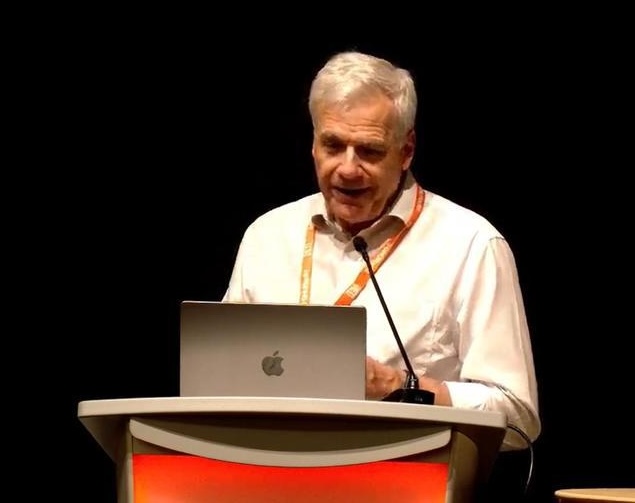
The NSF NRAO participated in the annual GNU Radio Conference at NC State in Raleigh, North Carolina. With a great balance of cutting-edge research, new technology demonstrations, and shared insights from academia, industry, government, and the hobbyist community, GRCon is one of the best venues to learn and stay informed about the field of software radio. The GRCon program is recognized for its focus on practical design and implementation, and its content reflects the concept of "theory put into practice". Bert Hawkins and Brian Kent both gave talks about radio astronomy, ngRadar, and the NSF NRAO Central Development Laboratory.
GNU Radio is a free and open-source software development toolkit that provides signal processing blocks to implement software radios. It can be used with readily-available low-cost external RF hardware to create software-defined radios, or without hardware in a simulation-like environment. It is widely used in research, industry, academia, government, and hobbyist environments to support both wireless communications research and real-world radio systems.
The meeting featured a live demonstration of the Aerial Experimentation and Research Platform for Advanced Wireless (AERPAW) at the NC State University's Lake Wheeler Field Laboratory. AERPAW is a first-of-its-kind national wireless research testbed that enables experimentation at the intersection of software-defined radio, advanced wireless communications, and autonomous aerial systems. The recorded livestream of the conference is available on YouTube. Connect with the GNU Radio Community to learn more.
Recent Science Media Releases
 |
Upcoming Jansky Lectures with Professor John Carlstrom: What Do We Know About the Big Bang? |
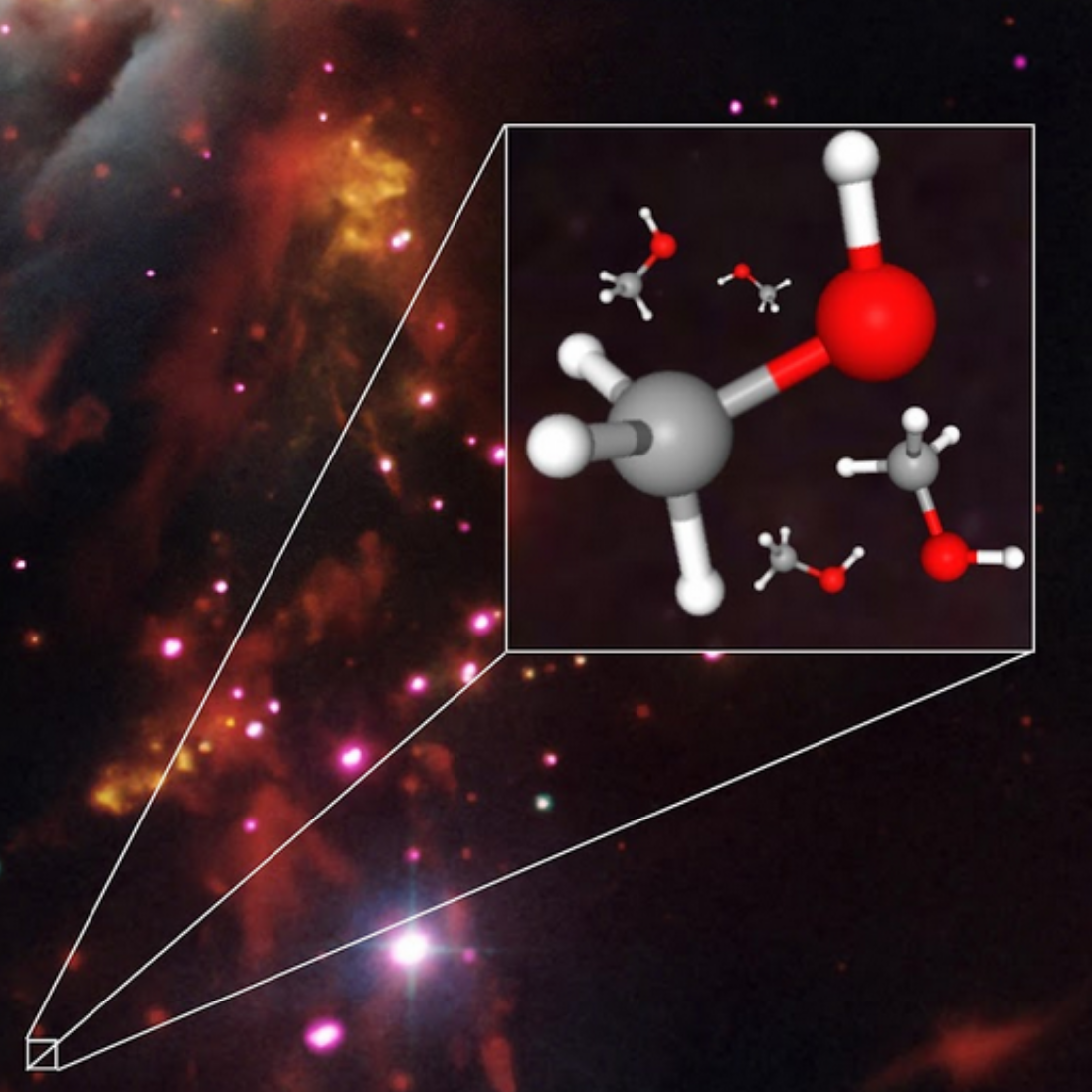 |
Cosmic Cocktail: Exotic Methanol Discovered in Planet-Building Zones |
|
Contact the NRAO press office to share your new and exciting science results. |
From the Archives
Ellen Bouton
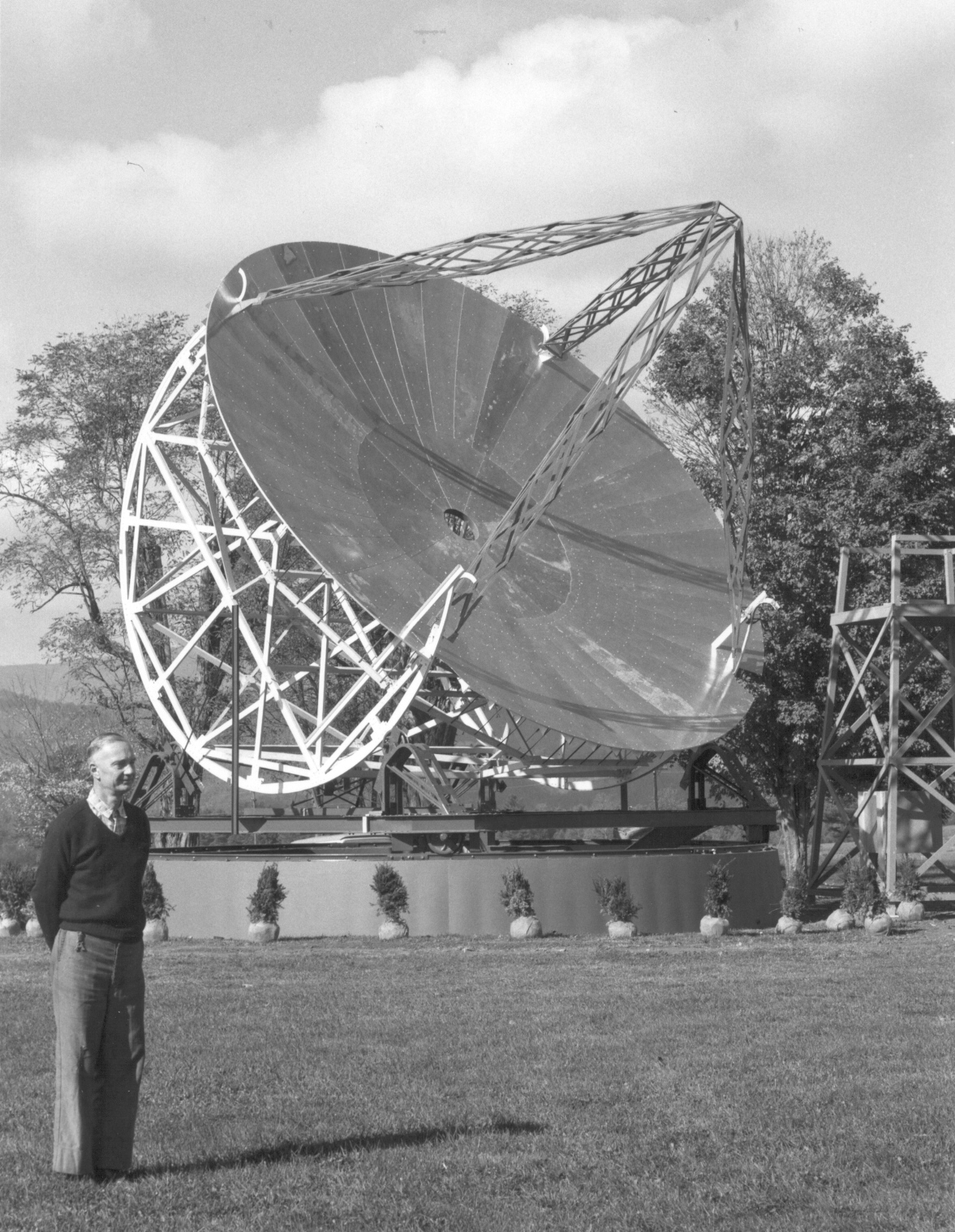
About this month's photo: On October 16, 1958, Grote Reber arrived in Green Bank for an extended visit during which he would oversee the reconstruction of his Wheaton antenna at the entrance to NRAO in Green Bank. Although the dedication of the (not quite finished) 85 Foot Howard E. Tatel Telescope was the same day Reber arrived, the Lab building and the Residence Hall were still under construction and the 140 Foot construction was just beginning. Reber had shipped his Wheaton antenna to Sterling VA in 1947 when he went to work for the National Bureau of Standards. When he left NBS for Hawaii to build an antenna on Haleakala, and then went to Tasmania to do low frequency work, the Wheaton antenna was shipped to NBS storage in Colorado, and eventually shipped from Colorado to Green Bank. While in Green Bank, Reber created a set of drawings for use during the project (now held in the NRAO/AUI Archives); construction work began in late spring 1959 and continued into 1960. In this photo, Reber poses in October 1960 with the completed antenna - very recently completed, since the shrubbery meant to surround the base is still wrapped in burlap and awaiting planting.
From the Archives is an ongoing series illustrating NRAO and U.S. radio astronomy history via images selected from our collections of individuals' and institutional papers. If readers have images they believe would be of interest to the Archives, please contact Ellen Bouton.