NRAO Newsletter
Volume Vol#, Issue Iss#
Day# Month# Year#
NRAO Newsletter
Volume Vol#, Issue Iss# • Day# Month# Year#
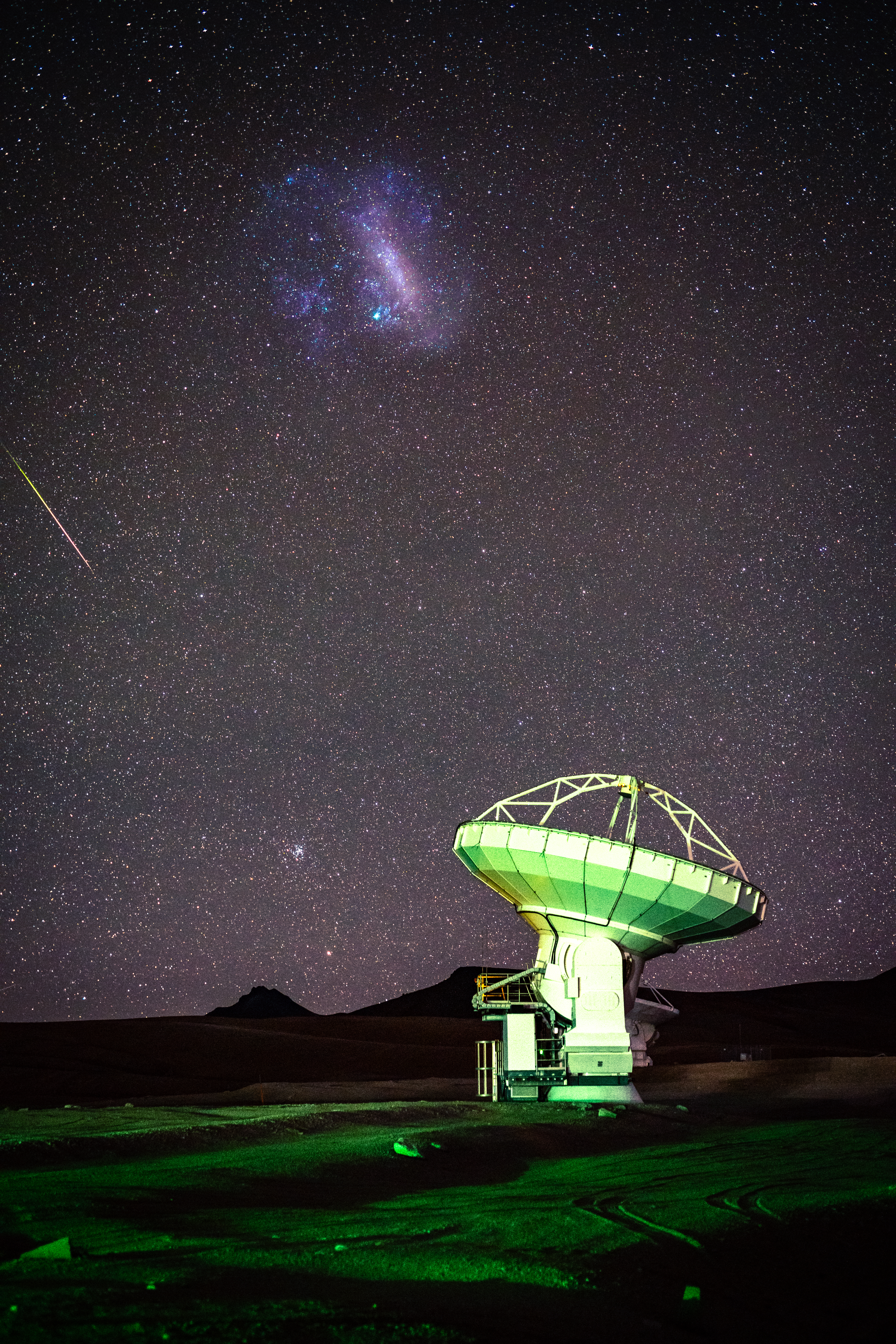
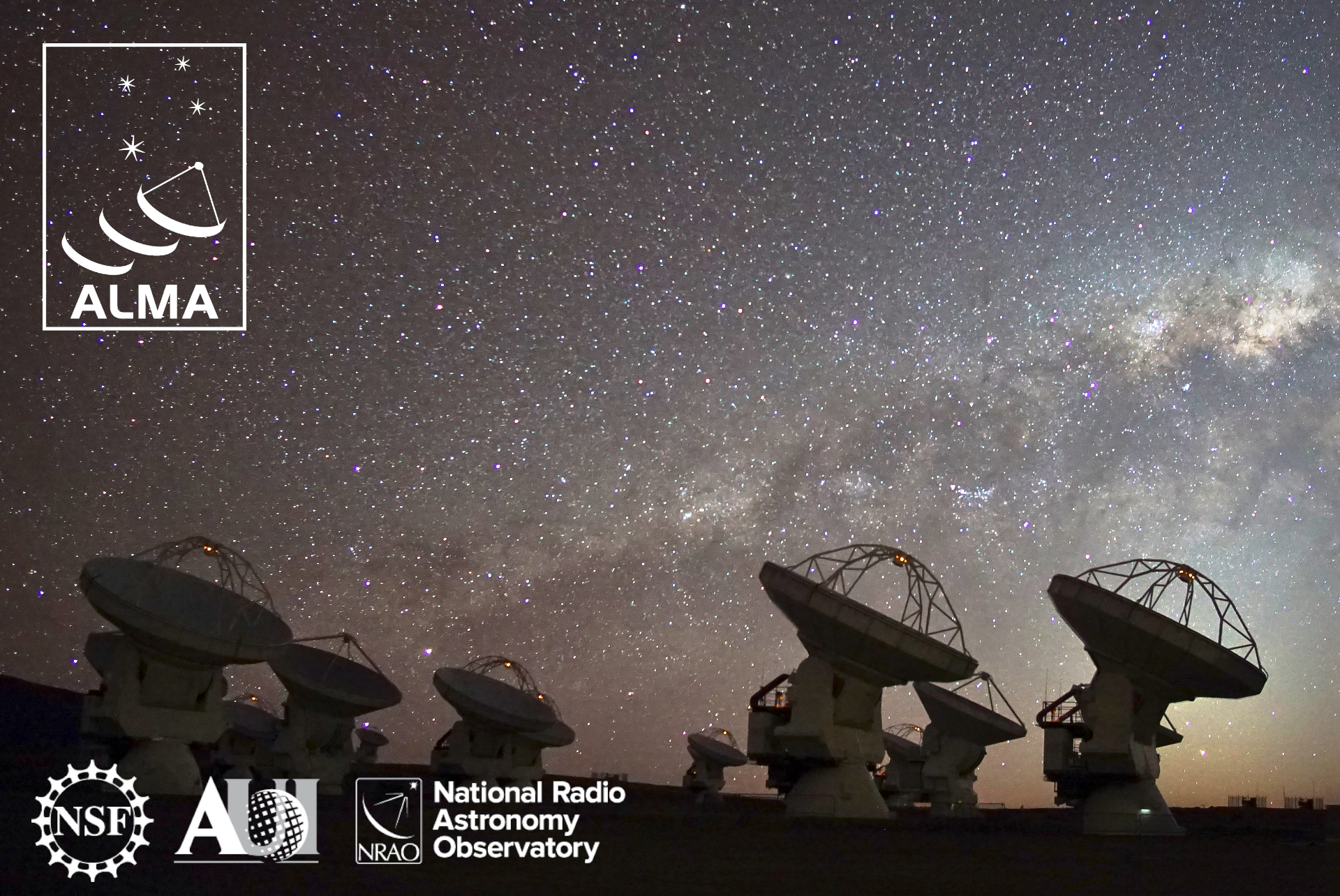 The Atacama Large Millimeter/submillimeter Array (ALMA) in Chile under the brilliant backdrop of the Milky Way galaxy (NSF / AUI / NSF NRAO / ALMA).
Upcoming Science Events

CosmicAI Virtual Winter School
December 14-23, 2026 | Online

American Astronomical Society 249
January 10-14, 2027 | Salt Lake City, Utah

ALMA at 15 years: Science, Synergies, and the Road Ahead
February 22-26, 2027 | Taipei, Taiwan

ngVLA High-resolution Frontier Workshop
March 22-24, 2027 | Washington, DC

Unveiling the Particle Nature of the Dark Universe with Radio Astronomy
April 6-8, 2027 | Green Bank, WV
2027 GBO/NRAO Single Dish Radio Astronomy Summer School
June 27 - July 03, 2027 | Green Bank, WV
Rubin Observatory Alerts Observing on the NSF VLA
The NSF NRAO is now offering non-proprietary VLA follow-up service observations of community-selected Rubin Observatory alerts on a best-effort basis. VLA Rubin Alert observations are aimed at detecting previously unobserved radio counterparts that appear on time scales of up to 72 hours after an optical detection with the Rubin Observatory. To propose for observations via the VLA Rubin Alerts program go to this link, and fill out the form. You will need to register for an NRAO account if you do not already have one to submit alert proposals.
Submitted alert proposals will be evaluated for observation by the VLA every day at 11:00 MT, and only alert requests that have been submitted to NRAO in the last 24 hours will be considered. VLA Rubin Alert proposals will not affect DDT and triggered proposal procedures.
Program details:
- The format of the observations is fixed, and the scheduling block is prepared by the Observatory. Observing is carried out using 12.5 minute scheduling blocks using the 8-bit samplers at X-band (8-10 GHz) in Stokes I continuum, with an on-source time of up to 2 minutes. The flux calibration uses a switched noise diode, and the gain/bandpass calibrator is automatically selected. The typical continuum sensitivity achieved is ~30 uJy/beam, so sources with expected continuum flux densities < 0.2 mJy/beam are unlikely to be detected and will not be considered.
- If an alert is accepted for observation, it will be added to the VLA observation queue with a D-priority, and will remain in the queue for up to 48 hours. The VLA Rubin Alerts are thus queued as fillers between regular observations, and therefore not all accepted observations will be observed.
- Accepted alerts, their status (‘queued’, ‘observed’, or ‘expired’), and (if applicable) the pipeline-processed data and their archive identifiers are posted here on a summary page. If observed, the scientific justification associated with the proposal and the name of the submitter will also be made public through this alert webpage.
- The data from VLA Rubin Alerts do not have a proprietary period, and immediately will be made public in the NRAO data archive under the ALRT01 project code.
More information on the calibration of the data and the provided products can be found here.
Please contact the NRAO Helpdesk and select the Rubin Alerts department with any issues encountered submitting a Rubin alert proposal (this is for submitting issues only; for submitting the proposal itself use the link above). Use your registered NRAO account (see above) to login to the NRAO helpdesk.
Science Spotlight: Stress-testing ALMA Black Hole Mass Measurements in NGC 315
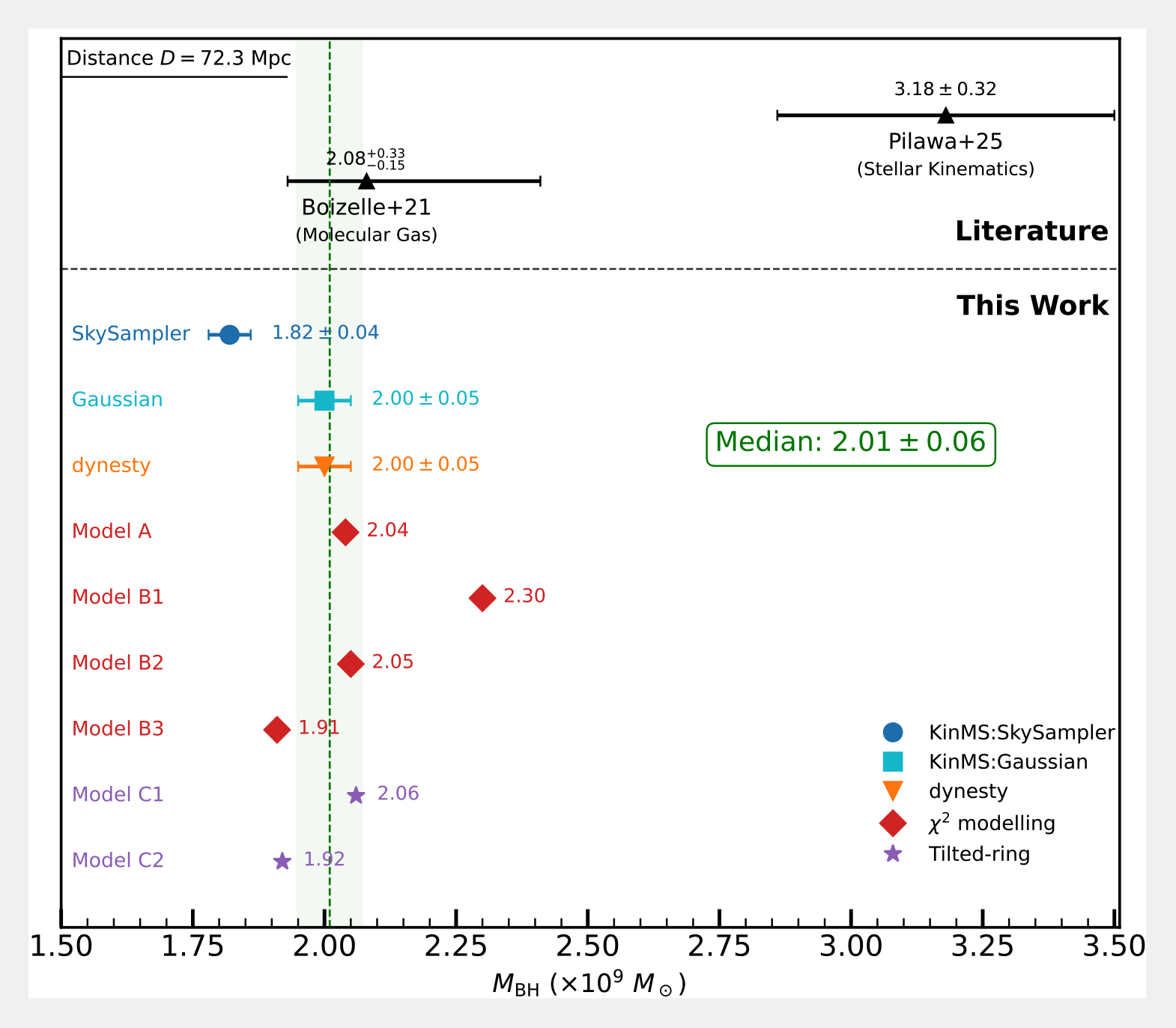
Figure: Black hole mass of NGC 315 from nine gas-dynamical models fitted to the same ALMA Cycle 7 12CO(2-1) data cube, with 1σ uncertainties. The dashed line and shaded band show the ensemble median and its 68% bootstrap interval. The earlier ALMA Cycle 5 measurement (Boizelle et al. 2021) and the stellar-dynamical measurement (Pilawa et al. 2025) are shown for comparison. Adapted from Nguyen et al. 2026.
Cold molecular gas disks observed with ALMA have become one of the most precise ways to weigh supermassive black holes (SMBHs). When the CO emission is resolved inside the black hole's sphere of influence (SOI), the gas velocity rises toward the center in a nearly Keplerian way, and the mass follows from a forward model of the full data cube. However, the community uses several modeling codes that differ in how they sample the parameter space, describe the gas surface brightness, and treat the disk geometry. These codes have rarely been applied to the same data, so it is unclear how much a published black hole mass depends on the choices of the modeler.
In Nguyen et al. (2026), we carry out this test on NGC 315, a giant elliptical radio galaxy at 72 Mpc that hosts a regularly rotating circumnuclear disk about 1 kpc across. Our ALMA Cycle 7 ¹²CO(2–1) observations reach a 0.23" × 0.18" beam (about 70 pc) with only 29 minutes on source. The SOI has a radius of 0.7–0.8" (230–270 pc), so the data resolve it by a factor of 7.6 and trace gas moving at up to 435 km/s around the nucleus.
We fit the same cube with the three approaches in common use: KinMS with MCMC sampling, nested sampling with dynesty, and a frequentist χ² optimization. Within these frameworks, we built nine models that vary the CO surface brightness (a Gaussian profile, CLEAN components via SkySampler, or a deconvolved moment map), the dust correction of the HST-based stellar mass model, the turbulent line-width profile, and the disk structure (flat or tilted-ring).
The nine masses fall between 1.8 and 2.3 × 10⁹ Msol (Figure). This spread is larger than the formal error of any single fit, and it comes mainly from the dust treatment in the stellar mass model and the assumed gas distribution, not from the code or sampler. Allowing the disk to warp barely changes the mass. A bootstrap over the nine models gives MBH = 2.02 (+0.04/−0.05 stat) (+0.05/−0.04 sys) × 10⁹ Msol, with statistical and systematic terms of similar size. This agrees with the earlier ALMA measurement at 0.3" resolution (Boizelle et al. 2021) and with the MBH –σ and MBH–Lbulge relations.
The agreement among the gas models sharpens a remaining puzzle. Our mass is 32% below the stellar-dynamical value from triaxial orbit modeling of ground-based integral-field data (Pilawa et al. 2025). Since the offset survives every variation we tried, it is not caused by a particular gas-dynamical method. Possible explanations include the assumption of circular gas orbits in a mildly triaxial galaxy and systematics on the stellar side. Higher-resolution ALMA data and a JWST stellar-kinematics program on NGC 315 will test both. For ALMA users, the practical message is that a short Band 6 track that resolves the SOI can deliver a black hole mass to a few percent, provided the error budget comes from an ensemble of models, not a single posterior.
Would you like your science or engineering projects featured in the NRAO Science Newsletter? Email the editor Brian Kent with your recent science publications!
CASA 6.7.4-12 with Pipeline 2026.2.1.55 Released for VLA Data Processing and ALMA User-Defined Imaging (AUDI)
The CASA and NRAO pipeline teams are pleased to announce the release of a new VLA calibration and imaging pipeline (2026.2.1.55), running on CASA 6.7.4-12. The VLA Operations team began using this pipeline at the start of C-configuration and it is installed on NRAO systems and can be downloaded by users. This version is also available for use with the ALMA User-Defined Imaging service within the NRAO archive.
The primary new features for the VLA pipeline are:
- Mosaic imaging for VLA data will occur when fields are found to overlap by their half-power beam widths or less. However, VLA mosaic self-calibration is not currently possible with the pipeline.
- Bandpass calibration tasks (hifv_testBPdcals, hifv_semifinalBPdcals, and hifv_finalcals) will use increased spectral solution intervals when the median S/N of the solutions is less than 50.
- Minor changes were made to hifv_priorcals and hifv_finalcals to enable flux density calibration using the switched power system to support short Rubin alert follow-up observations.
- QA scores have been updated for hifv_testBPdcals, and hifv_semifinalBPdcals.
- Bugs that on rare occasions allowed fully flagged antennas to be selected as reference antennas were fixed.
- QA scoring bugs are fixed in hifv_statwt and hifv_vlasetjy.
The ALMA User-Defined Imaging pipeline does not have any significant updates, aside from minor adaptations to ALMA pipeline infrastructure updates.
Descriptions and documentation can be found at the links below.
- VLA Calibration pipeline
- VLA Imaging pipeline
- ALMA pipeline documentation for general, non-VLA-specific infrastructure changes.
Unveiling the Particle Nature of the Dark Universe with Radio Astronomy

April 6-8, 2027 at Green Bank Observatory
Application Deadline: January 15, 2027 (Acceptances sent by Feb 1)
This workshop will investigate how radio astronomy may help uncover the particle nature of dark matter and beyond-the-Standard-Model physics. Dark matter makes up the majority of matter in the Universe, but its microscopic nature is unknown and represents one of the greatest open scientific questions. Many of the most motivated models for dark matter, including axions and WIMPs, could leave unique signatures in current- and next-generation radio telescopes. Axion dark matter can convert to narrow radio lines in neutron star magnetospheres, while WIMPs can annihilate to electrons and positrons, which can emit synchrotron signals. This workshop will bring together particle and astrophysics theorists with radio observers to come up with new synergies for optimizing searches for dark matter in the future.
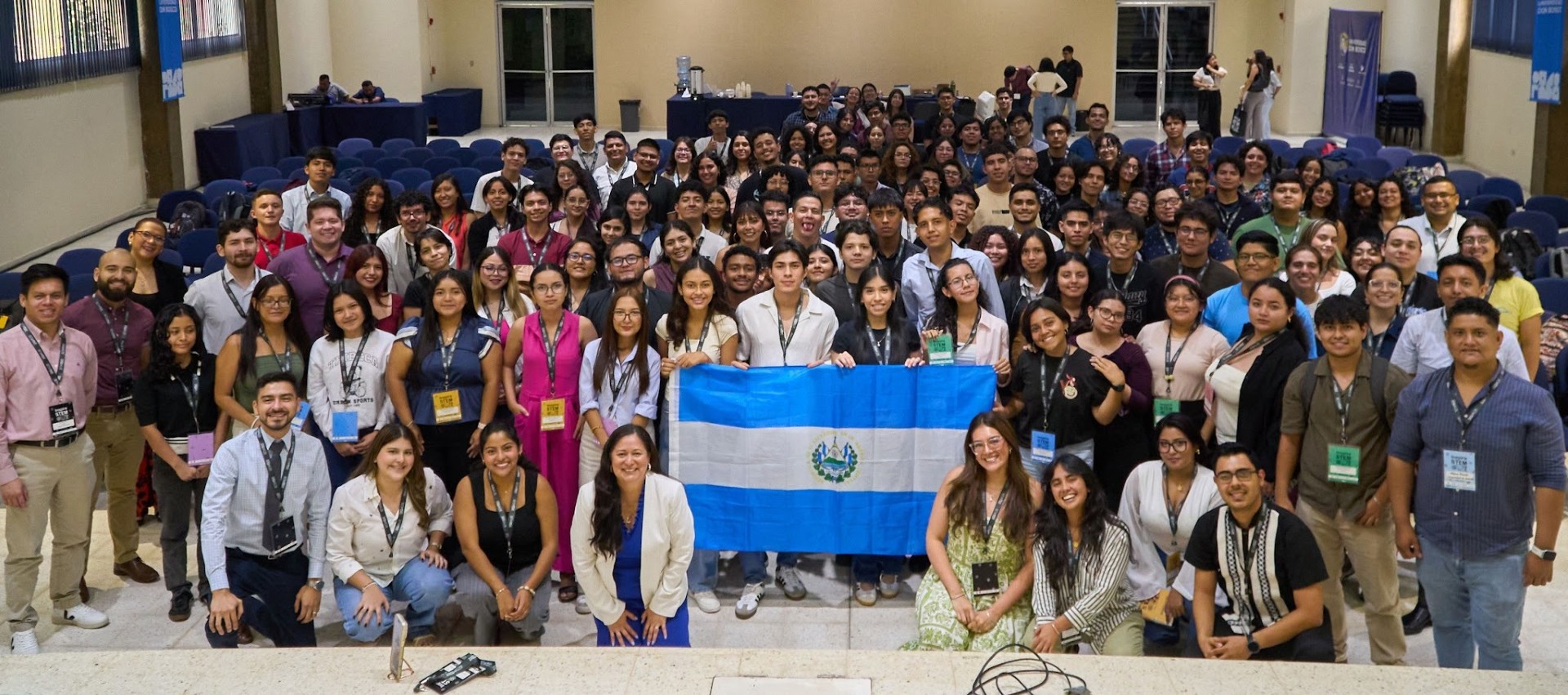
Bringing STEM and Space Exploration to Students in El Salvador

The second annual InspiraSTEM conference brought 150 students to Don Bosco University in El Salvador from September 19-21, 2026, for workshops, mentorship, and professional development. Featuring keynotes from NASA and the University of Dayton, the event introduced research internships and launched StartupSTEM, a pitch competition supporting local student innovation. Six hands-on workshops - covering Biochemistry, Astrophysics, Aeronautical Engineering, Molecular Biology, Electrical Engineering, and Marine Sciences - connected students with field experts. Michael Sánchez, a Scientific Data Analyst at NAASC, led the Astrophysics workshop, Planets in Construction: A Journey through Molecular Spectra, where participants modeled 5 micron carbon monoxide line spectra to study planet-forming regions (~10au) of protoplanetary disks.
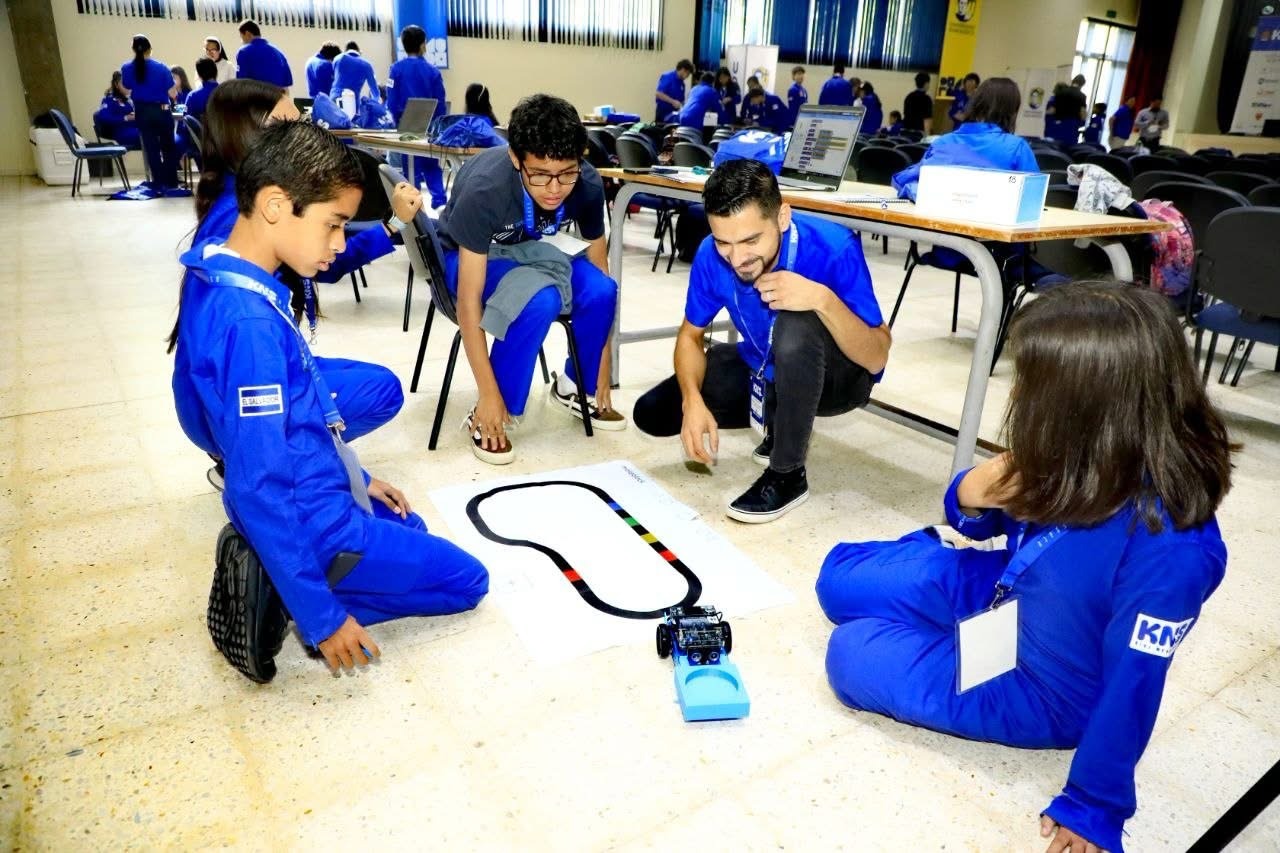
On September 23 - 25, Michael and 19 instructors facilitated El Salvador's first space camp, Campamento Frontera Marte, organized by Kids Need Space at Don Bosco University's Micro Macro Observatory. The Mars-themed camp hosted 100 students ages 11 - 15. Both initiatives gained national media attention alongside institutional support, with plans to expand future STEM programs in El Salvador, Mexico, and California.
2027 GBO/NRAO Single Dish Radio Astronomy Summer School

June 30-July 3, 2027 at Green Bank Observatory
Application Deadline: March 15, 2027 (Acceptances sent by April 1)
The 2027 Single Dish Summer School will provide students, post-docs, and experts in other fields of astronomy with both knowledge and practical experience of the techniques and applications of single-dish radio astronomy using the GBT as the primary example. The school will be based around an intensive series of lectures from experts, as well as hands-on radio-astronomy projects and tutorials. Topics to be covered include radio telescope fundamentals, key single-dish science areas, observing and calibration techniques, the impact of weather, GBT observing procedures, software, and data reduction.
We will host this workshop at the Green Bank Observatory with in-person participation only. Scientific sessions will run from Monday morning (June 28) through Friday evening (July 2). The workshop registration fee ($250) will cover housing accommodations and food while you are in Green Bank as well as a shuttle to/from Dulles Airport. We expect to have space for 50-70 participants for the SDSS.
2026 Jansky Lectures with Professor John Carlstrom
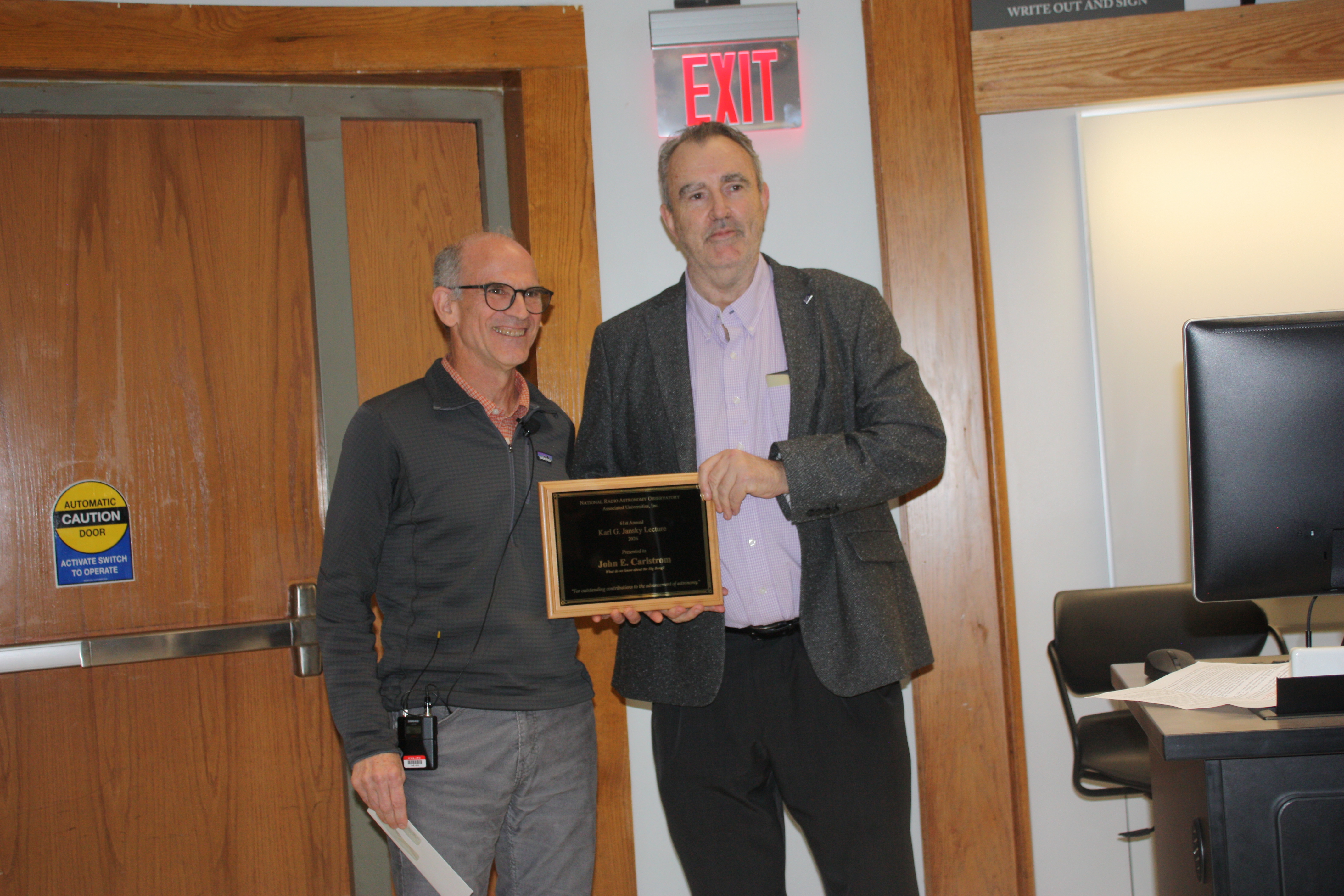
Professor John Carlstrom, Chair and Chandrasekhar Distinguished Service Professor, Departments of Astronomy and Astrophysics and Physics at the University of Chicago, delivered the 2026 Jansky Lectures, a series of prize lectures established by the trustees of AUI to recognize and celebrate outstanding contributions to the advancement of radio astronomy.
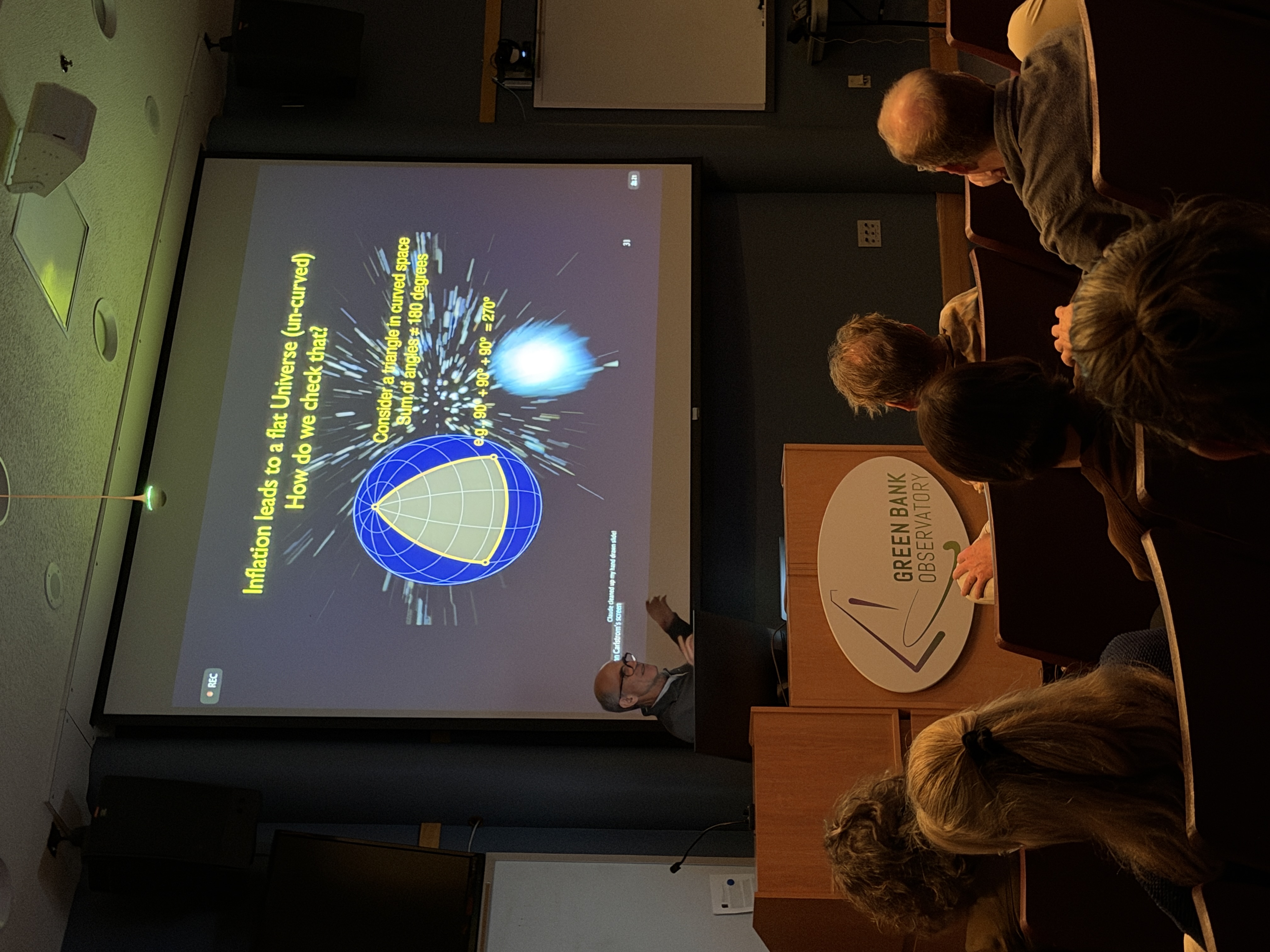
Professor Carlstrom delivered lectures in Charlottesville and Green Bank. After an introduction and presentation of the award by NRAO Director Tony Beasley in Charlottesville (above), Professor Carlstrom shared his research and studies into observational cosmology and the Big Bang with observations from the South Pole Telescope (right). A third lecture will follow in Socorro on November 20, 2026.
Professor Carlstrom leads world-renowned research in the field of observational cosmology, studying the cosmic microwave background (CMB), and Sunyaev-Zeldovich (SZ) effect. He is the director of the South Pole Telescope (SPT), a 10-meter telescope project that completed the 2,500 square-degree SPT-SZ survey in three bands at arc-minute resolution, and the SPTpol survey of 500 square degrees to unprecedented sensitivity. The group has since deployed SPT-3G with 16,260 bolometric detectors to make deep polarization maps. The SPT has made precise measurements of the CMB that led to the discovery of hundreds of clusters of galaxies going back to when the universe was about one-third its present age, providing a history of the growth of the large-scale structure of the universe, and offering strong evidence that the structure in the CMB is a remnant of quantum fluctuations consistent with the theory of inflation.
The public lecture from Green Bank is available on YouTube.
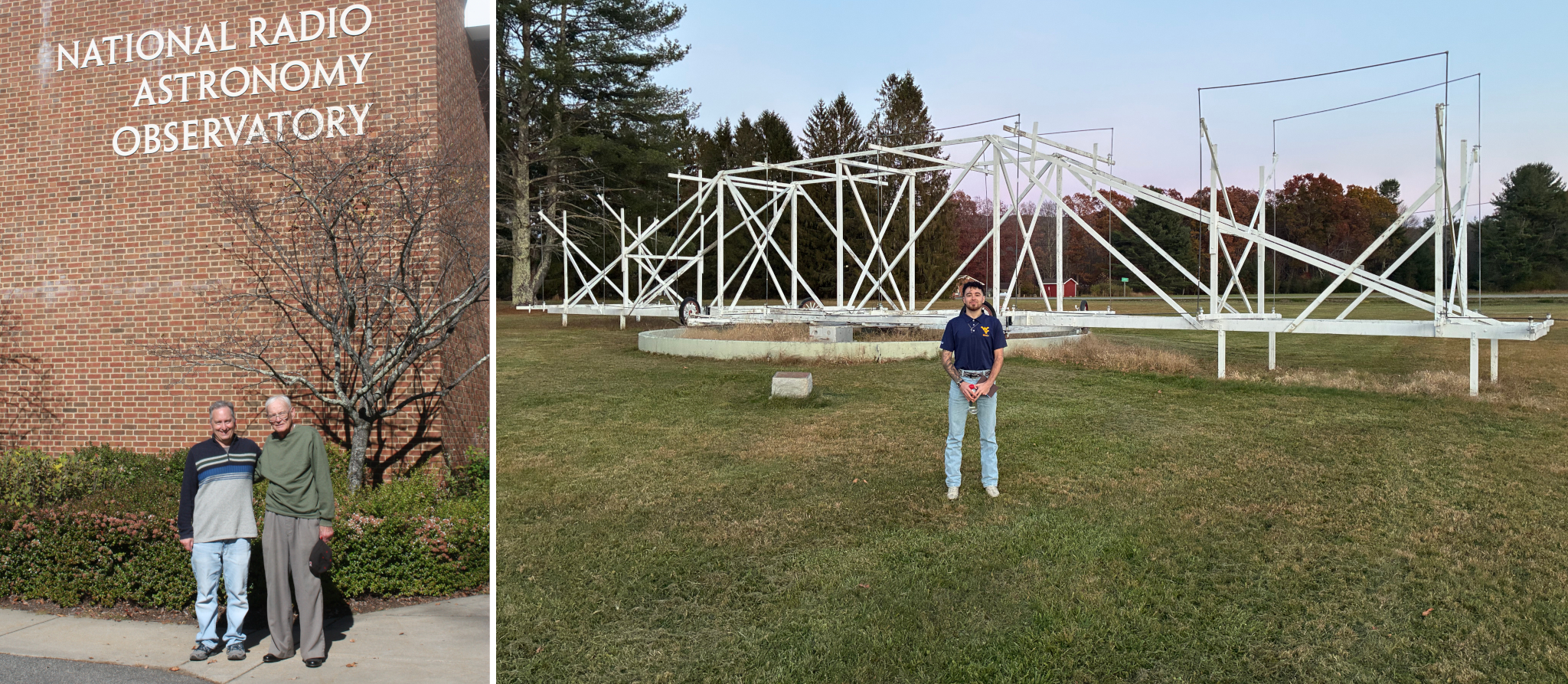
Photos below of Karl Jansky's son, David (right) and grandson, Greg (left) at NRAO Charlottesville. Karl Jansky's great-grandson, Sam, is pictured in front of the Green Bank Jansky antenna (right).
Photos courtesy of Ken Kellermann, Duncan Lorimer, and Jill Malusky (NSF / AUI / NSF NRAO).
ALMA News
ALMA Status
A few weeks after the start of Cycle 13, the first Band 2 PI observations were carried out, marking the first PI observations with a WSU-ready receiver. Observations were carried out with 38 antennas.The array is currently in its most compact configuration and will gradually expand over the rest of Cycle 13. The expected configuration schedule is available here.
Photo by Bettymaya Foott (NSF / AUI / NSF NRAO / ALMA).
News and updates on Cycle 13 tools
Several user tools were enhanced for Cycle 13, as detailed in this announcement. These include new data exploration features in the ALMA Archive, improved functionality of the ALMA Pipeline, and the display of the Phase 2 information for approved programs in the SnooPI tools. In particular, note that DDT proposals should now be submitted via the web-based ALMA Observing Tool of the corresponding cycle.
ALMA User Survey is back online - ALMA requests your feedback!
In October, ALMA launched a User Survey to assess user support needs as the observatory implements the Wideband Sensitivity Upgrade (WSU). Due to unforeseen technical maintenance on the survey platform over the last four weeks, the survey was temporarily unavailable. We are pleased to report that the ALMA User Survey is now back online! The survey will remain open until December 4, 2026.
Your feedback as the ALMA community - whether current, past, or prospective ALMA users - is crucial. The survey should take 10-15 minutes to complete. Previous survey responses have been preserved so users who filled out the survey in October do not need to fill it out again.
We greatly appreciate your time and participation, and we thank you in advance for your contribution to shaping the future of ALMA.
ALMA research featured in AAS video series
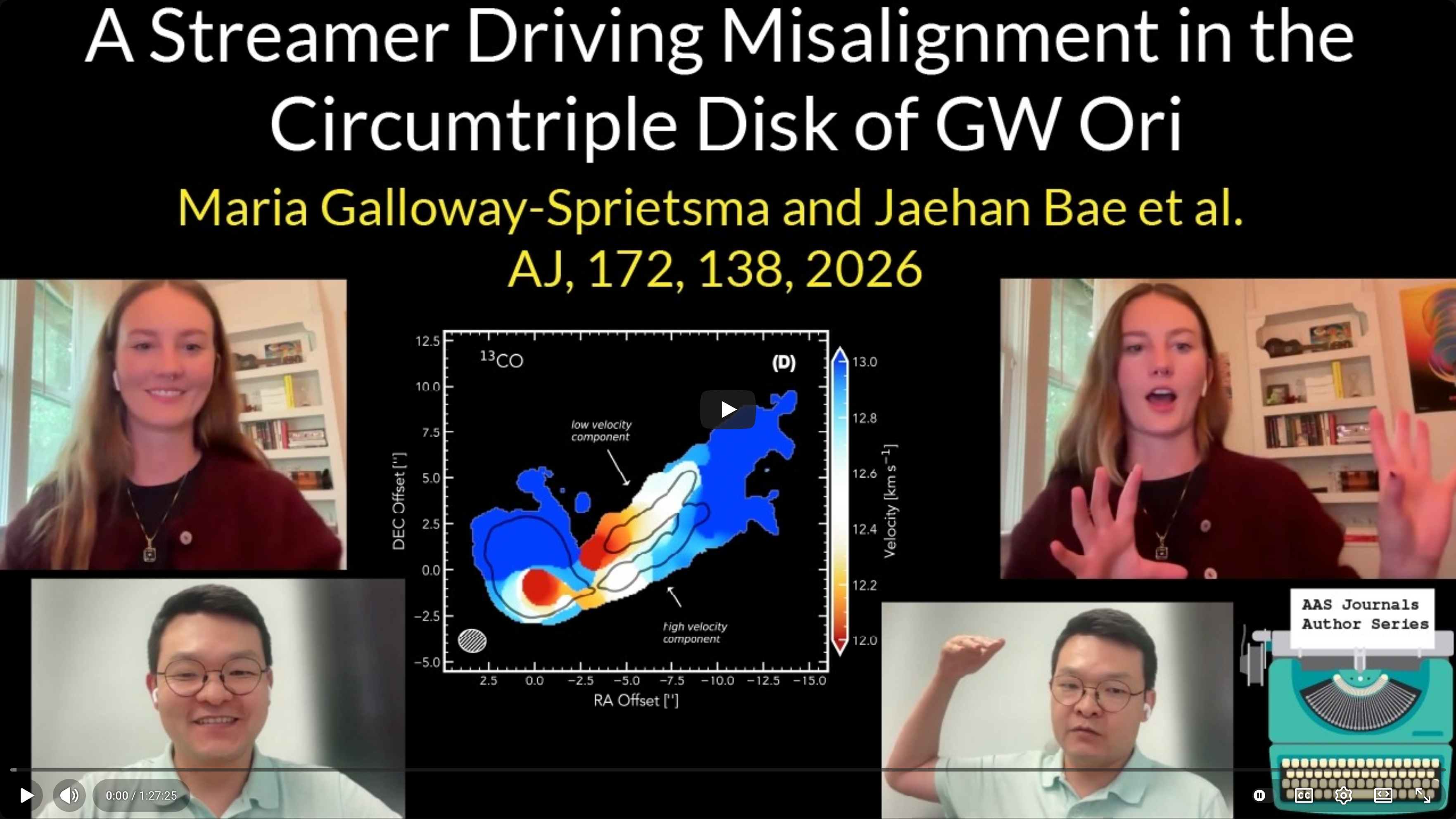
ALMA Cycle 13 ambassador Maria Galloway-Sprietsma (University of Florida) was featured in the AAS Journal author videos series, describing her recent paper on the discovery of a streamer connecting three dust rings in the triple system GW Ori based on ALMA program 2022.1.01108.S.
ngVLA Project News
ngVLA Scientist (Open Rank) Job Opportunities
NSF NRAO seeks two Scientists (Open Rank) to join a rapidly growing team to support the ngVLA software design and development effort. The appointee will be expected to spend 75% of their time on functional work as part of the ngVLA Science Support Integrated Product Team (IPT), with the remaining 25% available for independent research. The primary responsibility for this position will be to help develop and maintain detailed software requirements for the ngVLA Computing and Software IPT. Other responsibilities will include, but are not limited to, supporting the development of calibration and operation processes and workflows. Full details appear on the AAS Job Register. Apply by December 1, 2026.
ngVLA Postdoctoral Fellow Job Opportunities
NSF NRAO seeks two Postdoctoral Fellows to join a rapidly growing team to support the ngVLA design and development effort. The primary function of all ngVLA Postdoctoral Fellow positions is to provide a rich opportunity for postdoctoral professional career advancement. The appointee will be expected to spend up to 50% of their time on functional work as part of the ngVLA Science Support Integrated Product Team, with the remaining fraction of their time available for independent research. Full details appear on the AAS Job Register. Apply by December 1, 2026.
ngVLA High-resolution Frontier Workshop: Pulsars, Dynamic Universe, and Precision Astrometry

We invite the community to an in-person workshop, March 22-24, 2027, devoted to ngVLA Science use cases that require the highest spatial resolution capabilities, hosted at the Johns Hopkins University Bloomberg Center in Washington, DC, USA.
This workshop comes at a pivotal moment. Successful systems testing of the ngVLA prototype antenna is underway. And in July 2026, the U.S. National Science Foundation (NSF), the NSF National Radio Astronomy Observatory, and the U.S. Naval Observatory partnered to design and build the ngVLA High Resolution Subarray (HRS). The 10-antenna ngVLA HRS will enable high-resolution VLBI observations and operate standalone or folded into the full 263-antenna ngVLA. The workshop will bring together the scientists who will make strategic use of these high-resolution capabilities.
The science scope of the workshop includes:
- Pulsars, Cosmology, and Fundamental Physics
- Exploring the Dynamic Universe
- Precision Astrometry
- Future Facilities, Methods, and Techniques
The workshop will feature invited overviews, contributed talks, posters, and substantial time for discussion. Invited speakers and discussion panel members include Kazu Akiyama (Heriot-Watt University; TBC), Sarah Burke-Spolaor (West Virginia University), David Gordon (U.S. Naval Observatory), Matthias Kadler (Universit Wurzburg), Joseph Lazio (University of Michigan), Tom Maccarone (Texas Tech University), Maria Rioja (ICRAR, University of Western Australia), Genevieve Schroeder (University of Toronto), and Joe Skeens (NASA Goddard Space Flight Center).
Registration and abstract submission opened on October 20, 2026, and close on December 15, 2026. There will be a cap of 75 participants, so please register and submit your abstract early!
Further details appear on the workshop's webpage.
ngVLA International Science Conference 2026
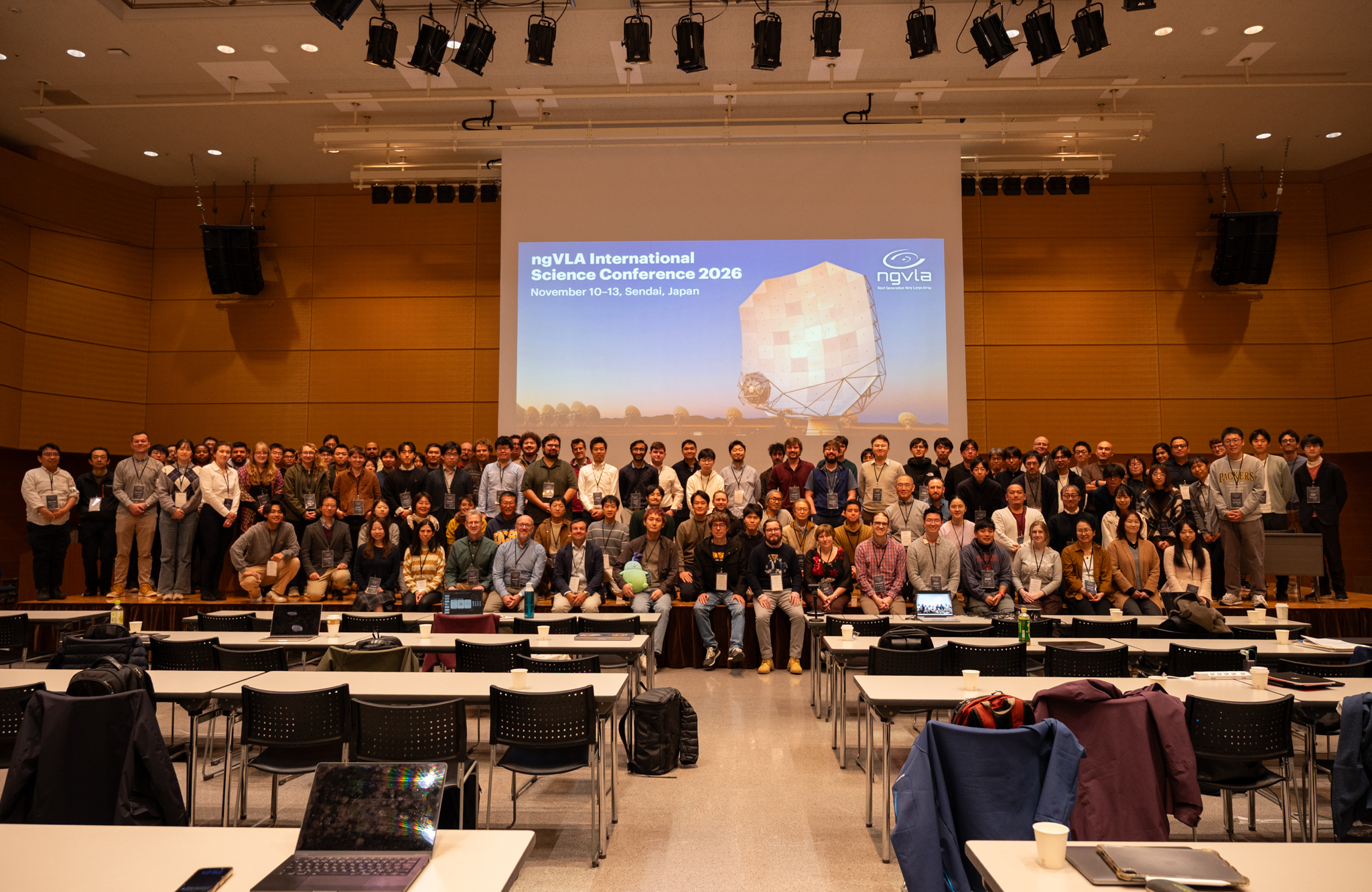
This in-person conference brought 140 experts from a broad range of fields to Sendai, Japan, during November 10-13. Participants shared compelling science cases, identified new opportunities, and fostered collaborations to further strengthen the momentum of the proposed ngVLA, a next-generation facility. The science program and abstract book are available from the conference's website. Many thanks to the organizing committees, venue hosts, and participants for such an engaging and successful gathering!
ngVLA Science - Probing Ionized Gas in Little Red Dots with Free-Free Emission
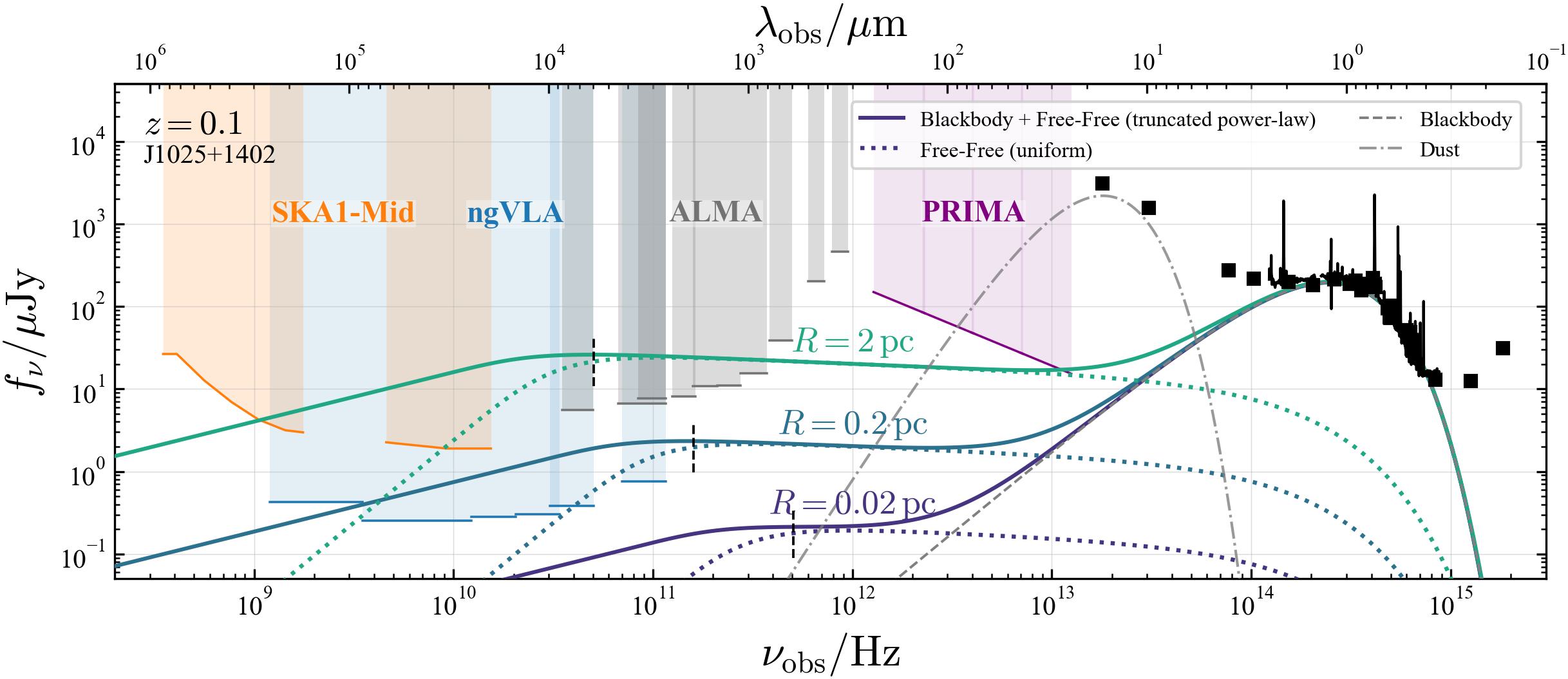
Figure - Predicted free-free SEDs of the local LRD analog J1025+1402 for different characteristic sizes R of the ionized gas. Turnover frequency and flux density depend on R (different colors) and electron column density. Different density profiles (solid and dotted curves) also affect the spectral slope at frequencies below the turnover. Shaded regions indicate the 5-sigma continuum sensitivities for 10-hour observations with the labelled telescopes. Adapted from Tanaka et al. (2026a).
JWST has revealed a mysterious population of compact, red objects in the early Universe, known as "little red dots" (LRDs; e.g., Matthee et al. 2024). LRDs are widely thought to host accreting black holes (BHs), and their discovery in large numbers in the early Universe, even at z>10 (Tanaka et al. 2026b), has raised the possibility that they represent an early stage of BH formation and growth (e.g., Inayoshi 2025).
However, their unusual spectral features, including broad Balmer lines, Balmer breaks, Balmer absorption, and V-shaped spectral energy distributions (SEDs), as well as their weak X-ray emission, are difficult to explain with conventional active galactic nucleus (AGN) models. Recent studies have proposed that LRDs are embedded in dense gas, which may play a key role in shaping their observed properties (e.g., Inayoshi and Maiolino 2025; Naidu et al. 2026). Still, the physical conditions and spatial distribution of gas surrounding the BHs in LRDs remain poorly understood.
In Tanaka et al. (2026a), we propose free-free radio emission as an independent probe of ionized gas in LRDs. The free-free emission spectrum exhibits a characteristic turnover due to self-absorption, and the turnover frequency and luminosity can constrain the electron column density and characteristic size of the ionized gas. Furthermore, the spectral slope at lower frequency than the turnover depends on the radial density profile of the ionized gas, enabling us to investigate gas structures on scales even smaller than those directly resolvable by telescopes.
In Tanaka et al. (2026a), we show that the ngVLA can detect the predicted free-free emission for plausible ionized gas configurations, especially in local LRD analogs (e.g., Lin et al. 2026). As indicated in the figure, combining the ngVLA and ALMA observations will enable us to characterize the spectral turnover. Therefore, the ngVLA will provide new insights into the central regions of LRDs, offering an independent probe complementary to the rest-UV-to-IR observations that have dominated previous LRD studies.
Since 2015 the acronym ngVLA has appeared in 1800+ publications indexed in the SciExplorer Data System. This article continues a regular feature intended to showcase some of those publications. We are especially interested in showcasing work done by early-career researchers. The collection of showcase articles can be viewed online. Anyone wishing to volunteer to author a feature should contact Joan Wrobel.
Call for CosmicAI Seed Funding Proposals
Abstract Submissions for Year 2026-27 are open!
NSF-Simons AI Institute for Cosmic Origins (CosmicAI) invites the submission of proposals for novel research projects at the intersection of AI/machine learning and astronomy. Focus areas for this call include (but are not limited to) topics that align with one of the four scientific working groups:
- Explorable Universe: Advancing trustworthiness, generative AI methods, and exploration of large datasets.
- Observable Universe: Advancing the efficiency of the calibration and analysis of high-dimensional data and preparation for next-generation observing facilities.
- Explainable Universe: Advancing the interpretability of AI methods and their application to study astrophysical systems.
- Accelerated Universe: Advancing the robustness of AI surrogate modeling in the astrophysical domain and methods to accelerate the modeling of physical processes
We will review applications in two stages. Applicants will first submit a project abstract by December 7, 2026, 5 PM CT. We will review abstracts and invite selected applicants to submit a full proposal by December 18, 2026. The selected applicants will submit a full proposal by January 22, 2027. We will announce final awards by March 1, 2027.
Note that seed proposals must be led by a faculty member or a research scientist; postdocs and graduate students may be co-Is but not PIs. Senior personnel may only submit one seed proposal as a PI.
Abstract Submission Due: December 7, 2026, 5 PM CT
ADASS 2026 Astronomy Computing Conference Recap
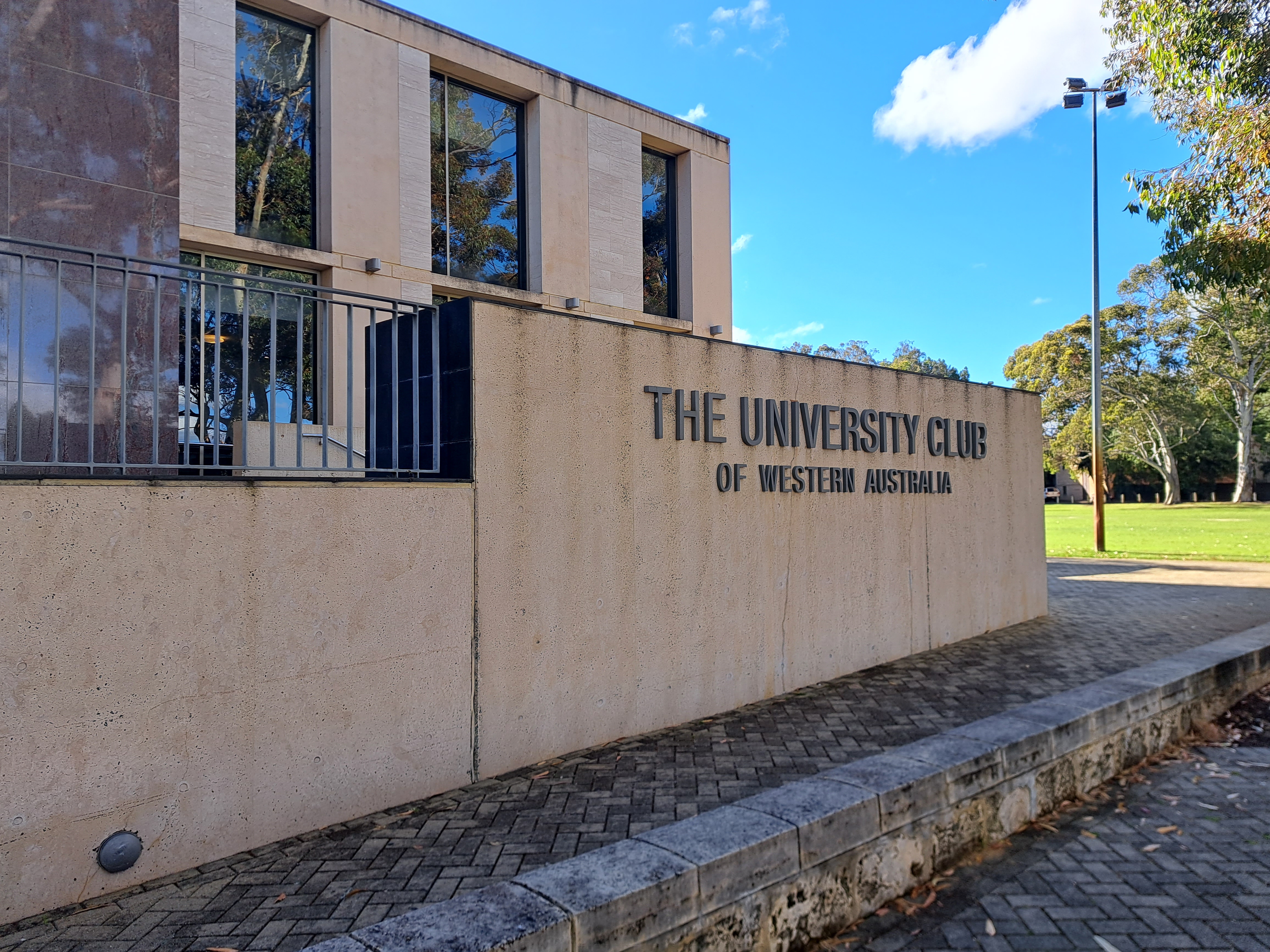
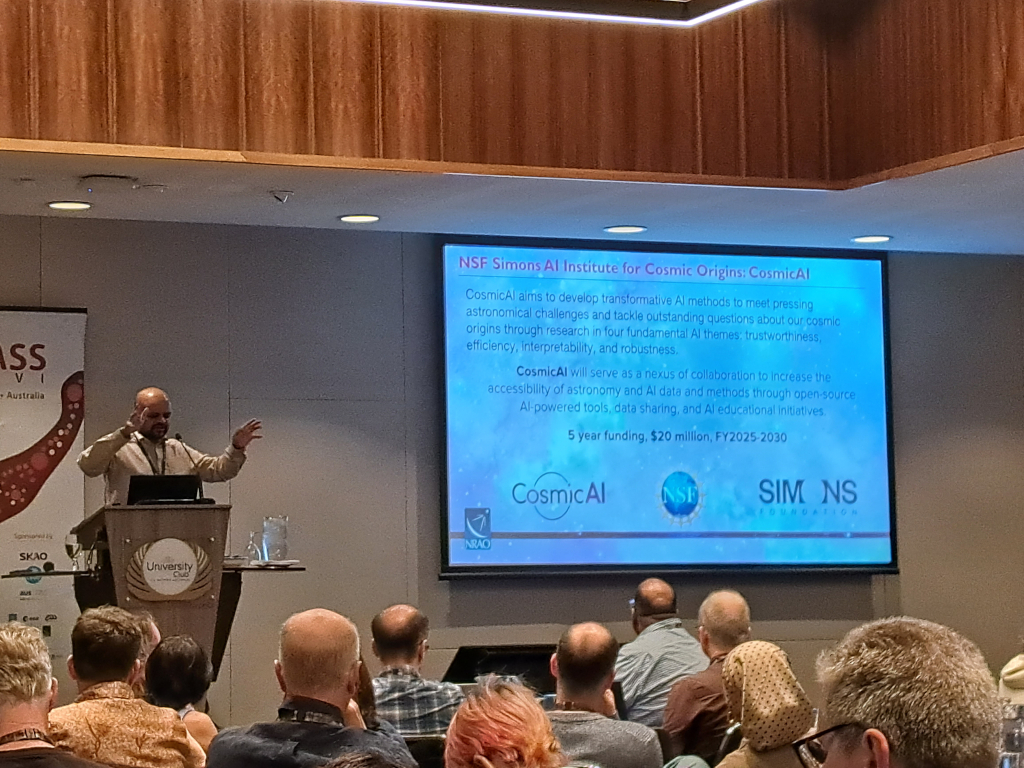
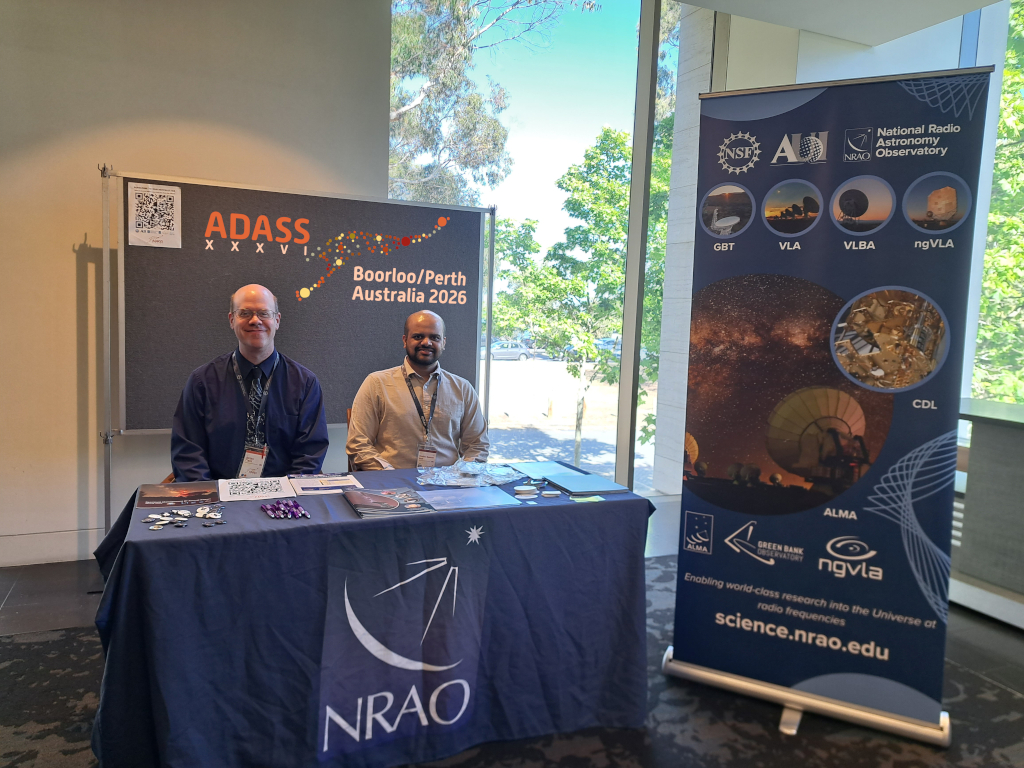
NSF NRAO was a sponsor and participant in the Astronomy Data Analysis Software and Systems XXXVI (ADASS) conference in Perth, Australia. Hosted by the University of Western Australia and ICRAR, the meeting covered a wide range of computing topics in astronomy, with over 250+ participants both in person and remote around the world.
The ADASS conference is held each year at a different hosting astronomical institution. The conference provides a forum for scientists and programmers concerned with algorithms, software and software systems employed in the acquisition, reduction, analysis, and dissemination of astronomical data. An important element of the program is to foster communication between developers and users with a range of expertise in the production and use of software and systems. The program consists of invited talks, contributed oral and display papers, tutorials, user group meetings and special interest group meetings (called Birds-of-a-Feather sessions; BOFs).
A listing of tutorials, talks, posters, and focus demos is available. Thanks to Andreas Wicenec, Omar Anwar, Ryan Bunney, Faisal Malik, and their talented team of local organizers, and Kathleen Labrie leading the organizing committees for a well organized and productive conference. Felix Stoehr will be the new ADASS Chair as of November 2026.
Next year's meeting will be in Toronto, Canada.
Photo above: CosmicAI Fellow Omkar Bait (NRAO) delivers his invited talk, "Learning the Radio Sky: Representation Learning from Visibilities to Data Archives."
Scintillometry Workshop at Cornell University
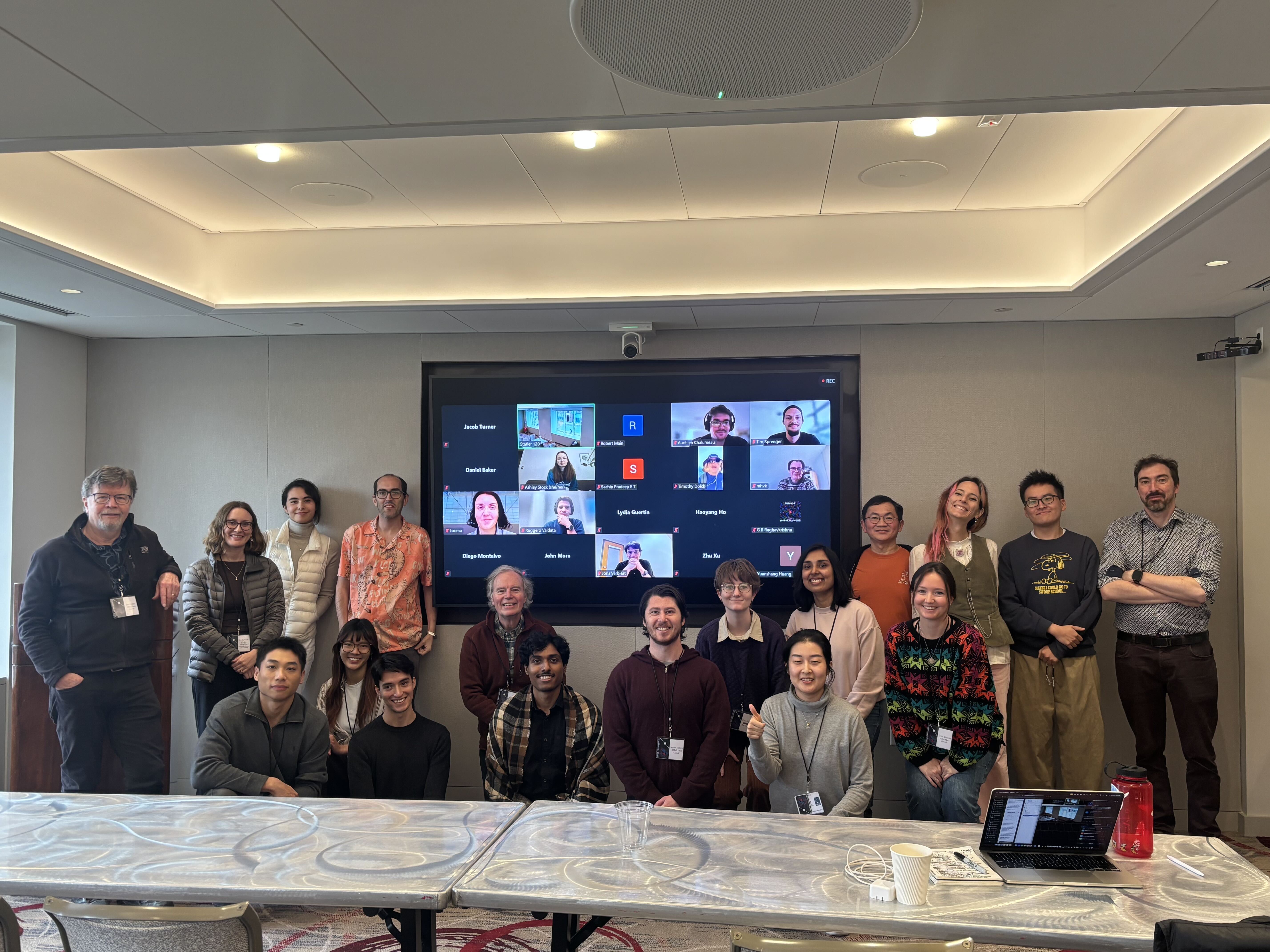
The National Radio Astronomy Observatory co-sponsored this year's Scintillometry Workshop on October 28-30, 2026 at Cornell University. The purpose of this workshop was to discuss advances and future goals in the field of scintillometry, which uses pulsar emission to probe the structure of the ionized interstellar medium.
Lights, Camera, Astronomy! Managing Media Projects at Your Facilities
January 10 at AAS249 Salt Lake City, 9 AM - 12 PM
Planning to attend AAS249? This workshop, presented by NRAO’s Jill Malusky and Corrina Jaramillo Feldman, is a practical session for communications and press professionals who may evaluate, facilitate, and manage external media projects at astronomy institutions.
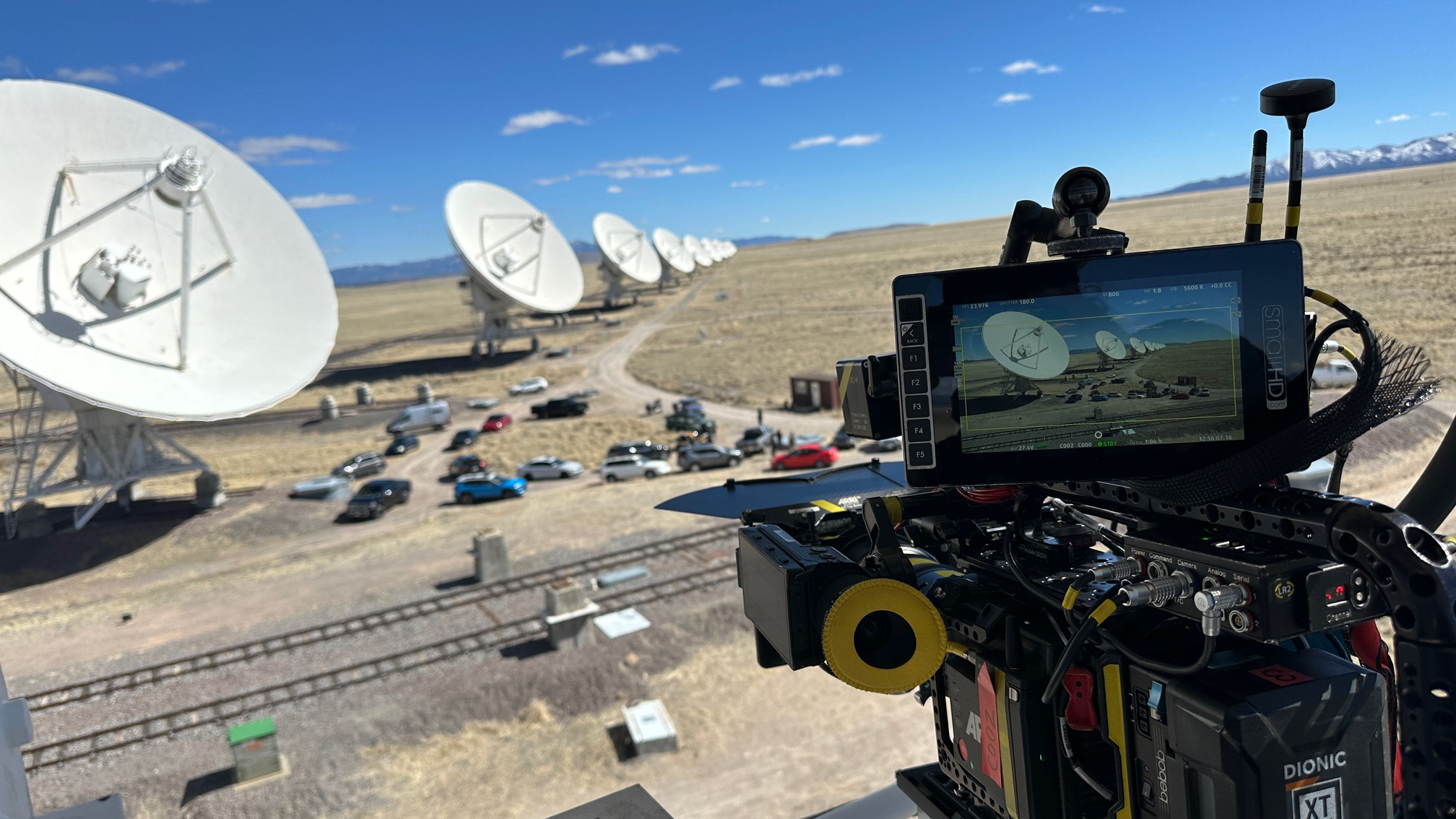
Media productions, from feature films and television series to commercials and video games, increasingly seek out astronomical research facilities as compelling and visually distinctive settings. These collaborations can create meaningful opportunities for public engagement and institutional visibility, but they also require careful coordination to balance scientific accuracy, operational continuity, safety, and institutional reputation.
Workshop attendees will be walked through the entire media project process, from initial request to contracts, planning, and managing the shoot day-of, and gain practical tools they can apply to future media collaborations at their own institutions.
Photo courtesy of High Bridge Productions/Sony/Apple TV.
Recent Science Media Releases
 |
Astronomers Track a Flaring Dwarf-Star Duo with Exceptional Precision |
 |
What Lurks Within the Shadows of Betelgeuse? |
 |
Cosmic "Hamburger" Has the Secret Ingredients |
|
Contact the NRAO press office to share your new and exciting science results. |
From the Archives
Ellen Bouton
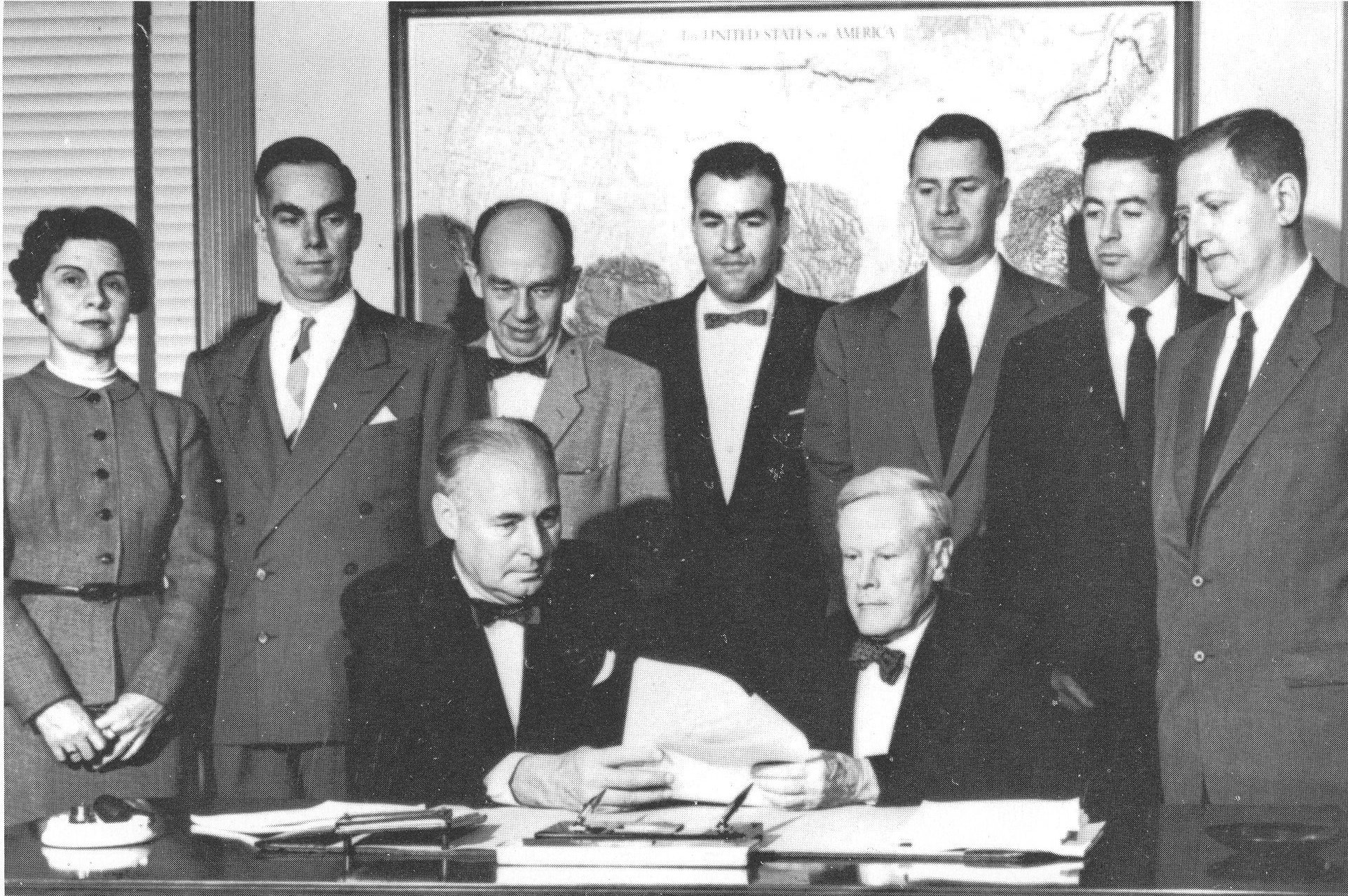
About this month's photo: Seventy years ago, on November 17, 1956, Lloyd Berkner (Associated Universities, Inc.) and Alan Waterman (National Science Foundation) signed the NSF/AUI agreement establishing the National Radio Astronomy Observatory with AUI as the managing agency. In this NSF photograph, Berkner (left) and Waterman (right) sign the agreement, which was a mere 44 pages long, double-spaced and with wide margins. Observing the occasion are (left to right): Lee Anna Embrey, Wilson F. Harwood, James M. Mitchell, Franklin J. Callendar, C.E. Sunderlin, Charles B. Ruttenberg, and William J. Hoff.
Discussions about the need for a national facility for radio astronomy had been ongoing for several years, and by the time the agreement was actually signed, there had been a successful site search as well as considerable correspondence on the proposed organization and guidelines for the future observatory. There had also been heated discussion, in very strongly but nevertheless decorously worded correspondence, about the size and design of the first antenna and whether it should be an alt-az or an equatorial mount instrument. Most of the early planning documents, reports, and correspondence have been scanned and may be read by following the links in the NRAO Founding and Organization Series in the NRAO Archives Finding Aid to the Records of NRAO.
From the Archives is an ongoing series illustrating NRAO and U.S. radio astronomy history via images selected from our collections of individuals' and institutional papers. If readers have images they believe would be of interest to the Archives, please contact Ellen Bouton.