NRAO Newsletter
Volume Vol#, Issue Iss#
Day# Month# Year#
NRAO Newsletter
Volume Vol#, Issue Iss# • Day# Month# Year#
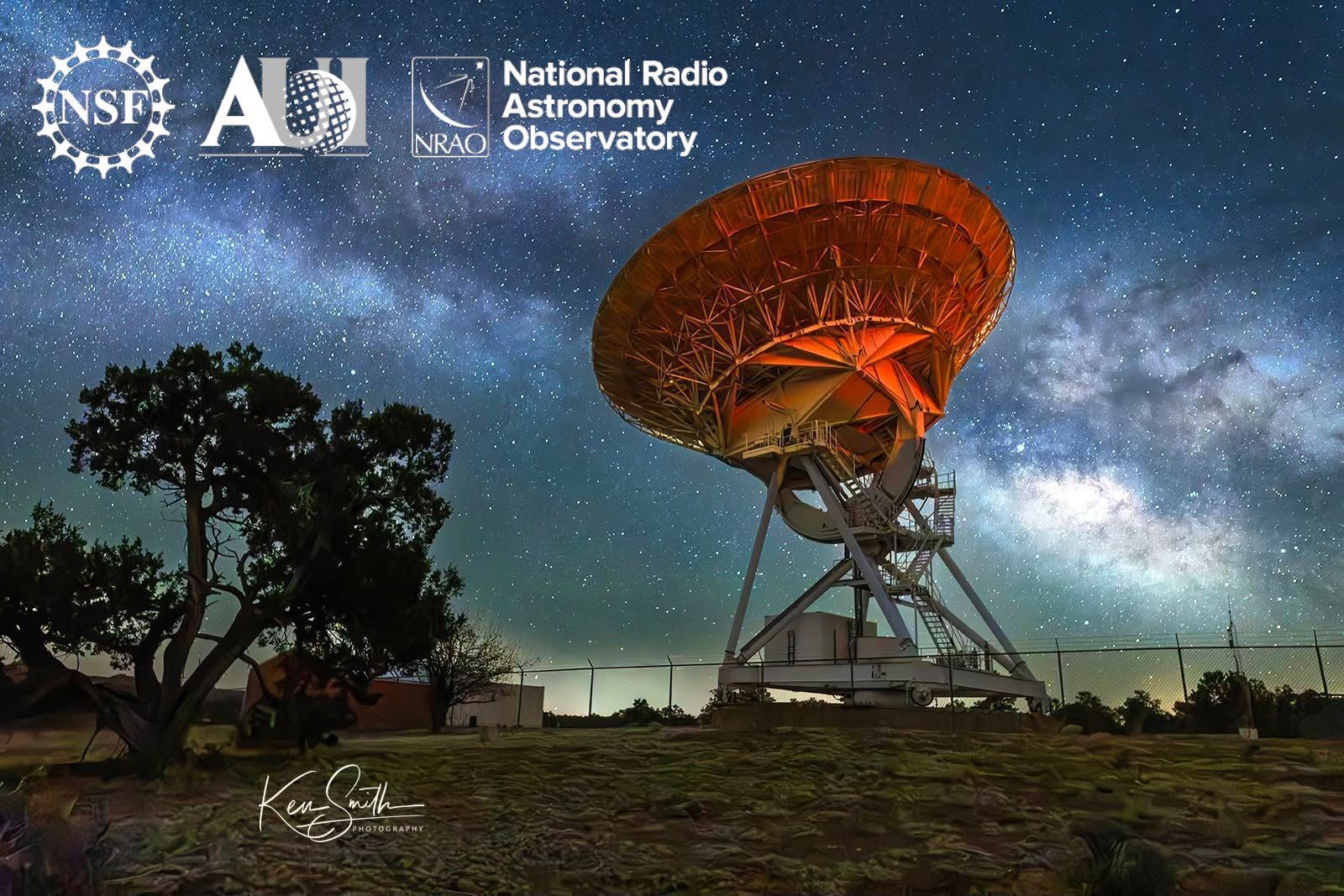 The NSF Very Long Baseline Array (NSF VLBA) antenna in Pie Town, New Mexico. Photo courtesy of Ken Smith Photography (NSF/AUI/NSF NRAO).
Upcoming Science Events

DISCO: Disks in Context
September 21-25, 2026 | Charlottesville, VA
ALMA Workshops
Various - October 2026 | Various

Scintillometry Workshop
October 28-30, 2026 | Ithaca, NY
Astronomical Data Analysis Software and Systems
November 1-5, 2026 | Perth, Australia

ngVLA International Science Conference
November 10-13, 2026 | Sendai, Japan
CosmicAI Virtual Winter School
December 14-23, 2026 | Online

American Astronomical Society 249
January 10-14, 2027 | Salt Lake City, Utah
ALMA at 15 years: Science, Synergies, and the Road Ahead
February 22-26, 2027 | Taipei, Taiwan
Call for Applications - 2027 Jansky Postdoctoral Fellowship Program
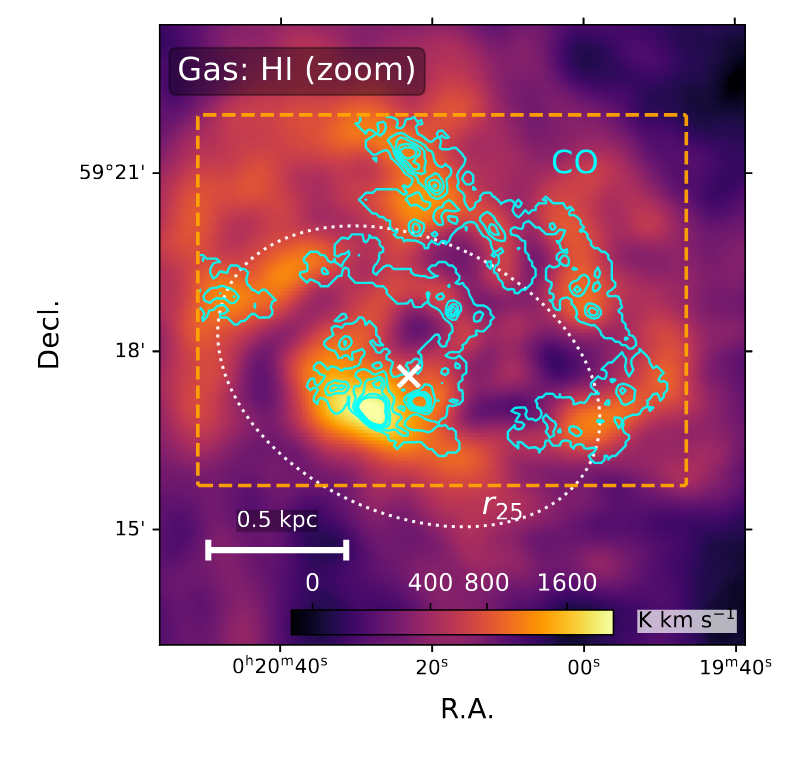
Figure left: IC 10 from Jansky Fellow Dr. Cosima Eibensteiner and collaborators (Eibensteiner et al. 2026). The panel shows the HI measured with the NSF VLA. The dotted circle indicates the optical radius r25. The orange dashed lines show the FoV of CO observations.
The NSF NRAO/GBO invites applications for the 2027 Jansky Fellowship Program. The Jansky Fellowship Program, established almost four decades ago, supports outstanding early career scientists to conduct independent research which exploits NSF NRAO/GBO facilities and contributes to the NSF NRAO's mission. As a Jansky Postdoctoral Fellow, you will have a unique opportunity to contribute to, and learn from, the development and delivery of the largest and most capable radio telescopes in the world. The Jansky Fellowship Program supports projects in radio astronomy and multi-wavelength science, radio astronomy techniques, instrumentation, computation, and theory. Candidates with expertise or interest in NSF NRAO /GBO technological initiatives, such as very long baseline interferometry or Green Bank telescope upgrades, are encouraged to apply.
Appointments may be made at the four internal NSF NRAO/GBO sites (Socorro, NM, Albuquerque, NM, Charlottesville, VA, and Green Bank, WV). Applicants should describe how their research or technical interests couple with the NRAO's mission, telescopes or science. In compelling cases, a 'split appointment' Jansky Fellowship between a U.S. based university and an NRAO site, or a 'non-resident' Jansky Fellowship hosted at a university within the United States, may be offered. Non-resident Jansky Fellows are expected to develop a research program that fosters close ties with the NRAO and describe how residence at their proposed host university will accomplish this.
The figure above shows some of the outstanding research work conducted by the NRAO Jansky Fellows (Eibensteiner et al. 2026). See the program website for more information on the program. Visit the DayForce Careers website to apply. Application deadline for the 2027 program is Wednesday, October 28, 2026.
NA ALMA Student Observing Support Opportunity, Cycle 13
We are pleased to announce that the North American ALMA Science Center is making funds available to support student research on ALMA Cycle 13 projects. This opportunity is part of the NRAO Student Observing Support (SOS) Program and provides awards on a competitive basis. SOS awards are subject to a cap of $40,000 per investigator, per year. The program is intended to support research using NRAO telescopes by graduate and undergraduate students enrolled at U.S. universities and colleges. Eligible expenses include a student stipend, computing hardware, and student travel to present ALMA results at a domestic conference.
Awards are determined by a committee of scientists external to NRAO. Factors used to determine awards include the science grade of the observing project, the importance of the student's role in the project, and the need for funding. Investigators in the U.S. from any approved Cycle 13 project may apply.
The deadline to apply is September 23, 2026. The application form and more information are available on the Student Observing Support website.
Please direct any questions about this SOS opportunity to Jim Braatz.
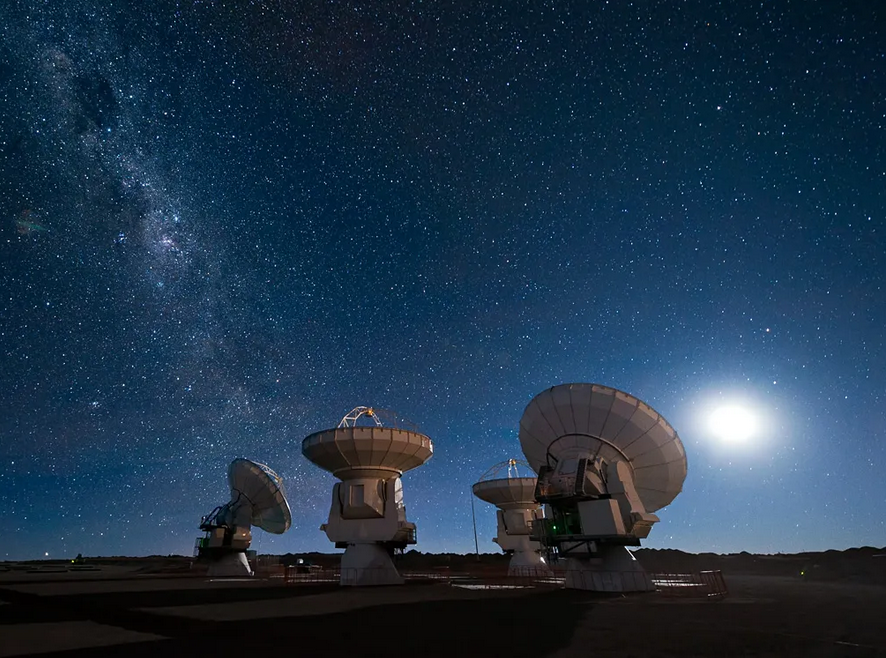
Image Credit - Bettymaya Foott (NSF/AUI/NSF NRAO/ALMA).
ALMA Data Processing and Analysis Workshops for Cycle 13
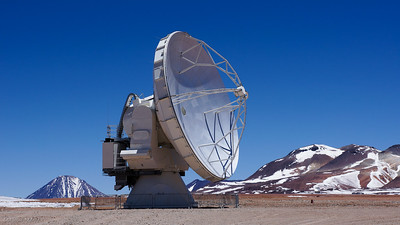
Image Credit - Pablo Carrillo (ALMA)
This Fall, the NAASC and the Cycle 13 ALMA Ambassadors will host a series of workshops on the processing and analysis of ALMA data, at several locations in the US, Canada and Chile. All local students and researchers are encouraged to attend these events, and no previous ALMA experience is required or necessary. The goal of these events is to train users on basic data processing and analysis techniques that they may need to use ALMA for scientific discovery. Early registration is encouraged, to facilitate tailoring workshop presentations to the interests of the attendees. Lunches will be provided at all these events.
| Ambassador | Workshop Location | Date |
|---|---|---|
| Woorak Choi | McMaster University | October 16, 2026 |
| Nickolas Pingel | Indiana University | October 21, 2026 |
| Maria Galloway-Sprietsma and Nazar Budaiev | University of Florida | October 21, 2026 |
| Carla Cornil-Baïotto | University of Concepción | October 22 and 23, 2026 |
| Teresa Paneque-Carreno | University of Michigan | October 23, 2026 |
| Nazar Budaiev | Columbia University | October 30, 2026 |
Science Spotlight: Catching Infall in Action: Core-Scale Collapse in Massive Star-Forming Regions
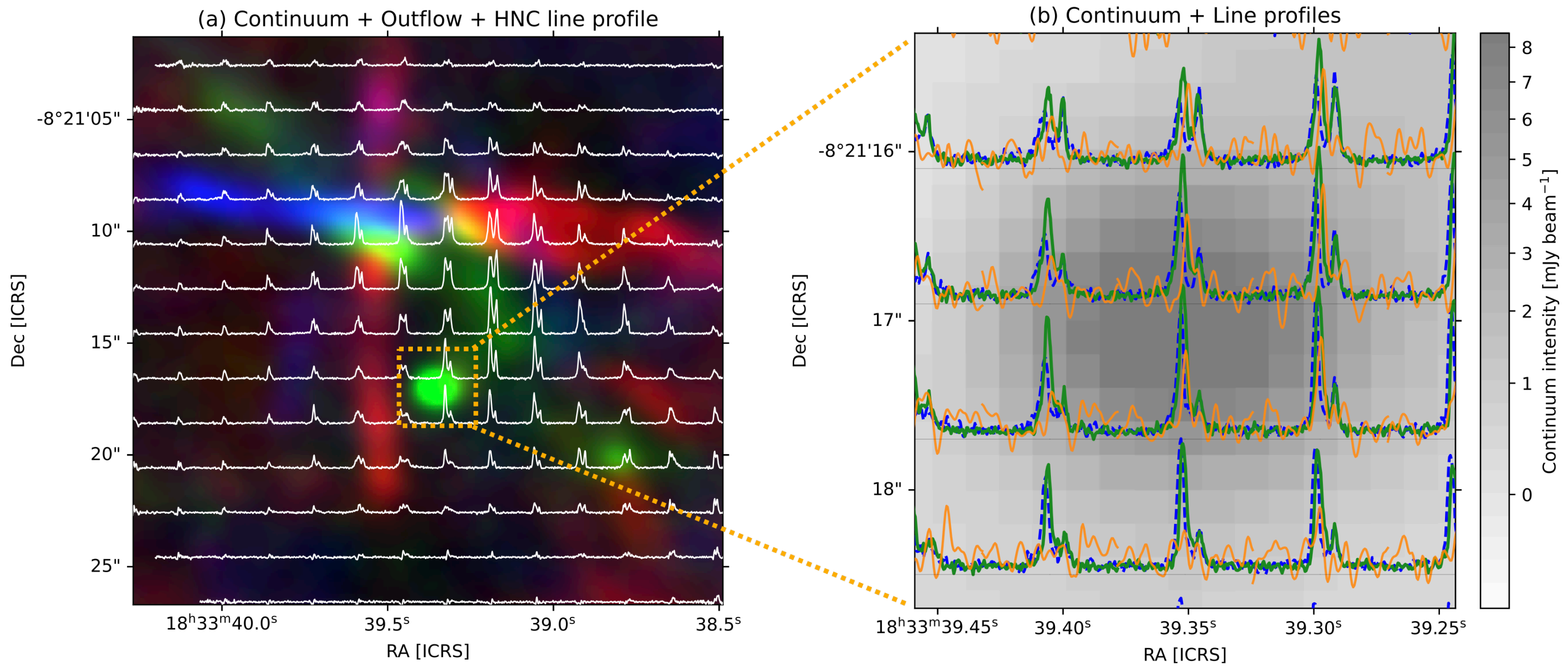
Figure: (a) Spatial distribution of HNC line profiles in one clump. RGB color shows dust continuum (green) and CO outflows (red and blue). The line profiles vary spatially, showing clearer blue-asymmetric double peaks around cores (bright green structures), while also being partially affected by outflows. (b) Zoom-in view of line profiles of HNC (green), HCO+ (blue), and DCO+ (orange) toward the brightest core in (a). Blue asymmetry profiles are found around the core, not only inside it.
The formation of high-mass stars remains among the most challenging unresolved questions in astrophysics. While recent observations have suggested core growth via infall from their surrounding environment, obtaining direct kinematic evidence at the core scale is remarkably difficult, as these regions are distant, crowded, and complex. Determining when and where infall begins, as well as how it evolves, is crucial for understanding how the seeds of massive stars accumulate sufficient mass to eventually form stars .
To address this gap, we present the GLASHES (Global and Local Infall in the ASHES Sample) survey, targeting a sample of deeply embedded, IR-dark massive clumps that represent the initial conditions of high-mass star formation. Using ALMA Band 6 observations of HCO+ and HNC (J=3-2), we systematically search for "blue asymmetry" profiles across 304 cores in 24 massive clumps. This spectroscopic signature, in which the blueshifted side of a line profile is brighter than the redshifted side, is indicative of infalling gas along the line of sight.
Blue asymmetry profiles are detected in approximately 60% of cores , with the fraction increasing systematically with core masses and surface densities as well as evolutionary stages. Notably, infall signatures are seen not only toward core centers but also in the surrounding gas, implying that material is being funneled onto cores from larger scales (Fig. a and b ). Infall signatures appear even in cores classified as gravitationally unbound, suggesting external compression may trigger collapse alongside self-gravity. A moderate correlation between infall signatures at the clump and core scales supports a hierarchical collapse picture, where gravitational collapse takes place in the clump and cores within.
GLASHES is the largest core-scale kinematic survey of high-mass star forming regions to date. Effects such as clump-scale gas motions and projection can locally mimic or mask infall signatures for a subset of cores, so only a statistically significant sample of cores, resolved at the core scale, can reliably reveal the true prevalence of infall. This study thus provides a foundation for understanding collapse motions in high-mass star-forming regions, and forthcoming analysis will characterize the observed profiles in greater detail.
Would you like your science or engineering projects featured in the NRAO Science Newsletter? Email the editor Brian Kent with your recent science publications!
NSF NRAO to Co-Sponsor 2026 Scintillometry Workshop
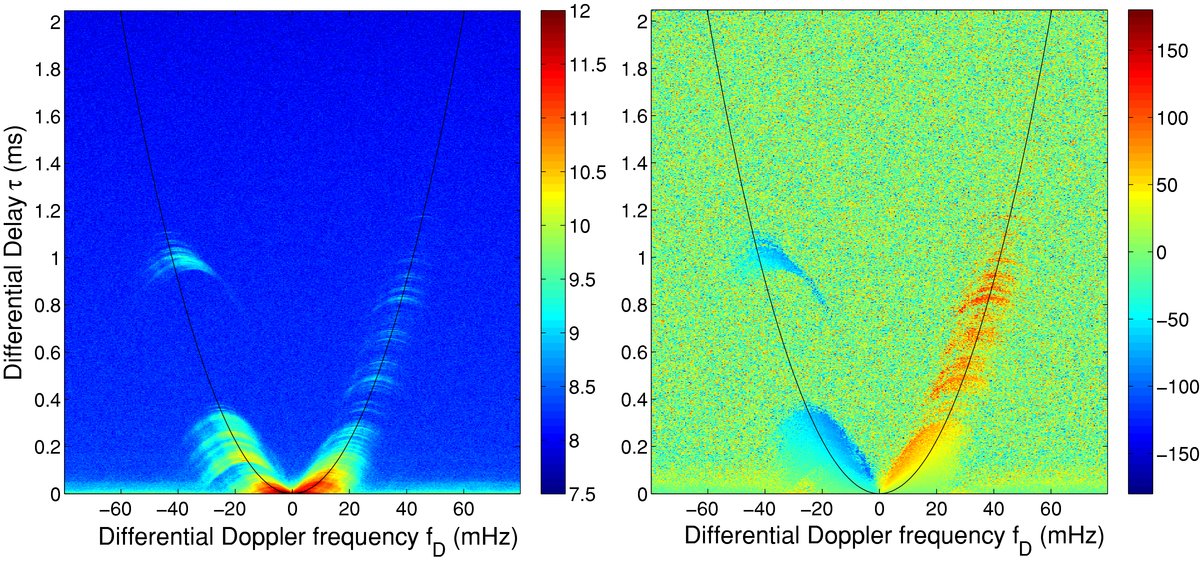
October 28-30, 2026
Click here to register for the workshop
The National Radio Astronomy Observatory is proud to co-sponsor this year's Scintillometry Workshop taking place October 28-30, 2026 at Cornell University. The purpose of this workshop is to discuss advances and future goals in the field of scintillometry, which uses pulsar emission to probe the structure of the ionized interstellar medium. Those interested in participating should contact Lydia Guertin to join the mailing list to ensure they receive correspondence regarding the workshop. Click here to register for the workshop.
Survey of the evolution of the VLA radio frequency environment over the past decade
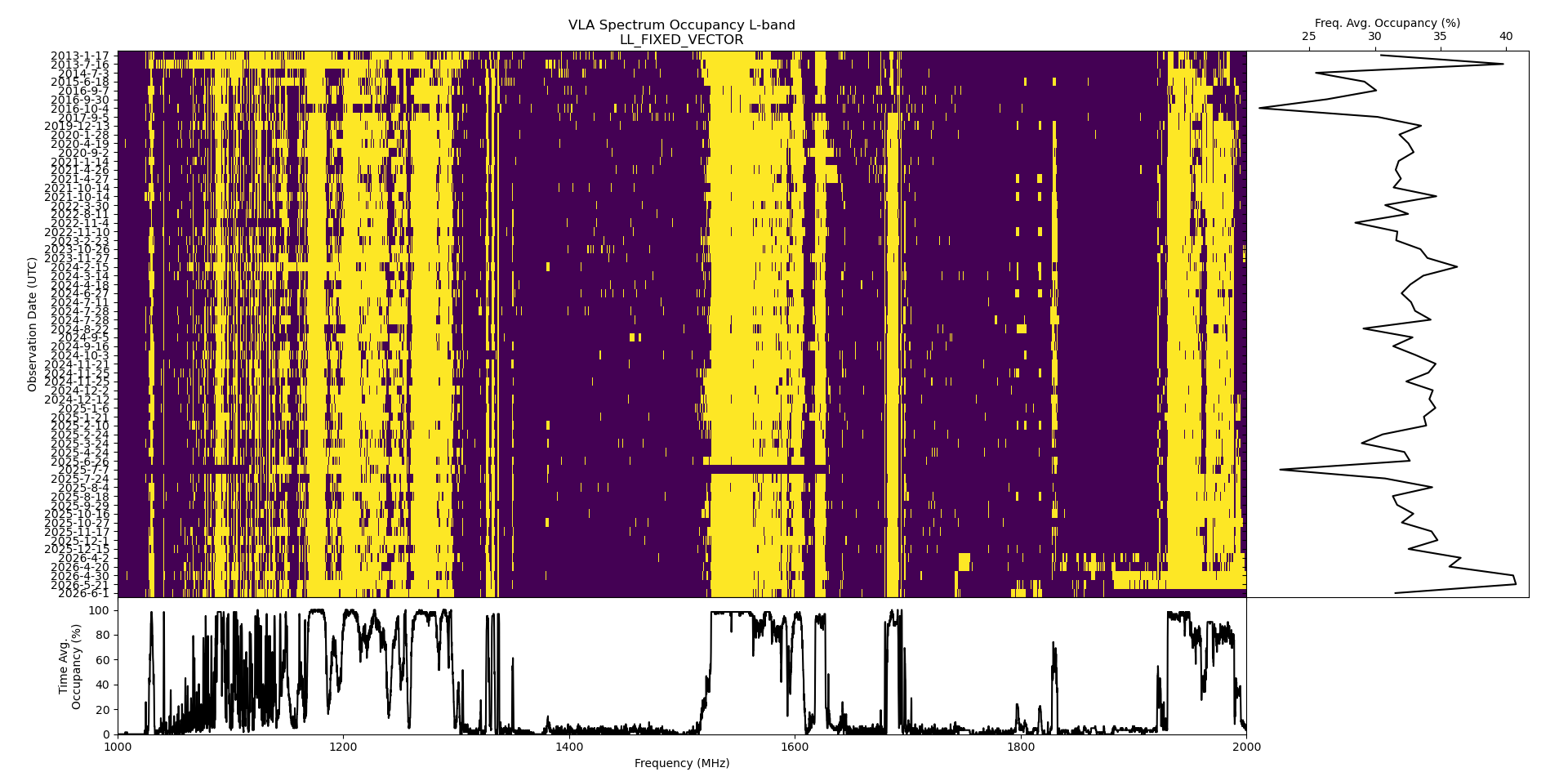
Figure: (Main) Waterfall plot showing spectral occupancy for L-band (1-2 GHz) across time and frequency. Yellow points indicate signals above a defined noise threshold occupy that particular frequency channel. (Bottom) Time averaged spectral occupancy. (Right) Frequency/Band averaged spectral occupancy.
The VLA has been performing regular consistent observations to monitor the radio frequency interference (RFI) environment since 2011. These observations are performed using the entire covered bandwidth from L to Q-band (1-50 GHz), along with the P-band receiver (224-480 MHz) which was added in 2016. The recently published RFI Memo 169 summarizes an analysis that was performed using this survey data evaluating the spectral occupancy by strong radio signals in VLA data. The long-term trends show a degradation of the RFI environment below 8 GHz, despite the VLA's remote location. Over the past 13 years this resulted in a loss of usable bandwidth of about 745 MHz between 1 and 12 GHz. The presented results underscore that the usable spectrum for radio astronomy at the VLA continues to erode from the bottom up, driven by satellite constellations, terrestrial wireless expansion, and locally generated interference. Continued monitoring of the RFI environment both through VLA RFI survey observations as well as dedicated spectrum monitoring are becoming an essential tool to characterize and mitigate impacts from new technology deployments that have been increasing at an exponential pace. Among these deployments one of the most concerning developments are direct-to-device satellite communications that are encroaching on significant fractions of the 1-4 GHz spectrum with unprecedented power levels for this type of transmissions. NRAO has recently deployed 1-10 GHz spectrum monitoring systems (Sentinels) at the VLA and GBO and just performed field tests of the Advanced Spectrum Monitor (ASM-2) at GBO.
Joint Proposal Opportunities with XMM-Newton
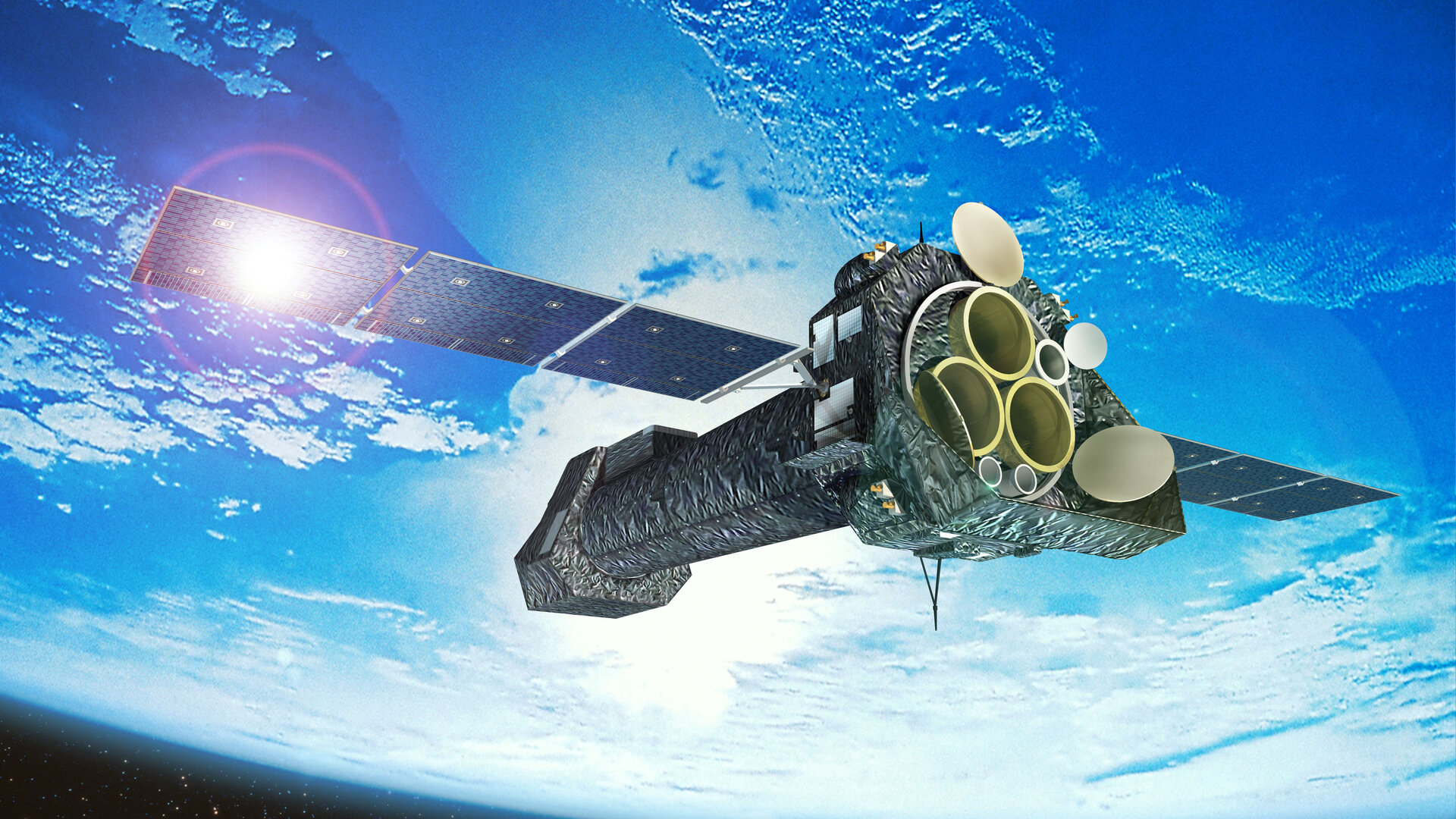
Effective 19 August 2026, XMM-Newton observing proposals are solicited in response to the Twenty-sixth Announcement of Opportunity, AO-26.
The XMM-Newton Project has Joint Programs with the VLT, NRAO (i.e., VLA, GBT, VLBA), HST, JWST, HESS and MAGIC, as well as with other X-ray missions: Chandra, IXPE (New!), NuSTAR, Swift and XRISM. The XMM-Newton Project may additionally award observation time to these facilities via the current AO. A letter from ESA's Director of Science, inviting you to participate in the Twenty-sixth Call for Proposals, is available in electronic form.
The deadline for XMM-Newton AO-26 proposal submission is Friday 9 October 2026, 12:00 UT.
You can sign up for the XMM-Newton GOF-SOC bulletin through the HEASARC website if you want news related to XMM-Newton delivered to your Inbox (select the "XMMNEWS" mailing list). You will be informed on news and updates (e.g., Announcements of Opportunities for observing proposals, software updates, science news, and related conferences/workshops).
Green Bank Telescope Remote Observing Training Workshop
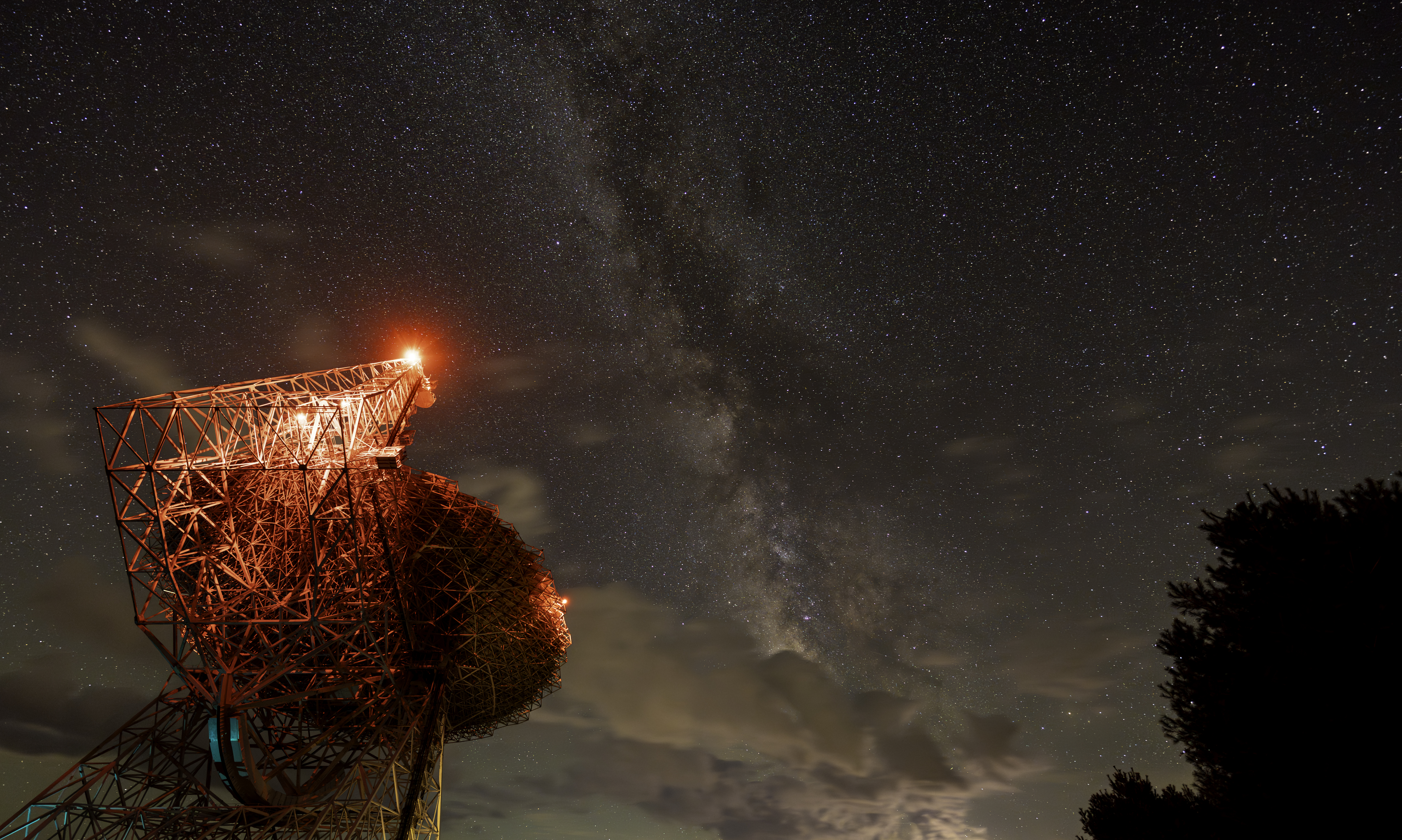
October 27-30, 2026 (online only)
The Green Bank Telescope (GBT) Remote Observer Training Workshop will provide the essential skills and knowledge needed to use the GBT and maximize its scientific output. It is intended for experienced astronomers who need to learn the specifics of observing with the GBT. After completing the workshop, an attendee will be certified to use the GBT as a remote observer. The workshop will focus on hands-on training in the observing techniques most relevant to participants (e.g. high frequency map, continuum, pulsar, etc.).
Applications will be open until October 2, 2026 and applicants will be informed of their acceptance shortly after. This remote workshop is open to GBT Observers and the professional scientific community. This is a virtual event - no attendees will visit Green Bank in person for the workshop.
Image by Jeff Hellerman (NSF/AUI/NSF NRAO)
ALMA News
ALMA Observing Status
The array is currently in configuration C-5 (with maximum baselines of ~1.4 km) and continues to contract into more compact configurations until the end of Cycle 12. Click the image to see the Instagram reel.
ALMA at 15 Years conference: LAST CHANCE to submit an abstract and apply for travel support
Abstract submission is now open for the conference ALMA at 15 Years: Science, Synergies, and the Road Ahead, which will be in person from February 22 to 26, 2027, at Academia Sinica's Nangang campus in Taipei, Taiwan. The abstract submission deadline is September 15, 2026. The conference will highlight ALMA's latest results, especially since the last Pan-ALMA conference held in 2023, and identify exciting directions for future ALMA research. The NAASC can provide travel support for early career attendees (students and postdocs) who are based at North American institutions (US and Canada). To apply for financial support, please contact Arielle Moullet after submitting your abstract and no later than the deadline for abstract submission (September 15, 2026).
Reminder: ALMA Ambassadors Program for Cycle 14 is open
The North American ALMA Science Center (NAASC) is accepting applications for the ALMA Ambassadors Program, with a deadline of October 2, 2026. The program provides training and up to a $10,000 USD research grant (other forms of payment are available, see the ALMA Ambassadors website) to postdoctoral researchers, senior graduate students, and early career researchers interested in expanding their ALMA/radio interferometry expertise and sharing that knowledge with their home (or other) institutions. For Cycle 14, ALMA Ambassadors can choose to support the community by organizing and hosting (1) ALMA Cycle 14 proposal preparation support workshops (Spring 2027), and/or (2) ALMA-focused data processing and analysis workshops (Fall 2027). Applications seeking to host both proposal preparation and data processing workshops will be favored.
The NAASC will provide travel support for the training as well as all talk materials, supplies, and infrastructure for the workshops hosted by the ALMA Ambassadors. Some radio or submillimeter interferometry experience is preferred but not required. Applicants must be based at a North American institution. If you do not meet these requirements but are interested in learning more about the training we are offering, please contact Arielle Moullet to discuss opportunities. We will consider both individual and coordinated applications from users in the same institution or region.
The NAASC will host the selected Ambassadors at the National Radio Astronomy Observatory headquarters in Charlottesville, Virginia in February and August 2027 to receive in-depth training. Training will include topics related to ALMA proposal writing, including: interferometry basics, ALMA science capabilities, recent ALMA headlines, use of the ALMA Observing Tool, and guidance for speaking on these topics. The NAASC will provide travel support for the training as well as all talk materials, supplies, and infrastructure for the workshops hosted by the ALMA Ambassadors.
The deadline to apply is October 2, 2026. For more information, please visit the ALMA Ambassadors website.
Data reduction visits to the NAASC
The NAASC continues to encourage "face-to-face" visits for North American-supported ALMA users to receive expert assistance for data reduction (PI projects or archival research) or proposal preparation. Visits can be held at the NAASC locations (Charlottesville, VA, or Victoria, British Columbia) or virtually. For more information and to request a visit, please see the visitors web page and submit a ticket to the face-to-face visits department of the ALMA Helpdesk. Note that investigators from U.S. institutions can apply to the NAASC for assistance with travel expenses, for up to two members of their team.
Wideband Sensitivity Upgrade
Following a successful Preliminary Design review 2 years ago, the Critical Design and Manufacturing review for the Digital Transmission System (DTS) will be held in December 2026 at NAOJ Mitaka. Several WSU presentations were held at the SPIE meeting in Copenhagen, including a status summary by Alvaro Gonzalez, the ALMA Deputy Director for Development. You can find the most up-to-date information about the WSU project and its scientific impact on the ALMA Observatory WSU webpage; resources for the North American community can be found on the NAASC WSU webpage.
ngVLA Project News
ngVLA International Science Conference 2026
As the ngVLA project advances toward its next phase of development, it is timely to consolidate and expand the international science community, refine key science drivers, and explore synergies with other major observatories and space missions.
From November 10 to 13, 2026, this conference in Sendai, Japan, will bring together experts from a broad range of fields to share compelling science cases, identify new opportunities, and foster collaborations that will further strengthen the momentum of this proposed next-generation facility.
The conference is being jointly organized by NSF NRAO, the ngVLA Science Advisory Council, and the ngVLA-Japan Science Working Groups. The organizers particularly encourage the participation of early-career researchers and students.
Key upcoming dates:
- Early September, oral program announced
- September 25, deadline for poster abstract submission+registration and for reduced registration fee
- October 12, deadline for registration
ngVLA Science - Long-Baseline Polarimetry and Kinematics of Neutrino Blazars
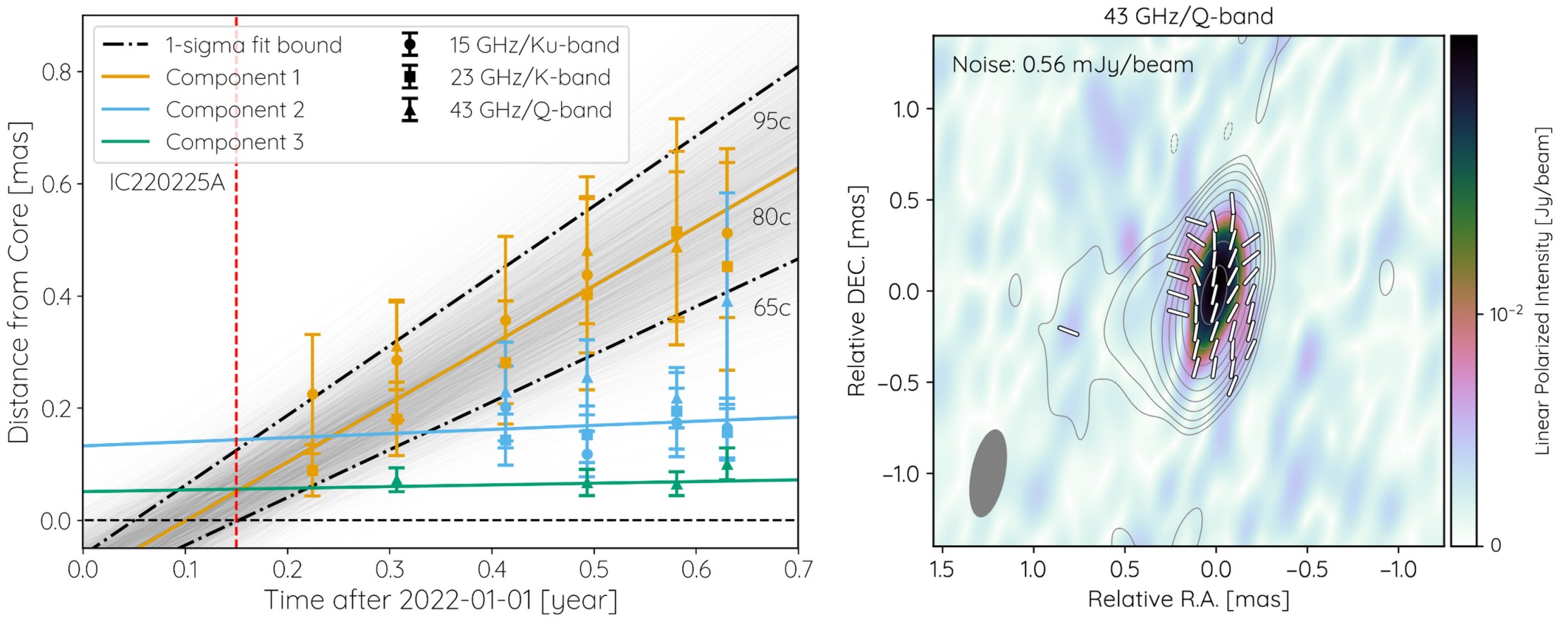
Figure - Left: Dashed red line shows the arrival time of the neutrino event, which coincides with component 1's passage through component 3. Right: Stacked polarization image. Sticks show EVPA direction. Credit: Eppel et al. (2026a)
In recent years, neutrino observatories have detected high-energy neutrinos from TeV to PeV energies (e.g., Abbasi et al. 2023; KM3Net Collaboration et al. 2025), yet their origins and production mechanisms remain uncertain. Active Galactic Nuclei (AGN), and particularly blazars, are promising contributors to the astrophysical neutrino flux (e.g., Plavin et al. 2020; Buson et al. 2022). While their relativistic jets can accelerate protons, which may produce neutrinos through hadronic interaction (e.g., Mannheim 1993), the exact mechanisms at play remain an open question. High-resolution VLBI observations provide a unique way to investigate the small-scale jet structure and put constraints on configurations that have been proposed as potential neutrino production sites, such as spine-sheath structures or compact shocks (e.g., Tavecchio et al. 2014; Kalashev et al. 2023). Variability in jet structure and polarization in response to neutrino events can further constrain the physical conditions in these regions.
In our recent work (Eppel et al. 2026a), we studied the neutrino-candidate blazar PKS 0215+015, which exhibited a strong radio flare coincident with an IceCube neutrino in 2022. Monthly VLBA observations revealed a new, fast jet component moving at an apparent speed of (60 - 80)c, ejected from the core around the time of neutrino arrival (see figure, left panel). Polarization information further indicates that this component likely interacted with a stationary feature, suggesting a multi-layered jet structure. However, the limited resolution and sensitivity of the VLBA result in substantial uncertainties in the component speed and inferred Lorentz factor (Gamma = 105 +/- 56), preventing a precise reconstruction of the jet configuration.
The ngVLA long baseline array in synergy with existing and new GMVA stations will substantially overcome these limitations. Its improved sensitivity and high-frequency capabilities up to ~120 GHz will enable sub-mas imaging of compact and significantly fainter neutrino-candidate blazars, while also improving polarization sensitivity. This is particularly important for testing structured jet models that invoke characteristic polarization signatures (e.g., Pushkarev et al. 2005). While stacking long-term VLBA observations can overcome some of these limitations (e.g., see figure above, right panel; Eppel et al. 2026b), it is essential to study the dynamics and the interplay of different jet layers in full polarization between individual epochs to fully understand the physics behind the multi-messenger emission of AGN.
Since 2015 the acronym ngVLA has appeared in 1690+ publications indexed in the SciExplorer Data System. This article continues a regular feature intended to showcase some of those publications. We are especially interested in showcasing work done by early-career researchers. The collection of showcase articles can be viewed online. Anyone wishing to volunteer to author a feature should contact Joan Wrobel.
CosmicAI in Charlottesville
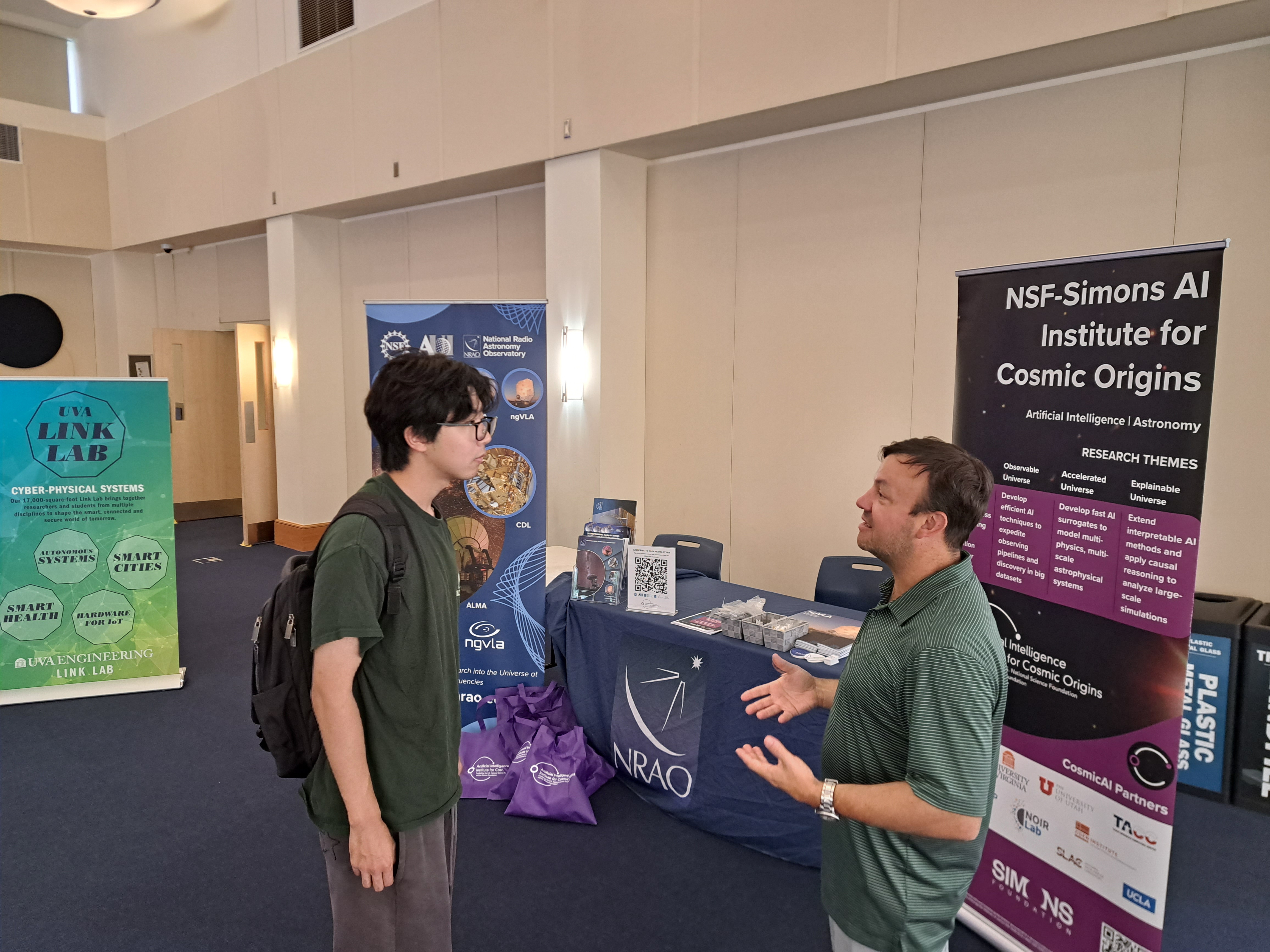
The NSF NRAO and University of Virginia Department of Astronomy participated in a campus AI event in Charlottesville, VA.
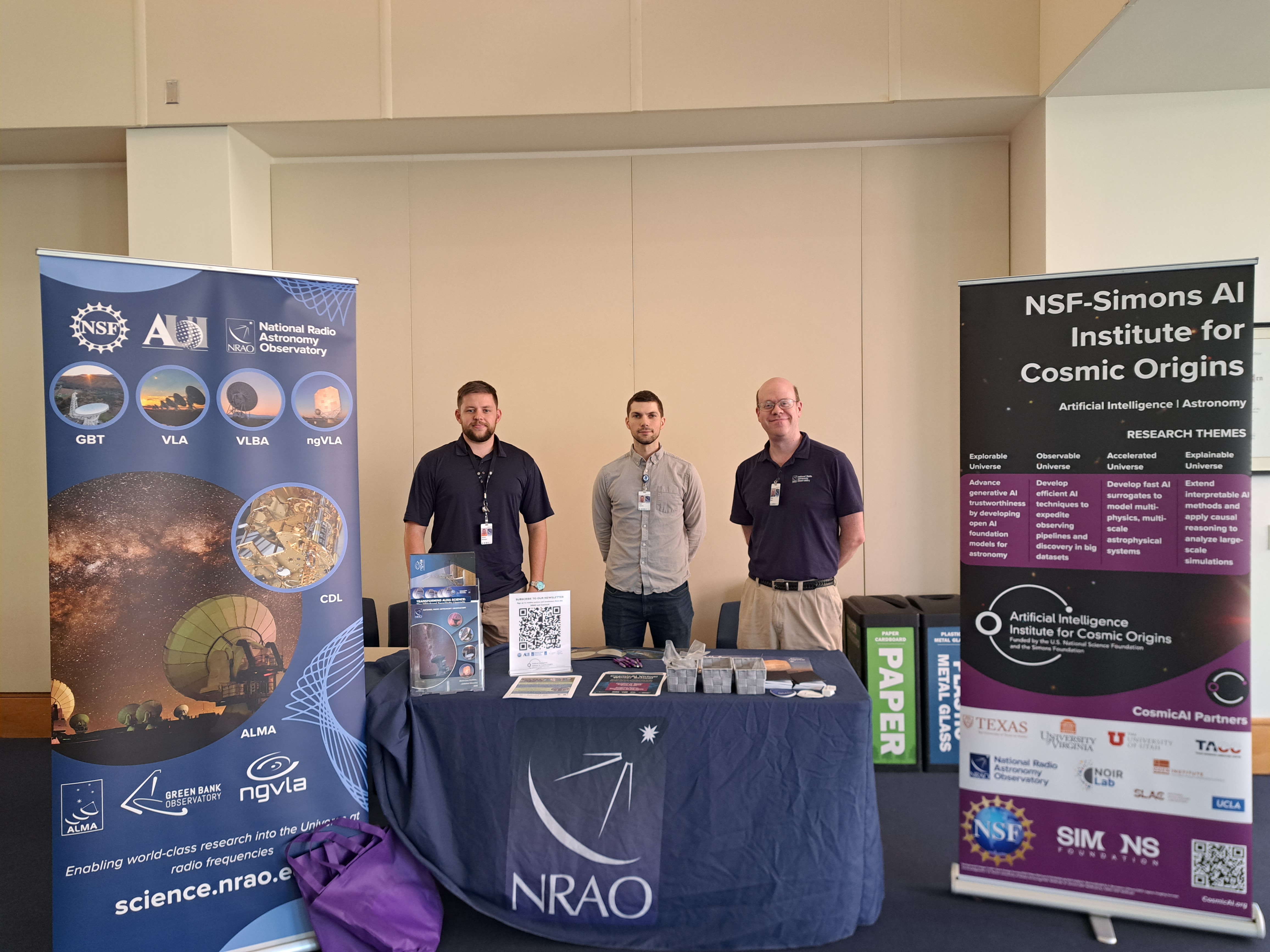
The event was held on the first day of classes at Ern Commons near campus residences and hosted by the UVa Societal Impact of AI Group. Participants included the Virginia AI Security Initiative, the Business AI Institute, School of Data Science, UVa Link Lab, the UVa Provost's Office, UVa Library, and NRAO/CosmicAI/UVa Astronomy. The group talked about the CosmicAI Winter School, opportunities for students, and how to get involved with CosmicAI.
CosmicAI will also be offering a Virtual Winter School at NSF NRAO from December 14-23, 2026. The winter school is a 40-hour online program designed to equip rising junior and senior undergraduate students with the foundational skills needed to succeed in interdisciplinary AI-Astronomy research.
Read more about CosmicAI and how to be involved.
Arizona Radio Observatory 2026B Call for Proposals
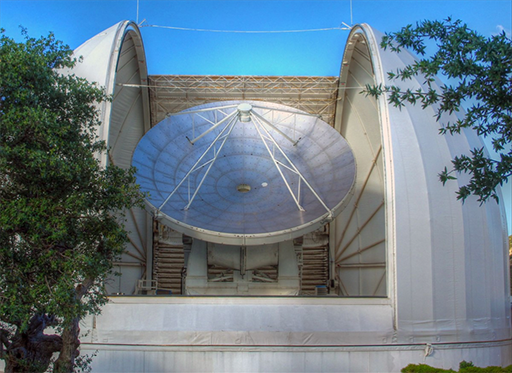
The University of Arizona's Steward Observatory and Arizona Radio Observatory (ARO) solicit proposals for observations with:
The UA ARO 12-meter Telescope (12M) located on Kitt Peak, Arizona:
Proposals are invited for observations with the 4-band receiver, which covers the 4, 3 (ALMA Band 3), 2, and 1 (ALMA Band 6) mm bands, and the AROWS backend, offering bandwidths of 20 to 4000 MHz and channel spacings ranging from 9.8 to 625 kHz. In the event of oversubscription, preference will be given to Arizona institutions (UA, ASU, and NAU) and to student thesis proposals.
The UA ARO Submillimeter Telescope (SMT), located on Mount Graham, Arizona:
Proposals are accepted only from Arizona-affiliated PIs (UArizona, ASU, and NAU) for observations with the dual-frequency receiver, which offers concurrent observations at 1.3 mm (210-275 GHz SIS) and 0.8 mm (275-373 GHz). The general astronomical community can, at any time, request time-sensitive and/or target-of-opportunity observations by submitting a Director's discretionary time request following the same procedure as outlined below.
Proposers are requested to submit as a single PDF document both pages of the cover sheet, a science justification, a technical justification, and a past allocation update. View the ARO Call for Proposals for complete instructions.
The deadline for proposals is 23:59 MST on September 18, 2026. Proposals will be reviewed by the ARO TAC, which will make scheduling recommendations to the Director of Steward Observatory.
Recent Science Media Releases
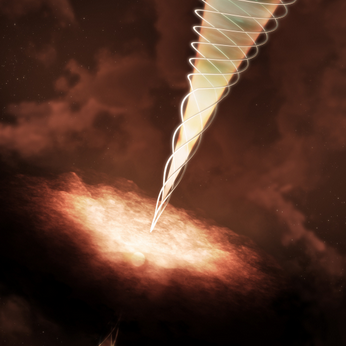 |
Twisted Physics: Astronomers Solve 30-Year-Old Stellar Mystery
|
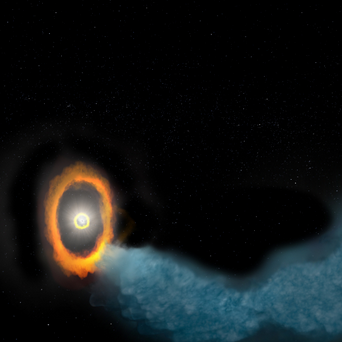 |
VLA Maps a Hidden Hydrogen Shell Around the Orion Nebula |
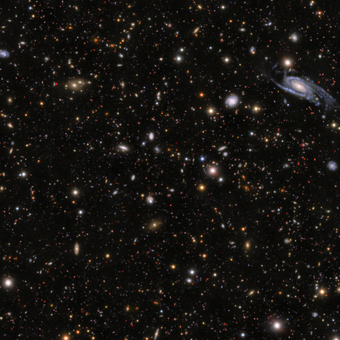 |
Radio observations help rule out a relativistic jet in rare stellar explosion
|
|
Contact the NRAO press office to share your new and exciting science results. |
From the Archives
Ellen Bouton
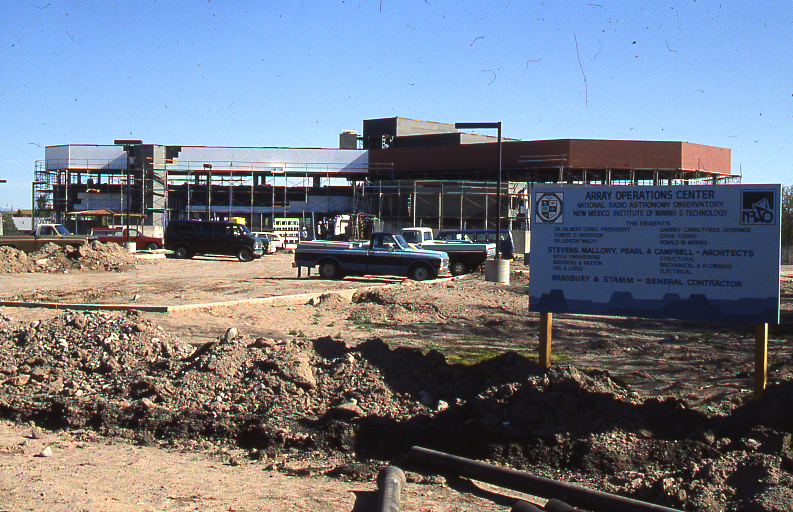
About this month's photo: Following the 1984 decision to locate the management and operation of the VLBA in Socorro, plans rapidly moved forward to build a facility for NRAO VLA and VLBA operations on the campus of New Mexico Tech. Groundbreaking for the building (with a Y footprint to echo the footprint of the VLA) was on 26 June 1987; the photo shows construction in early 1988. The preliminary name for the facility was Center for Radio Astronomical Imaging; it was dedicated as the Array Operations Center (AOC) in December 1988, and was rededicated as the Pete V. Domenici Science Operations Center (DSOC) in May 2008.
From the Archives is an ongoing series illustrating NRAO and U.S. radio astronomy history via images selected from our collections of individuals' and institutional papers. If readers have images they believe would be of interest to the Archives, please contact Ellen Bouton.