NRAO Newsletter
Volume Vol#, Issue Iss#
Day# Month# Year#
NRAO Newsletter
Volume Vol#, Issue Iss# • Day# Month# Year#
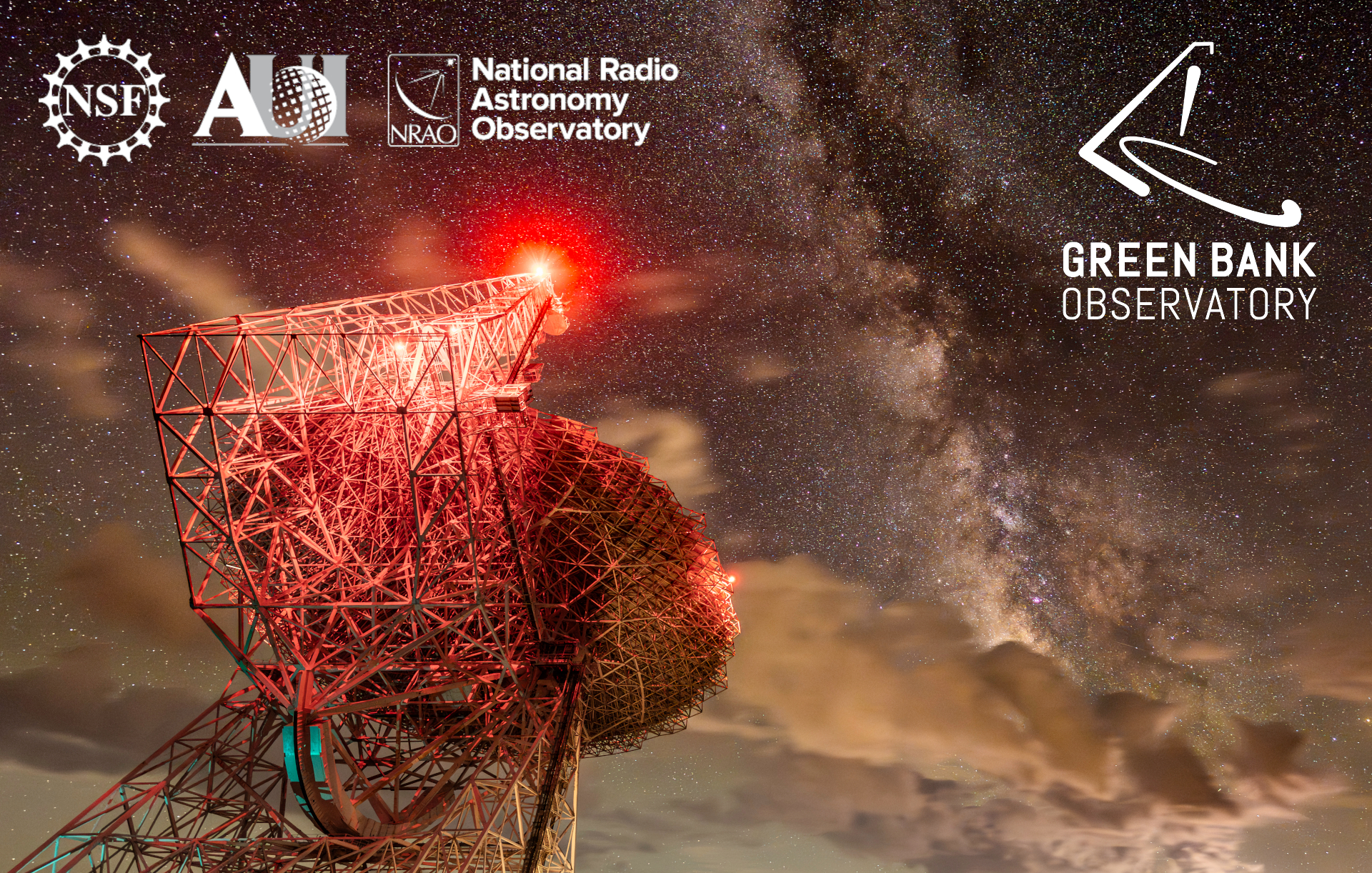 The Robert C. Byrd Green Bank Telescope (NSF GBT) in West Virginia observes the Universe - studying pulsars, astrochemistry, neutral hydrogen, and SETI (Photo courtesy of Jeff Hellerman, NSF / AUI / NSF NRAO).
Upcoming Science Events

ALMA Ambassadors Community Events
March 20-31, 2026 | Various Locations

NRAO Open House
April 18, 2026 | VLA Site, New Mexico
21st Synthesis Imaging Workshop
May 26-June 3, 2026 | Socorro, NM
International Microwave Symposium
June 7-12, 2026 | Boston, MA

AAS Meeting
June 14-18, 2026 | Pasadena, CA
2nd Annual Cosmic Horizons Conference
July 13-16, 2026 | Charlottesville, VA
2025 Doctoral Dissertation Award - Dr. Emma Schwartzman
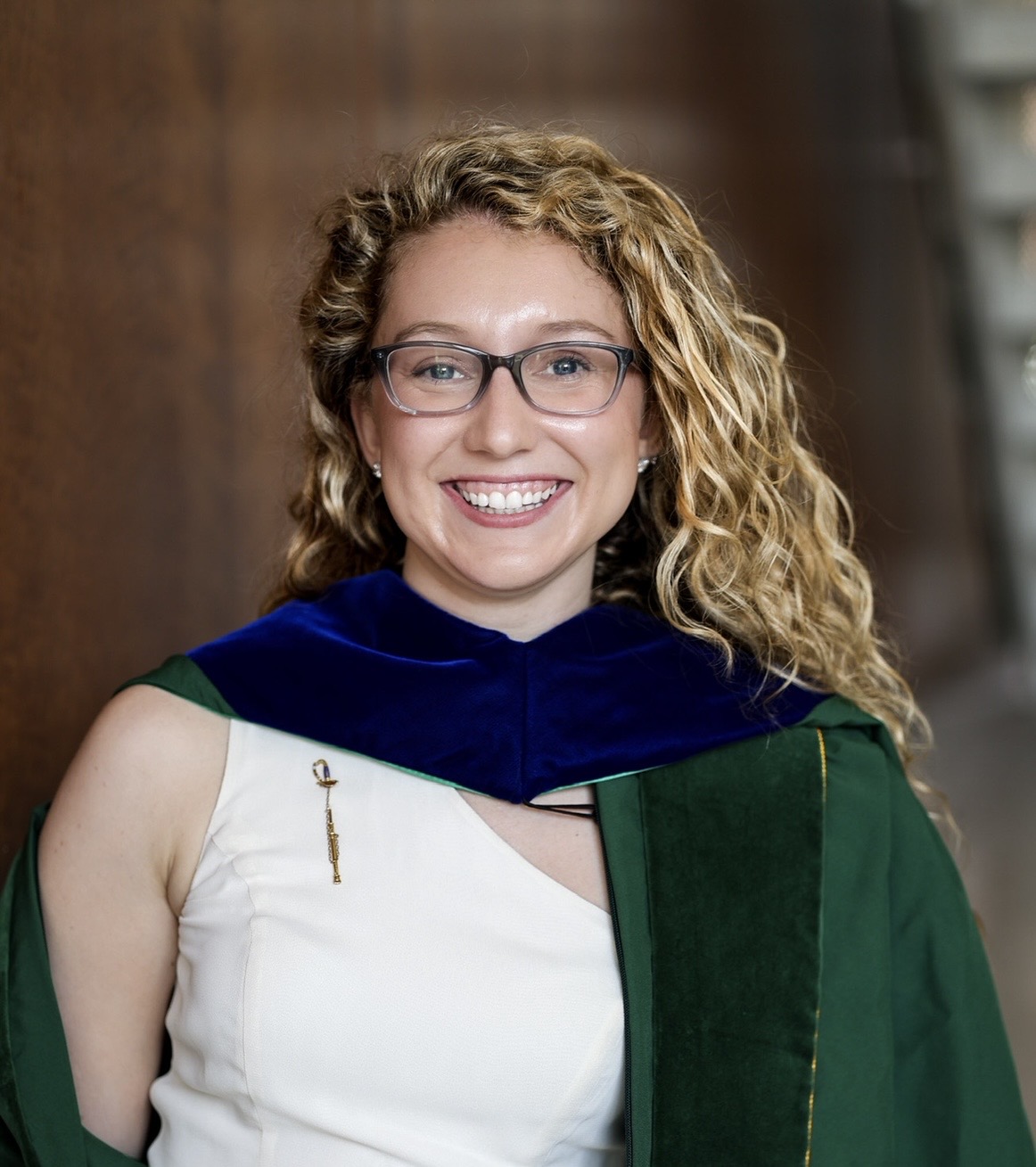
NRAO and AUI are pleased to announce that the winner of the 2025 Doctoral Dissertation Award is Dr. Emma Schwartzman for her thesis on "A Multi-Frequency Radio Study of Dual Active Galactic Nuclei and Galaxy Cluster Mergers," which was completed at the U.S. Naval Research Laboratory and George Mason University. This thesis, based on new radio observations with the VLA and VLBA, represents a significant advancement in studies of massive, energetic cosmic structures, particularly in characterizing complex galaxy cluster mergers and identifying elusive dual and binary active galactic nuclei (AGN) candidates. The award selection committee lauded the technical innovation of the so-called "Varstrometry" analysis and its application to characterize a new population of multi-AGN. Dr. Schwartzman recognized and seized a unique scientific opportunity and demonstrated exceptional scientific leadership by carrying out multiple impactful observing campaigns. The thesis also addresses topics of broad astronomical importance, including the accuracy of the International Celestial Reference Frame.
She will receive her award and deliver a lecture based on her thesis at NRAO in Charlottesville, VA, on September 17.
Registration open - The 21st NSF NRAO Synthesis Imaging Workshop
The NSF NRAO will be hosting the 21st Synthesis Imaging Summer Workshop in Socorro, New Mexico, from May 26th to June 3rd, 2026. The workshop will consist of a week of lectures on aperture synthesis theory and techniques at a level appropriate for graduate students in astrophysics, covering both radio interferometry fundamentals and state-of-the-art methods and techniques. The program will include discussion groups, and tutorials demonstrating data collection, calibration, and imaging of various types of observations, including new data from the NSF Karl G. Jansky Very Large Array (VLA), NSF Very Long Baseline Array (VLBA), the Atacama Large Millimeter/submillimeter Array (ALMA), and a special tour to the NSF VLA site.
This year the workshop will also include a session on optical interferometry (lectures, tutorials), and a visit to the Magdalena Ridge Observatory Interferometer (MROI) site.
Visit the workshop website for information on registration, program, and logistics.
NRAO's Jansky Fellows Continue Reaching for the Stars
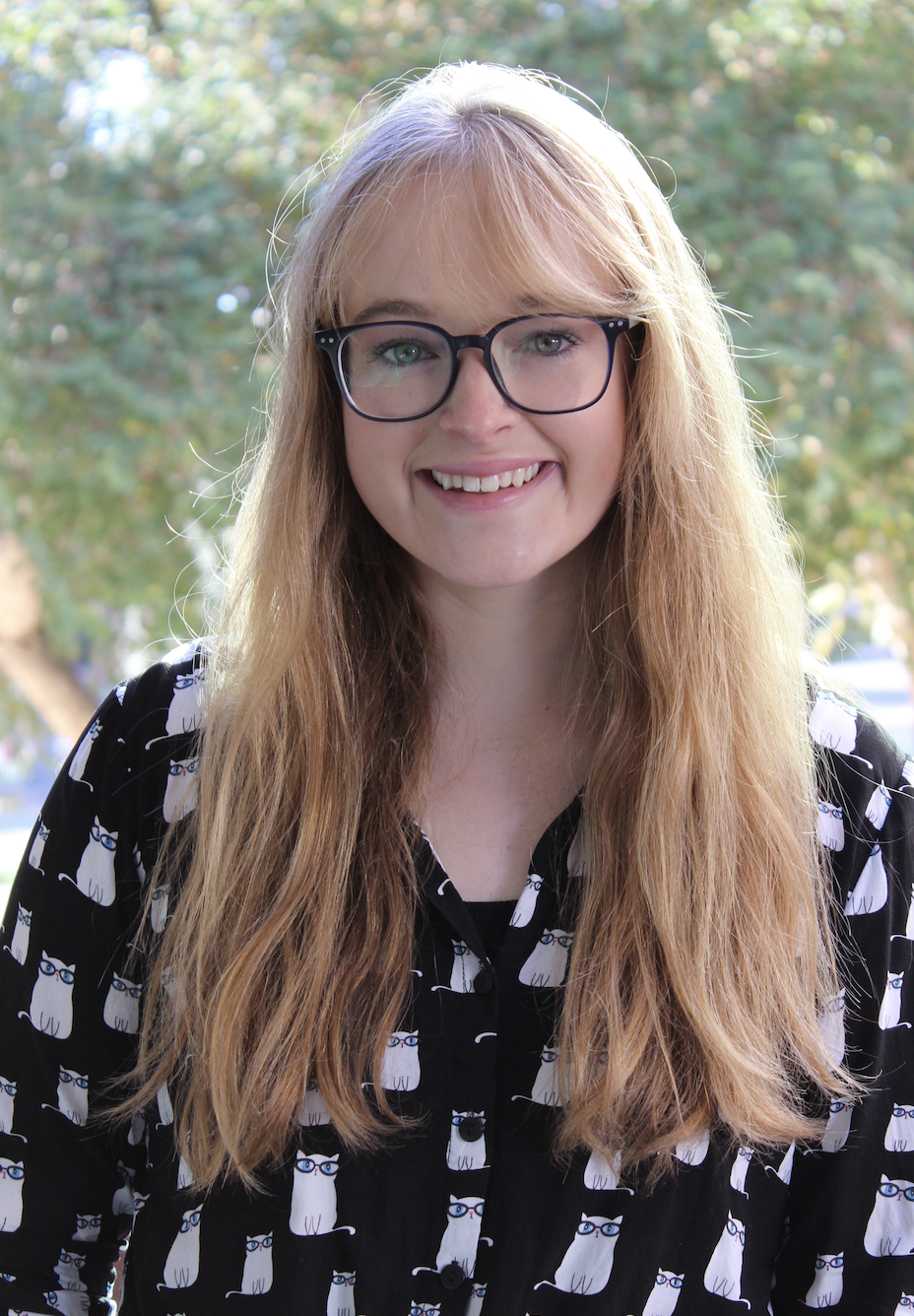
Samantha Scibelli and Cosima Eibensteiner - two current NSF NRAO Jansky Postdoctoral Fellows - have won prestigious fellowships to continue their research into interstellar chemistry and star formation in galaxies.
Dr. Samantha Scibelli (left) has been awarded NASA's Hubble Fellowship to be taken at the National Radio Astronomy Observatory in Charlottesville, VA, beginning in September 2026. As a Sagan Fellow within the Hubble Fellowship Program Samantha will be researching the origins of life in the Universe. Samantha studies prebiotic molecules, and in recent years she demonstrated that their precursors are ubiquitous in starless and prestellar cores across various local star-forming environments. As an incoming Sagan Fellow at NRAO, Samantha will continue to advance our understanding of our chemical origins through several observing campaigns with the NSF's 100m Green Bank Telescope (GBT) and the NSF's Atacama Large Millimeter/submillimeter Array (ALMA). These new observations will 'zoom-in' at high spectral and spatial resolution to trace the precise locations of these precursor prebiotic species in and around prestellar cores. These studies will help bridge the gap between interstellar chemistry and emergence of life on Earth.

Dr. Cosima Eibensteiner (right) has been awarded the GECO Fellowship to be taken at the University of Virginia, Charlottesville, VA, beginning in November 2026. The Galaxy Evolution and Cosmology Initiative (GECO) Fellowship Program is a multi-year research initiative supporting research on galaxy evolution and cosmology. Cosima studies how galaxies convert diffuse atomic gas into cold molecular gas and ultimately into stars, and as a Jansky Fellow she showed that the balance between atomic and molecular gas is more strongly linked to dynamical equilibrium pressure than to other commonly discussed environmental drivers. This result provides an important clue to how star formation is regulated. As an incoming GECO Fellow at the University of Virginia, she will make use of her newly awarded NSF's Karl G. Jansky Very Large Array (VLA) Large Program to add the atomic-gas view to PHANGS galaxies imaged by the James Webb Space Telescope (JWST), Hubble Space Telescope (HST), and NSF's ALMA. She is also co-leading an ALMA Large Program to study Great Observatories All-sky LIRG Survey (GOALS) starburst galaxies where star formation is especially intense. This will let her test what drives star formation in both normal spiral galaxies and extreme environments.
We are excited about Samantha and Cosima's successes, and look forward to exciting results in their research and new appointments!
Science Spotlight: Radio Spectral Diagnostics of Local Lyman-Continuum Emitting Galaxies
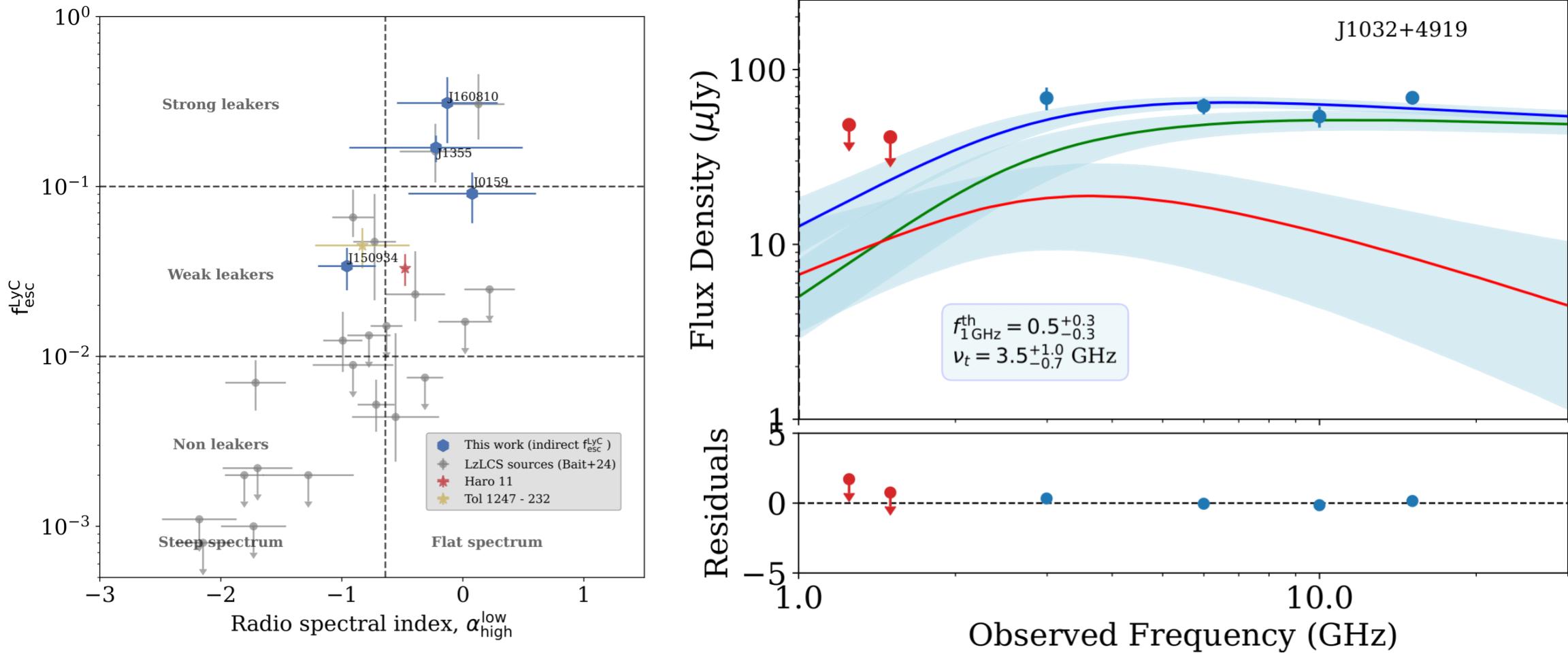
Figure: Left panel shows the relation between radio spectral index and LyC escape fraction for xSFGs (from Bait et al., 2026) and LzLCS sample (Bait et al. 2024). The plot also shows two well studied LCEs Haro 100 and Top 1245 - 232. Right panel shows the radio-SED of one xSFGs (from Bait et al. 2026) which shows a flat radio spectrum with a turnover at ~3.5 GHz and is well fit with a radio-SED consisting of a high thermal fraction and free-free absorption feature.
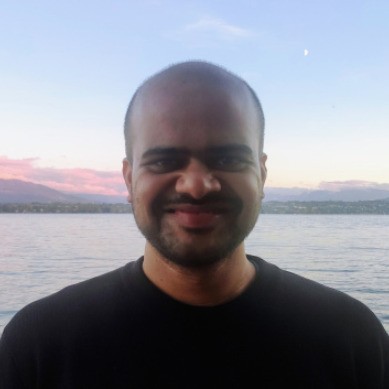
Dr. Omkar Bait is a CosmicAI Fellow at the National Radio Astronomy Observatory (NRAO) in Charlottesville, Virginia. His research focuses on developing novel AI-driven techniques for interferometric imaging, calibration, and source characterization, with the goal of enabling fully automated processing of raw radio interferometric data that currently requires significant manual intervention. Such advancements are essential to handle the data deluge expected from next-generation facilities such as ALMA Wideband Sensitivity Upgrade (WSU) and the ngVLA.
A second major component of his work is on investigating the radio properties of local metal-poor starburst galaxies, some of which are known to leak significant amounts of hydrogen-ionizing Lyman continuum (LyC) photons into the intergalactic medium. These systems serve as nearby analogs of high-redshift galaxies that are believed to have played a central role in the reionization of the Universe. However, the dominant feedback mechanisms—whether driven by supernovae or radiation - that facilitate LyC escape remain an open question.
Radio continuum emission at gigahertz frequencies, particularly from non-thermal processes tracing supernova activity, provides a powerful diagnostic of feedback. In Bait et al. (2024), Dr. Bait and collaborators conducted the first systematic JVLA study at 3 and 6 GHz of nearby (z ~ 0.3) confirmed LyC emitters from the Low-redshift Lyman Continuum Survey (LzLCS). They identified an interesting correlation between the radio spectral index and the LyC escape fraction (fesc), with high-fesc systems exhibiting flat or rising radio spectra, while low-fesc LCEs showing very steep radio spectra (see Figure left-panel). This result points to a potential role of supernova feedback, cosmic rays, and magnetic fields in enabling LyC escape.
In more recent work (Bait et al. 2026), he led a multi-frequency radio spectral energy distribution (SED) analysis of nearby (z ~ 0) metal-poor extreme star-forming galaxies (xSFGs) using JVLA and uGMRT observations. These galaxies, which show indirect evidence of strong LyC leakage, also exhibit flat radio SEDs with a few sources showing a turnover in the GHz range (see Figure right-panel). The results suggest that the radio SEDs of xSFGs contain a significant thermal emission component, possibly associated with pre-supernova stellar populations. However, the role of cosmic-ray escape in suppressing non-thermal emission remains to be fully understood. The presence of high-frequency turnovers in some systems further suggests extremely high emission measures, indicative of a dense interstellar medium.
Currently, Dr. Bait is leading a multi-frequency radio SED survey of confirmed strong LyC emitters from the LzLCS sample using the NSF VLA, while also working to push the detection of such systems to higher redshifts (z ~ 3) using deep NSF VLA observations. In parallel, he is developing a new AI-based anomaly detection framework for ALMA data using autoencoders, aimed at identifying subtle anomalies in high-dimensional radio visibility data.
He is an active member of several international collaborations, including LzLCS and LACOS, and works closely with colleagues at NRAO and the CosmicAI Institute. You can find more about his research and publications on his website.
Publications:
- Bait et al. 2024: Low-redshift Lyman Continuum Survey (LzLCS). Radio continuum properties of low-z Lyman continuum emitters
- Bait et al. 2026: Radio Spectral Energy Distribution of Low-z Metal Poor Extreme Starburst Galaxies: Novel insights on the escape of ionizing photons
Would you like your science or engineering projects featured in the NRAO Science Newsletter? Email the editor Brian Kent with your recent science publications!
ALMA News
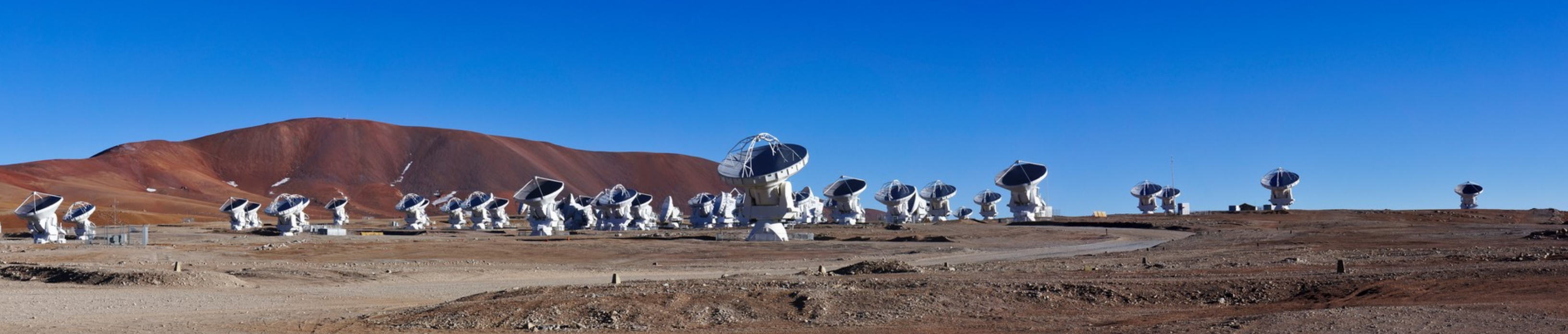
ALMA Observing Status
The Observatory resumed regular operations on March 1st, 2026 with the 12-m Array in its most compact configuration (C-1), and is now moving towards C-2 with 310 m maximum baselines.
ALMA Cycle 13: Call for Proposals open
As of Thursday March 19th, 2026, the call for Cycle 13 proposals is open, with a submission deadline of April 23rd, 2026 at 15:00 UTC. For the first time, the capability for Band 2 observations is offered on the 12-m Array. Note that Cycle 13 will include all 12-m configurations (C-1 through C-10), following this anticipated configuration schedule, with the most extended configurations planned to be offered July - Sep 2027. A web-based interface of the ALMA Observing Tool (OT) will be used for proposal submission, instead of the classic desktop-based OT.
ALMA Cycle 13: proposal preparation support
To help the North-American community in their preparation of ALMA Cycle 13 proposals, the NAASC has organized a series of ALMA proposal preparation workshops from March 20 - 31, 2026. The goal of these events is to provide users with the knowledge they need to carry out cutting-edge scientific research using the ALMA facilities. These ALMA talks are hosted by experienced postdocs and graduate students as part of the ALMA Ambassadors program. Registration for these events is free. We are particularly interested in reaching new users, so no experience with radio astronomy is required to participate! Information on the locations and dates for the remaining workshops is available on the NAASC Community Events webpage and in the table below.
| Dates | Workshop Location | Ambassador |
|---|---|---|
| March 27, 2026 | McMaster University | Woorak Choi |
| March 31, 2026 | University of Michigan | Teresa Paneque-Carreno |
In addition, to support the North American community's use of the new web-based OT, the NAASC will be holding bi-weekly virtual office hours during the call to support users encountering technical issues with the web-based OT. No registration is needed, and attendees will be paired up with a NAASC staff member for help with the tool. The drop-in office hour sessions will last for one hour each. Information the dates/times and how connect to the office hours can be found at the WebOT website. Attendees will be able to screen-share the OT with NAASC staff in 1-on-1 breakout rooms, to protect the confidentiality of their proposals.
Note that participants of these office hours will only receive support regarding technical or usability issues experienced in using the web-based OT. Proposers seeking information on proposal preparation strategies, Cycle 13 capabilities, Large Program support, or other proposal preparation questions should instead submit a ticket to the ALMA Helpdesk.
ALMA Band 2 Science Verification Data Released
Science Verification observations obtained with Band 2 last November have now been processed and the calibrated data products are publicly available. Available datasets span a variety of sources and observation modes.
- G31.41+0.31: spectral scan of one of the most chemically rich hot molecular cores located outside the Galactic Center, where high-mass star formation is occurring
- SPT 0027-50: spectral scan of a strongly lensed, dusty star-forming galaxy, including two CO transitions for redshift identification
- HR 5907: full polarization of a main-sequence V star displaying variability
- Arp 220: spectral scan of the nearest ultraluminous infrared galaxy
Information on the Science verification projects and the data are available from this page.
The ALMA Wideband Sensitivity Upgrade (WSU)
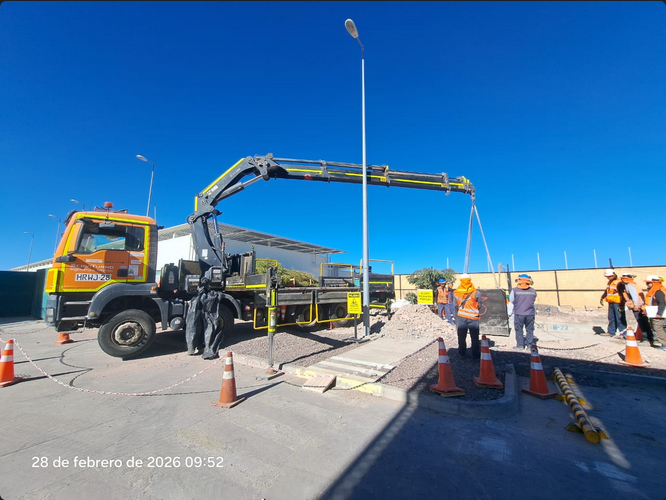
Photo left: Unloading and installation of a prefabricated concrete chamber for rain drainage and evacuation. Credit: Héctor Pérez (OCRO Site Supervisor)
The WSU program achieved several significant milestones over the winter: the Total Power GPU Spectrometer (TPGS) and the receiver Band 6v2 both passed their Preliminary Design Reviews (PDRs). Reviews for Software Adaptations and for Band 8v2 are upcoming, while on site, the construction of the new correlator room (OCRO) is rapidly progressing as shown in the pictures (left and right).
You can find the most up-to-date information about the WSU project and its scientific impact on the ALMA Observatory WSU webpage; resources for the North American community can be found on the NAASC WSU webpage.
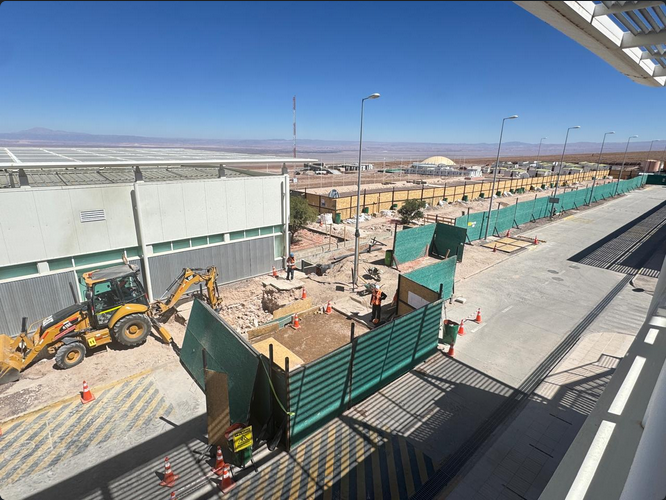 Photo right: Road crossing works for the installation of electrical ducting for the main electrical feeder to the UPS room and back to the OCRO Room. Credit: Héctor Pérez (OCRO Site Supervisor)
Upcoming Events - DISCO: Disks in context
The DISCO: Disks in Context conference will take place on September 21-24, 2026, at the National Radio Astronomy Observatory in Charlottesville, USA, adjacent to the University of Virginia. The event focuses on the role of star-forming environments in shaping planet-forming disks. Abstract submission is now open for contributed talks and posters - please see the submission form. The abstract submission deadline is April 30, 2026. Limited travel support is available for early career researchers. Visit the conference website for more details.
ngVLA Project News
2nd Annual Cosmic Horizons Conference in Charlottesville, Virginia
The recent revolution in AI is fundamentally changing how astronomers observe, explore, analyze, and model astronomical data. From July 14 to 16, this conference will bring together researchers who are actively developing and applying AI/ML methods in astronomy. Abstract submissions close next week, on April 1. Discounted registration closes May 15.
ngVLA Science Conference in Sendai, Japan
As the ngVLA project advances toward its next development phase, it is timely to consolidate and expand the international science community, refine key science drivers, and explore synergies with other major observatories. From November 10 to 13, 2026, this conference will bring together experts from a broad range of fields to share compelling science cases, identify new opportunities enabled by the ngVLA, and foster collaborations that will further strengthen the momentum of this next-generation facility. A conference web site will be available soon.
ngVLA Science - Molecular Gas in Dusty Star-forming Galaxies at z = 1-6
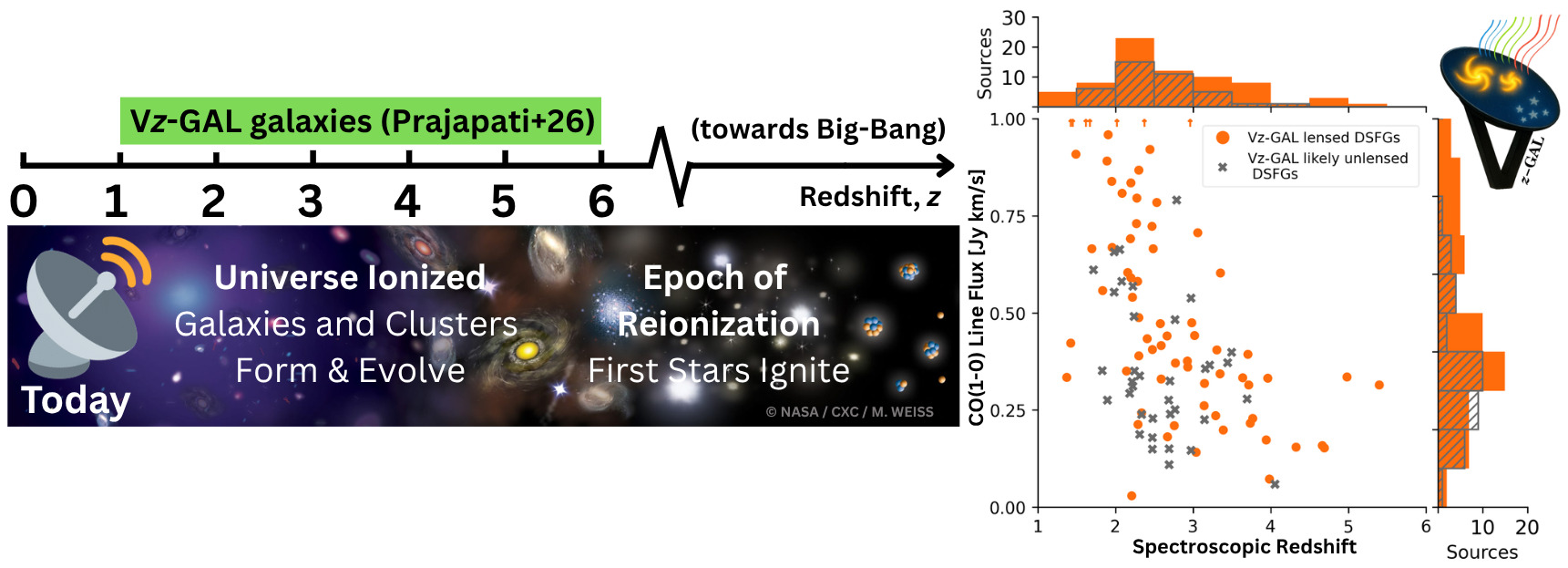
Figure: CO(1-0) line fluxes for Vz-GAL galaxies spanning the peak epoch of cosmic star formation. Potentially lensed systems are identified using high-resolution ALMA and HST data, highlighting the need for ngVLA to enable complementary, efficient, spatially resolved cold gas follow-up. Adapted from Prajapati et al. (2026).
Cold molecular gas is a fundamental component of the multiphase interstellar medium in star-forming galaxies and serves as the primary fuel for star formation. Observations of this constituent are especially critical in heavily dust-obscured galaxies at high redshift z, where traditional star-formation tracers are attenuated. While most studies rely on higher-J CO transitions, the intrinsically faint CO(1-0) line remains essential for accurately probing extended cold molecular gas reservoirs and constraining excitation conditions, despite its observational challenges. Until recently, low-J CO measurements were limited to heterogeneously selected samples, preventing robust statistical studies of dusty high-z galaxies.
Our recent VLA Vz-GAL large program has addressed this gap by targeting CO(1-0) in 135 Herschel-selected dusty star-forming galaxies (DSFGs) at z=1-6, spanning the peak epoch of galaxy assembly (the so-called 'cosmic noon'). The latest Vz-GAL catalog (Prajapati et al. 2026) more than doubles the number of high-z CO(1-0) detections, enabling statistically robust separation of intrinsic cosmic trends from small-number biases (see figure).
With homogeneous sample selection and available total infrared luminosities as star-formation rate proxies (Berta et al. 2023), the Vz-GAL-derived integrated CO(1-0) luminosities as molecular-gas mass proxies enable systematic investigation of the Kennicutt-Schmidt relation and the redshift evolution of gas depletion timescales. Comparisons with local analogs such as ULIRGs (Sanders & Mirabel 1996) confirm a self-regulated star-formation mechanism that maintains a nearly constant star-formation efficiency across high-z DSFGs and local starbursts, although high-z systems typically host larger molecular gas reservoirs.
The statistical Vz-GAL sample also helps us derive CO excitation ratios up to J=6. The resulting CO spectral line energy distributions, peaking at J=4-6, resemble those of local starbursts but exhibit substantial diversity in excitation conditions. The large CO(1-0) dataset further enables empirical calibration of alternative cold gas tracers, including CO(2-1) and [CI](1-0). Combined CO, [CI], and continuum observations, anchored by CO(1-0), support semi-empirical excitation modeling to better constrain gas mass, temperature, density, opacity, and the CO-to-H2 conversion factor.
Vz-GAL will remain the most comprehensive northern-sky CO(1-0) statistical sample until the advent of the ngVLA. With an order-of-magnitude sensitivity improvement and broader frequency coverage, the ngVLA will detect fainter and more distant DSFGs, measure low-J CO lines alongside multi-band radio continuum, and constrain synchrotron slopes across wide redshift ranges. It will also enable spatially resolved low-J CO studies of gravitationally lensed galaxies on kiloparsec scales, probing cold gas dynamics, excitation, and the Kennicutt-Schmidt relation. Such studies currently require at least 30-50 hours per source with the VLA but will become significantly more efficient with the ngVLA. In summary, the ngVLA will transform CO(1-0) studies from statistical samples into precision astrophysics, enabling a comprehensive and physically anchored understanding of cold molecular gas, star-formation regulation, and galaxy evolution across cosmic time.
Since 2015 the acronym ngVLA has appeared in 1550+ publications indexed in the SciExplorer Data System. This article continues a regular feature intended to showcase some of those publications. We are especially interested in showcasing work done by early-career researchers. The collection of showcase articles can be viewed online. Anyone wishing to volunteer to author a feature should contact Joan Wrobel.
Very Large Array - Astrophotography Workshop
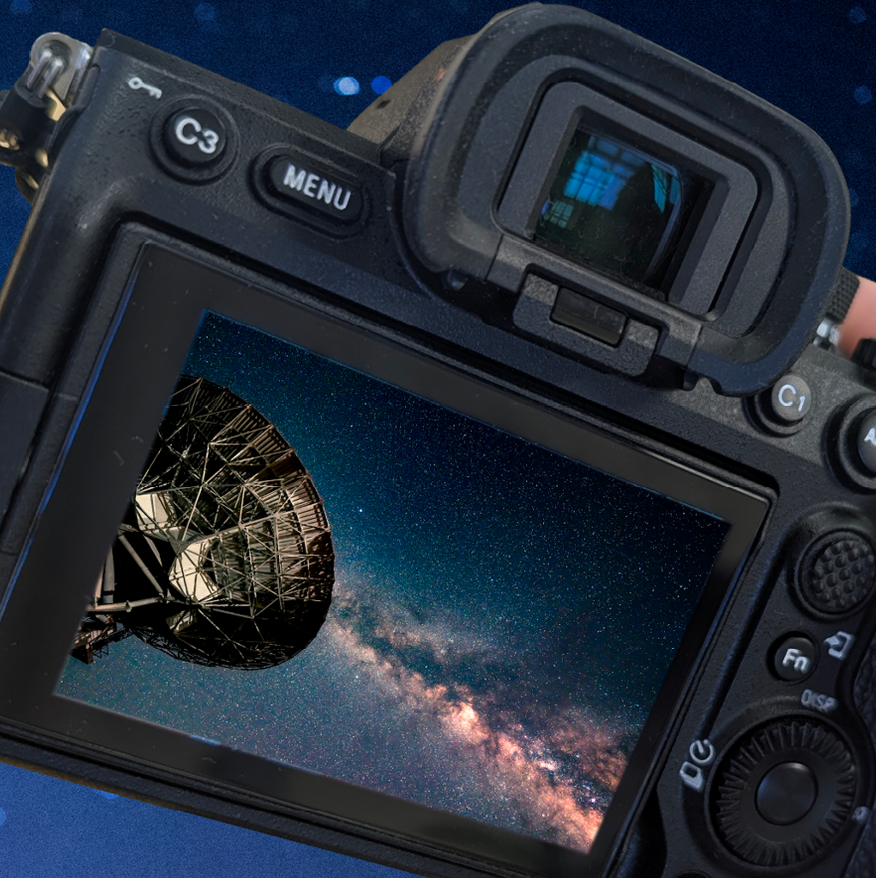
Saturday, April 18, 5:00-10:00 PM Mountain
Have you always wanted to photograph the night sky but didn't know where to start? Join us for an evening at one of the most breathtaking locations in the world, the Very Large Array, for a hands-on astrophotography workshop designed with beginners in mind.
The workshop begins in the classroom and moves outside as the sun sets over the New Mexico desert, and the stars begin to emerge. You'll learn everything you need to capture stunning images of the night sky. No experience necessary, just bring your camera and your curiosity.
What you will learn:
- Camera settings for night photography (aperture, shutter speed, ISO, etc.)
- How to compose compelling shots using the VLA's iconic dishes as your foreground
- Milky Way basics: how to find it, track it, and photograph it
- Light painting techniques to add drama and color to your long exposures
Please visit the workshop page for more information.
Recent Science Media Releases
 |
NSF NRAO Names Albuquerque's Jeff Hoehn to Director of Advancement for Next Generation Learning Center |
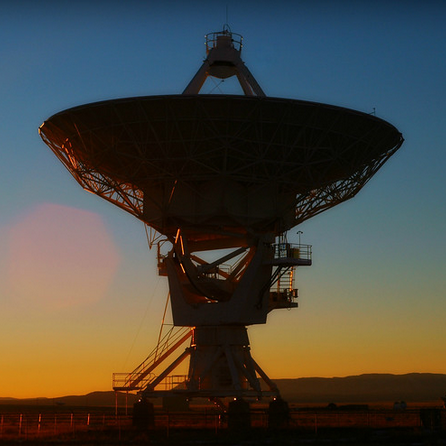 |
NSF NRAO to Host Spring 2026 VLA Open House |
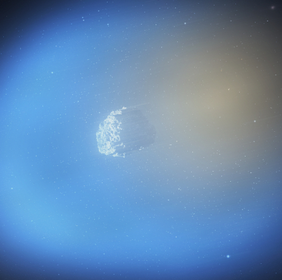 |
ALMA Detects Extremely Abundant Alcohol in Interstellar Comet 3I/ATLAS |
|
Contact the NRAO press office to share your new and exciting science results. |
From the Archives
Ellen Bouton
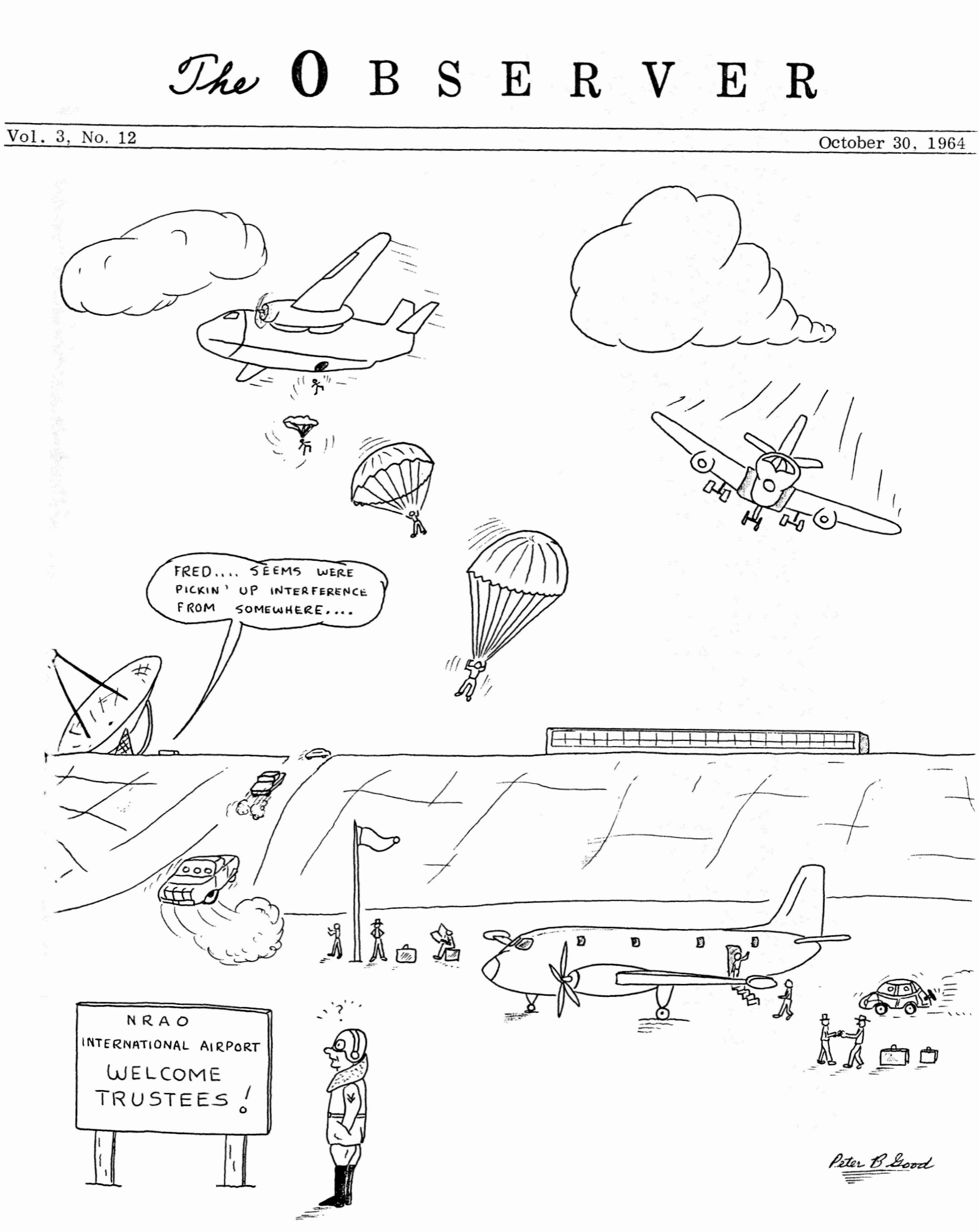
About this month's photo: The AUI Board of Trustees met in Green Bank on 15-16 October 1964. "They came to Green Bank by every available modern day means," said the 30 October 1964 issue of NRAO's then newsletter, The Observer. The landing notice for the Green Bank air strip was first filed with the FAA on 14 August 1963. For the next three years, including the time of the 1964 Trustees meeting, it was only a sod strip, noted as rutted and unusable in some months. In June 1966 NSF awarded funding to pave it, and after grading and paving, the air strip officially opened for use (with qualifications) in November 1966. Over the following decades AUI officials, some visiting observers, and West Virginia Governor Jay Rockefeller were regular users. NRAO no longer maintains the air strip, although it is still used occasionally as a medivac site for helicopters in case of emergencies in surrounding counties.
From the Archives is an ongoing series illustrating NRAO and U.S. radio astronomy history via images selected from our collections of individuals' and institutional papers. If readers have images they believe would be of interest to the Archives, please contact Ellen Bouton.