NRAO Newsletter
Volume Vol#, Issue Iss#
Day# Month# Year#
NRAO Newsletter
Volume Vol#, Issue Iss# • Day# Month# Year#
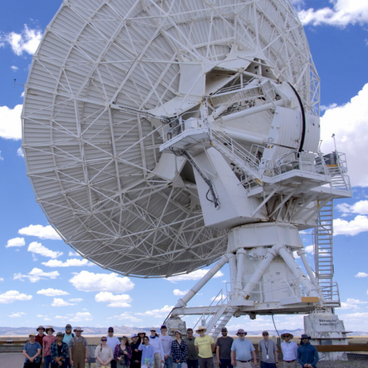
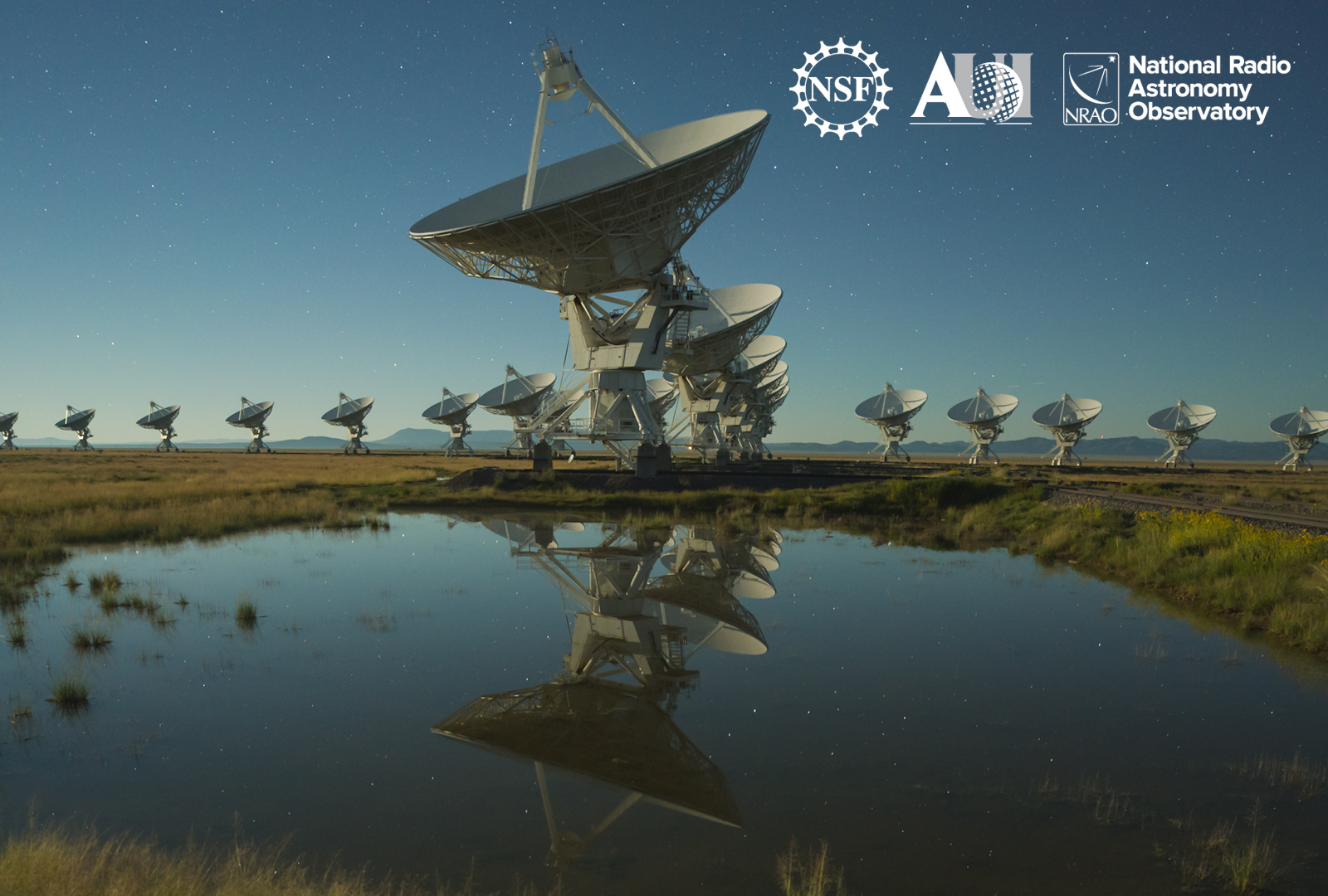 New Mexico, home to the NSF Karl G. Jansky Very Large Array. Photo by Jeff Hellerman (U.S. NSF / AUI / NSF NRAO).
Upcoming Science Events

ALMA Ambassadors Workshops
August-October 2025 | Various Locations

ADASS 2025
November 9-13, 2025 | Goerlitz, Germany

AAS 247
January 4-8, 2026 | Phoenix, Arizona
CASA 6.6.6-17 with Pipeline 2025.1.0.32 Released for VLA Data Processing and ALMA User-Defined Imaging (AUDI)
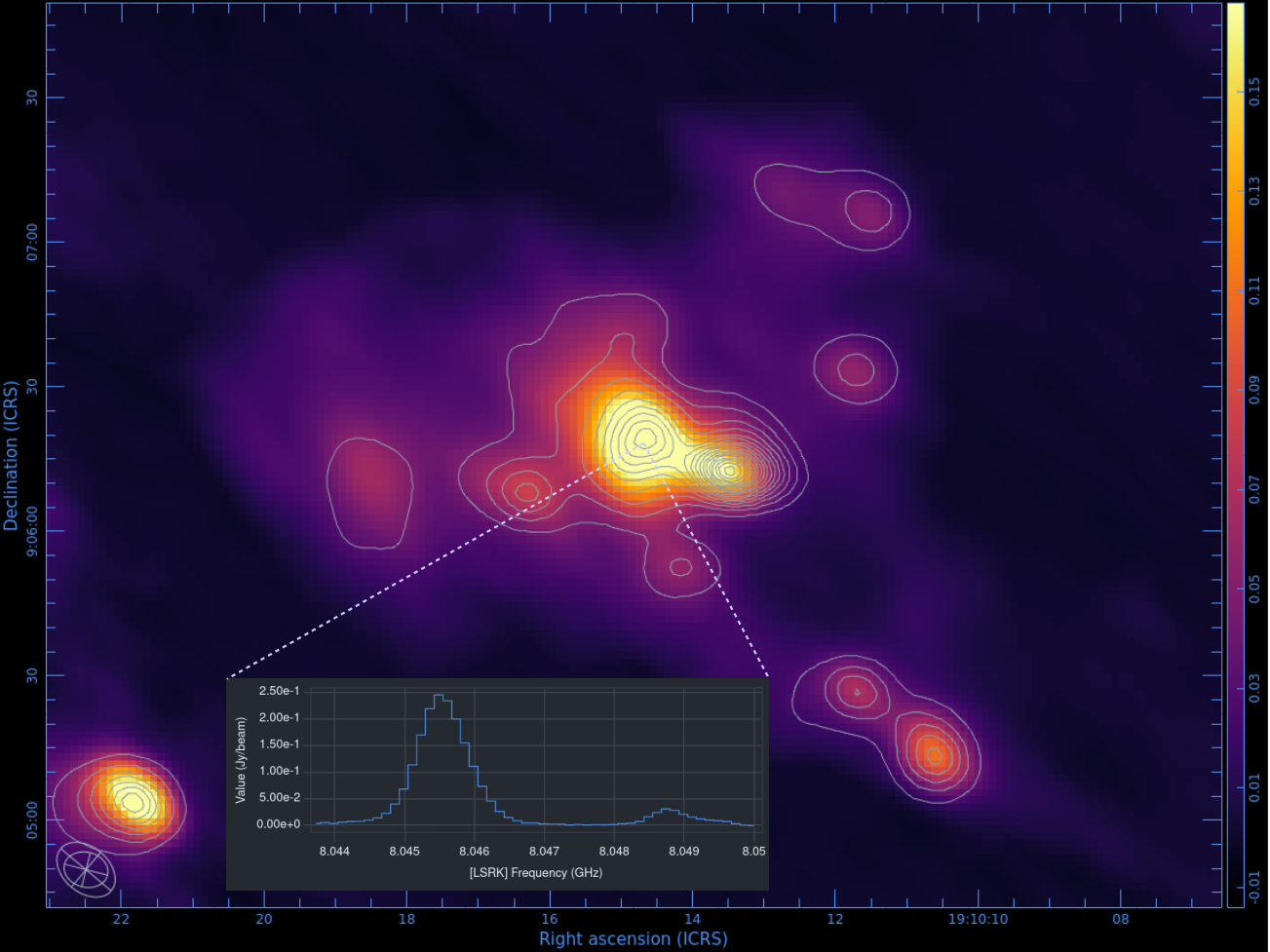
This figure (left) shows a peak intensity image of the Hydrogen (93) alpha recombination line at 8.0456 GHz toward W49 taken by the VLA in D-configuration, from program 15A-089 (PI: C. De Pree). The inset spectrum shows both the aforementioned Hydrogen line and the adjacent Helium (93) alpha recombination line at 8.0489 GHz. The contours highlight the X-band continuum data tracing free-free emission in the region. The spectral line data were automatically processed by the VLA calibration and imaging pipeline in CASA 6.6.6-17-pipeline-2025.1.0.32. Click the image to enlarge.
The CASA and NRAO pipeline teams have released a new version of the VLA calibration and imaging pipeline (2025.1.0.32), running on CASA 6.6.6-17. This version is also available for use with the ALMA User-Defined Imaging service (AUDI) within the NRAO archive. This version is now installed on NRAO systems and can be downloaded by users. This pipeline version has some small differences from the version that ALMA will use for data processing, but there are no significant differences in the imaging portions of the pipelines.
The VLA previously deployed a new pipeline in March 2025 (improving on the October 2024 release) that fully enabled spectral line data to be processed in the automatic pipeline runs at NRAO. As such, this latest VLA pipeline has focused on correcting the most major issues that appeared during the first 6 months of spectral line processing and improving the QA scores for the VLA pipeline.
The primary new features of the pipeline that are specific to the VLA are:
- The pipeline will continue to completion even when a calibrator is fully flagged.
- QA scoring has been updated for hifv_hanning, hifv_flagdata, hifv_vlasetjy, hifv_syspower, hifv_checkflag, hifv_solint and hifv_statwt.
- Spectral line imaging will use the largest 'good' beam in a cube for image restoration, avoiding erroneous larger beams that can result from flagging.
- Bugs that stopped the imaging pipeline when some spectral windows were fully flagged have been fixed.
- Cases where sub-optimal pixel size and image dimensions could be selected if the highest frequency spectral window was heavily flagged have been fixed.
- The parameter 'spws_to_smooth' is now available in the hifv_hanning task, enabling manual control of what spectral windows to Hanning smooth.
- Bad deformatter flagging can be turned off completely or for antenna, bands, and spectral windows.
- The task hifv_pbcor is removed from recipes since tclean will now perform the primary beam correction.
- Various bugs fixed in the hif_selfcal task; self-calibration of certain mosaics is now possible (mostly ALMA).
The primary new features of the pipeline for ALMA User-Defined Imaging (AUDI) are:
- Improved self-calibration outcomes for long baseline data.
- Self-calibration support for ALMA mosaic data.
- Bug fixes and other minor improvements to the hif_selfcal task.
A more detailed description of the VLA Calibration pipeline is available, along with a description of the VLA Imaging pipeline. More information about automated self-calibration is available. See also the ALMA pipeline documentation for general, non-VLA-specific infrastructure changes.
Call for Applications - 2026 Jansky Postdoctoral Fellowship Program

The NSF National Radio Astronomy Observatory (NRAO) invites applications for the 2026 Jansky Fellowship Program. The Jansky Fellowships support outstanding early career scientists to conduct independent research which exploits NSF NRAO facilities and contributes to the NSF NRAO's mission. We welcome applicants who bring innovative dimensions to the Observatory and to the field of radio astronomy. As a Jansky Fellow, you will have a unique opportunity to contribute to, and learn from, the development and delivery of the largest and most capable radio telescopes in the world. Candidates with interests in radio astronomy and multiwavelength science, radio astronomy techniques, instrumentation, computation, and theory are encouraged to apply.
Appointments may be made at the three internal NSF NRAO/GBO sites (Socorro NM, Charlottesville VA, and Green Bank WV). Applicants should describe how their research or technical interests couple with NRAO's mission, telescopes or science. In compelling cases, a "split appointment" Jansky Fellowship between a U.S. based university and an NRAO site, or a "non-resident" Jansky Fellowship hosted at a university within the United States, may be offered. Non-resident Jansky Fellows are expected to develop a research program that fosters close ties with the NRAO and describe how residence at their proposed host university will accomplish this.
The Jansky Fellowship appointment is awarded initially for a two-year period, renewable for a third year. The salary is at the level comparable with other prestigious U.S. postdoctoral fellowships. For more information and details on how to apply the prospective candidates are requested to consult the NRAO Job website and program description.
The application deadline is 11:59 pm EDT on Wednesday, October 22, 2025, for the appointments starting in the Fall 2026.
Questions or assistance with the application procedure, as well as requests for additional information on the Jansky Fellowship Program may be emailed to Jansky2026@nrao.edu.
NRAO Telescope Facilities Reach One Million Citations
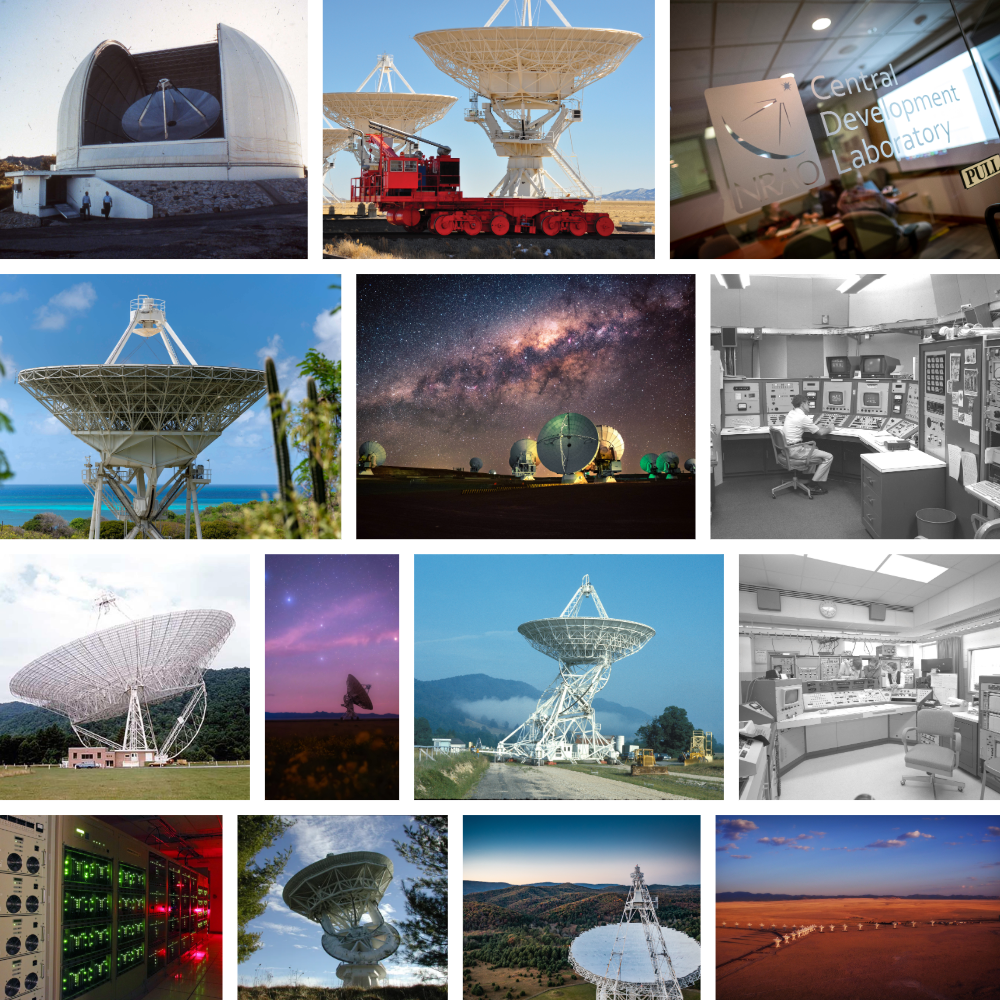
Photos courtesy of Jeff Hellerman, Bettymaya Foott, Jay Young, Brian R. Kent, S. Argandoña (US NSF/AUI/NSF NRAO/NSF GBO/ALMA/NAOJ/ESO)
A major milestone has been achieved for the National Radio Astronomy Observatory: the number of NRAO telescope citations has now crossed one million!
This number reflects the total of all citations to refereed NRAO/GBO telescope papers and excludes all papers by staff authors that do NOT use NRAO/GBO telescope data.
This achievement reflects decades of groundbreaking work enabled by the world-class VLA, VLBA, ALMA, GBT, and other past facilities, as well as the dedication of all NRAO staff and users who support the mission of advancing scientific discovery. From engineering and operations to science and outreach, each contribution has played a part in making NRAO radio telescopes the most scientifically productive in the world.
As we celebrate this remarkable accomplishment, we also look forward to the discoveries yet to come with next-generation facilities and advancements including the ngVLA, ALMA Wideband Sensitivity Upgrade, next gen Radar, and beyond.
Congratulations to the community for their contributions that helped the NRAO reach this historic milestone.
Thanks to NRAO Librarian Lance Utley for the compilation and tracking of these publication metrics.
2025 Jansky Lectures with Dr. Jean Turner
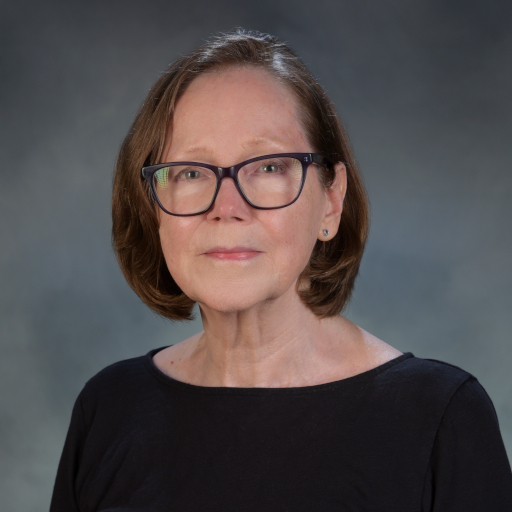
The NRAO will be hosting a series of public lectures for the 2025 Karl G. Jansky Lectureship, awarded to Dr. Jean Turner, Distinguished Professor Emerita, Research Professor, University of California, Los Angeles. The Jansky Lectureship is an honor established by the trustees of AUI to recognize and celebrate outstanding contributions to the advancement of radio astronomy.
Jean Turner earned her A.B. from Harvard University and her Ph.D. from UC Berkeley. Prior to joining the faculty at UCLA, she conducted research at the Harvard-Smithsonian Center for Astrophysics and held visiting scientist positions at Caltech, the Space Telescope Science Institute, and the Joint ALMA Observatory.
In addition to her observational work, Jean played a key role in the development and commissioning of two major millimeter and submillimeter facilities: the Hat Creek Millimeter Interferometer and the Atacama Large Millimeter/Submillimeter Array (ALMA). She is a fellow of the American Association for the Advancement of Science.
Jean is recognized for her groundbreaking research in radio astronomy, with a focus on star formation, molecular clouds, and the interstellar medium. Her work has advanced our understanding of the structure and dynamics of star-forming regions in both the Milky Way and nearby galaxies through high-resolution radio and millimeter-wave observations.
A central theme of her research is the study of super star clusters and compact, energetic sites of massive star formation. Her investigations of galaxies such as NGC 5253—using instruments like ALMA—have shed light on how massive stars and clusters form in dense, dust-enshrouded environments. Her detailed analysis of ionized and molecular gas, along with dust properties, has provided key insights into the earliest stages of star and galaxy evolution.
Moreover, Jean has significantly advanced the use of molecular tracers to probe dense gas and the conditions that foster efficient star formation. Her pioneering application of interferometric techniques has enabled precise mapping of gas dynamics and structure, refining our models of how massive stars shape their environments. Alongside her scientific contributions, she is a dedicated mentor and a leader in major observational efforts, firmly establishing her as a prominent figure in contemporary radio astronomy.
The lecture title will be Exploring the Dusty Origins of Star Clusters.
The public lectures will take place on the following dates:
- Charlottesville on Thursday, October 30, 2025. University of Virginia, Chemistry Building Room 402, 6:30PM ET.
- Green Bank on Monday, November 3, 2025. The lecture will take place in the Science Center auditorium starting at 7PM ET followed by a light reception with the Green Bank staff.
- Socorro on Friday, November 21, 2025. The lecture will start at 7PM MST at the Macey Center followed by a reception.
Volunteers Needed to Serve on VLA, GBT, & VLBA Science Review Panels

Image by Brian R. Kent (US NSF/AUI/NSF NRAO/NSF GBO)
Members of NRAO's Science Review Panels (SRP) play a very important role in identifying the Science Programs for these world-leading radio telescopes. Being a reviewer could help you to:
- Learn what science other astronomers are interested in;
- Get a sense of what makes the most compelling proposals;
- Build your group of professional contacts and potential collaborators;
- Understand the review process for a major observatory.
If you are interested, please apply to be a volunteer SRP member!
ALMA Ambassadors Program for Cycle 13
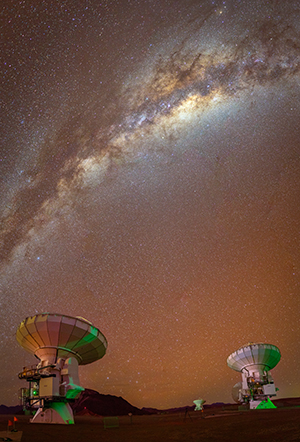
Image by Bettymaya Foott (US NSF/AUI/ALMA)
The North American ALMA Science Center (NAASC) is accepting applications for the ALMA Ambassadors Program, with a deadline of October 31, 2025. The program provides training and up to a $5,000 USD research grant (other forms of payment are available, see the ALMA Ambassadors website) to postdoctoral researchers, senior graduate students, and early career researchers interested in expanding their ALMA/radio interferometry expertise and sharing that knowledge with their home (or other) institutions. For Cycle 13, ALMA Ambassadors can choose to support the community by organizing and hosting (1) ALMA Cycle 13 proposal preparation support workshops (Spring 2026), and/or (2) ALMA-focused data processing and analysis workshops (Fall 2026). Applications seeking to host both proposal preparation and data processing workshops will be favored.
The NAASC will provide travel support for the training as well as all talk materials, supplies, and infrastructure for the workshops hosted by the ALMA Ambassadors. Some radio or submillimeter interferometry experience is preferred but not required. Applicants must be based at a North American institution. If you do not meet these requirements but are interested in learning more about the training we are offering, please contact George Privon to discuss opportunities. We will consider both individual and coordinated applications from users in the same institution or region.
The NAASC will host the selected Ambassadors at the National Radio Astronomy Observatory headquarters in Charlottesville, Virginia in February and August 2026 to receive in-depth training. Training will include topics related to ALMA proposal writing, including: interferometry basics, ALMA science capabilities, recent ALMA headlines, use of the ALMA Observing Tool, and guidance for speaking on these topics. The training also includes a poster session where ALMA Ambassadors will showcase their own science to their fellow ambassadors and the local astronomical community, including NRAO staff. Ambassadors must host a proposal preparation workshop in advance of the Cycle 13 ALMA proposal deadline (Spring 2026) and/or data analysis and processing workshops (Fall 2026). These workshops may be held at the ambassador's home institute, an alternate location, or virtually. ALMA Ambassadors will also make themselves available to help their local community between the call for proposals and the deadline and support other NAASC activities.
The deadline to apply is October 31, 2025. For more information, please visit the ALMA Ambassadors website.
The End of Star Formation
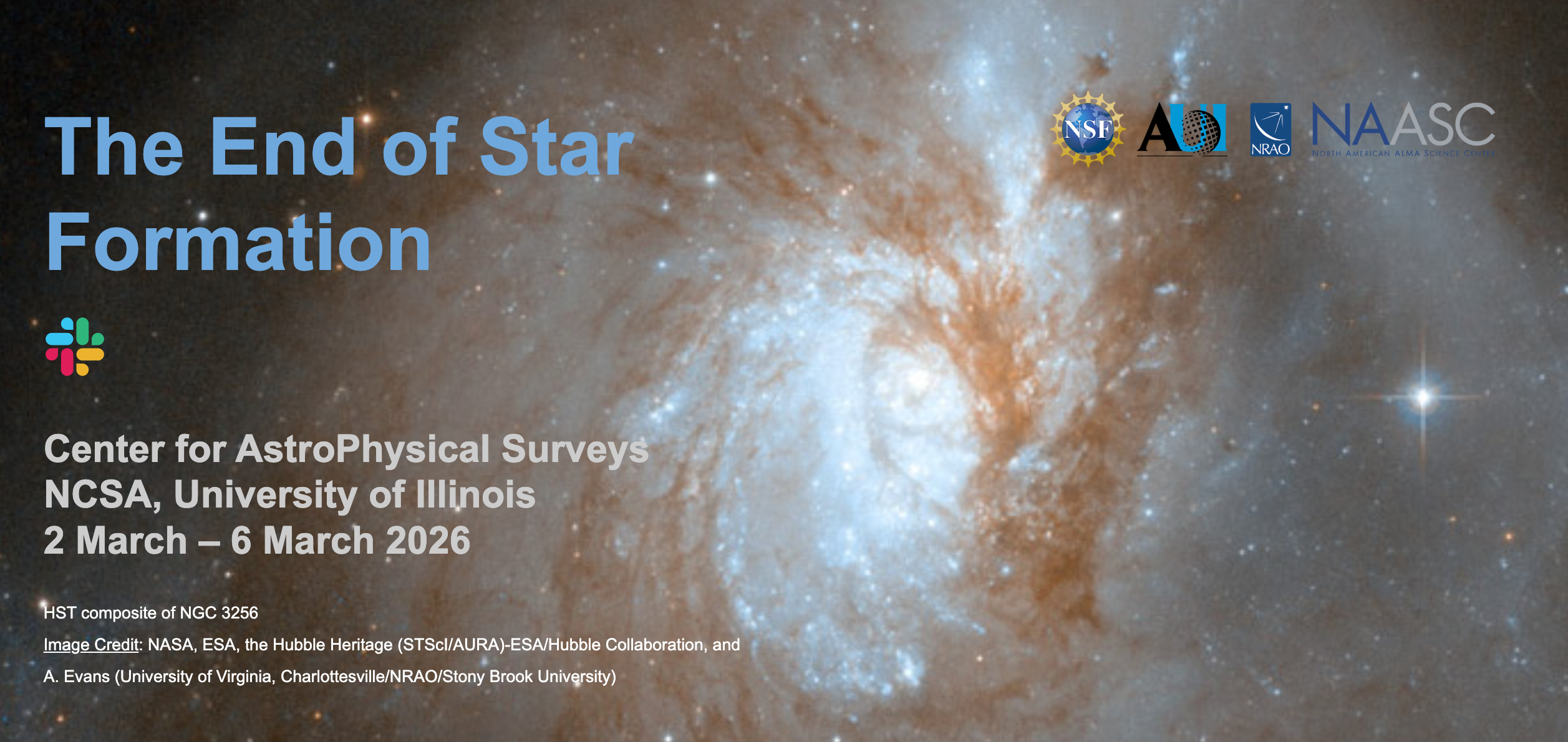
We are excited to announce that abstract submission will open soon for the conference "The End of Star Formation" scheduled to be held at the Center for AstroPhysical Surveys, University of Illinois, Urbana IL, March 2-6, 2026.
Galaxy merging is a central prediction of the Lambda-CDM paradigm, and has the potential to drive rapid changes in galaxy properties. Most importantly, mergers have the potential to both rapidly enhance and then rapidly halt - or "quench" - star formation in the remnant. In this conference, we will bring together members of the astrophysical community studying the merger-driven rapid quenching of star formation in galaxies, from the nearby universe to high-redshift. We aim to address the following key questions:
1. What are the main mechanisms for rapid quenching and what are its signatures?
2. How is rapid quenching related to morphological change and the buildup of central black holes?
3. What are the big open questions regarding the physics of rapid quenching?
4. What is the influence of AGN throughout the quenching phase?
5. What have we learned in the last several years (with e.g., JWST, ALMA, new cosmological simulations, etc.) and how will upcoming facilities progress our understanding of rapid galaxy quenching?
The idea of this meeting is to bring together observers, with experience at all wavelengths, and theorists working on rapid quenching at any simulation scale. With a focus on discussion and model - observation comparison, we aim to identify the biggest open questions on how and why galaxies quench, and collaboratively discuss which areas are most critical for advancement.
More information can be found at the conference website. Abstract submissions will be open shortly, and be due November 15, 2025. Note that some travel funding for North American early career participants will be provided by the NAASC.
GBT Observer Training Workshops
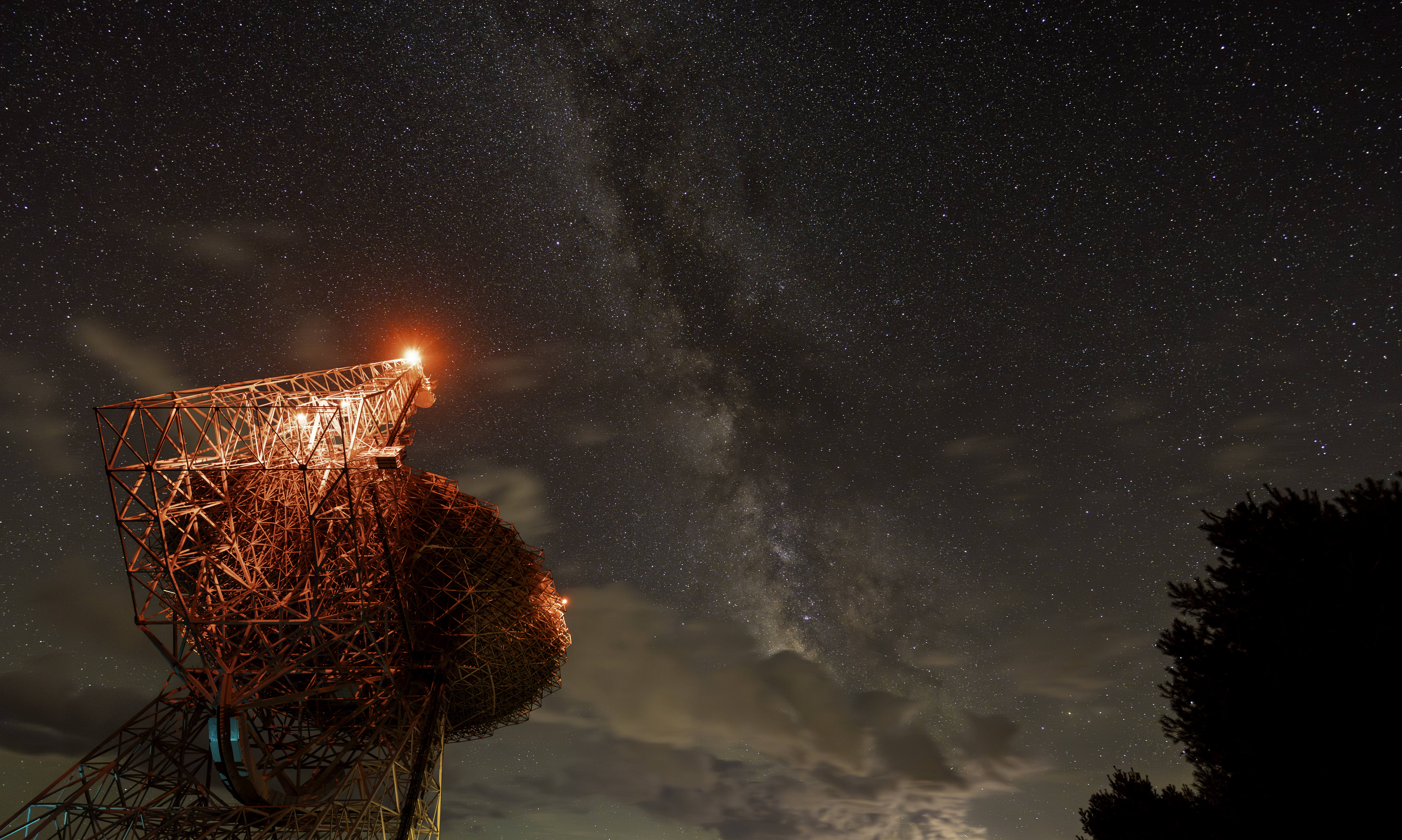
The Green Bank Telescope (GBT) Observer Training Workshops provide the essential skills and knowledge needed to use the GBT and maximize its scientific output. It is intended for experienced astronomers (including advanced undergraduates and graduates) who need to learn the specifics of observing with the GBT. The workshops will focus on hands-on training in the observing techniques most relevant to the participants (e.g. high-frequency mapping, continuum, pulsar observations etc.).
Visit the GBO website to register for the next virtual workshop, taking place November 4-7, 2025. The application deadline for registration is October 10.
Image by Jeff Hellerman (US NSF/AUI/NSF GBO)
GOALS Workshop 2025
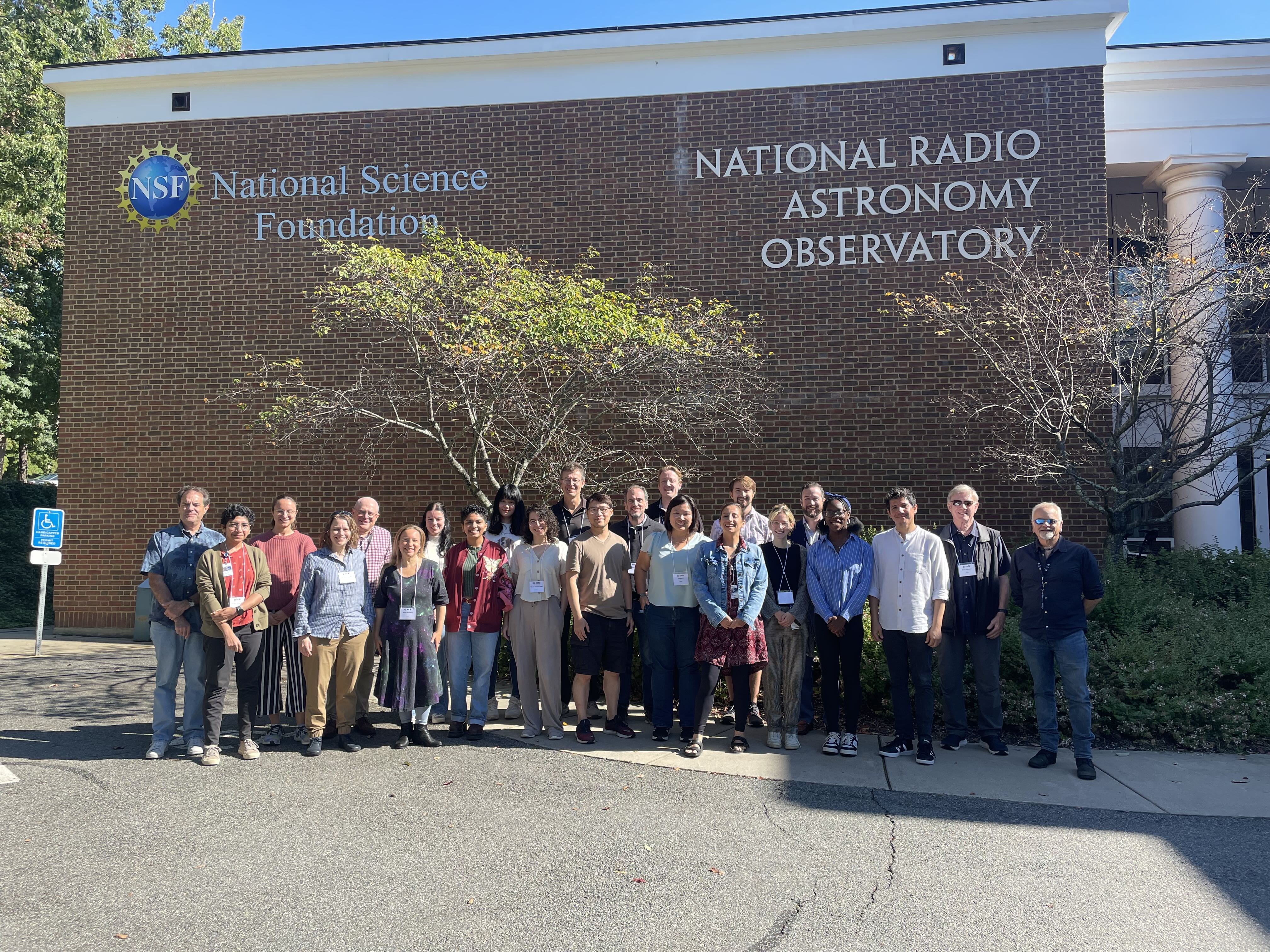
The Great Observatory All-sky LIRGs Survey (GOALS) collaboration consists of more than 40 international members studying local Luminous Infrared galaxies, with two big concentrations of members in the West (UC, Caltech, IPAC) and the East US coast (STScI/UVA/NRAO), as well as collaborators in Europe and Japan. The collaboration held their annual meeting at NRAO, Charlottesville from September 16-18, 2025, sponsored by the North American ALMA Science Center (NAASC). During the meeting, more than 30 participants came together to share their results, including observations from ALMA, VLA, VLBA, GBT, Herschel, Spitzer, JWST, Keck, HST, CFHT, VLT, GALEX, Chandra, and NuSTAR! In addition, early organization for their awarded ALMA Large Program was kicked off. This approved Cycle 12 Large Program aims at characterizing the physical processes which drive extreme star formation and feedback in local luminous infrared mergers.
ALMA News
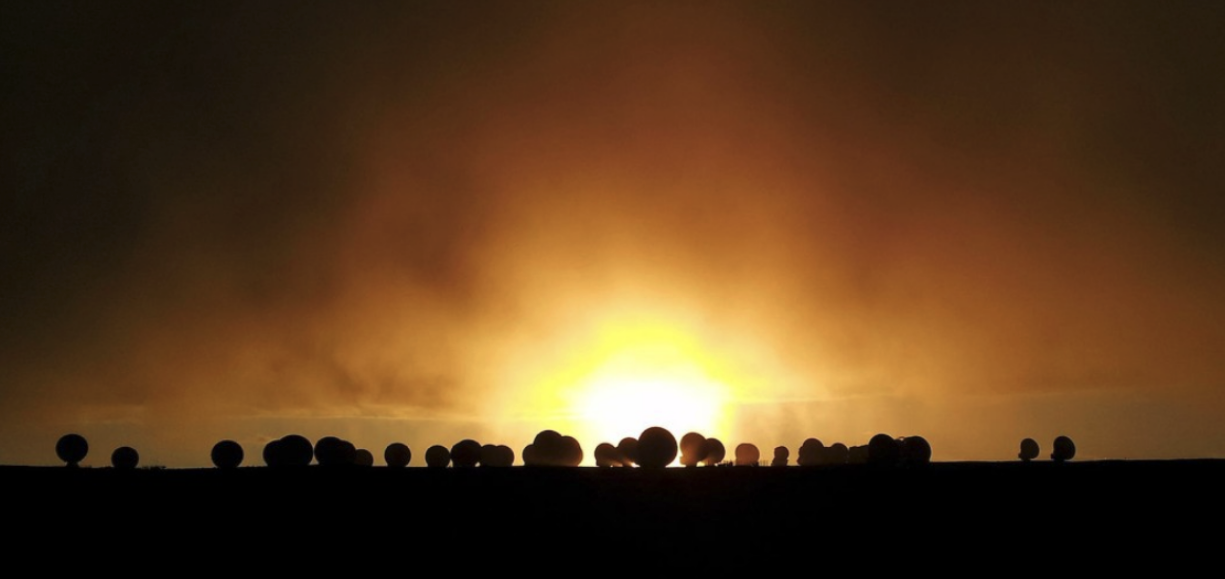
ALMA was in its long-baseline configuration as planned during the southern hemisphere winter, with antennas spread across Llano Chajnantor over an area larger than encompassed by the Paris Peripherique, and it then began the transition towards shorter baselines. Wintry weather occurred as expected, but the southern hemisphere spring has begun. Here we see a dramatic break in clouds during a snowstorm. Photo by J. Guarda, ALMA (ESO/NAOJ/NSF NRAO).
ALMA Status
It is early Spring at the ALMA site at Llano Chajnantor. Cycle 11 ended with the array in configuration C-8 before moving to more compact configurations as the year progresses. Cycle 12 observing commenced on October 1st. More information about the Cycle 12 projects and the Cycle 12 proposal review process can be found in this report.
ALMA Cycle 11 Surpasses 4,300 Hours of Observations
ALMA Cycle 11 for the first time surpassed 4,300 hours of observations, reaching a total of 4,482 hours. Thanks to the dedicated work of the entire ALMA team!
Science Highlight
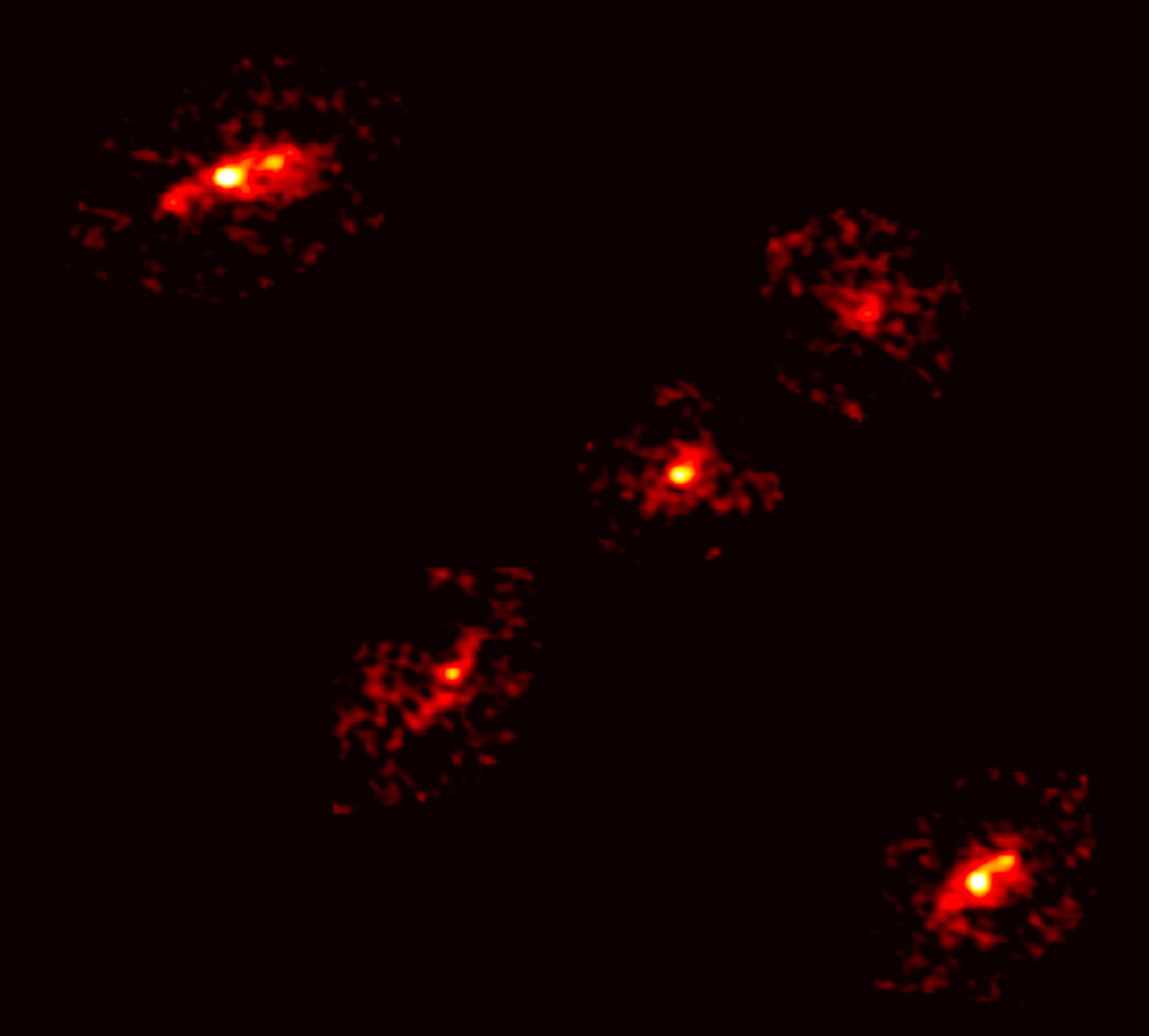
An international team of astronomers, including researchers from ALMA, has discovered a spectacular Einstein Cross in the distant universe that reveals the hidden presence of dark matter. Observations used data from the Atacama Large Millimeter/submillimeter Array (ALMA) in Chile, the Northern Extended Millimeter Array (NOEMA) in France, the Karl G. Jansky Very Large Array (VLA) in the USA, and the NASA/ESA Hubble Space Telescope.
The findings are now published in the Astrophysical Journal.
ALMA Wideband Sensitivity Upgrade (WSU)
Installation of the new wide-bandwidth ALMA Band 2 (67-116 GHz) receivers continues, with 19 receivers installed and available for commissioning. Data acquisition and analysis for some tests have already begun.
Work on other elements of the ALMA Wideband Sensitivity Upgrade is proceeding.The Critical Design and Manufacturing Readiness (CDMR) Review for the Fiber Optical System is scheduled this month at the ALMA Operations Support Facility (OSF).
A new Advanced Technology ALMA Correlator (ATAC) Project Manager has begun work on ATAC at NRAO, Charlottesville. Work has also begun on building the new ATAC correlator room at the ALMA Operations Support Facility (OSF).
Visits to the NAASC
The NAASC welcomes and encourages visits from community members to the Charlottesville NRAO Headquarters. Visits can have different goals: getting expert assistance for data reduction or proposal preparation ("face-to-face" visits), scientific collaborations with NAASC staff on ALMA data, or just taking advantage of computing facilities for data analysis and paper writing. Remote visits for data reduction support are also possible. Please note that at this time, the NAASC is not offering funding for face-to-face visits.
To request such visits, the visitor should submit a ticket to the "Face-to-face visits" department of the helpdesk. Visitors will have access to office space and, as needed, computer support. See the visitors website for more details.
Talks now available: "Born in Fire: Eruptive Stars and Planet Formation"
This NAASC-sponsored meeting brought together over 100 scientists from the planet formation and eruptive star communities for four days of dynamic discussions, from September 24-27, 2024, in Santiago, Chile. The conference was marked by healthy and constructive discussions across a wide range of career stages, a touch of Chileanity for atmosphere, and the birth of several new collaborations.
All talks are now available on YouTube.
Upcoming Events
ALMA Cycle 12 Data Processing Workshops
The Cycle 12 ALMA Ambassadors data processing workshops continue in October. It's not too late to attend an event and learn about imaging ALMA data, analyzing images and cubes with CARTA, or the latest updates to CASA and the ALMA Pipeline! See the Community Events page or the list below for information on the remaining workshops.
| Ambassador | Workshop Location | Date |
|---|---|---|
| Pallavi Patil | Johns Hopkins University | October 28, 2025 |
| Pietro Curone | Universidad de Chile | October 29, 2025 |
247th AAS Meeting, January 4-8, 2026, Phoenix, AZ
The NAASC will host a special Session on the subject of Monitoring the transient sky: the role of ALMA in the WSU era. Contributed IPosters submissions to the special session are welcome and encouraged (submission deadline October 6th). This session will feature presentations of recent impactful results obtained with ALMA on a variety of time-variable progenitors and phenomena. It will highlight the specific role of sub-mm observations and the impact of ALMA-WSU on time-domain subfields, in particular in the context of extensive transient detections with LSST and Roman.
ngVLA Project News
Successful Computing and Software Review
The ngVLA Computing and Software Subsystem (CSS) IPT had their Conceptual Design Review September 16-17. Members from across the Observatory participated in the review. The CSS team also collaborated with the Texas Advanced Computing Center (TACC) and the TACC team presented their conceptual design for the computing technical infrastructure.
The review panel, which has been engaged with the CSS team for over a year, opened more than 65 Review Item Discrepancies (RIDs) across all aspects of the computing conceptual design. The teams addressed all RIDs and successfully passed the review. The panel noted the high quality of the work on the conceptual design documents based on extensive analysis of the stakeholder needs. The panel was particularly impressed with the collaboration between ngVLA and TACC, and recommended continuing this, and other external, collaborations.
ngVLA Science - Imaging Circumplanetary Disks with the ngVLA
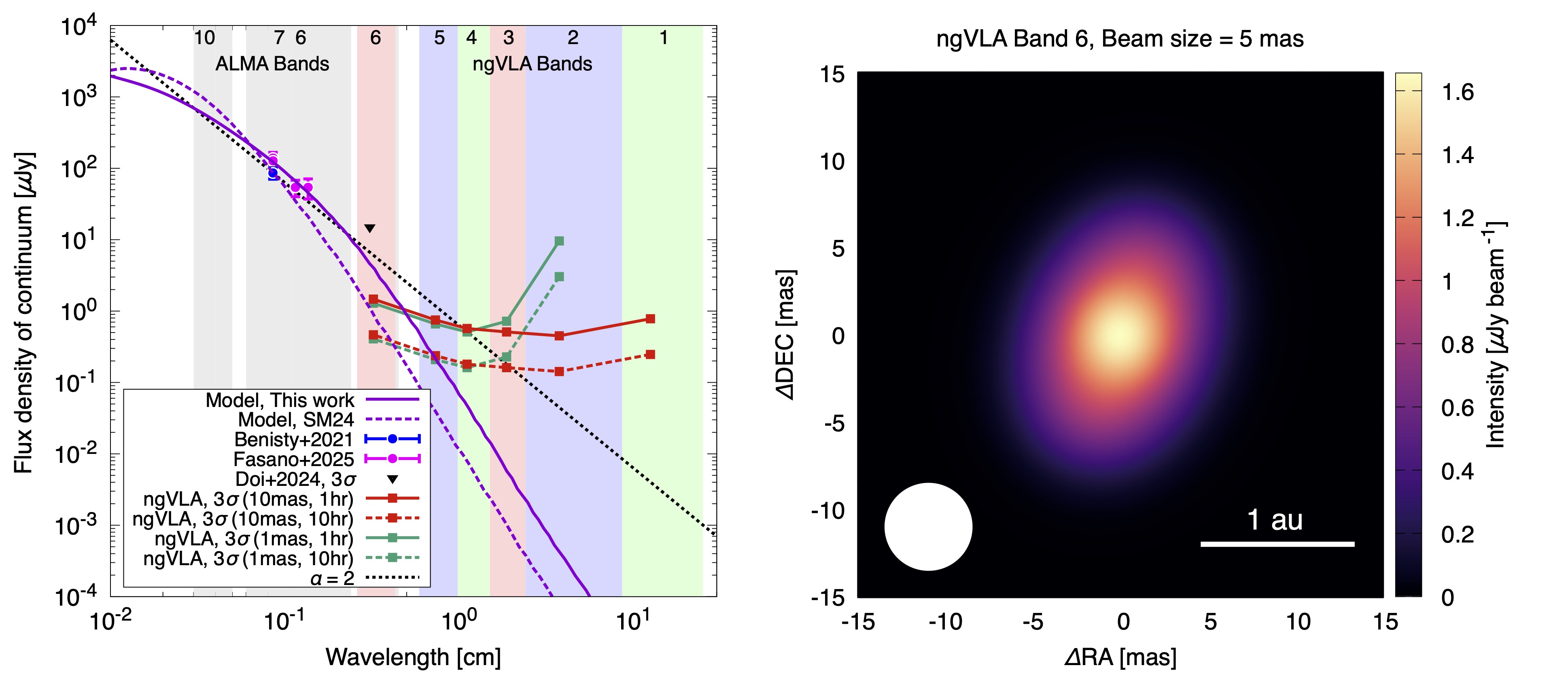
Figure: Predictions of the dust thermal emission from PDS 70 c, a gas-accreting planet. (Left) ngVLA detectability. (Right) ngVLA imaging. Credit: Shibaike et al. (2025)
A gas giant forms a small gas disk, called a circumplanetary disk (CPD), around itself during the gas accretion process. This disk contains dust particles similar to those in a protoplanetary disk, and these particles could serve as the building material for large moons. The young T Tauri star PDS 70 hosts two gas-accreting planets. Compact continuum emission from one of them, PDS 70 c, has been detected with ALMA Bands 6 and 7, which is interpreted as dust thermal emission from its CPD (Isella et al. 2019; Benisty et al. 2021; Fasano et al. 2025). Here, we discuss the detectability and imaging of PDS 70 c with the ngVLA as a benchmark.
In Shibaike et al. (2025), we first reproduced the emission in ALMA Bands 6 and 7 using a dust evolution and emission model provided by Shibaike & Mordasini (2024). The detected flux density of the continuum emission suggests that the disk is optically thick at the wavelengths of those ALMA bands. Under the conditions reproducing the ALMA detections, we then predicted how the dust emission would be observed with the ngVLA by extending the wavelength range from submillimeter to centimeter. We find that the total flux density of the dust thermal emission can be detected in ngVLA Band 6, and probably ngVLA Band 5 as well, with on-source times shorter than 10 hours (see figure, left panel).
We also predicted intensity maps of the CPD in ngVLA Band 6. We showed that the size and shape of the CPD could likely be constrained with a beam size of 5 mas and a reasonable on-source time of about 20 hours (see figure, right panel). However, detecting potential substructures of the CPD will be difficult, since the sensitivity will not be sufficient.
According to our study, the CPD is expected to be detectable in ngVLA Band 6 with an on-source time of 1 hour. Dominguez-Jamett et al. (2025) very recently reported detections of continuum emission from PDS 70 c at ALMA Bands 3 and 4, suggesting that the CPD might be even brighter than our prediction. In that case, survey observations of multiple systems aimed at characterizing their population would be feasible.
Since 2015 the acronym ngVLA has appeared in 1390+ publications indexed in the SAO/NASA Astrophysics Data System. This article continues a regular feature intended to showcase some of those publications. We are especially interested in showcasing work done by early-career researchers. The collection of showcase articles can be viewed online. Anyone wishing to volunteer to author a feature should contact Joan Wrobel.
Recent Science Media Releases
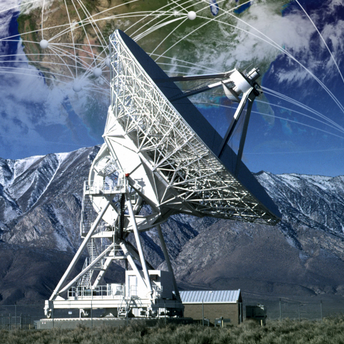 |
NSF NRAO to Outfit the VLBA with New Ultra Wideband Receivers |
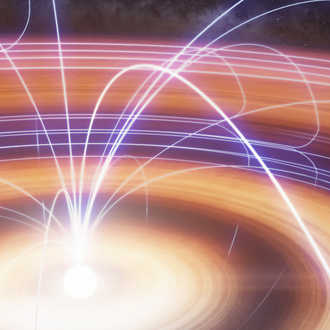 |
Astronomers Reveal Planet Building's Secret Ingredient: Magnetism |
 |
NSF NRAO Hits One Million Citations |
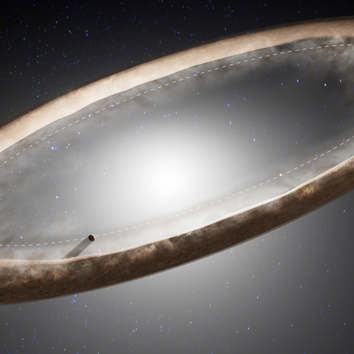 |
Neighboring Star's Warped Ring Shaped by Evolving Planets
|
 |
NSF NRAO Hosts SpectrumX Field Experiment at the Very Large Array
|
|
Contact the NRAO press office to share your new and exciting science results. |
From the Archives
Ellen Bouton
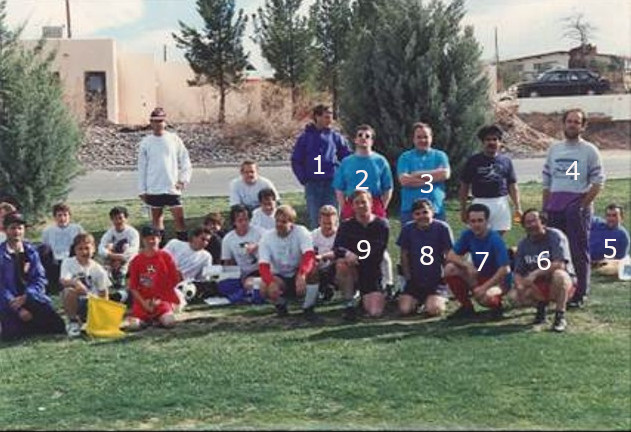
About this month's photograph - In the early 1990s in Socorro there were several Commonwealth and European staff members interested in competing in the New Mexico Tech intramural soccer competition. A group of NRAO-NM people played on the team, supplemented by visiting astronomers and occasionally the family members of NRAO staff. Known IDs (and their current positions): 1 - Kevin Marvel (AAS CEO); 2 - Bill Junor (Scientist, Los Alamos National Lab); 3 - Phil Diamond (SKA Director General); 4 - Angelos Vourlidas (Astrophysicist, Johns Hopkins University Applied Physics Laboratory); 5 - a relaxed Tony Beasley (NRAO Director); 6 - Leonid Kogan (NRAO staff member - deceased); 7 - Andrei Lobanov (Senior Staff Astronomer, MPIfR Bonn); 8 - John Conway (Director of the Onsala Space Observatory); 9 - Gustaaf van Moorsel (NRAO staff member - retired); Gustaaf's son is seated at left holding the flag. The photo was taken on the south side of NM Tech Field. NRAO staff at all sites have organized and participated in a wide variety of sports, including basketball, golf, skiing, and even cricket.
Thanks to Tony Beasley for the photo (taken by Miller Goss) and the IDs. Can anyone supply additional IDs? Let Ellen Bouton know.
From the Archives is an ongoing series illustrating NRAO and U.S. radio astronomy history via images selected from our collections of individuals' and institutional papers. If readers have images they believe would be of interest to the Archives, please contact Ellen Bouton.