NRAO Newsletter
Volume Vol#, Issue Iss#
Day# Month# Year#
NRAO Newsletter
Volume Vol#, Issue Iss# • Day# Month# Year#
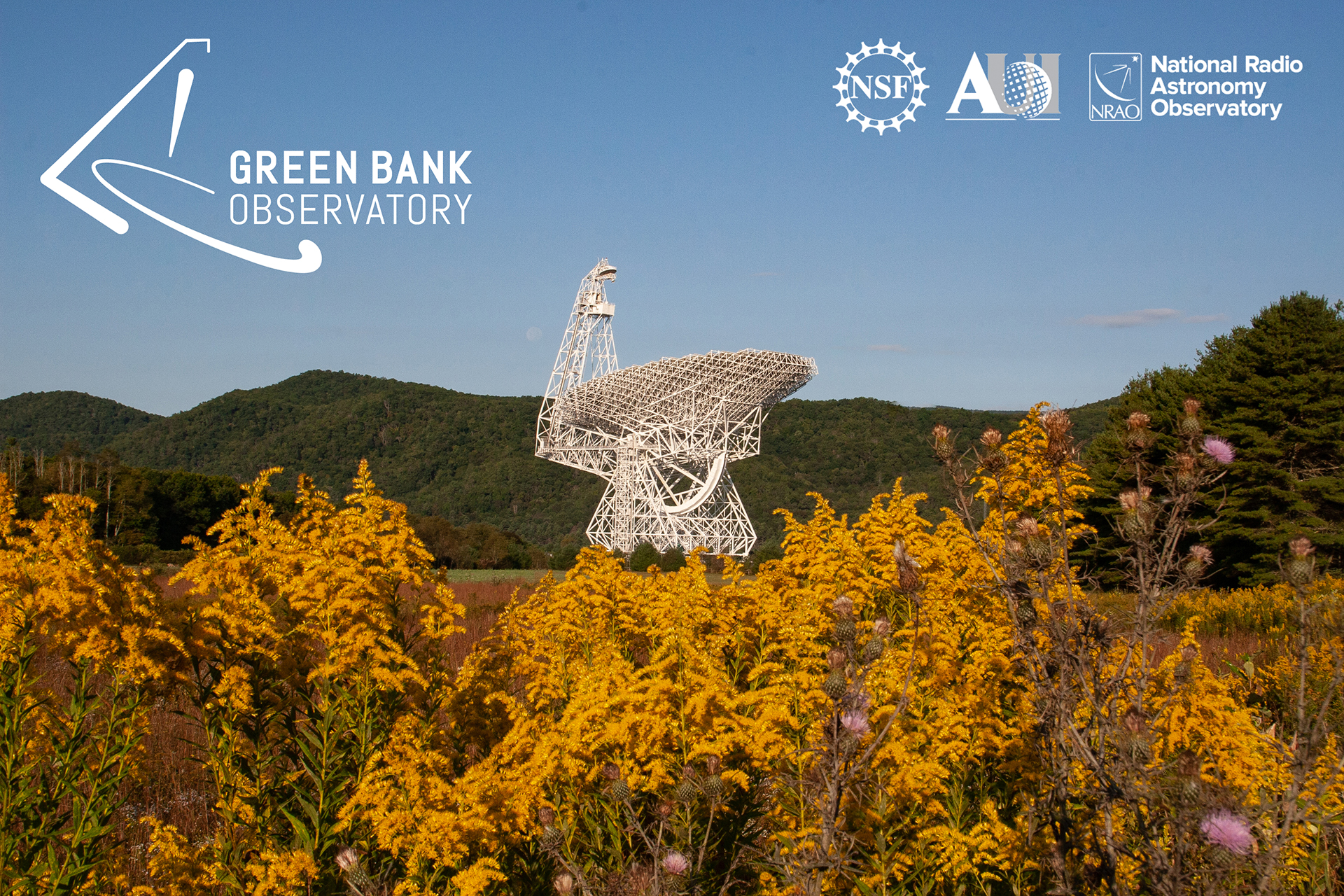 The NSF Robert C. Byrd Green Bank Telescope at the GBO in West Virginia. Photo courtesy of NSF/AUI/NSF NRAO/P. Vosteen.
Upcoming Science Events

DISCO: Disks in Context
September 21-25, 2026 | Charlottesville, VA
Astronomical Data Analysis Software and Systems
November 1-5, 2026 | Perth, Australia

CosmicAI Virtual Winter School
December 14-23, 2026 | Online

American Astronomical Society 249
January 10-14, 2027 | Salt Lake City, Utah
ALMA at 15 years: Science, Synergies, and the Road Ahead
February 22-26, 2027 | Taipei, Taiwan
Reminder - NRAO Call for Proposals: Semester 2027A
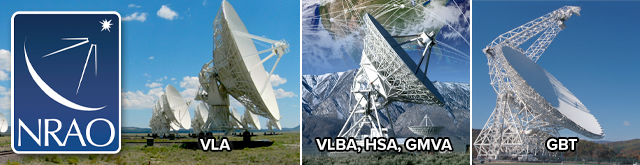
The National Radio Astronomy Observatory (NRAO) invites scientists to participate in the Semester 2027A Call for Proposals for the Karl G. Jansky Very Large Array (VLA), the Robert C. Byrd Green Bank Telescope (GBT), and the Very Long Baseline Array (VLBA), High Sensitivity Array (HSA), and Global mm VLBI Array (GMVA).
The submission deadline for Semester 2027A proposals is Wednesday, 29 July 2026, at 17:00 EDT (21:00 UTC).
For the VLA, the B and A-configurations will be available. It is anticipated there will be around 3300 hours on the VLA, 2000 hours on the GBT, and 965 hours on the VLBA available for science observing. Opportunities for Joint proposals will be available for ALMA, JWST, HST, Swift, Chandra, XMM-Newton, and IXPE. Joint Proposals with ALMA or JWST need to be submitted to the facility requesting the larger amount of observing time.
View the complete Semester 2027A Call for Proposals online.
Advanced Data Products Survey and Science Ready Data Products Update
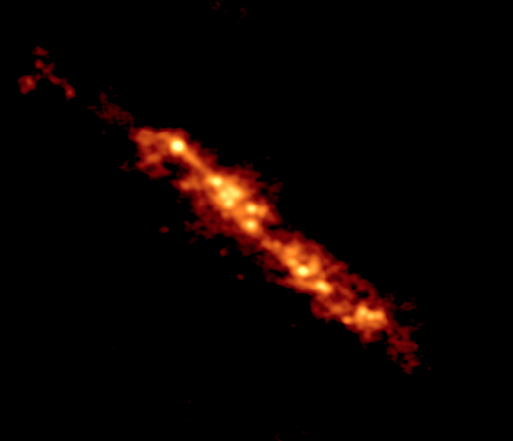
Figure: ALMA Band 6 (230 GHz) continuum image of the star-forming galaxy NGC 253 made using the AUDI workflow.
NRAO has joined a collaboration with the European Southern Observatory, ASTRON, and the Square Kilometer Array Observatory to work on Advanced Data Products (ADPs) for radio astronomy. ADPs, such as processed calibrations, advanced images, spectral products, and source catalogs allow astronomers from all backgrounds to engage more easily with radio datasets. ADPs also improve reproducibility and reduce duplication of processing effort.
An ADP workshop was held at ESO Headquarters in Garching in December 2024 and identified several issues common to such efforts, namely, standardization, provenance tracking, quality assurance, and long-term maintenance. These conclusions were summarized by workshop participants in a White Paper, and led to the establishment of an Advanced Data Products Coordination Group (ADPCG), with members from various radio observatories and the broader community.
The ADPCG will hold its first face-to-face meeting this Fall at ASTRON, to follow up on topics raised in the White Paper. This meeting will be held jointly with a meeting of the International Virtual Observatory's (IVOA) Radio Interest Group to identify overlapping areas of interest between the ADP initiative and the IVOA.
To help focus the ADP group in its work, the ADPCG is conducting a short user survey on the usage and potential needs for advanced data products. We warmly encourage all members of the radio astronomy community to participate in this survey and share their perspective.
At NRAO, ADPs are coordinated through the NRAO Science Ready Data Products (SRDP) initiative that includes the VLA Sky Survey processing and user-driven imaging pipeline runs for ALMA and, in the future, VLA (and ultimately ngVLA) data.
The SRDP ALMA User-Driven Imaging (AUDI) service has recently passed a milestone of 1000 ALMA reimaging jobs run since it was first made available in 2019. AUDI allows reimaging of ALMA data to a user-specified spatial and spectral resolution via a simple interface that is part of the NRAO data archive. This spring there was a major refactoring of the underlying code that greatly improved the robustness of the AUDI workflow and also introduced some new options for images such as cubes or continuum only and the option of including or not including self calibration.
Green Bank Telescope Remote Observing Training Workshop
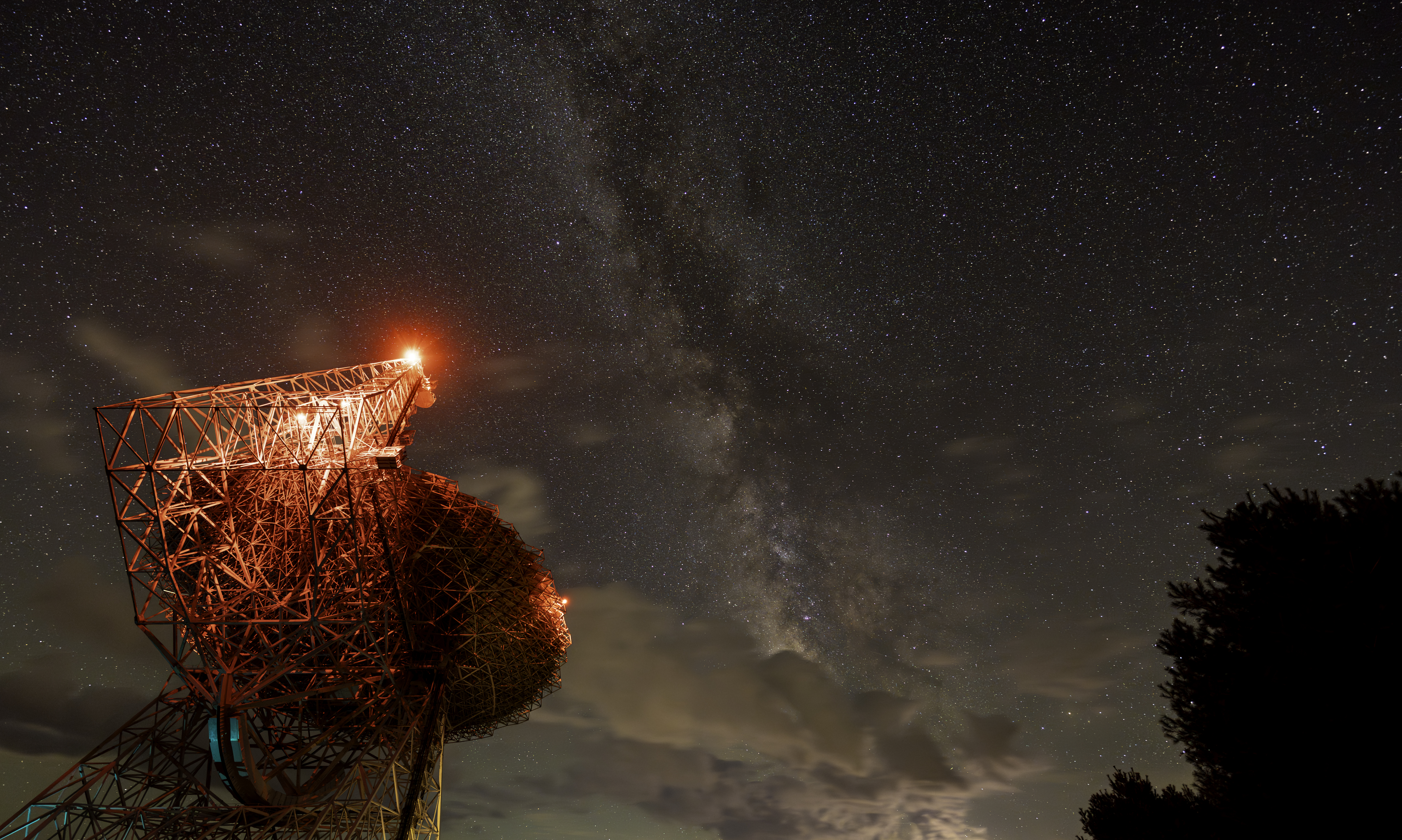
October 27-30, 2026 (online only)
The Green Bank Telescope (GBT) Remote Observer Training Workshop will provide the essential skills and knowledge needed to use the GBT and maximize its scientific output. It is intended for experienced astronomers who need to learn the specifics of observing with the GBT. After completing the workshop, an attendee will be certified to use the GBT as a remote observer. The workshop will focus on hands-on training in the observing techniques most relevant to participants (e.g. high frequency map, continuum, pulsar, etc.).
Applications will be open until October 2, 2026 and applicants will be informed of their acceptance shortly after. This remote workshop is open to GBT Observers and the professional scientific community. This is a virtual event - no attendees will visit Green Bank in person for the workshop.
Image by Jeff Hellerman (NSF/AUI/NSF NRAO)
ALMA Ambassadors Program for Cycle 14
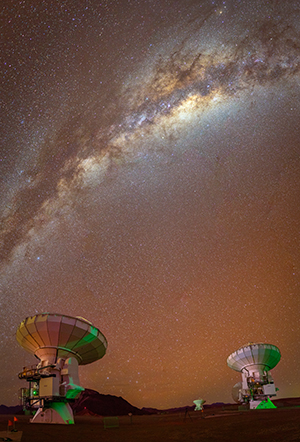
Image by Bettymaya Foott (NSF/AUI/NSF NRAO).
The North American ALMA Science Center (NAASC) is accepting applications for the ALMA Ambassadors Program, with a deadline of October 2, 2026. The program provides training and up to a $10,000 USD research grant (other forms of payment are available, see the ALMA Ambassadors website) to postdoctoral researchers, senior graduate students, and early career researchers interested in expanding their ALMA/radio interferometry expertise and sharing that knowledge with their home (or other) institutions. For Cycle 14, ALMA Ambassadors can choose to support the community by organizing and hosting (1) ALMA Cycle 14 proposal preparation support workshops (Spring 2027), and/or (2) ALMA-focused data processing and analysis workshops (Fall 2027). Applications seeking to host both proposal preparation and data processing workshops will be favored.
The NAASC will provide travel support for the training as well as all talk materials, supplies, and infrastructure for the workshops hosted by the ALMA Ambassadors. Some radio or submillimeter interferometry experience is preferred but not required. Applicants must be based at a North American institution. If you do not meet these requirements but are interested in learning more about the training we are offering, please contact Arielle Moullet to discuss opportunities. We will consider both individual and coordinated applications from users in the same institution or region.
The NAASC will host the selected Ambassadors at the National Radio Astronomy Observatory headquarters in Charlottesville, Virginia in February and August 2027 to receive in-depth training. Training will include topics related to ALMA proposal writing, including: interferometry basics, ALMA science capabilities, recent ALMA headlines, use of the ALMA Observing Tool, and guidance for speaking on these topics. The training also includes a poster session where ALMA Ambassadors will showcase their own science to their fellow ambassadors and the local astronomical community, including NRAO staff. Ambassadors must host a proposal preparation workshop in advance of the Cycle 14 ALMA proposal deadline (Spring 2027) and/or data analysis and processing workshops (Fall 2027). These workshops may be held at the ambassador's home institute, an alternate location, or virtually. ALMA Ambassadors will also make themselves available to help their local community between the call for proposals and the deadline and support other NAASC activities.
The deadline to apply is October 2, 2026. For more information, please visit the ALMA Ambassadors website.
Science Spotlight: ALMA Reveals Starbursts in the Early Universe that are too Dark for JWST/NIRCam
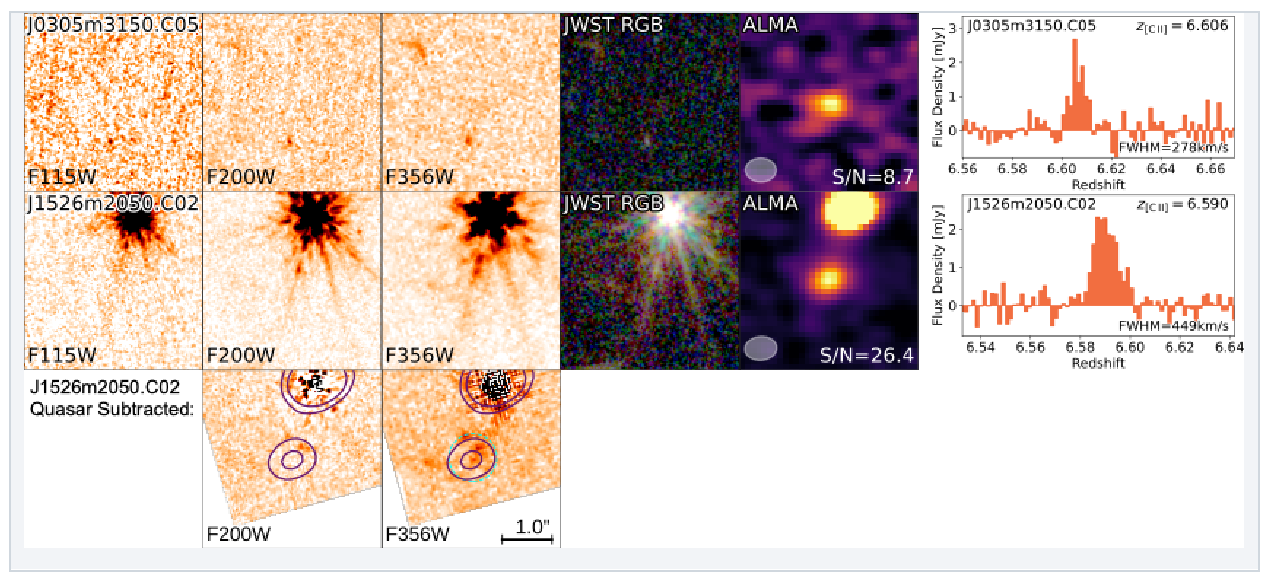
Figure above: JWST/NIRCam and ALMA views of two dust-obscured starburst galaxies, J0305m3150.C05 and J1526m2050.C02, at z = 6.6. The galaxies are detected strongly by ALMA in dust continuum and [C II] emission, but are undetected or extremely faint in JWST/NIRCam imaging, motivating the term "NIRCam-dark."
JWST has transformed our view of the early Universe by finding a large number of bright, young galaxies. However, some rapidly growing systems may be hidden behind dust. Dust absorbs starlight and reradiates the energy at far-infrared and millimeter wavelengths, making ALMA essential for finding galaxies that are faint or invisible in the near-infrared.
In our recent work (Sun et al. 2026, ApJ), we use ALMA and JWST observations from the ASPIRE survey to identify two heavily dust-obscured starburst galaxies at z = 6.6, when the Universe was less than one billion years old. Both galaxies are companions to luminous quasars and are securely detected by ALMA through dust continuum emission and the [C II] 158-micron line, yet they are undetected or extremely faint in JWST/NIRCam imaging at 1 to 4 microns despite forming stars at roughly 80-250 solar masses per year.
Because these "NIRCam-dark" starbursts are missed by JWST/NIRCam surveys, they may represent a hidden stage in the growth of massive galaxies: after the first UV-bright galaxies at z > 10, but before they evolved into massive quiescent galaxies at z >= 4. Their true abundance remains uncertain from this pilot study, but if similar systems are common in early massive dark matter halos, they would reach about 30% of the number densities of both populations. Future ALMA surveys, especially with the upcoming Wideband Sensitivity Upgrade (WSU), may be essential for uncovering a significant yet hidden population of star formation in the early Universe (z >~ 8).
Would you like your science or engineering projects featured in the NRAO Science Newsletter? Email the editor Brian Kent with your recent science publications!
A Sentinel Awakens
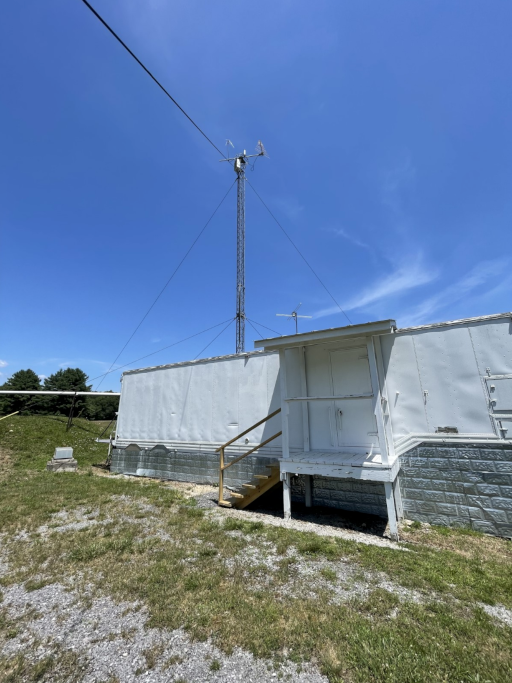
The RFI Trailer at GBO hosts the backend to the new on-site spectrum monitor installed in June 2026. A similar device is operational at the VLA.
In early June 2026, NRAO electronics engineer Remy Nguyen visited Green Bank Observatory for three days to complete the installation of a 1 MHz-10 GHz spectrum monitor at the RFI Trailer down site (see photo left). A similar device has been running at the VLA site since last fall and was instrumental in the diagnosis of the impacts of a recent 2 GHz technology update at the Gray Hill site near the East arm of the VLA. Remy Nguyen was assisted by Laura Leyzorek, Daniel Bautista, Evan Smith and Chuck Niday in site preparation and device assembly. These omnidirectional spectrum monitoring devices, now deployed at the VLA and GBO, are named Sentinels standing guard at our radio observatory sites. The first waterfall plot from Sentinel-GBO was taken on July 15, 2026, and an early plot is shown in the figure below. These waterfall plots will accrue daily and will eventually provide another dataset for the Dynamic Radio Interference Finding Tool (DRIFT) software. NRAO has applied to the US NSF for additional funding to build 10 more Sentinel devices and to deploy them at VLBA sites in advance of eventual deployment of the Advanced Spectrum Monitor (ASM-2) devices.
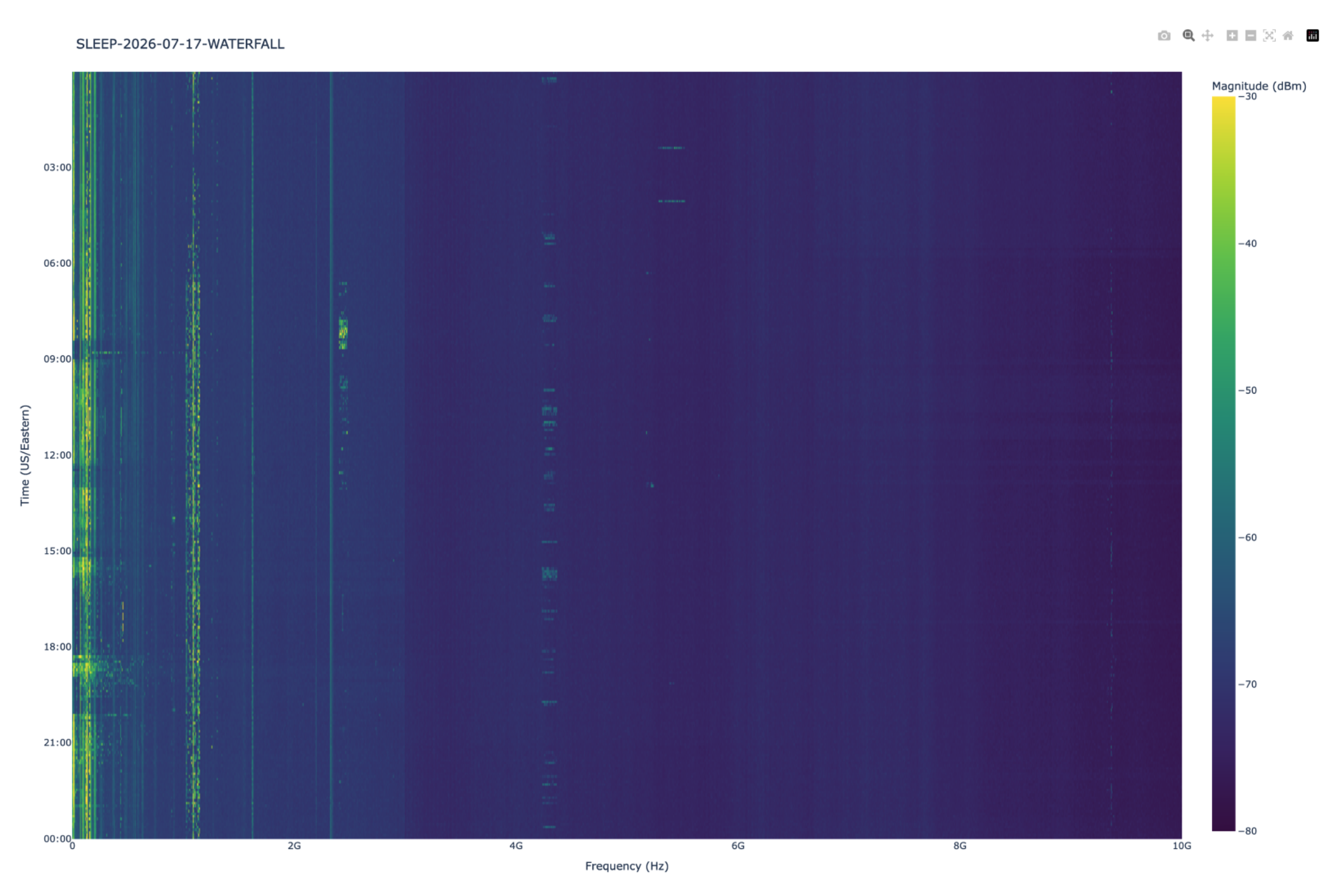
One of the "first light" waterfall plots from Sentinel-GBO taken on 7/17/26. These daily waterfall plots (started on 7/15/26) will form the basis of a new dataset that will be searchable using the NRAO DRIFT software. Note the general trend that RFI signals are predominantly found (for the time being) at lower frequencies.
ALMA News
ALMA Observing Status
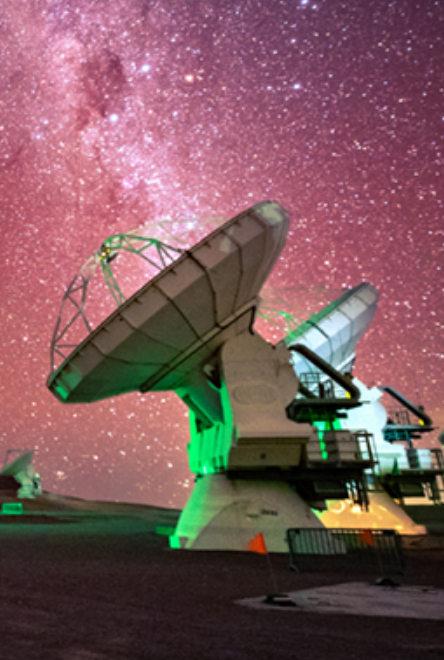
The array is currently in configuration C-6 (with maximum baselines of ~2.5 km), after which more compact configurations will be available until the end of Cycle 12. Image: Bettymaya Foott (NSF/AUI/NSF NRAO/ALMA)
ALMA reaches 5000 refereed publications
On June 27th, ALMA and its scientific community reached a major scientific milestone with the publication of the 5000th refereed paper based on ALMA data. This achievement comes just 14 years after the start of Early Science operations and reflects ALMA's extraordinary scientific impact. Publications based on ALMA data have accumulated more than 210,000 citations, establishing ALMA as one of the most productive and scientifically impactful astronomical facilities in the world. A new study on ALMA publication statistics (Stoehr et al., 2026) was just published, describing the ensemble of publications in regard to science categories, geographical distribution and many other characteristics.
Reminder: Call for Meetings and Conference - support now open
The NAASC invites members of the North American scientific community to apply for funding in support of conferences and workshops that are ALMA focused or have a synergy with ALMA, and which encourage the participation of students, postdocs, and early career researchers. PI-led events (e.g. collaboration workshops) held in the US and Canada, or conferences organized at any geographical location (national or international) are eligible to apply. Events must be scheduled between Oct 1, 2026 and December 31, 2027 to be eligible.
For awarded events, the NAASC can provide monetary funding (up to $15,000 per event). As needed, the NAASC can also provide logistical support (e.g., webinar platform) materials and content.
Proposals requesting more than $5,000 should apply before August 21th, 2026. For other proposals with lower monetary requests, we encourage submission by the call deadline but we will also consider applications at any time while funds last. For instructions on how to apply, eligibility criteria and other details on this program, please look at the program webpage.
Data Products Survey
The Advanced Data Products Coordination Group (ADPCG), including members from various radio observatories and the broader community, is conducting a short survey on the usage and potential needs for advanced data products. See the accompanying article in this current newsletter. We warmly encourage all members of the radio astronomy community to participate and share their perspective by filling this form.
New Paper on Distributed Peer Review at ALMA
"Distributed Peer Review at ALMA: An Empirical Comparison with Panel-Based Review" by Carpenter and Corvillon (2026), has been accepted for publication in PASP. The paper provides an in depth comparison of the outcomes of distributed peer review, which has been used on ALMA since Cycle 9, to outcomes of traditional panel-based review. It also investigates systemic ranking trends across proposals' characteristics such as PI demographics, technical characteristics, and scientific areas.
Upcoming Events
ALMA at 15 years: Science, Synergies, and the Road Ahead. February 22-26, 2027, Taipei, Taiwan
Abstract submission is now open for the conference ALMA at 15 Years: Science, Synergies, and the Road Ahead, which will be in person from February 22 to 26, 2027, at Academia Sinica's Nangang campus in Taipei, Taiwan. The abstract submission deadline is September 15, 2026. The conference will highlight ALMA's latest results, especially since the last Pan-ALMA conference held in 2023, and identify exciting directions for future ALMA research.
The NAASC can provide travel support for early career attendees (students and postdocs) who are based at North American institutions (US and Canada). To apply for financial support, please contact Arielle Moullet after submitting your abstract and no later than the deadline for abstract submission (September 15, 2026). Announcement of travel support awards will be made at the time of abstract acceptance.
Important Dates:
- Abstract Submission Opens: June 15, 2026
- Abstract Submission Deadline: September 15, 2026
- Early-Bird Online-registration Opens: September 30, 2026
- Notification of Abstract Acceptance: Late Oct./Early Nov., 2026
- Early Bird Online-registration Deadline: November 27, 2026
- Online Registration Deadline: January 20, 2027
ngVLA Project News and Job Opportunities
ngVLA Pathfinder Project Starts
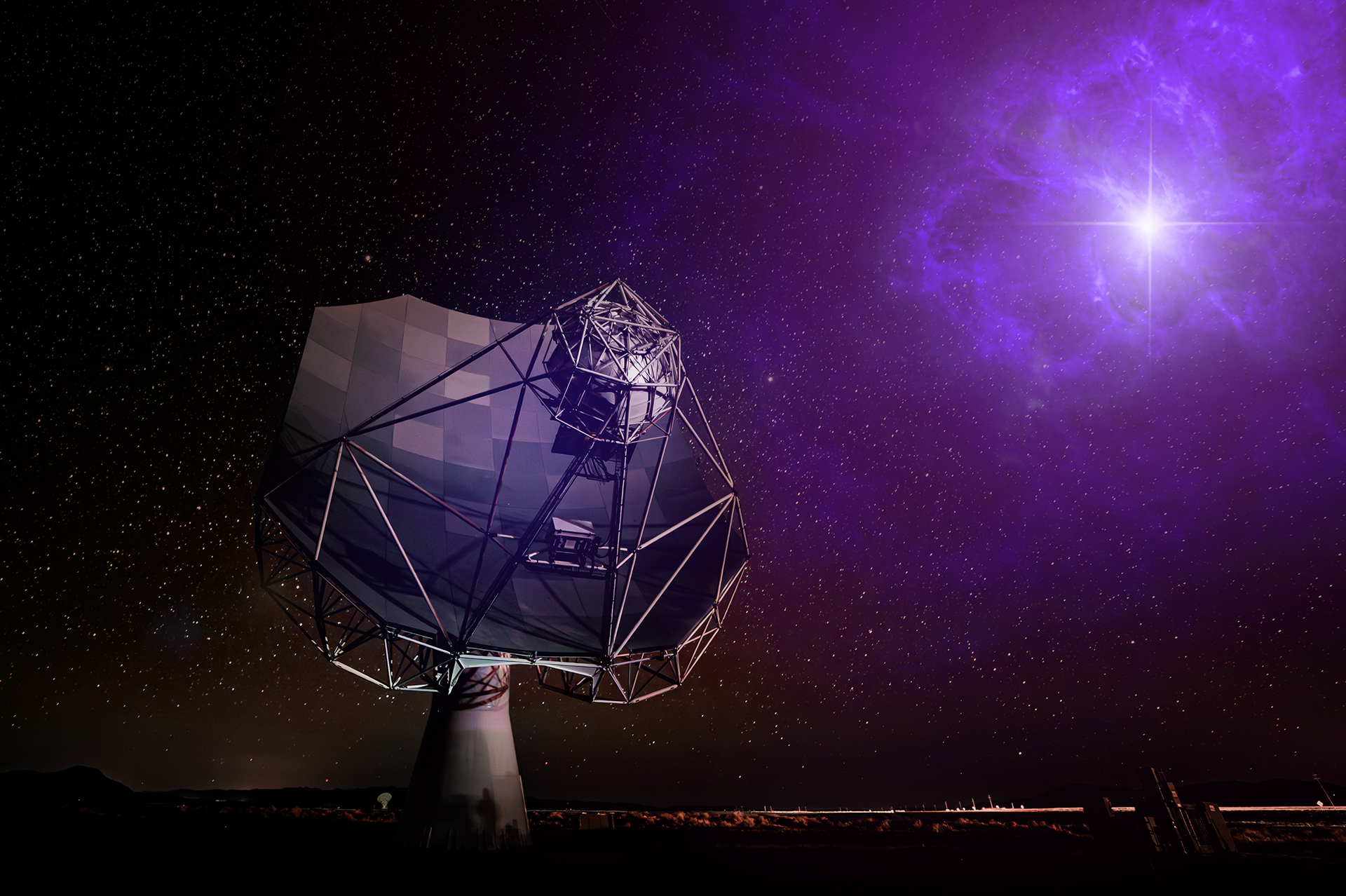
The U.S. National Science Foundation (NSF), the NSF NRAO, and the U.S. Naval Observatory (USNO) are advancing a new collaboration to support the future of high-resolution radio astronomy and astrometry, with the development of a pathfinder instrument for the proposed ngVLA.
These joint efforts support the pathfinder for ngVLA technologies, focusing on very long baseline interferometry capabilities that enable ultra-sharp imaging of the Universe. Jointly funded by NSF and USNO, it expands a longstanding partnership that currently supports the NSF Very Long Baseline Array. This collaboration reflects the shared importance of high-resolution radio observations for both cutting-edge astrophysics and other important applications, including maintaining the International Celestial Reference Frame, the fundamental reference system used for navigation and space science.
For further details, see here.
Graphic Credit: NSF/AUI/NSF NRAO/A.Sosnovici/M.Weiss.
ngVLA Assistant Scientist Job Opportunity
The NSF NRAO is pleased to direct the community's attention to an ngVLA Assistant Scientist job opportunity. The appointee will be expected to spend 75% of their time on functional work as part of the ngVLA Science Support Integrated Product Team (IPT), with the remaining 25% available for independent research. The primary responsibility for this position will be to help develop and maintain detailed software requirements for the ngVLA Computing and Software IPT. Other responsibilities will include, but are not limited to, supporting the development of calibration and operation processes and workflows. Apply by September 1,2026.
ngVLA International Science Conference 2026
As the ngVLA project advances toward its next phase of development, it is timely to consolidate and expand the international science community, refine key science drivers, and explore synergies with other major observatories and space missions.
From November 10 to 13, 2026, this conference in Sendai, Japan, will bring together experts from a broad range of fields to share compelling science cases, identify new opportunities, and foster collaborations that will further strengthen the momentum of this proposed next-generation facility.
The conference is being jointly organized by NSF NRAO, the ngVLA Science Advisory Council, and the ngVLA-Japan Science Working Groups. The organizers particularly encourage the participation of early-career researchers and students.
Key upcoming dates:
- July 31, deadline for oral abstract submission+registration and for financial support requests
- Late August, final program announced and financial support offers made
- September 11, deadline for poster abstract submission+registration and for reduced registration fee
- October 9, deadline for in person registration
ngVLA Science - Direct detection of cool molecular gas at z > 7
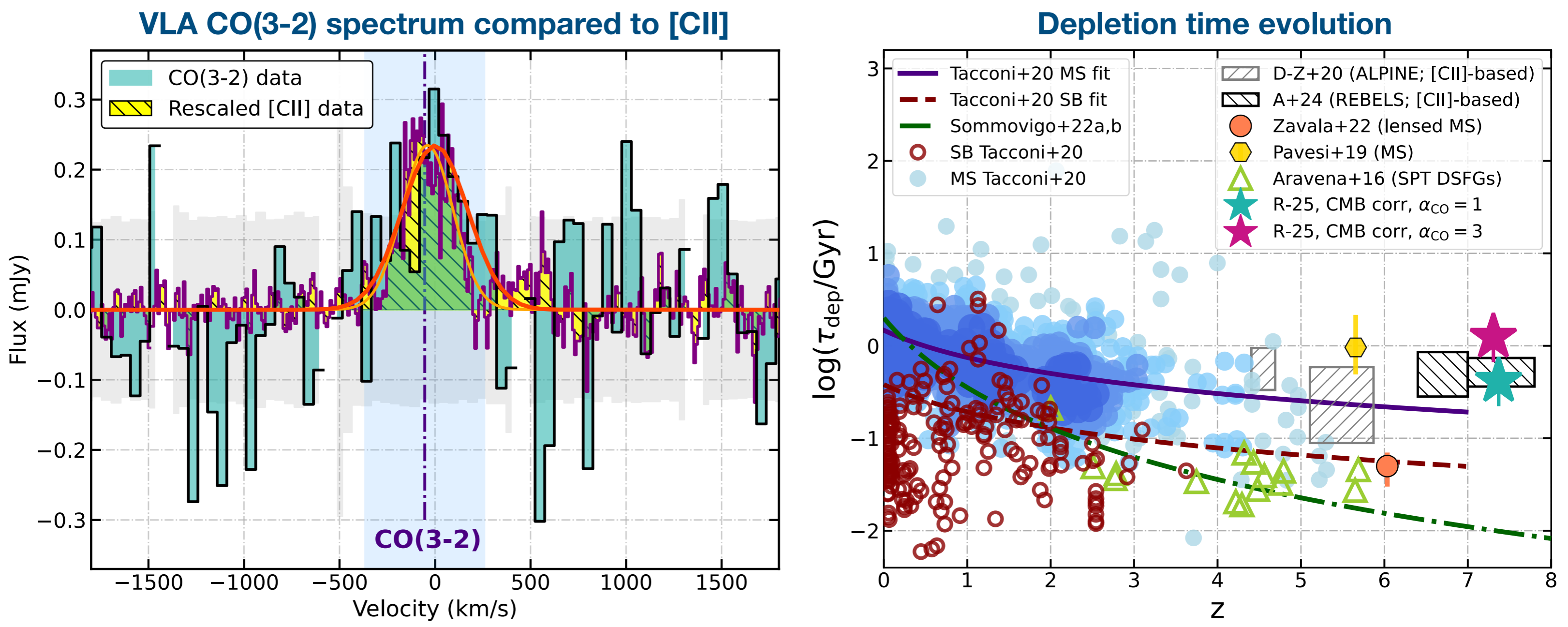
Figure: VLA CO(3-2) spectrum compared with [CII] emission (left) and the gas depletion time as a function of redshift (right) for the z=7.31 star-forming galaxy REBELS-25. Credit: Cescon et al. (2026)
A large population of massive galaxies is now being discovered within the first billion years after the Big Bang, raising the question of how these systems were able to assemble their mass in such a short cosmic time. A key to this problem is their cold molecular gas reservoirs, which provide the direct fuel for star formation. Deep into the Epoch of Reionization (EoR), however, this component becomes extremely difficult to observe, as reliable tracers such as low-J CO transitions are intrinsically faint and increasingly suppressed against the rising cosmic microwave background (CMB).
In this context, in Cescon et al. (2026) we present the highest-redshift detection to date of a low-J CO transition, obtained from deep NSF VLA observations of the disky star-forming galaxy REBELS-25 at z=7.31. We detect CO(3-2) emission, whose flux implies the presence of a massive cold gas reservoir of M_mol ~ 10^11 M_Sun only ~700 Myr after the Big Bang. Using complementary ALMA observations of CO(7-6) and the radiative transfer code TUNER (Boogaard et al. 2026), we jointly model two CO transitions and several dust continuum measurements in the presence of significant CMB background, allowing us to constrain the physical conditions of the interstellar medium and recover a high M_mol, independent of assumptions on conversion factors and excitation ratios, which are essentially unconstrained at such early cosmic times.
Our study also enables a comparison between CO-based molecular gas measurements and the much brighter [CII] line, which is more readily detected in high-redshift galaxies and is widely used as an indirect tracer of molecular gas. Our results therefore provide one of the first direct tests of this approach at z > 7 and suggest that [CII] remains a promising tracer of cold gas masses in the EoR.
These results demonstrate that low-J CO observations in the EoR are feasible with the current VLA, but only for the most massive star-forming galaxies and at substantial observational cost. The CO(3-2) detection presented in this study required nearly 40 hours of VLA time on one of the brightest known galaxies at z > 7. With roughly an order-of-magnitude improvement in sensitivity, the ngVLA will be fundamentally transformative by allowing for such detections in just a couple of hours and making such observations routine. This will also enable spatially resolved studies on sub-kiloparsec scales for the brightest systems and extend cold molecular gas studies to much more representative galaxy populations, building statistically robust measurements of molecular gas scaling relations during the first billion years of cosmic history.
Since 2015 the acronym ngVLA has appeared in 1660+ publications indexed in the SciExplorer Data System. This article continues a regular feature intended to showcase some of those publications. We are especially interested in showcasing work done by early-career researchers. The collection of showcase articles can be viewed online. Anyone wishing to volunteer to author a feature should contact Joan Wrobel.
Astrochemistry Highlights Strong NRAO Connections at the 79th International Symposium on Molecular Spectroscopy
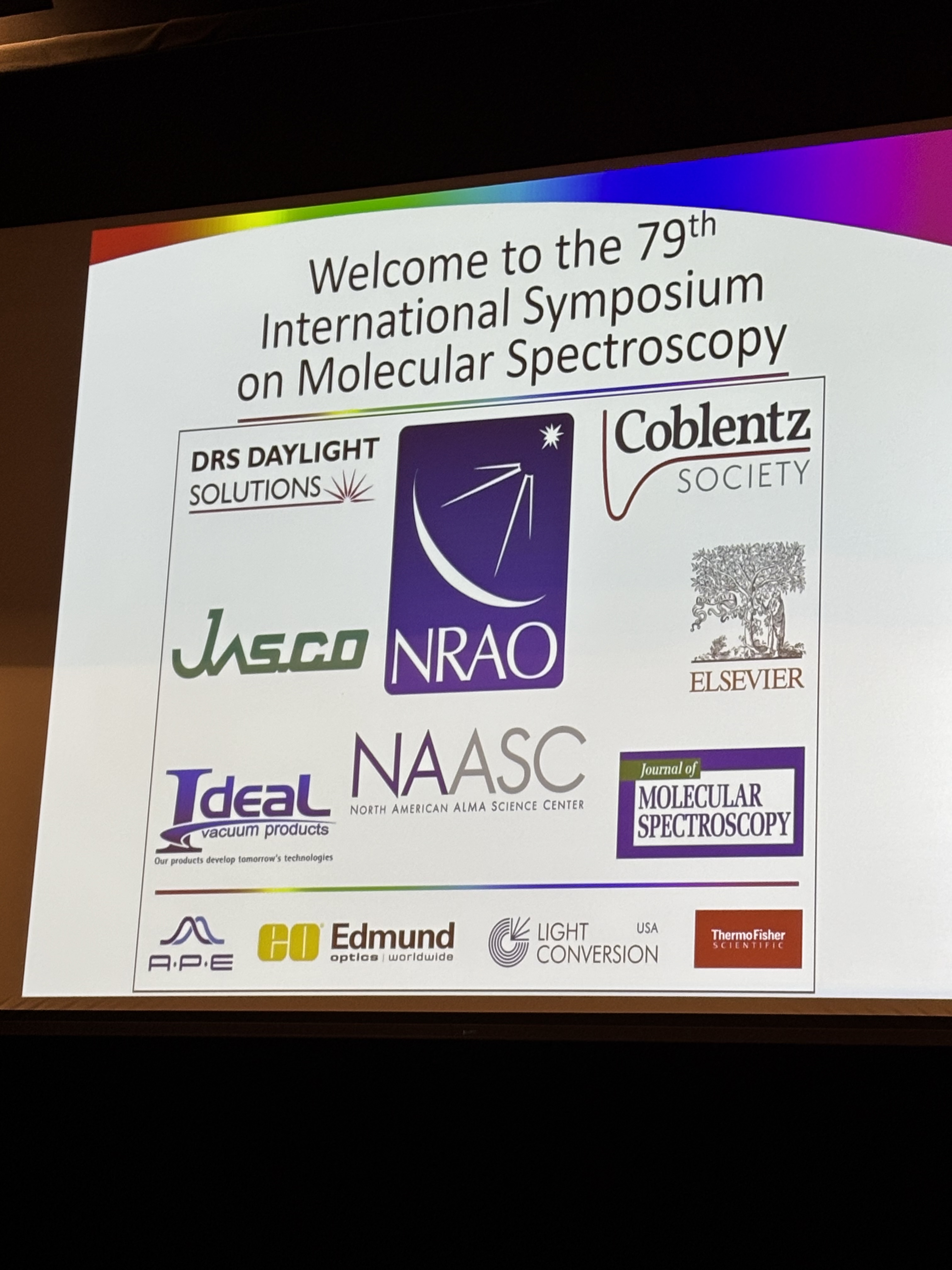
Astronomy and astrochemistry were among the strongest scientific themes at the 79th International Symposium on Molecular Spectroscopy (ISMS), held June 22-26, 2026 at the University of Illinois Urbana-Champaign. Of the conference's more than 300 oral presentations, over 50 talks focused on astronomy, molecules in space, interstellar chemistry, star-forming regions, planetary nebulae, comets, and exoplanet atmospheres. Three dedicated Astronomy sessions alone featured 26 presentations, underscoring the growing synergy between laboratory spectroscopy and radio astronomy.
ALMA was the facility most frequently highlighted throughout the meeting. Researchers presented new ALMA studies probing the chemical complexity of star-forming regions, molecular inventories of planetary nebulae, and the detection of CH3CN in diffuse clouds toward the Galactic Center. Several additional talks combined new laboratory rotational spectroscopy with ALMA observations, providing the precise molecular fingerprints needed to identify complex organic molecules in space and refine astrochemical models.
The conference also reflected the lasting scientific impact of the GOTHAM (GBT Observations of TMC-1: Hunting Aromatic Molecules) survey. GOTHAM talks focused on molecules first detected - or actively sought - in TMC-1, as well as laboratory measurements motivated by ongoing searches for new interstellar species. These studies continue to expand the molecular inventory accessible to the GBT, ALMA, and other radio observatories.
This close partnership between laboratory spectroscopy and astronomical observations is one reason NRAO and the North American ALMA Science Center (NAASC) continue to serve as strong corporate supporters of ISMS. The conference provides a unique forum where laboratory spectroscopists, astrochemists, and radio astronomers come together to develop the spectral data that enable discoveries with facilities such as ALMA and the GBT. As astronomical observations become increasingly sensitive, the collaboration between laboratory measurements and NRAO telescopes remains essential for identifying new molecules and advancing our understanding of the chemistry of the Universe.
2nd Annual Cosmic Horizons Conference and Virtual Winter School
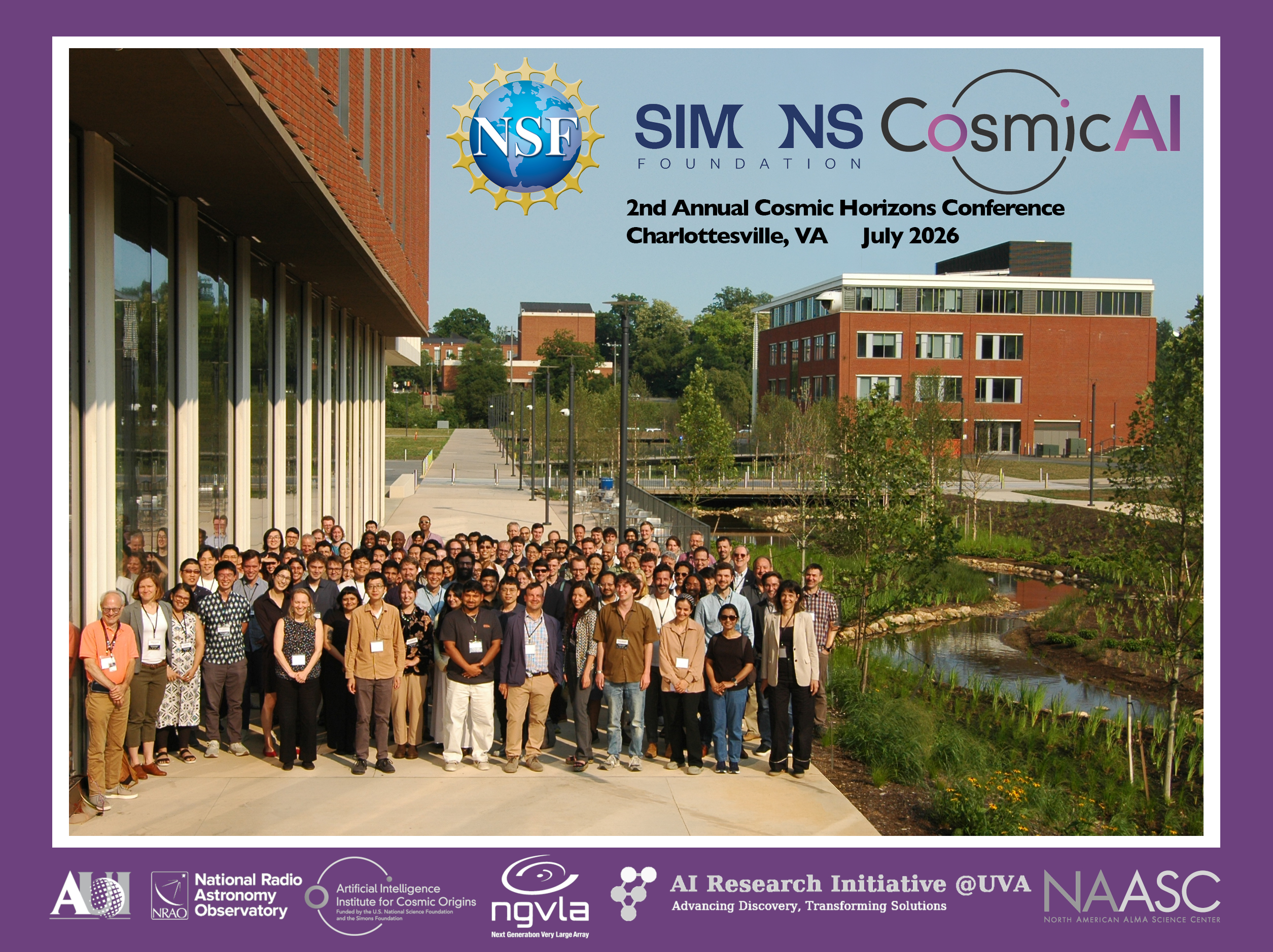
The NSF NRAO hosted the 2nd annual Cosmic Horizons Conference in Charlottesville, VA from July 13-17, 2026 to talk about the latest developments in AI, machine learning, and computing techniques in modern astronomy.
The recent revolution in AI is fundamentally changing how astronomers observe, explore, analyze, and model astronomical data. The 2nd Cosmic Horizons conference was designed to bring together researchers who are actively developing and applying AI/ML methods in astronomy.
The conference focused on recent advances at the intersection of AI and Astronomy and AI-powered progress towards understanding our cosmic origins, from cosmology to habitability; methodologies to increase the trustworthiness, robustness, interpretability, and efficiency of AI applications in astronomy; and preparation for the big-data challenges posed by next-generation observing facilities and approaches for analyzing high-dimensional data.
Sign up for the CosmicAI seminar series to learn about the latest developments and opportunities.
CosmicAI will also be offering a Virtual Winter School at NSF NRAO from December 14-23, 2026. The winter school is a 40-hour online program designed to equip rising junior and senior undergraduate students with the foundational skills needed to succeed in interdisciplinary AI-Astronomy research. The application deadline is Monday, August 31, 2026.
Recent Science Media Releases
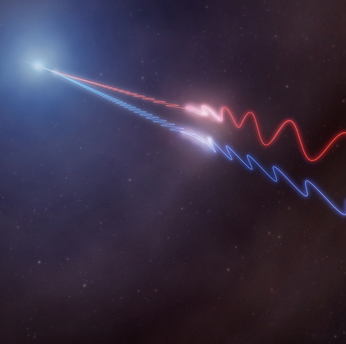 |
Astronomers Detect Magnetic Fingerprint of a Cosmic Explosion for the First Time |
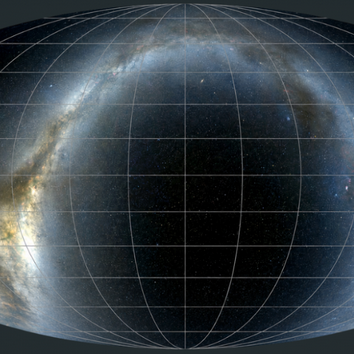 |
NSF VLA Sky Survey Sets New Standard for High-Resolution, Wide-Area Radio Astronomy
|
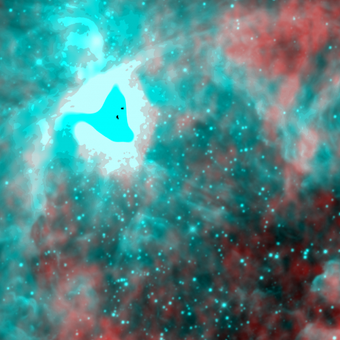 |
NSF VLA Maps a Hidden Hydrogen Shell Around the Orion Nebula |
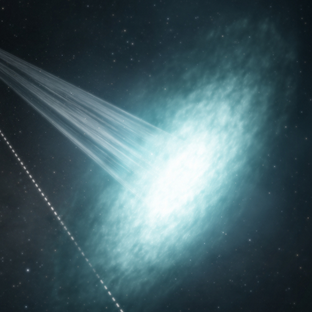 |
Hidden Jet from a "Missing-Link" Black Hole Lights Up the Radio Sky
|
|
Contact the NRAO press office to share your new and exciting science results. |
From the Archives
Ellen Bouton
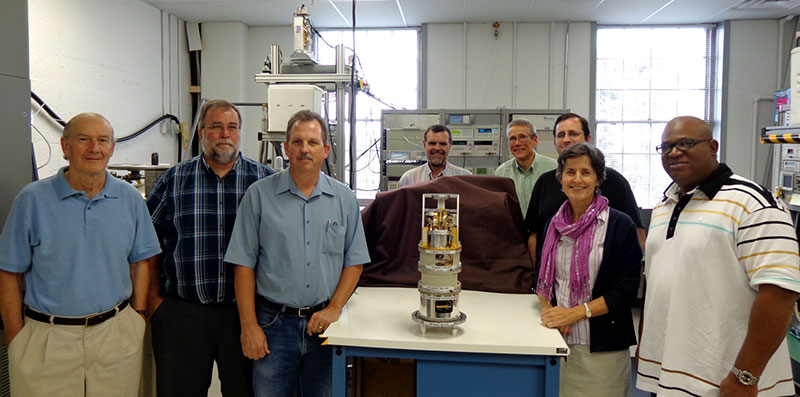
About this month's photo: On 16 August 2012, the ALMA Band 6 team at the Central Development Laboratory in Charlottesville delivered the final Band 6 (211-275 GHz) SIS receiver cartridge to the project. The Band 6 team [left to right]: Tony Kerr, Dave Schmitt, Ralph Groves, Neil Horner, John Effland, Matt Morgan, Francoise Johnson, and Mike Reynolds.
From the Archives is an ongoing series illustrating NRAO and U.S. radio astronomy history via images selected from our collections of individuals' and institutional papers. If readers have images they believe would be of interest to the Archives, please contact Ellen Bouton.