NRAO Newsletter
Volume Vol#, Issue Iss#
Day# Month# Year#
NRAO Newsletter
Volume Vol#, Issue Iss# • Day# Month# Year#
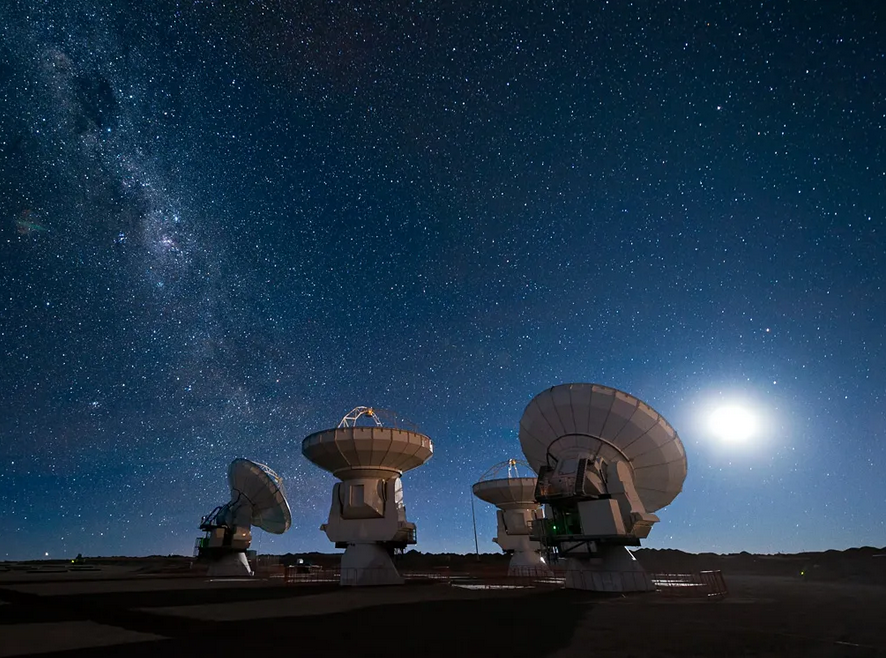
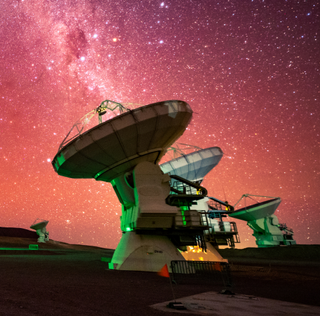
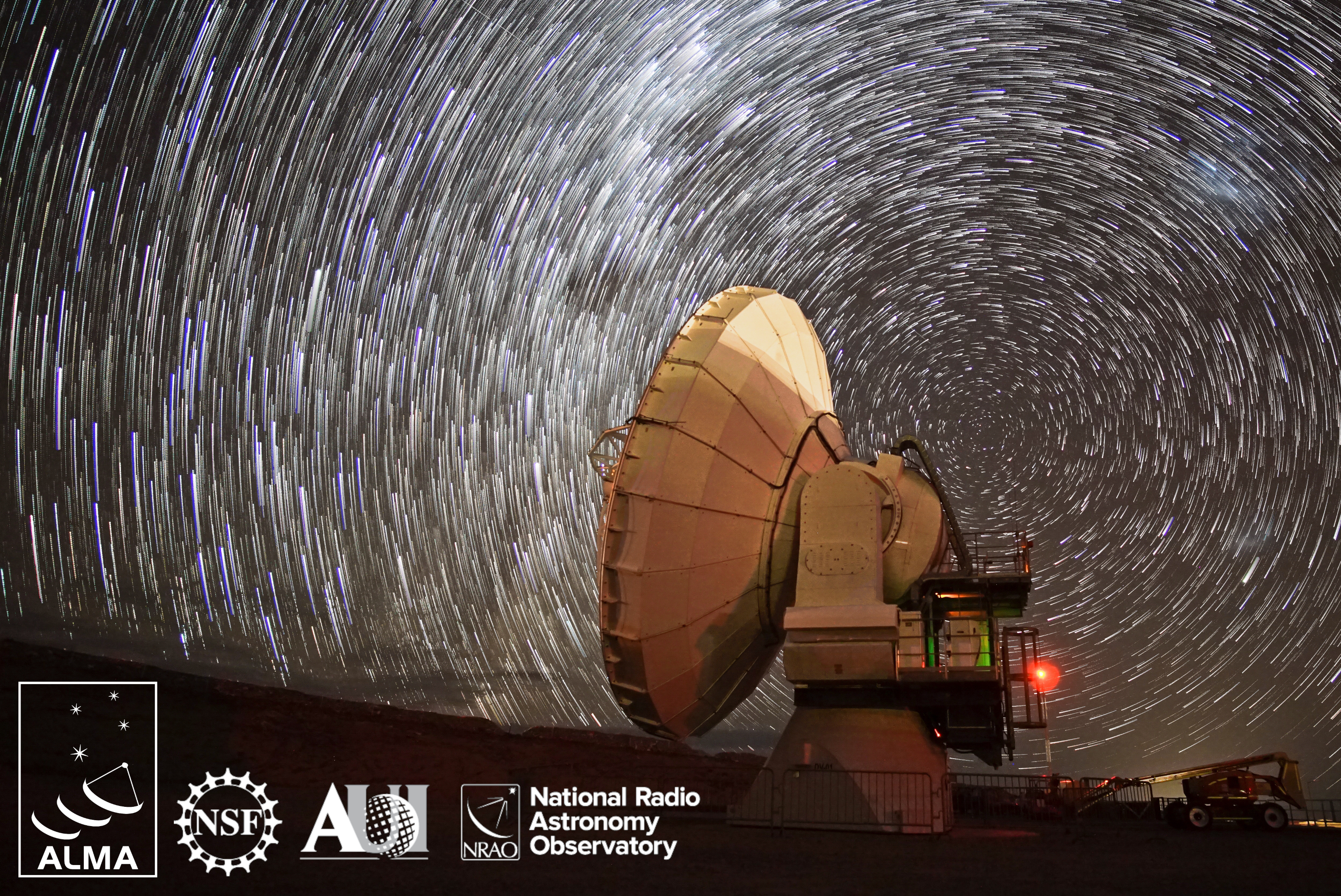 Star trails behind an ALMA antenna on Cerro Chajnantor in northern Chile. Photo courtesy of ALMA/JAO/ESO/NSF NRAO.
Upcoming Science Events

2nd Annual Cosmic Horizons Conference
July 13-16, 2026 | Charlottesville, VA

DISCO: Disks in Context
September 21-25, 2026 | Charlottesville, VA
Astronomical Data Analysis Software and Systems
November 1-5, 2026 | Perth, Australia
ALMA at 15 years: Science, Synergies, and the Road Ahead
February 22-27, 2027 | Taipei, Taiwan
NRAO Call for Proposals: Semester 2027A
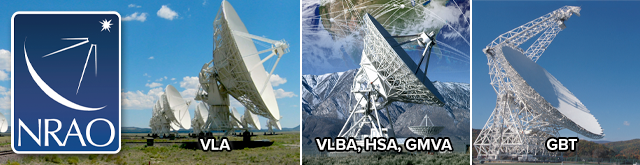
The National Radio Astronomy Observatory (NRAO) invites scientists to participate in the Semester 2027A Call for Proposals for the Karl G. Jansky Very Large Array (VLA), the Robert C. Byrd Green Bank Telescope (GBT), and the Very Long Baseline Array (VLBA), High Sensitivity Array (HSA), and Global mm VLBI Array (GMVA).
The submission deadline for Semester 2027A proposals is Wednesday, 29 July 2026, at 17:00 EDT (21:00 UTC).
For the VLA, the B and A-configurations will be available. It is anticipated there will be around 3300 hours on the VLA, 2000 hours on the GBT, and 965 hours on the VLBA available for science observing. Opportunities for Joint proposals will be available for ALMA, JWST, HST, Swift, Chandra, XMM-Newton, and IXPE. Joint Proposals with ALMA or JWST need to be submitted to the facility requesting the larger amount of observing time.
View the complete Semester 2027A Call for Proposals online.
Science Spotlight: Millimeter Flux Density Variations and Dust Heating Triggered by Orbital Motion
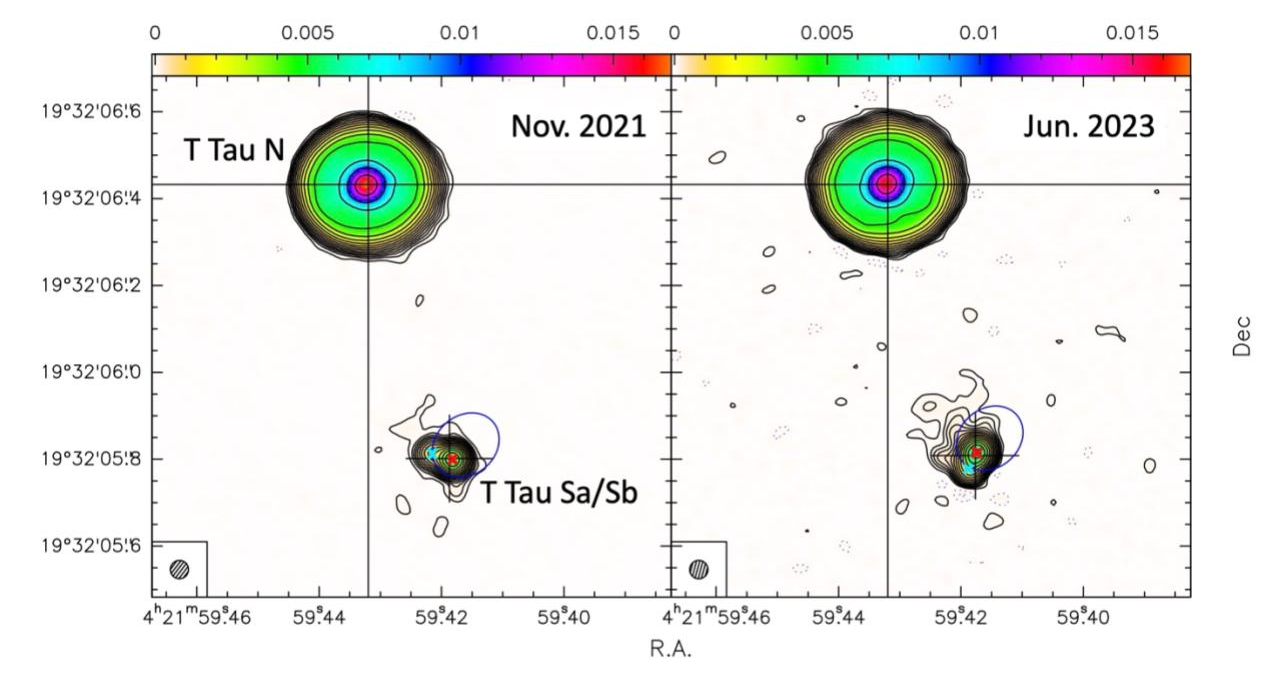
Figure above: A comparison of the 225 GHz continuum emission in Jy/beam from the T Tau triple system at two epochs (09-Nov-2021, 23-Jun- 2023), at the same 42.5 mas spatial resolution. Contour levels are in steps of 0.666 K (about 50 μJy/beam, approximately 4.7σ in Nov-2021 and 3.1σ in Jun-2023 respectively), up to 2 K and then increase by a factor √2 up to 128 K (peak value 225 K). The red and cyan X's mark the measured Sa and Sb positions in the two epochs, and the black cross is the Sa/Sb center of mass. The blue ellipse shows the Sa/Sb binary orbit. Beam sizes are presented at lower left for clarity. From Beck et al. (2026).
The T Tauri system is a remarkable young triple star. The optically bright star T Tau North (T Tau N) is the prototypical young star in our galaxy, defining the T Tauri class. The southern companion T Tau South (T Tau S) was spatially resolved into two stars, Sa and Sb. The motion of the ~0.1" separation Sa/Sb binary system has been monitored through most of its orbit with ground-based adaptive optics in the infrared. The best-fit orbital period is 27 years for the T Tau S binary, and the most recent binary periastron closest approach occurred in March 2023. In Beck et al. (2026) we acquired high resolution ALMA 225 GHz imaging of the T Tauri system over several years to refine its orbit, identify non-thermal emission components, and evidence the effects of periastron passage on the system's circumstellar disks.
The high resolution ALMA images were obtained over two epochs, in November 2021 and June 2023, (see Figure above) and therefore covered the time frame around the recent periastron passage of the Sa/Sb binary. We clearly resolve the binary in both measurements with ALMA, even though the projected periastron passage separation was less than 50 mas. Low resolution measurements at 225 and 350 GHz were also acquired in 2019 and 2022.
We studied the compact (24 au radius), thermal dust disk around T Tau N (see Figure above). After subtracting a uniform thermal disk model, we identify a crescent-shaped residual emission excess just outside a shallow gap at 12 au radius, that appears to move at Keplerian speed.
We find increases in the Sa/Sb millimeter flux between 2019 and 2022, from heating of the Sa disk and the wider distribution of dust in the environment of the binary. This heating is likely in response to increased stellar accretion activity triggered by orbital motion during the dynamic periastron passage of T Tau Sb around Sa. Resolved, extended millimeter emission is also found to change morphology and increase in flux in the immediate environment of the Sa-Sb binary after periastron passage. This likely suggests an increase in nonthermal emission from magnetic interaction, specifically energetic electrons interacting with the disturbed magnetic field of Sb.
Would you like your science or engineering projects featured in the NRAO Science Newsletter? Email the editor Brian Kent with your recent science publications!
VLASS Update - New SE Continuum Catalogs
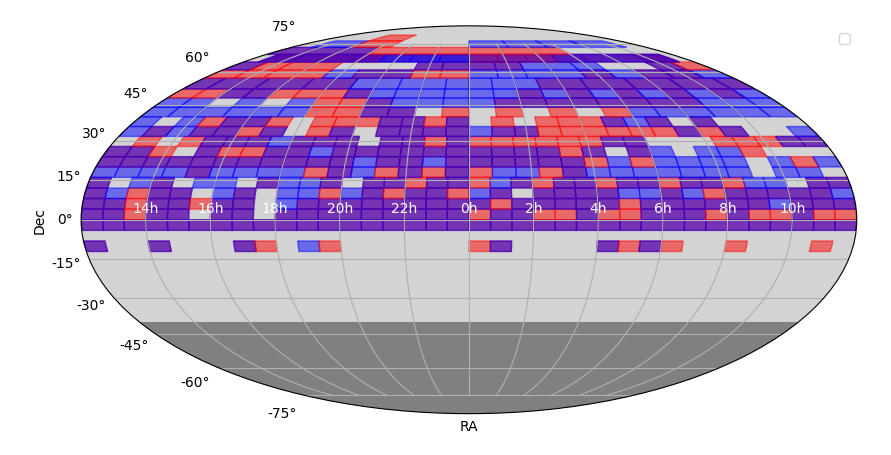
Figure above: Current sky coverage of SECI images from VLASS Epochs 2 (red) and 3 (blue). VLASS tiles imaged in both epochs are shown in purple and those yet to have SECI imaging in light grey.
The VLASS project is pleased to announce that a set of Single Epoch Continuum Image (SECI) catalogs is now available at the catalog listing website. These catalogs cover the areas in VLASS2.1, 2.2, 3.1 and 3.2 that were imaged with the mosaic gridder (observations taken at > 45 degree elevation, which minimizes artifacts due to the neglect of w-terms in imaging). Two types of catalog are available. Component catalogs are based on detections of individual source components down to a limit of 5-sigma on each image (typically 0.6-1.0 mJy).
Source catalogs are made by running the DRAGN hunter code of Gordon et al. 2023 to identify candidate double radio sources for components > 1.2 mJy. If a component is not part of a candidate double, it is retained as a compact source in the catalog. The source catalogs include candidate host galaxy identifications in WISE and redshifts from NED where available. Because of the elevation limit, most of the cataloged sources are in the northern hemisphere. Overall, 55% of the sky north of Dec. -40 degrees is covered by one or more SECI images and that fraction rises to 87% north of Dec. -4 degrees (see Figure).
Catalogs will continue to be updated and refined as SECI imaging proceeds and will include lower elevation observations using w-term imaging and the remaining VLASS campaigns that will be imaged for SECI (VLASS1.2 and 4.1). We expect mosaic gridder SECI imaging to be completed this Fall, with the project then switching to producing polarization cubes and combined epoch SECI images for the fields imaged with the mosaic gridder during 2027. In 2028 we will begin using newly developed CASA awp imaging codes to complete SECI imaging for the lower elevation observations (mostly in the southern sky) followed by their corresponding cubes and combined epoch images, an effort that we expect to take 2-3 years.
John E. Carlstrom named 2026 Jansky Lecturer
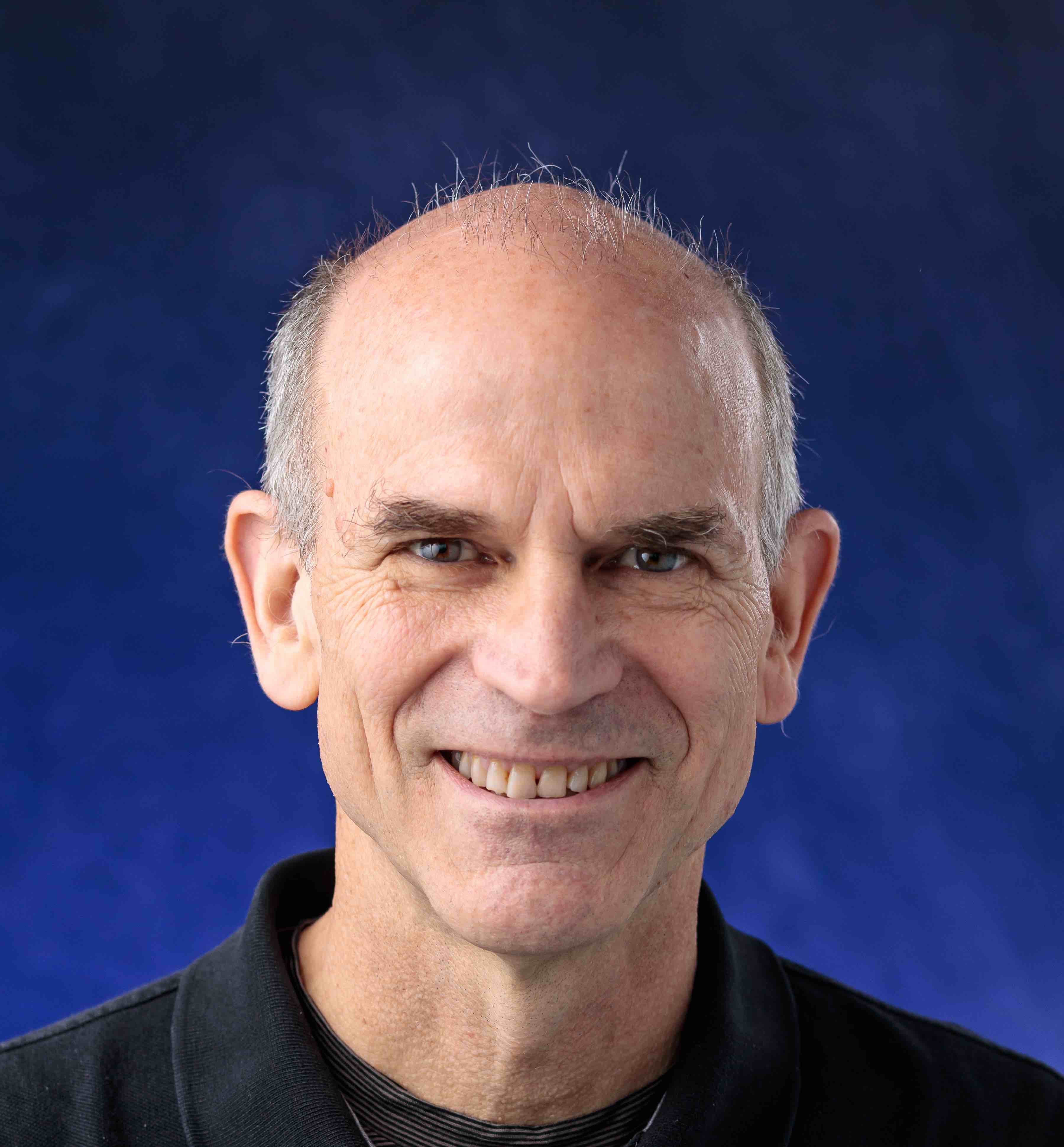
The NRAO is pleased to award the 2026 Karl G. Jansky Lectureship to Professor John E. Carlstrom, Chair and Chandrasekhar Distinguished Service Professor, Departments of Astronomy and Astrophysics and Physics at the University of Chicago. The Jansky Lectureship is an honor established by the trustees of AUI to recognize and celebrate outstanding contributions to the advancement of radio astronomy.
He earned his A.B. in Physics from Vassar College in 1981 and Ph.D. from UC Berkeley in 1988. He was a Millikan Research Fellow in astrophysics at the California Institute of Technology (1989-91) where he also taught (1991-1995). He joined the University of Chicago faculty in 1995.
Professor Carlstrom leads world-renowned research in the field of observational cosmology, studying the cosmic microwave background (CMB), and Sunyaev-Zeldovich (SZ) effect. He is the director of the South Pole Telescope (SPT), a 10-meter telescope project that completed the 2,500 square-degree SPT-SZ survey in three bands at arc-minute resolution, and the SPTpol survey of 500 square degrees to unprecedented sensitivity. The group has since deployed SPT-3G with 16,260 bolometric detectors to make deep polarization maps. The SPT has made precise measurements of the CMB that led to the discovery of hundreds of clusters of galaxies going back to when the universe was about one-third its present age, providing a history of the growth of the large-scale structure of the universe, and offering strong evidence that the structure in the CMB is a remnant of quantum fluctuations consistent with the theory of inflation.
He has been a member of the American Academy of Arts and Sciences since 2000, a member of the National Academy of Sciences since 2002, and Senior Member of the Kavli Institute for Cosmological Physics. Professor Carlstrom has received recognition from the scientific community as a 1998 MacArthur Fellow, the 2004 Magellanic Gold Model, the 2006 Beatrice Tinsley Prize, co-recipient of the 2015 Gruber Prize in Cosmology, and was elected a Legacy Fellow of the AAS in 2020.
The public lecture dates for this fall will be announced soon.
2026 Jansky Fellows
Since its inception over 60 years ago, the NSF NRAO has been enabling forefront research into the Universe at radio frequencies with early-career scientists. The NSF NRAO Jansky Fellowship program supports those scientists in launching their careers with leading research in radio astronomy. In partnership with the scientific community, the NSF NRAO provides world-leading telescopes, instrumentation, and expertise, training the next generation of scientists and engineers, and promoting astronomy to foster a more scientifically literate society.
The NSF NRAO has awarded three new Jansky Postdoctoral Fellowships this year.
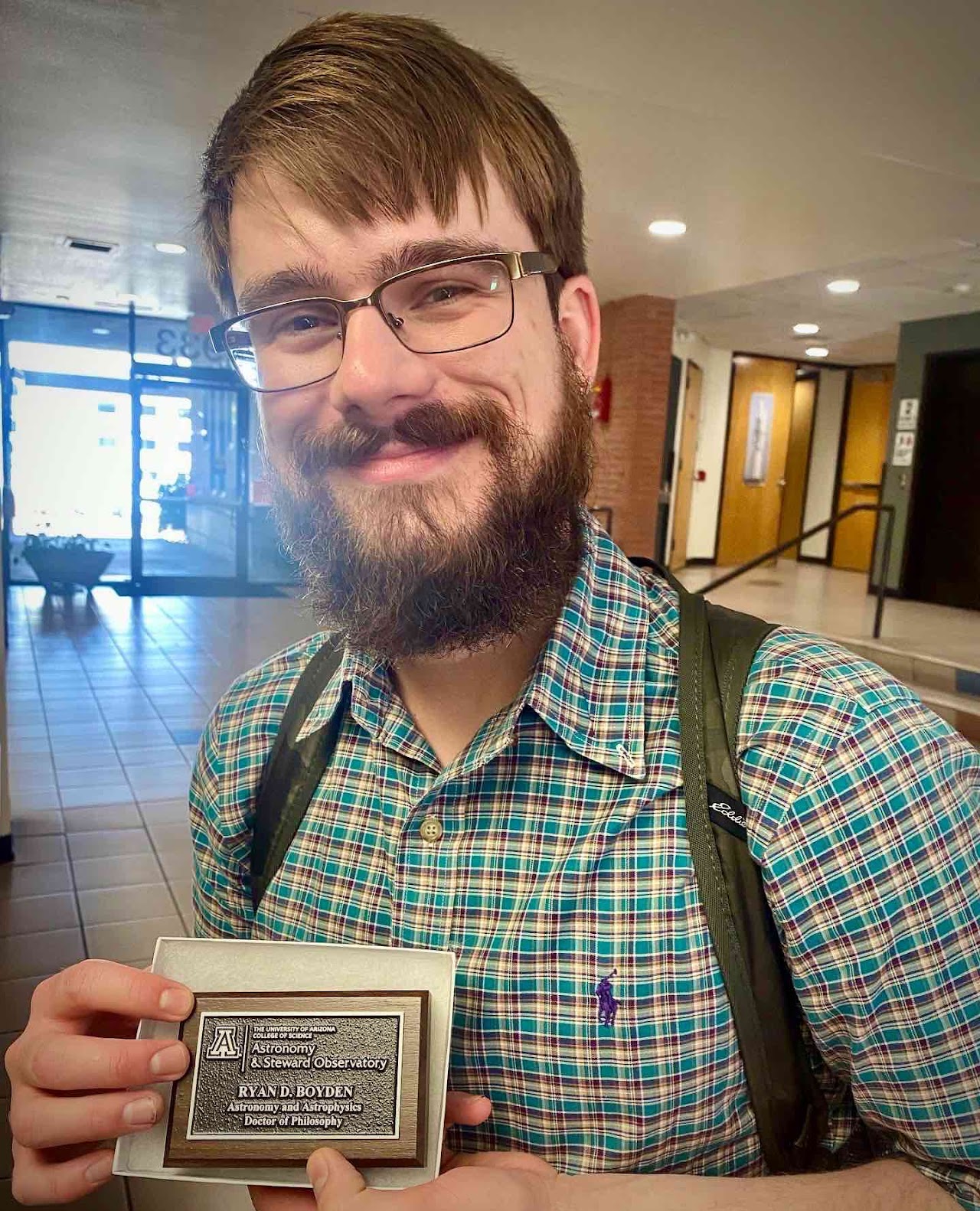
Ryan Boyden received his PhD in 2023 from the University of Arizona and subsequently moved to the University of Virginia in Charlottesville, Virginia as a Virginia Initiative on Cosmic Origins Postdoctoral Fellow. His research aims to understand the relationship between planet formation and star formation. Specifically, he uses observations from the Atacama Large Millimeter/submillimeter Array (ALMA), the NSF Karl G. Jansky Very Large Array (VLA), and the James Webb Space Telescope (JWST) to measure the properties of protoplanetary disks in clustered star-forming environments, like the Orion Nebula Cluster. As a Jansky Fellow, Ryan will lead as Principal Investigator a series of newly approved ALMA, VLA, and JWST programs to constrain the environmental influence on planet formation. He is especially excited to pioneer new applications of radio recombination lines to measure gas kinematics in protoplanetary disks, using observations from his large VLA program “PEARRLS: The Proplyd EVLA/ALMA Radio Recombination Line Survey.” Ryan will be located at NRAO Charlottesville.
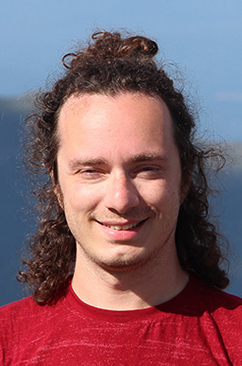
Alexander (Sasha) Plavin received his Ph.D. in Physics and Astronomy from Lebedev Physical Institute, Moscow in 2022. He served as a Black Hole Initiative postdoctoral fellow at Harvard University where he focused on studying quasar jets and black hole environments through multimessenger astronomy and data analysis: from radio interferometry and the Event Horizon Telescope to high-energy neutrinos. Sasha is no stranger to the NRAO community, having participated in the NRAO Summer School in 2016, and returning as a summer intern in 2019. As a Jansky Fellow, Sasha will tackle a long-standing puzzle in high-energy astrophysics: how quasars - the most powerful engines in the universe - accelerate particles to extreme energies. He will pair VLBA radio imaging of quasar jets with detections of cosmic neutrinos, building on his discovery that the brightest radio jets and the highest-energy neutrinos share a common origin. Sasha will be a Jansky Fellow in Socorro.
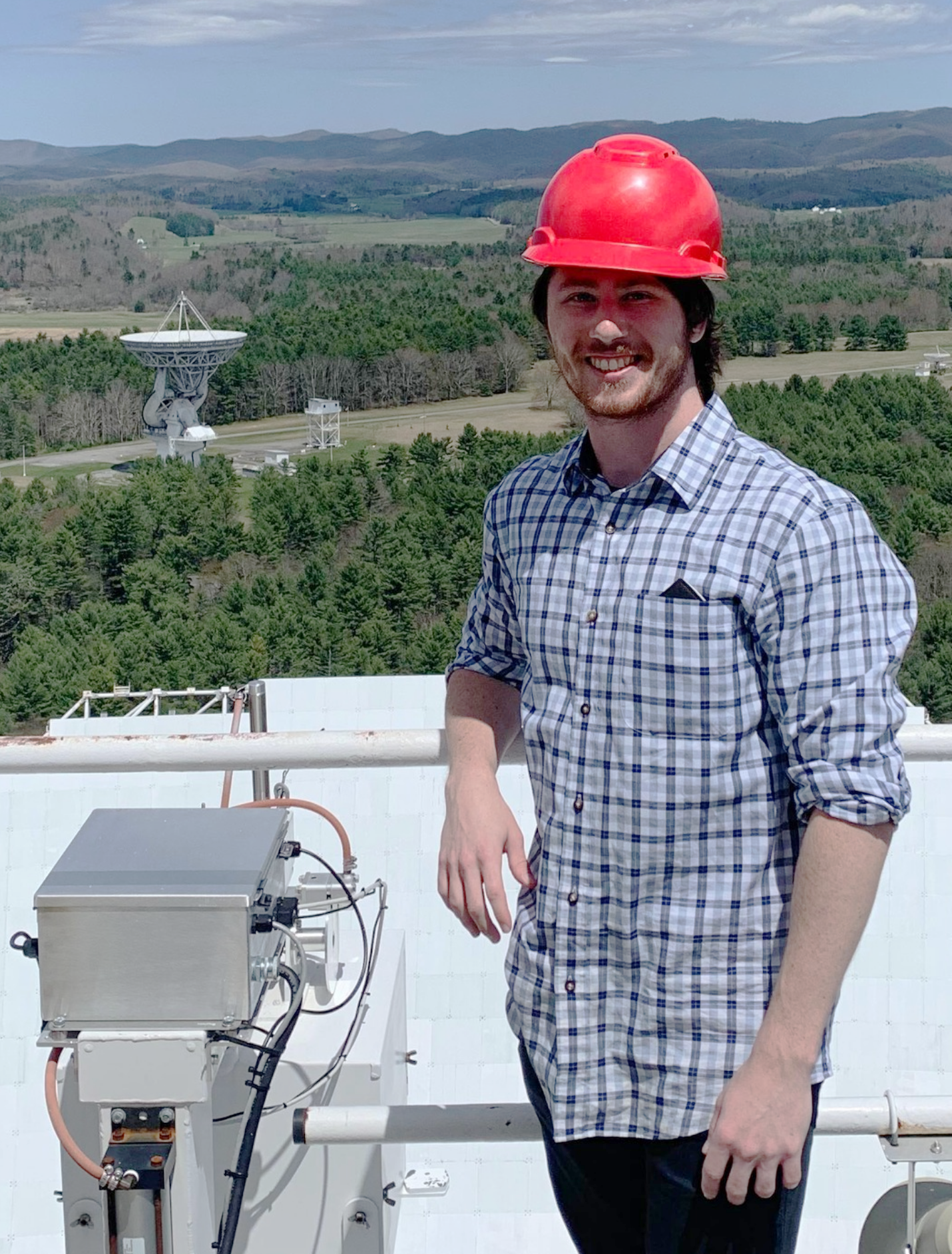
Jacob Turner received his Ph.D in physics from West Virginia University in 2023 and has been a postdoctoral fellow at Green Bank Observatory since receiving his advanced degree. He has, over the past four years, served as leader of the Pulsar Science Collaboratory (PSC) scintillation group, acting as a research mentor for thirteen students, ranging from middle school to graduate school, helping them learn how to observe, process, analyze, and interpret pulsar data. Additionally, his work at Green Bank has been primarily focused on cyclic spectroscopy and he has been instrumental in the development and testing of this unique backend system. As a Jansky fellow, Jacob will expand the field of pulsar cyclic spectroscopy through demonstrations of the technique's capabilities using the GBT's new cyclic spectroscopy backend, as well as commission similar systems for instruments like the DSA. Jacob will be a Jansky Fellow at Cornell University.
2026B Proposal Review
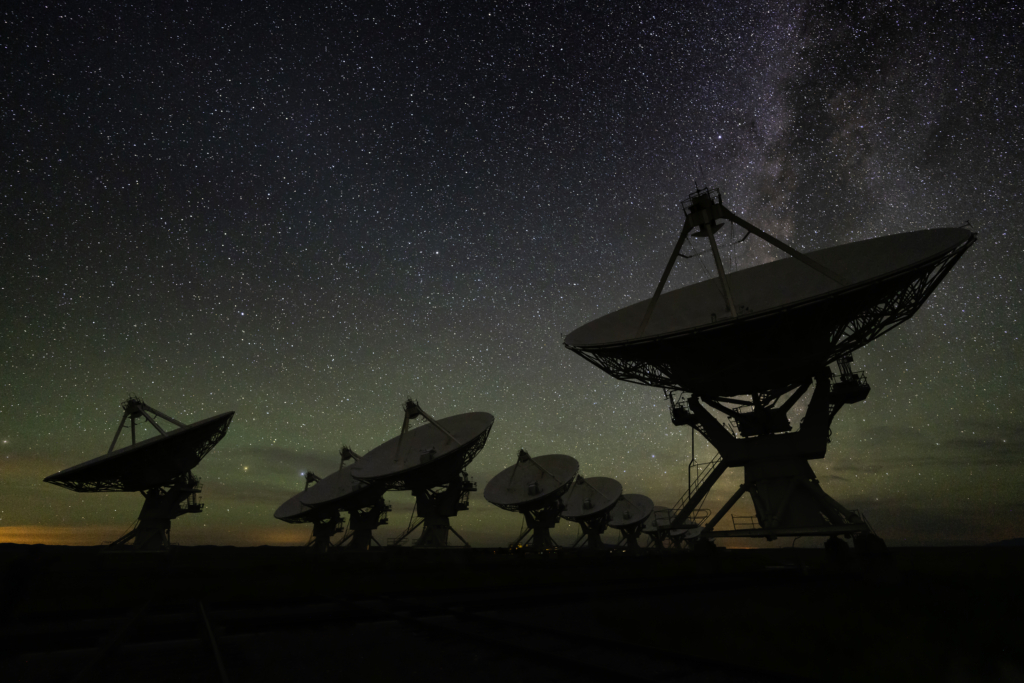
The NRAO has completed the Semester 2026B proposal review and time allocation process for the Very Large Array (VLA), Very Long Baseline Array (VLBA), and the Green Bank Telescope (GBT).
For the VLA the C-configuration will be available in the 26B semester and 169 new proposals were received by the 4 February 2026 submission deadline, including thirty-four time critical (triggered) proposals. The oversubscription rate (by proposal number) was 2.4 and the proposal pressure (hours requested over hours available) was 2.5, both of which are similar to recent semesters.
For the VLBA 61 new proposals were submitted. The oversubscription rate was 3.1 and the proposal pressure was 3.3, continuing a trend of slightly higher values than past semesters.
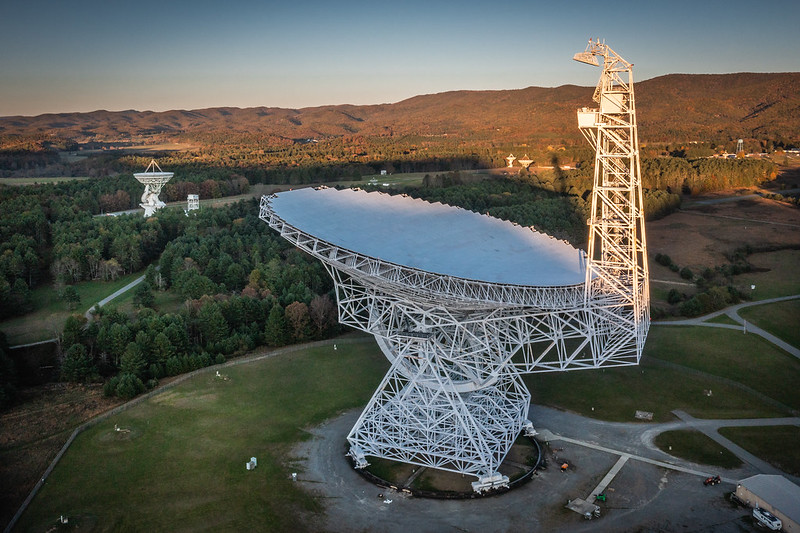
For the GBT 67 proposals were received for the 26B Semester. The oversubscription rate was 2.2 and the proposal pressure was 1.6, slightly lower than historical values.
There were sixteen joint proposals submitted that requested time with our partner observatories: ALMA, JWST, HST, Swift, and XMM-Newton.
The proposals were reviewed for scientific merit by ten Science Review Panels (SRPs) and for technical feasibility by NRAO staff. These reviews were completed in February - March 2026 and then considered by the Time Allocation Committee (TAC) during a face-to-face meeting on 16-17 April 2026. The TAC - comprising the 10 SRP chairs - was charged with recommending a science program for Semester 2026B to the Observatory Director. The recommended program was reviewed and approved on 13 May 2026.
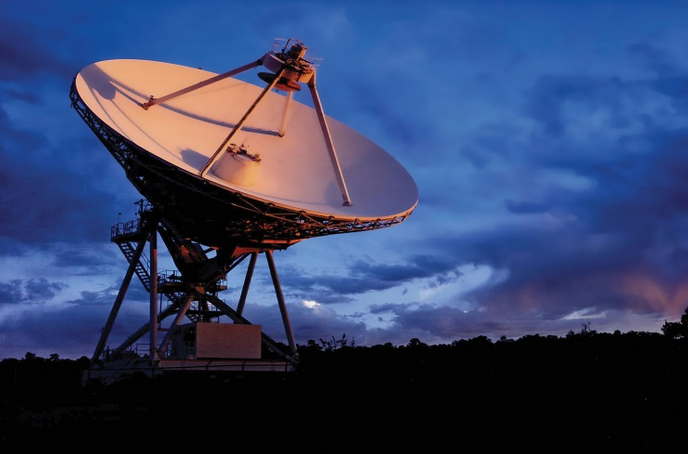
A disposition letter was sent to the Principal Investigator and Co-Investigators of each proposal on 22 May 2026 and a TAC report containing information for proposers and observers, including statistics and telescope pressure plots, was released the same day. The approved science program for the VLA, VLBA, and GBT has been posted to the NRAO science website. The authors, title, abstract, and scheduled hours for each approved proposal can be accessed from the Proposal Finder Tool.
The NRAO welcomes community feedback on the proposal review and time allocation process. Please provide such feedback via the Proposal Review department of the NRAO Helpdesk.
Photos: VLA - Jeff Hellerman; GBT - Jay Young; VLBA - AUI; (U.S. NSF / AUI / NSF NRAO)
NSF NRAO hosts the 21st Synthesis Imaging Workshop
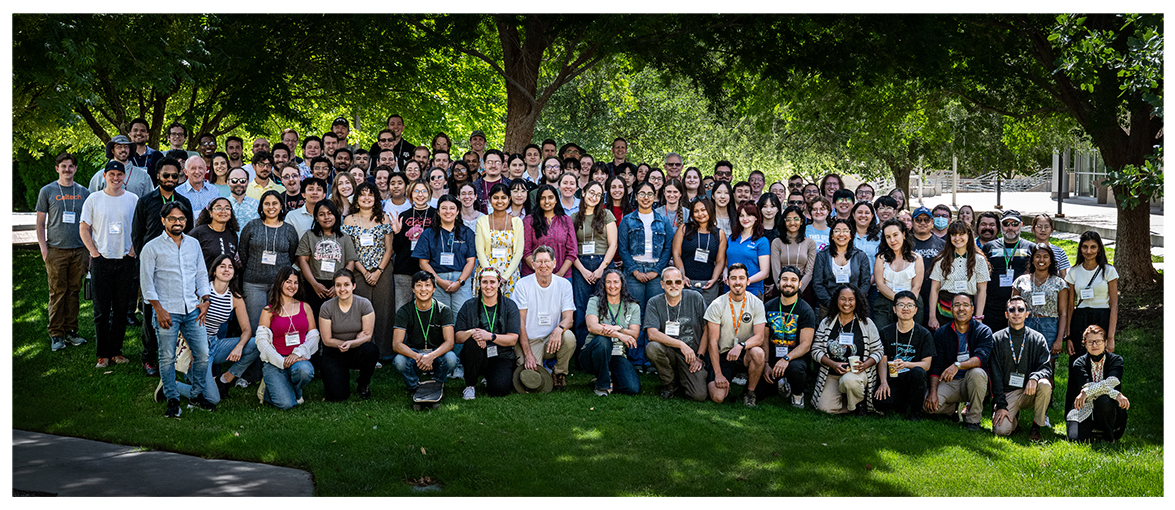
The NSF NRAO hosted the 21st Synthesis Imaging Summer Workshop in Socorro, New Mexico, from May 26th to June 3rd, 2026. More than 110 participants from the US and around the world joined this long-standing workshop to learn radio interferometry fundamentals and state-of-the-art methods and techniques in radio data processing. This year, the workshop also included a special session on optical interferometry. Participants toured NSF NRAO New Mexico facilities: the Karl G. Jansky Very Large Array (VLA) site that hosts both the VLA and the next generation VLA prototype antenna, as well as the New Mexico Tech (NMT) Magdalena Ridge Observatory (MRO) Interferometer site.
Learning resources from the workshop, including video recordings of the lectures, are publicly available online.
The event was sponsored by NSF NRAO, AUI, NSF, the NAASC, and New Mexico Tech (NMT). Group photo courtesy of Tony Perreault.
ALMA News
ALMA Observing Status
Austral Winter is quickly arriving at the ALMA site. The array is currently in configuration C-6 (with maximum baselines of ~2.5 km), after which more compact configurations will be available until the end of Cycle 12. Image: ALMA/ESO/José Francisco Salgado
Announcement: Call for Meetings and Conference support call open
The NAASC invites members of the North American scientific community to apply for funding in support of conferences and workshops that are ALMA focused or have a synergy with ALMA, and which encourage the participation of students, postdocs, and early career researchers. PI-led events based in the US, as well as national or international conferences may be considered. Events must be scheduled between Oct 1, 2026 and December 31, 2027 to be eligible.
For awarded events, the NAASC can provide monetary funding (up to $15,000 per event). As needed, the NAASC can also provide logistical support (e.g., webinar platform) materials and content if requested in the application or proposed by the NAASC at the time of the award.
Proposals requesting more than $5,000 should apply before July 31th, 2026. For other proposals with lower monetary requests, we encourage submission by the call deadline but we will also consider applications at any time while funds last. For instructions on how to apply, eligibility criteria and other details on this program, please look at the program webpage.
Announcement: Travel support available for data reduction visits
The NAASC continues to encourage "face-to-face" visits for North American-supported ALMA users to receive expert assistance for data reduction (PI projects or archival research) or proposal preparation. Remote visits are also possible. For more information and to request a visit, please see the visitors web page and submit a ticket to the face-to-face visits department of the ALMA Helpdesk. Note that investigators from U.S. institutions can apply to the NAASC for assistance with travel expenses, for up to two members of their team.
Cycle 13 Proposal Submission Statistics available
A detailed report of the Cycle 13 Proposal Submission Statistics is now available on the ALMA Science portal. The report provides a summary of items such as the number of submitted proposals and time requested, subscription rates, and comparisons with the number of hours requested in previous Cycles.
The ALMA Wideband Sensitivity Upgrade (WSU)
The WSU Software Adaptations initiative recently passed its Preliminary Design Review. This initiative represents the ensemble of efforts to upgrade the ALMA online and offline software packages for the WSU. The ALMA Band 2 production process was completed in May of this year. The first peer-reviewed paper based on Band 2 data has recently been accepted for publication (T. Bakxs, 2026, MNRAS, Volume 549, Issue 2), demonstrating the performance of the first commissioned component of WSU. The paper focuses on a molecular line survey of a high-z dusty star-forming galaxy, and is based on public Band 2 science verification data.
You can find the most up-to-date information about the WSU project and its scientific impact on the ALMA Observatory WSU webpage; resources for the North American community can be found on the NAASC WSU webpage.
Upcoming Events
ALMA at 15 years: Science, Synergies, and the Road Ahead. February 22-27, 2027, Taipei, Taiwan
Abstract submission is now open for the conference ALMA at 15 Years: Science, Synergies, and the Road Ahead, which will be in person from February 22 to 26, 2027, at Academia Sinica's Nangang campus in Taipei, Taiwan. The abstract submission deadline is September 15, 2026. The conference will highlight ALMA's latest results, especially since the last Pan-ALMA conference held in 2023, and identify exciting directions for future ALMA research. The program will feature invited and contributed science presentations, along with updates on the Wideband Sensitivity Upgrade (WSU), tutorial sessions on the archival and CARTA systems, and discussions of future ALMA prospects. Talks and posters presenting scientific work using ALMA and/or its synergies with other facilities across all areas of astronomy are welcome.
The NAASC can provide travel support for early career attendees (students and postdocs) who are based at North American institutions (US and Canada). To apply for financial support, please contact Arielle Moullet after submitting your abstract and no later than the deadline for abstract submission (September 15, 2026). Announcement of travel support awards will be made at the time of abstract acceptance.
Important Dates:
- Abstract Submission Opens: June 15, 2026
- Abstract Submission Deadline: September 15, 2026
- Early-Bird Online-registration Opens: September 30, 2026
- Notification of Abstract Acceptance: Late Oct./Early Nov., 2026
- Early Bird Online-registration Deadline: November 27, 2026
- Online Registration Deadline: January 20, 2027
ngVLA Project News and Job Opportunities
ngVLA Job Opportunities
The NRAO is pleased to direct the community's attention to the following job opportunities:
-
• ngVLA Assistant Scientist
• ngVLA Technical Project Manager
• Assistant Director, ngVLA Project Director
First Light Achieved with ngVLA Prototype Antenna
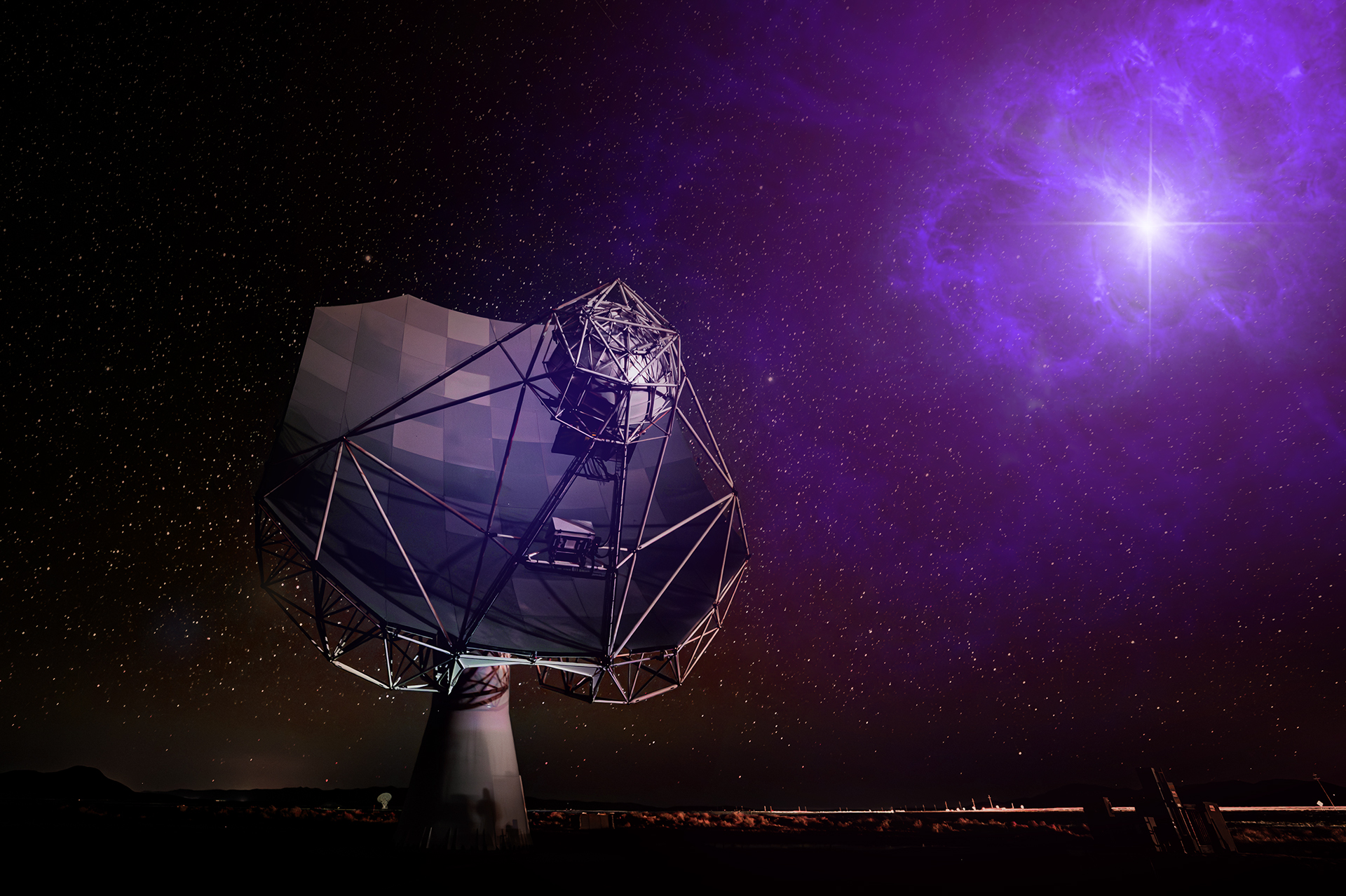
In April, the ngVLA prototype antenna achieved first light by taking observations independently, and also in collaboration with the NSF VLA. First light marks the 18m prototype antenna’s transition from construction by the contractors to astronomical testing by staff of the NSF NRAO. Quoting the press release from NSF NRAO:
"First light from the ngVLA prototype antenna is a real world demonstration of the engineering progress required to build America's - and the World's - next great radio astronomy facility,"" said Tony Beasley, Director of NSF NRAO and AUI Vice President for Radio Astronomy Operations. "This milestone reflects the leadership and expertise we've tapped into amongst NRAO staff, our contractors, and the U.S. and international scientific community."
Graphic Credit: NSF/AUI/NSF NRAO/A.Sosnovici/M.Weiss.
Mexican Universities Sign Collaboration Agreement
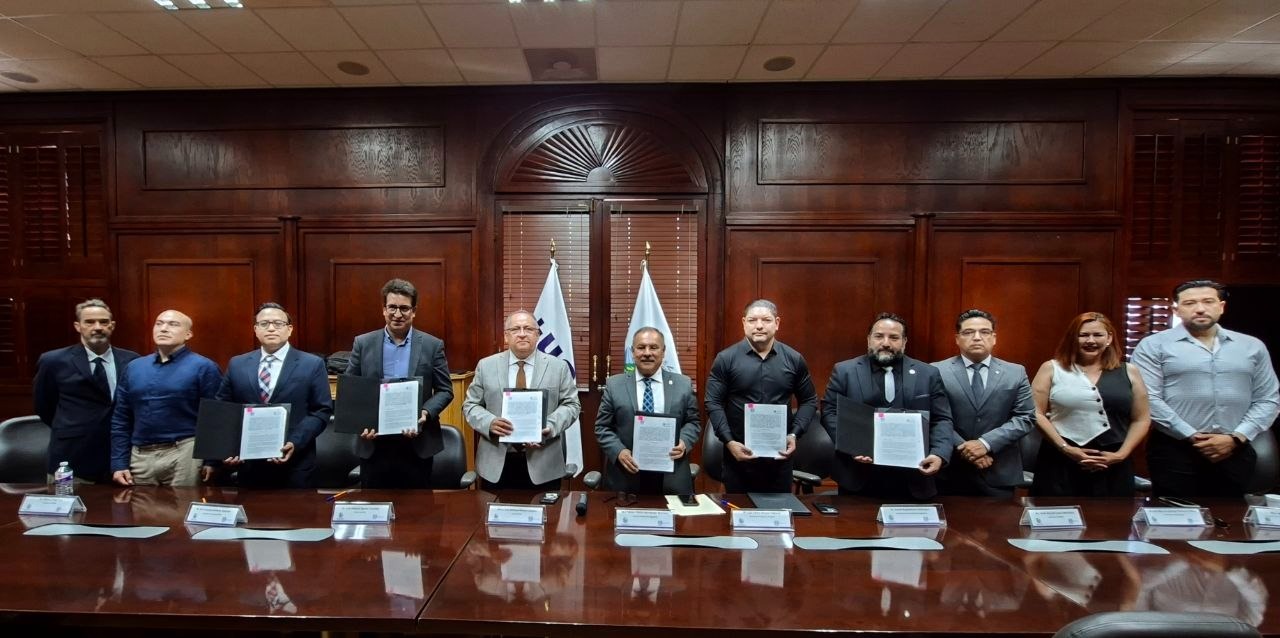
In June, the Autonomous University of Chihuahua signed a collaboration agreement with the National Autonomous University of Mexico, through the Institute of Radio Astronomy and Astrophysics. The agreement aims to promote the development of joint research projects in radio astronomy, including the identification and analysis of sites in Chihuahua, Mexico, for the possible installation of ngVLA antennas.
ALMA WSU and ngVLA Presentations in Canada
In June, members of the NAASC and the ngVLA SAC hosted a special lunchtime session at the CASCA conference in Montreal, Canada. This session included introductions to these two facilities, followed by an update on the scope, capabilities and timeline of the ALMA Wideband Sensitivity Upgrade and the ngVLA's current status and paths to Canadian partnership. Both ALMA and ngVLA were prioritized in the 2020 Canadian Long Range Plan for Astronomy. NAASC Development Scientist Jennifer Donovan Meyer spoke about the WSU, and NAASC member and ngVLA SAC co-chair Brenda Matthews spoke about the ngVLA project.
ngVLA International Science Conference 2026
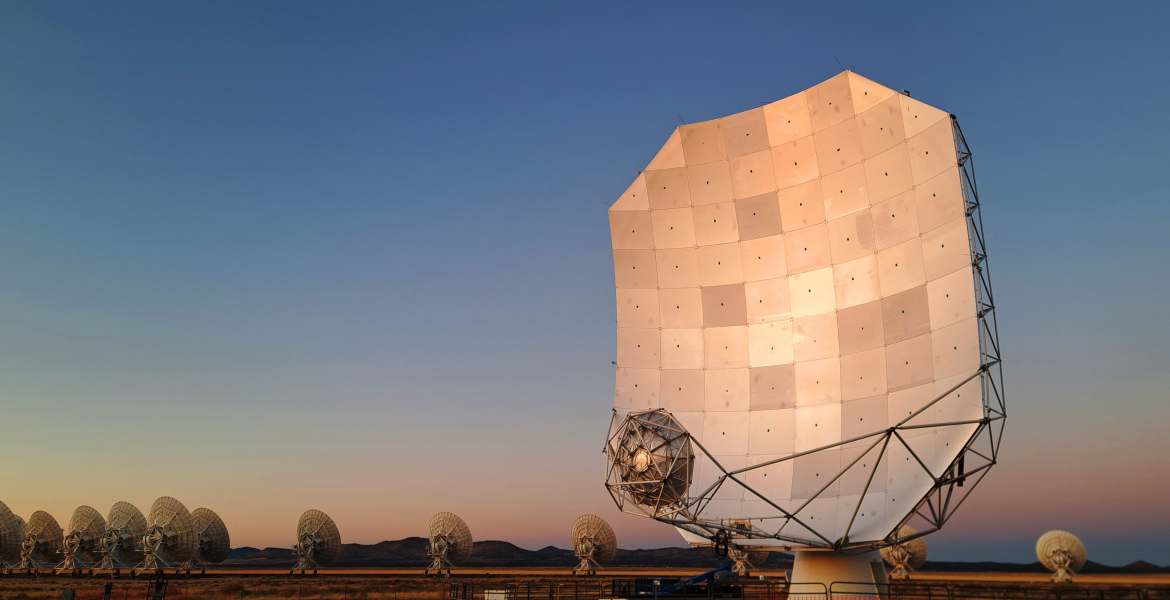
Registration and abstract submission has opened for the conference in Sendai, Japan, November 10-13. Jointly organized by NSF NRAO, the ngVLA SAC, and the ngVLA-Japan Science Working Groups, this conference will highlight recent advances in astronomy and related fields, and explore the novel scientific opportunities enabled by the ngVLA's unprecedented angular resolution and sensitivity. The organizers particularly encourage the participation of early-career researchers and students, who will be the primary users of the ngVLA in the coming decades.
ngVLA Science - From Detection to Cartography: Mapping Technosignatures with the ngVLA
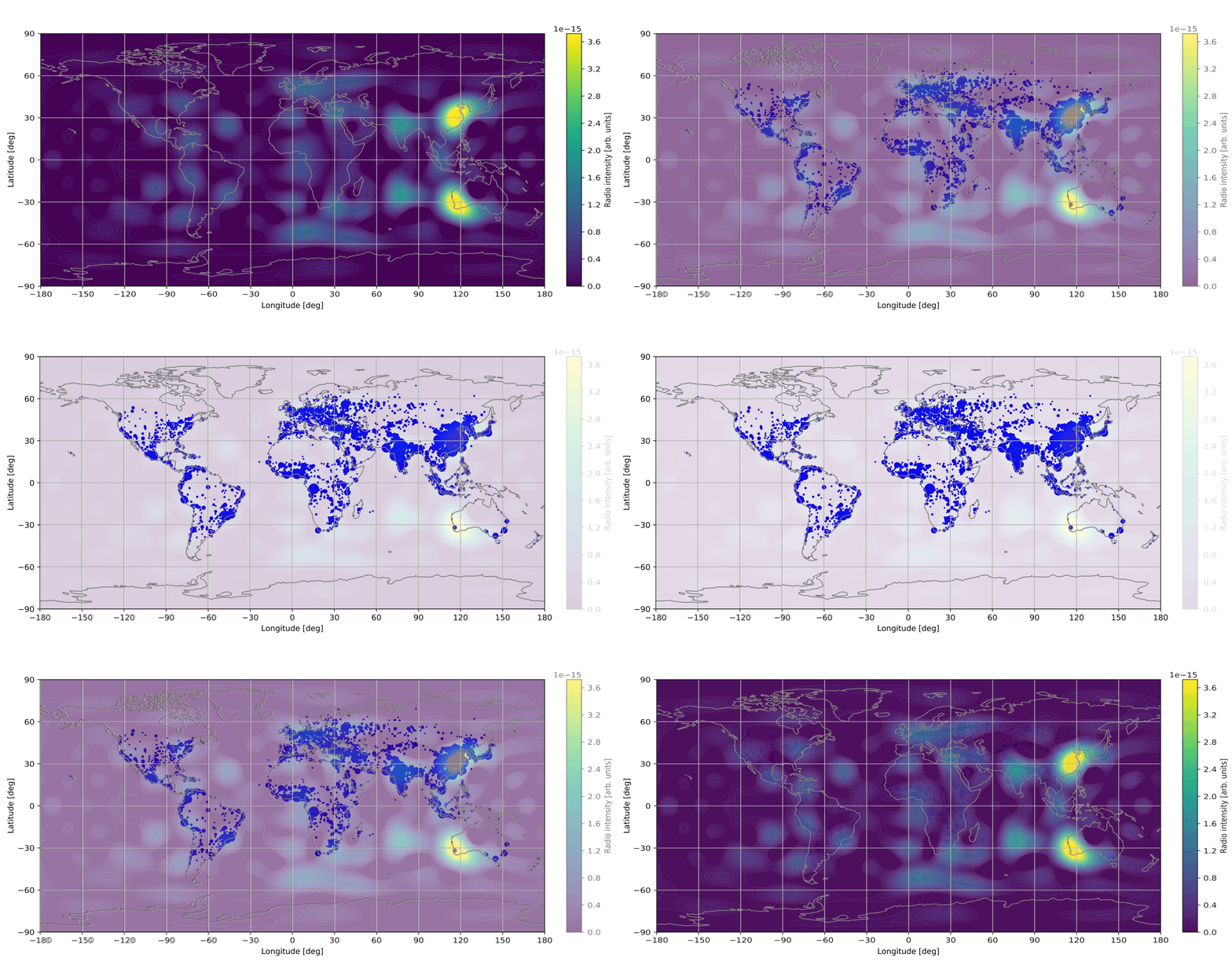
Figure: Earth as an unresolved exoplanet. (1) True distribution of radio transmitters in blue, scaled to city population. (2) Distribution recovered from rotational Doppler pattern of the integrated narrowband signal with colormap. Click to Enlarge. Credit: Takahashi (2026)
A previous newsletter (Technosignature Searches with the ngVLA) explained how the ngVLA could detect narrowband radio transmitters around many nearby stars. Here we ask the next question: once we detect such a signal, what can it tell us about the planet that sends it? Even with future telescopes, an Earth-like exoplanet stays a single point of light. But the rotation of the planet leaves a clear mark on the signal. Earlier studies modeled the radio leakage from Earth and how Earth's total radio flux changes with time as the planet rotates (Sullivan et al. 1978; Saide et al. 2023). Building on this idea, in Takahashi (2026) we show that this time variation also carries information about where the transmitters are located.
On Earth, most transmitters send their power mainly in near-horizontal directions. This is the case for mobile-phone base stations, digital terrestrial TV transmitters, and many radars. Because the radiation is mostly horizontal, a distant observer receives signals mainly from transmitters near the edge (limb) of the rotating planet. Earth's surface moves at about 470 m/s at the equator, so sources near the equator have the largest line-of-sight speed and the largest Doppler shift. The maximum fractional frequency offset is about 1.6 x 10⁻⁶ (about 1.6 kHz at 1 GHz), and sources at higher latitudes give smaller offsets. In this way the frequency offset indicates the latitude of a source, and the time pattern over one rotation indicates its longitude.
Using these relations, a simple inversion based on Fourier transform and spherical harmonics reconstructs the large-scale distribution of transmitters, which is expected to follow continents, climate zones, and population. This measurement fits the strengths of the ngVLA well: very fine frequency channels (1 to 10 Hz), time-resolved spectra taken over many rotation periods, and enough sensitivity to add many periods together after correcting the slow orbital Doppler drift.
This approach moves narrowband SETI from a simple yes/no detection toward real mapping (see figure). In tests that use Earth as an example planet, the method recovers the main large-scale structure even at modest signal-to-noise, with bright regions over the U.S. coasts, Europe, West and South Asia, eastern China, Japan, and Brazil in the south. One limitation is that the northern and southern hemispheres produce the same Doppler pattern, so the recovered map is symmetric about the equator. Used together with the ngVLA's wide commensal SETI surveys, the same data that find a nearby narrowband source could later provide a first rough "activity map" of another technological planet, and also give clues about its rotation and geography.
Since 2015 the acronym ngVLA has appeared in 1600+ publications indexed in the SciExplorer Data System. This article continues a regular feature intended to showcase some of those publications. We are especially interested in showcasing work done by early-career researchers. The collection of showcase articles can be viewed online. Anyone wishing to volunteer to author a feature should contact Joan Wrobel.
Conference Recaps: International Microwave Symposium Boston, AAS Pasadena, and NRDZ Santa Fe
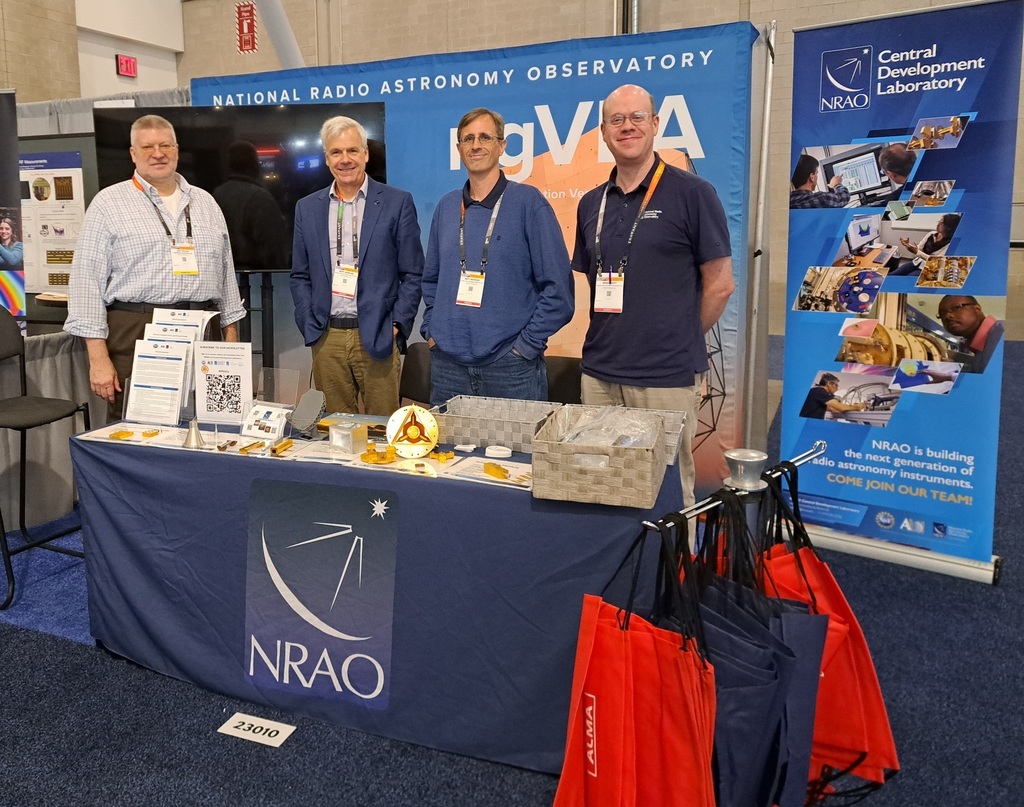
The National Radio Astronomy Observatory Central Development Laboratory took part in the exhibition of the 2026 IEEE MTT-S IMS conference in Boston, MA, June 8-12, 2026. Starting in 1952, the IEEE MTT-S International Microwave Symposium (IMS) has become the premier international conference for microwave theory and practice.
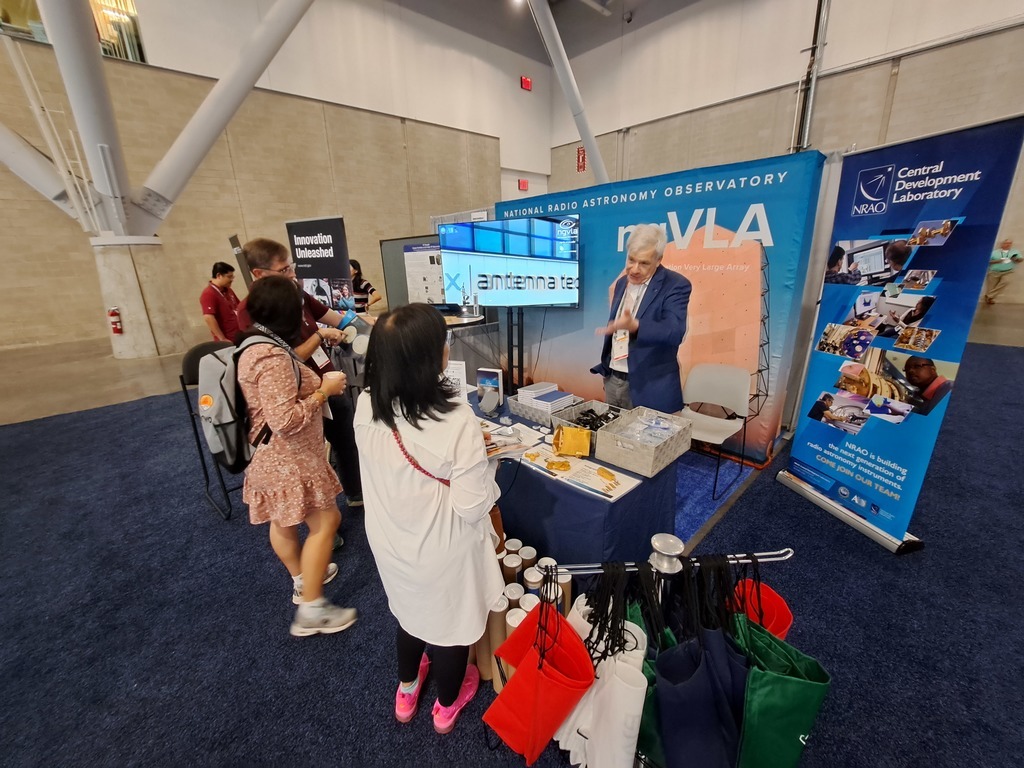
9,000 attendees engaged with observatory staff about the NRAO facilities, engineering development, ngRadar, ngVLA, and opportunities for students. The membership learned about CDL research, instrumentation for ngVLA, and new microwave RF developments for radio telescopes. The NRAO-CDL exhibition was one of 500 vendors in the Boston Convention Center.
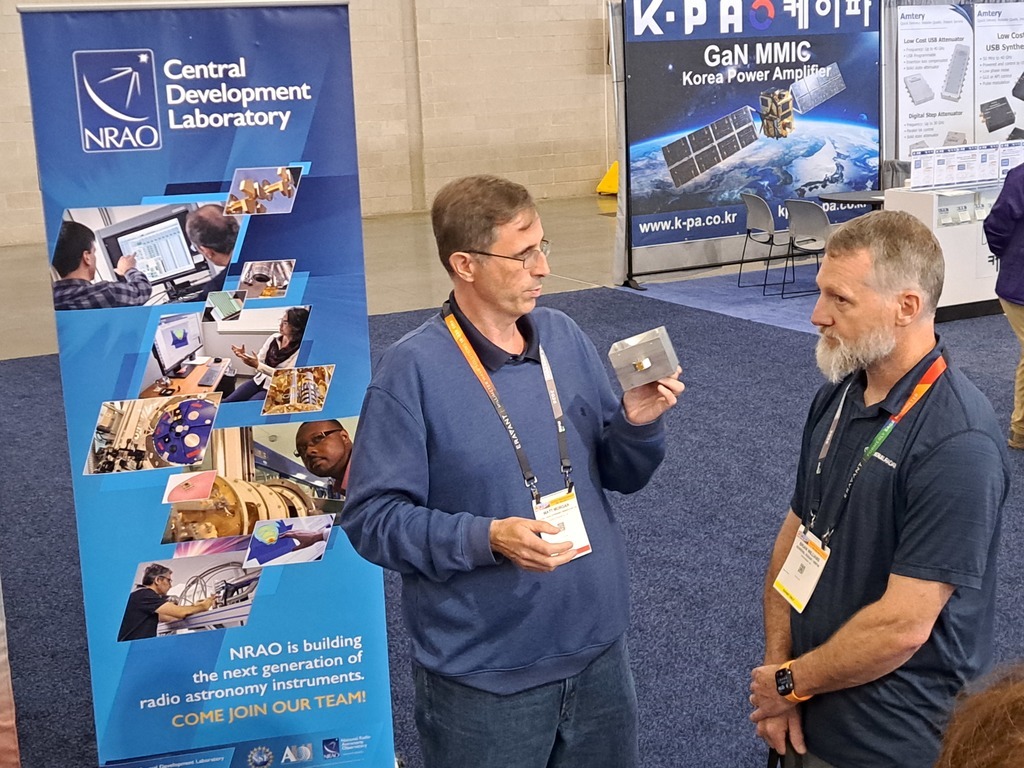
IMS2026 was co-located with the RF Systems Pavillion and StartUp Program, designed to connect hard tech start-up founders with visionary investors and manufacturers, fostering the growth of next-generation companies. The conference also convened a series of panels and talks led by leaders in the innovation research communities.
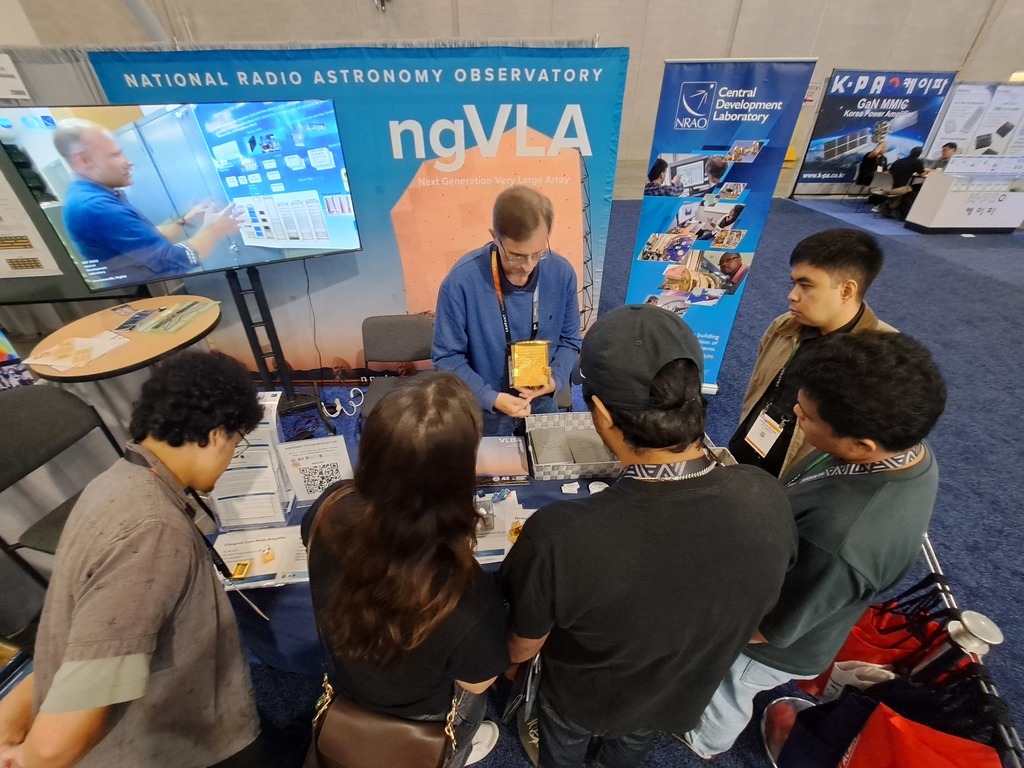
Microwave Week kicked off on Sunday, June 8, 2026 with various informative workshops and boot camps designed to keep participants at the forefront of industry trends or refresh their understanding of microwave fundamentals.
Photos top to bottom: (1) Jeff Pixton, Bert Hawkins, Matt Morgan, and Brian Kent showcase NRAO-CDL to the RF community in the Research and Development part of the exhibit hall. (2) Bert Hawkins discusses student and co-op opportunities to attendees in Boston. (3) Matt Morgan shows a compact feed horn design in the exhibit hall. (4) Matt Morgan shows close ups of instrumentation to early career visitors.
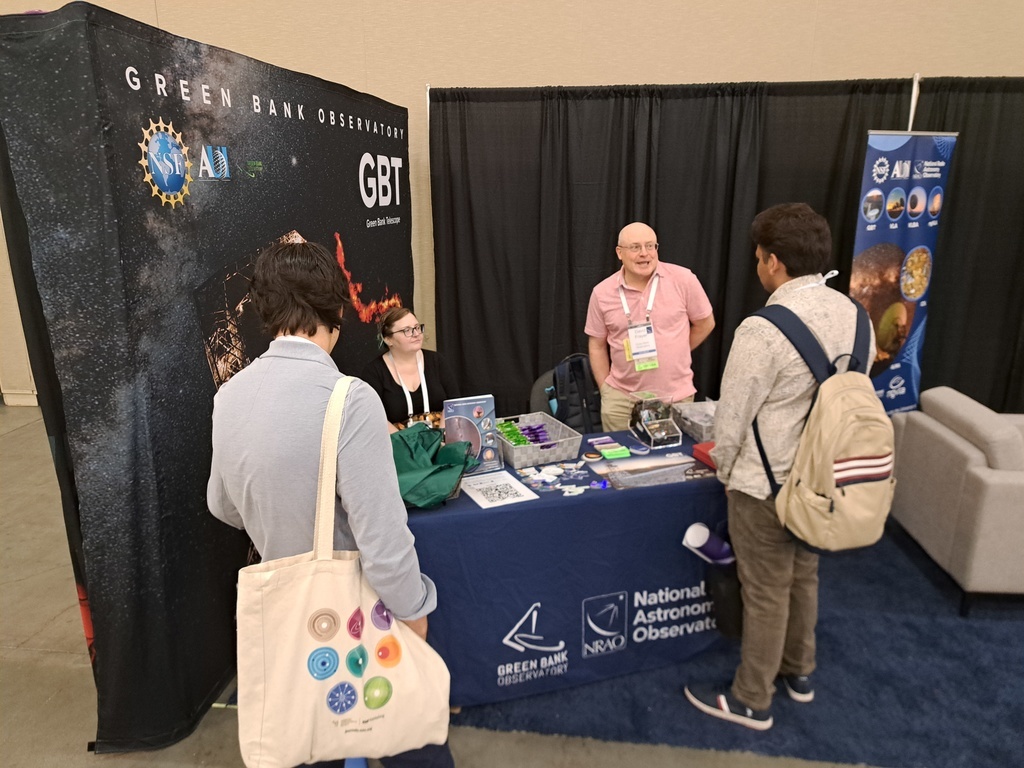
The NSF National Radio Astronomy Observatory also took part in the exhibition of the 248th meeting of the American Astronomical Society in Pasadena, California, June 14-18, 2026.
900 attendees engaged with observatory staff about our facilities, scientific research, and opportunities for students. The membership learned about the next generation Very Large Array and ALMA Wideband Sensitivity Upgrade (WSU), and opportunities with GBT, VLA, and VLBA, along with meeting press conferences available on YouTube.
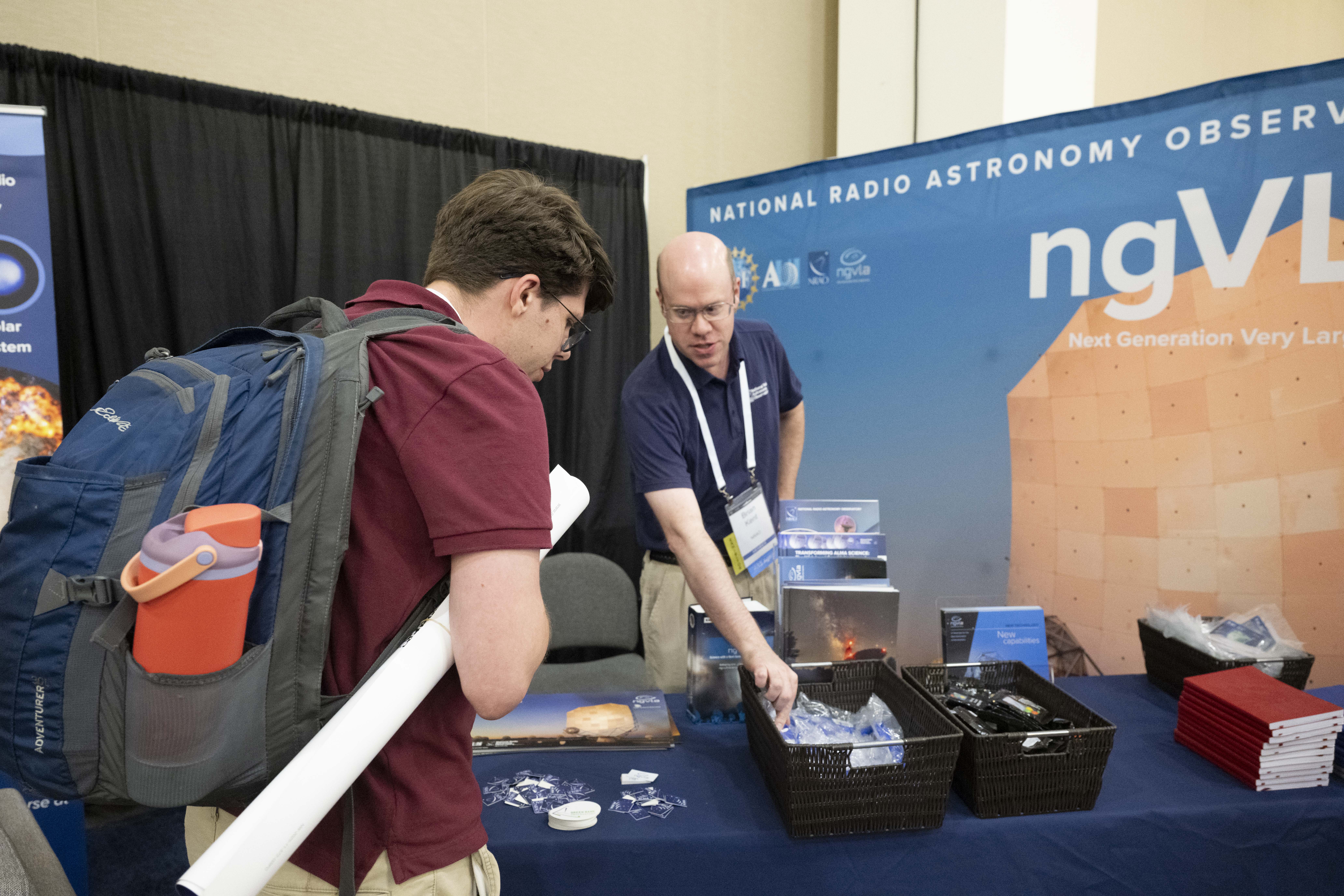
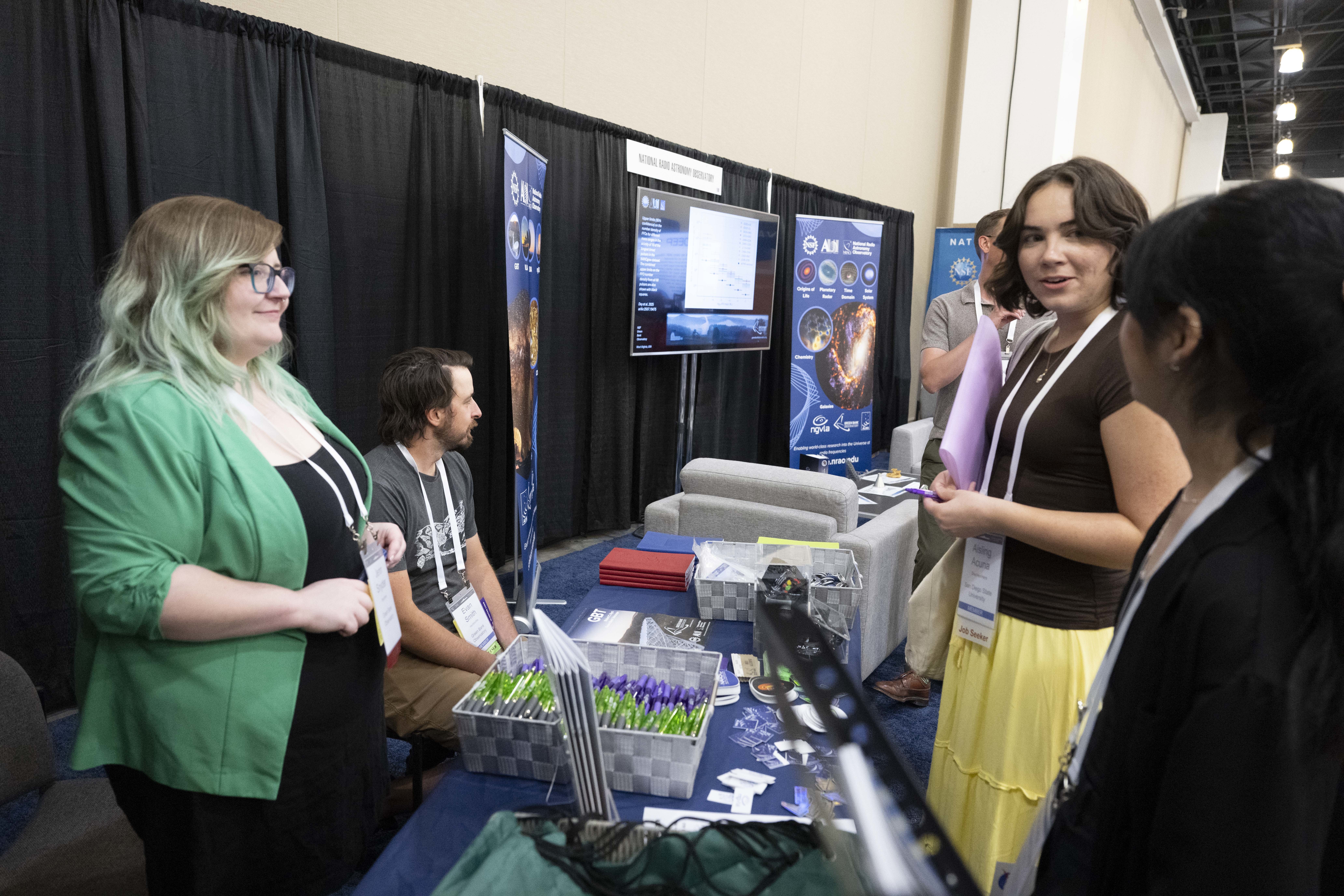
The AAS will be hosting a Virtual Graduate Admissions Fair in September 2026. The next AAS meeting will be in Salt Lake City, Utah, January 2027.
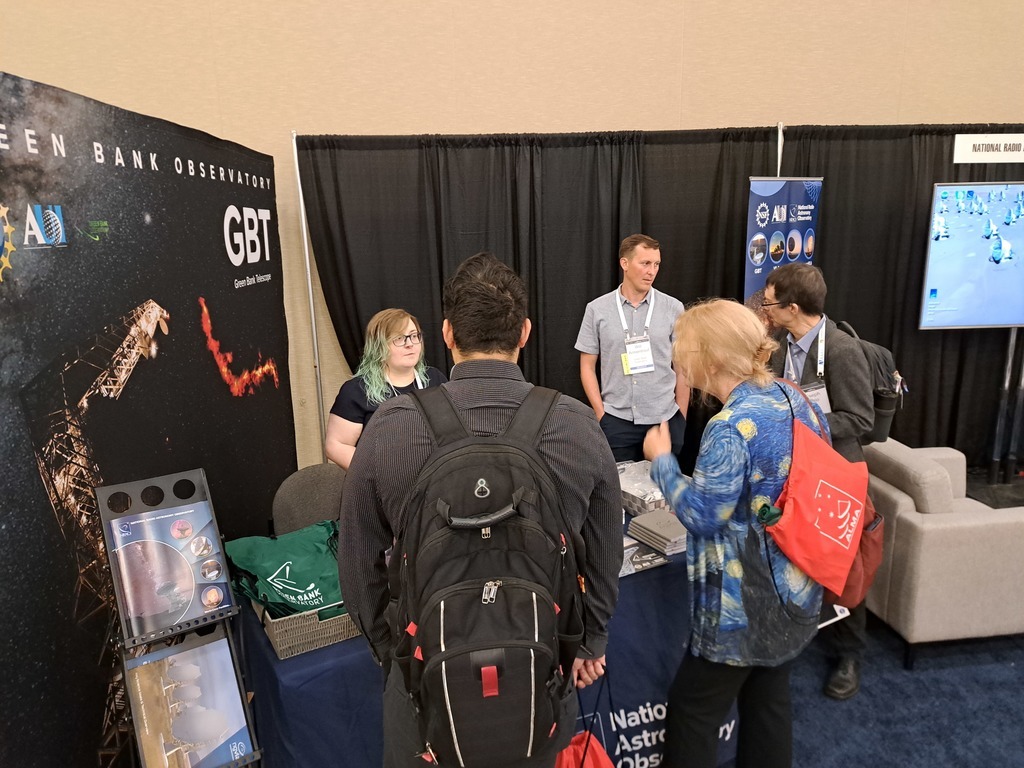
Photos top to bottom: (5) Dave Frayer talks about the Green Bank Observatory. (6) Brian Kent shares some literature and handouts with meeting attendees. (7) Jenn Snyder and Evan Smith answer questions about the NRAO. (8) Will Armentrout and Jenn Snyder discuss observing opportunities with potential users in the exhibit hall.
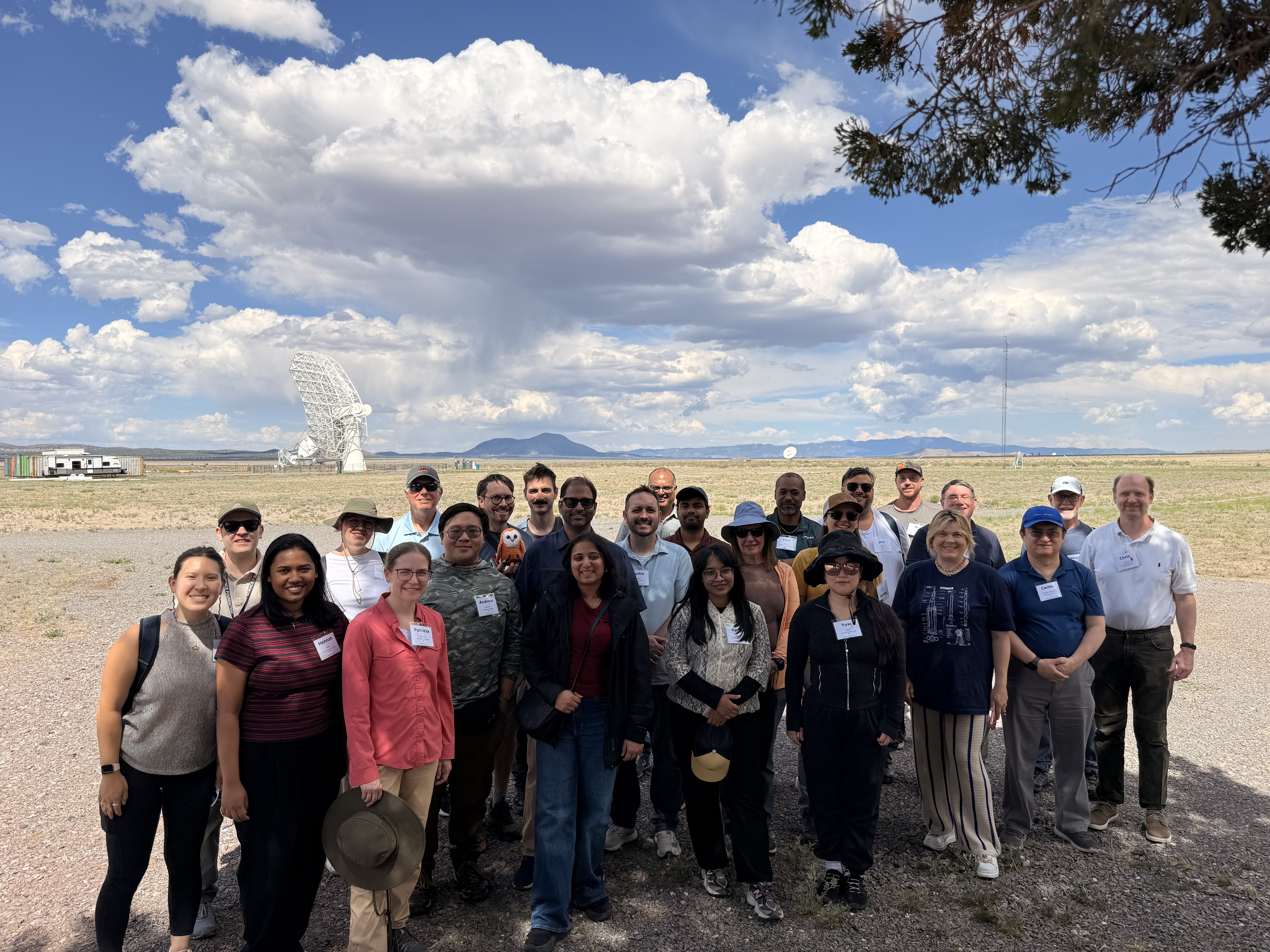
Finally, the NSF-supported National Radio Dynamic Zone (NRDZ) Research Partnership and Workshop Series sponsored an in-person workshop held in conjunction with the 20th Annual IEEE International Conference on RFID in Santa Fe, New Mexico, June 15-16, 2026. The first day featured a guided tour of the Jansky Very Large Array (conference participants pictured below in front of the ngVLA antenna). Day two featured talks, panels, open discussions, paper presentations, and poster sessions, including an invited paper on NRAO's Operational Data Sharing (ODS), and a poster presentation on a collaborative solution to RFI from a recently updated cell tower near the VLA.
Recent Science Media Releases
 |
Young Stars Shape the Fate of Galaxies |
 |
NSF VLA and ALMA Reveal Hidden "Ring Factories" of Giant Star Clusters in Nearby Galaxies |
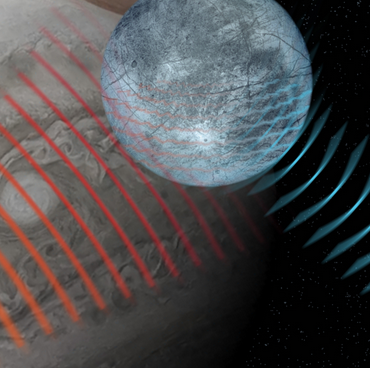 |
Radar Echoes From Europa Reveal Secrets Beneath the Ice |
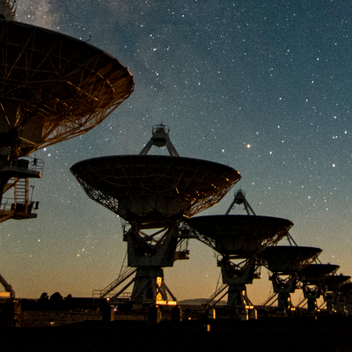 |
Saving the Quiet Sky: Scientists and Telecom Team Up to Protect NSF VLA |
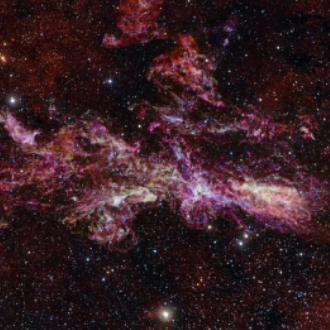 |
A Quiet Corner of the Milky Way Could Hold the Secret to Star Formation |
 |
Astronomers Catch Black Holes "Burping" in Radio with the NSF VLA
|
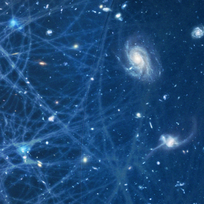 |
Cosmic Dawn Fuel Discovery Unlocks Early Galaxy Growth Secrets |
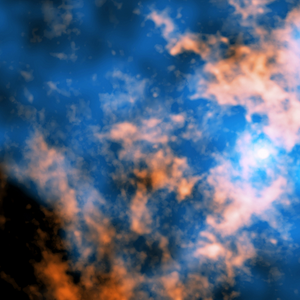 |
Milky Way’s Black Hole Finally Caught "Breathing" |
|
Contact the NRAO press office to share your new and exciting science results. |
From the Archives
Ellen Bouton
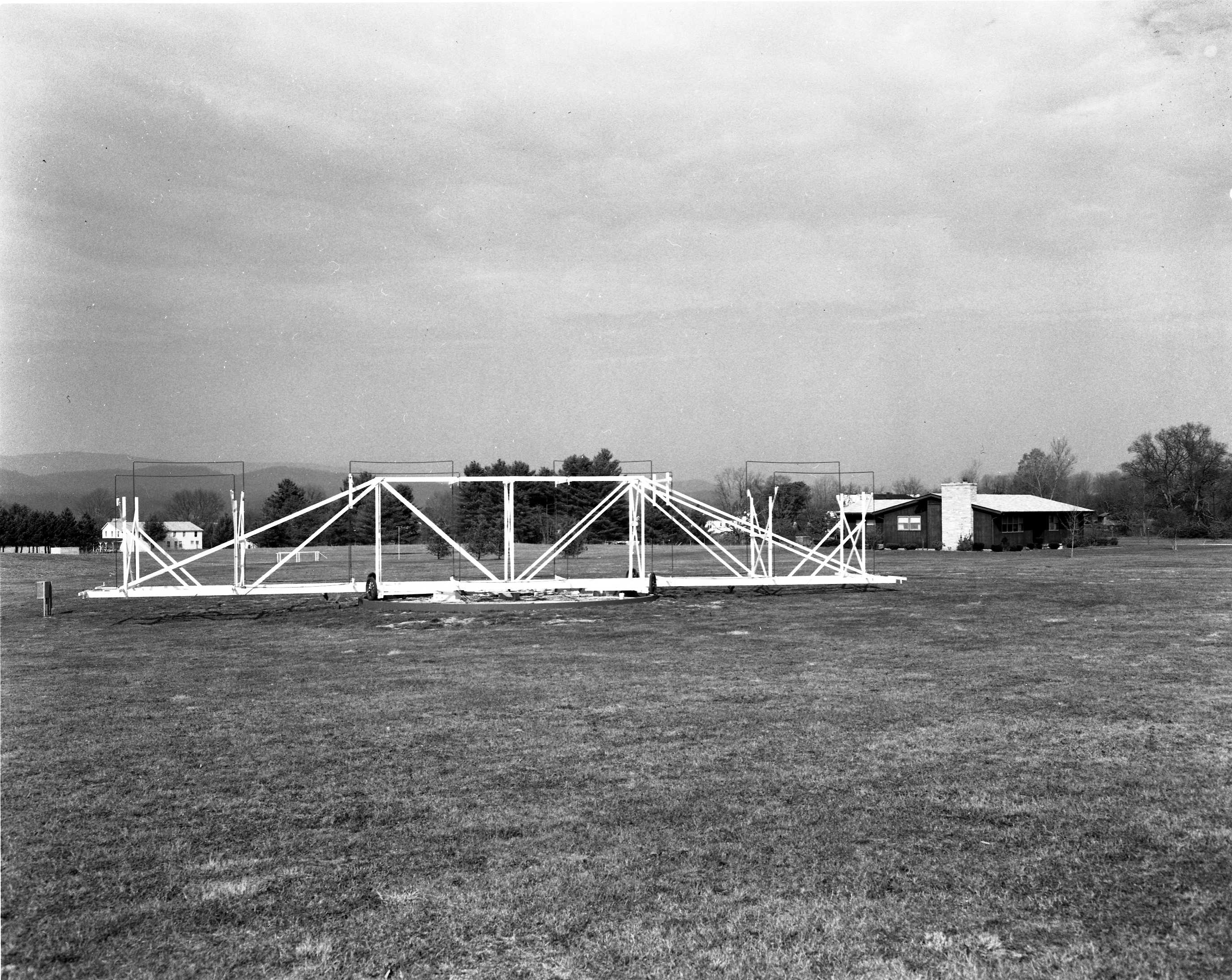
About this month's photo: In a project organized by Grote Reber, a replica of Karl Jansky's original antenna at the entrance to NRAO in Green Bank was completed in summer 1964. Reber and NRAO requested help from Jansky's associate, Al Beck, who was still at Bell Labs, and the antenna components were built at Bell Labs and shipped to Green Bank for assembly. Reber was able to find Ford Model T axles and wheels for the reconstruction, the same kind of wheels Jansky had used. When this photo of the completed antenna was sent to Bell Labs in November 1964, NRAO's Sidney Smith noted that "the wood is painted white, the concrete green, and the spokes of the wheels red." The reconstruction could be moved on its circular track, and was used several times for radio astronomy experiments and for ham radio events. See Al Beck's 1966 summary of the reconstruction project for details.
From the Archives is an ongoing series illustrating NRAO and U.S. radio astronomy history via images selected from our collections of individuals' and institutional papers. If readers have images they believe would be of interest to the Archives, please contact Ellen Bouton.