

test collection
saved-data.csv
 saved-data.csv
— 1 KB
saved-data.csv
— 1 KB
File contents
replyto,topic,pi-name,proposal,short-proposal-title,rating,comments
dkim@nrao.edu,dckim,pi,1,test,1,test
lvonschi@nrao.edu,Lyndele von Schill,Glendenning,18,test,2.0,gjvwv ebneb
awootten@nrao.edu,Al Wootten,Jeff Kern,15,CASA VLBI,6.5,Interesting...
calvs2011@gmail.com,cal,callum,15150263,dogs doing backflips,.5,dogs can do backflips
paul.f.goldsmith@jpl.nasa.gov,PAUL GOLDSMITH,Ho,15,ALMA Band 1,10,I think there are many higher priority proposals that do not have the issue of overlap with J-VLA
proposed-talks.csv
proposed-talks.csv
— 5.7 KB
File contents
name,site,email-address,talk-title,position,preferred-date,comments
antonio,Charlottesville,antonio.hales.gebrim@gmail.com,This is a test,Scientist
ANTONIO HALES,Charlottesville,ahales@alma.cl,Test 2,Scientist,none
Anna Kapinska,Charlottesville,akapinska@gmail.com,test,test,test
Ryan Loomis,Charlottesville,rloomis@nrao.edu,Regularized Maximum Likelihood (RML) imaging of ALMA data,Assistant Scientist,None,"Ian Czekala (PSU) and I recently had an ALMA development study accepted to investigate the application of RML imaging techniques to ALMA observations of spectral lines. We have already successfully applied our ""Million Points of Light"" (MPoL) software implementation of RML to data from the ALMA large program MAPS, imaging gas kinematics of protoplanetary disks.

In this talk, I will first briefly introduce the theoretical framework behind RML and discuss some of the key distinctions on how these methods have evolved from the initial maximum likelihood and maximum entropy approaches, first introduced almost 35 years ago. I will then highlight our application of RML to MAPS data, comparing these results with our tclean analysis, and discuss our future directions for the development study."
Jay Lockman,Green Bank,jlockman@nrao.edu,Cold Gas in the Milky Way's Nuclear Wind,Astronomer,Some preference for Oct 9,
Jay Lockman,Green Bank,jlockman@nrao.edu,Cold Gas in the Milky Way's Nuclear Wind,Astronomer,Some preference for Oct 9,
Paulo C. Cortes,Chile,paulo.cortes@alma.cl,Magnetic field tomography in NGC6334,Scientist,October 9,"Observation of polarized dust emission and molecular dust emission allow us to obtain a detailed picture of NGC6334I_N, where we found a clear hourglass shape for the magnetic field. This is work in progress."
Paulo C. Cortes,Chile,paulo.cortes@alma.cl,Mosaicking of the magnetic field in Orion KL,Scientist,October 9,Here we present the first mosaic of polarized dust emission done with ALMA in OrionKL bands 3 and 6. This is also work in progress.
David Rebolledo,Chile,david.rebolledo@alma.cl,Global view of the radio continuum emission in Carina Nebula,ALMA Postdoc,Available from October,"I will like to present an update on the 2 GHz radio image of the Carina Nebula I have created from observations using the Australia Telescope Compact Array.  Several challenging issues appeared during calibration and imaging, and they were needed to be solved in order to get the final image. I would like to present this map to experts, specially at the VLA.  The goal will be to obtain feedback and ideas about alternative imaging approaches, and also potential science that can be obtained from such as spectacular image."
Allison Matthews,Charlottesville,amm4ws@virginia.edu,P(D) radio source counts and the star formation history of the universe,Graduate Student,"Oct. 9, 23",
Carilli and Thyagarjan,Charlottesville,ccarilli@nrao.edu,a new method to visualize and measure closure phase in the image plane,,After September,We will jointly discuss our paper on a new method to visualize and measure closure phase in the image plane.
Mark Lacy,Charlottesville,mlacy@nrao.edu,VLASS Science Update,VLASS Project Scientist,Any,"The VLA Sky Survey has now complete its first epoch of observing the entire sky visible to the VLA and is starting its second. I will discuss early science results from VLASS on topics ranging from transient radio sources to giant radio galaxies, including the surprisingly large population of highly-variable radio AGN found by comparing FIRST to VLASS."
Loreto Barcos Munoz,Charlottesville,lbarcos@nrao.edu,Gas in Luminour Infrared Galaxies at GMC scales,,November or December would work for me,
Megan Lewis,New Mexico,mlewis@nrao.edu,"Overview and status update on the BAaDE project, a Galactic Plane survey of thousands of SiO masers, including results from the VLA and ALMA.",Reber fellow,"Dec 4 preferred, Nov 20 is second best, but other dates are also fine",
Ryan Lynch,Green Bank,rlynch@nrao.edu,"I'll provide an update on the Green Bank North Celestial Cap pulsar survey, which is a large-area pulsar survey with the GBT that I collaborate on.  The survey has discovered close to 200 pulsars and should be wrapping up in the next year or two.",Associate Scientist,Would prefer on or after Nov 13,
Charles Romero,Green Bank,cromero@gmail.com,Thermodynamic evolution of galaxy clusters,,November 20th or later,
Genie Hsieh,New Mexico,mhsieh@nrao.edu,Efficient Adaptive-Scale CLEAN Deconvolution in CASA for Radio Interferometric Images,Software Engineer,Any time after 2/5/2021,"Scale sensitive solvers are widely used for accurate reconstruction of extended emission in
radio astronomy. The Adaptive Scale Pixel decomposition (Asp) algorithm models the sky
brightness by adaptively determining the optimal scales. It thus gives a significantly better
imaging performance, but at a cost of significantly increased computational time. In this talk,
we described an improved Asp-Clean algorithm which achieves more than 30x speed up comparing to the original Asp-Clean algorithm. It is also combined with the scale-insensitive Hogbom CLEAN algorithm to achieve even better computational efficiency for both compact and diffuse emission. We implemented the algorithm in CASA and applied it to data sets from EVLA and ALMA telescopes.
We show that this algorithm has performed better than the widely used MS-Clean algorithm without the need for an expensive automasking algorithm in the ALMA imaging pipeline."
Pallavi Patil,New Mexico,ppatil@nrao.edu,WISE-NVSS Selected Heavily Obscured Quasars with Compact Radio Jets at z ~ 2,Jansky Fellow,None,
Dyas Utomo,Charlottesville,dutomo@nrao.edu,PHANGS Results,Jansky Fellow,"May 14, 2021",I'd like to give a talk that highlight PHANGS results about star formation efficiency in nearby galaxies. Abstract will come later on.
nrao-nm-visitors.csv
nrao-nm-visitors.csv
— 28.6 KB
File contents
visitor-first-name,visitors-middle-name,visitors-last-name,email-address,phone-number,nrao-nm-facility,offsite-location-information,arrival-date,departure-date,purpose-of-visit-1,other-selection-information,affiliation,nrao-nm-host,scientific-visitors-1,scientific-support-consult-details,equipment-space-1,other-details,local-announcement,travel-arrangements,group-name-event,nrao-nm-guest-house-1,travel-arrangement-details,aui-nrao-charge-account-number,travel-authorization-form,citizenship,city,state-or-region,date-of-birth,i-have-a-current-vaccination-against-covid-19-1,date-of-final-shot,vaccine-brand,return-address,dt
William,Davis,Murphy,murfguy@gmail.com,4349628209,['Meeting'],placeholder text,NRAO Communications,Stefan Witz,"['No, I am not a scientific visitor.']",placeholder text,"['New Mexico - Jansky Very Large Array (VLA)', 'New Mexico - NRAO Albuquerque Office (NAO)']",placeholder text,2021-09-22 00:00,2021-09-25 00:00,['No'],['Apartment (Occupancy - 6)'],placeholder text,123456789,enews.pdf:application/pdf:None:Binary upload discarded,['No Resources Needed'],placeholder text,['Submitted'],2021/09/21 18:14:54.811209 GMT-4
William,Davis,Murphy,murfguy@gmail.com,4349628209,['Meeting'],placeholder for testing,NRAO Communications,Stefan Witz,"['No, I am not a scientific visitor.']",placeholder for testing,['New Mexico - NRAO Albuquerque Office (NAO)'],placeholder for testing,2022-02-03 00:00,2022-02-06 00:00,"['Other, please provide details below']",['Single (Occupancy - 2)'],placeholder for testing,123456,enews.pdf:application/pdf:None:Binary upload discarded,['No Resources Needed'],placeholder for testing,"['Did not submit, AUI/NRAO Employee']",2021/09/22 09:22:24.097552 GMT-4
William,Davis,Murphy,murfguy@gmail.com,4349628209,['Meeting'],placeholder for testing v2,NRAO Communications,Stefan Witz,"['No, I am not a scientific visitor.']",placeholder for testing v2,['New Mexico - NRAO Albuquerque Office (NAO)'],placeholder for testing v2,2022-02-03 00:00,2022-02-06 00:00,"['Other, please provide details below']",['Single (Occupancy - 2)'],placeholder for testing,123456,enews.pdf:application/pdf:None:Binary upload discarded,['No Resources Needed'],placeholder for testing v2,"['Did not submit, AUI/NRAO Employee']",2021/09/22 09:23:37.735041 GMT-4
William,D,Murphy,dmurphy@nrao.edu,4349628209,['New Mexico - NRAO Albuquerque Office (NAO)'],,2022-04-03 00:00,2022-04-13 00:00,['Meeting'],,NRAO Communications,Stefan Witz,"['No, I am not a scientific visitor.']",,['No Resources Needed'],,False,['No'],[],,,NO UPLOAD,"['Did not submit, AUI/NRAO Employee']",2021/09/22 13:04:11.378415 GMT-4
William,D,Murphy,dmurphy@nrao.edu,4349628209,['New Mexico - NRAO Albuquerque Office (NAO)'],,2021-01-01 00:00,2021-01-03 00:00,['Meeting'],,NRAO Communications,Stefan Witz,"['No, I am not a scientific visitor.']",,['No Resources Needed'],,False,['No'],['Single (Occupancy - 2)'],,,NO UPLOAD,"['Did not submit, AUI/NRAO Employee']",2021/09/22 13:13:49.048752 GMT-4
William,D,Murphy,murfguy@gmail.com,4349628209,['New Mexico - NRAO Albuquerque Office (NAO)'],,2021-02-03 00:00,2022-09-23 00:00,['Meeting'],,NRAO Communications,Stefan Witz,"['No, I am not a scientific visitor.']",,['No Resources Needed'],,False,['No'],[],,,NO UPLOAD,"['Did not submit, AUI/NRAO Employee']",2021/09/22 13:28:35.797421 GMT-4
William,D,Murphy,dmurphy@nrao.edu,4349628209,['New Mexico - NRAO Albuquerque Office (NAO)'],,2021-01-01 00:00,2021-01-03 00:00,['Meeting'],,NRAO Communications,Stefan Witz,"['No, I am not a scientific visitor.']",,['No Resources Needed'],,False,['No'],['Single (Occupancy - 2)'],,,NO UPLOAD,"['Did not submit, AUI/NRAO Employee']",2021/09/22 13:30:49.057592 GMT-4
William,D,Murphy,dmurphy@nrao.edu,4349628209,['New Mexico - NRAO Albuquerque Office (NAO)'],,2021-01-01 00:00,2021-01-03 00:00,['Meeting'],,NRAO Communications,Stefan Witz,"['No, I am not a scientific visitor.']",,['No Resources Needed'],,False,['No'],['Single (Occupancy - 2)'],,,NO UPLOAD,"['Did not submit, AUI/NRAO Employee']",2021/09/22 13:31:17.754470 GMT-4
William,D,Murphy,dmurphy@nrao.edu,4349628209,['New Mexico - NRAO Albuquerque Office (NAO)'],,2021-01-01 00:00,2021-01-03 00:00,['Meeting'],,NRAO Communications,Stefan Witz,"['No, I am not a scientific visitor.']",,['No Resources Needed'],,False,['No'],['Single (Occupancy - 2)'],,,NO UPLOAD,"['Did not submit, AUI/NRAO Employee']",2021/09/22 13:34:15.549081 GMT-4
William,D,Murphy,dmurphy@nrao.edu,4349628209,['New Mexico - NRAO Albuquerque Office (NAO)'],,2021-01-01 00:00,2021-01-03 00:00,['Meeting'],,NRAO Communications,Stefan Witz,"['No, I am not a scientific visitor.']",,['No Resources Needed'],,False,['No'],['Single (Occupancy - 2)'],,,enews.pdf:application/pdf:None:Binary upload discarded,"['Did not submit, AUI/NRAO Employee']",2021/09/22 13:35:8.726080 GMT-4
William,D,Murphy,murfguy@gmail.com,4349628209,['New Mexico - NRAO Albuquerque Office (NAO)'],,2021-02-03 00:00,2022-09-23 00:00,['Meeting'],,NRAO Communications,Stefan Witz,"['No, I am not a scientific visitor.']",,['No Resources Needed'],,False,['No'],[],,,NO UPLOAD,"['Did not submit, AUI/NRAO Employee']",2021/09/22 13:35:43.350074 GMT-4
William,Davis,Murphy,dmurphy@nrao.edu,4349628209,['New Mexico - NRAO Albuquerque Office (NAO)'],,2021-01-01 00:00,2021-01-03 00:00,['Meeting'],,NRAO Communications,Stefan Witz,"['No, I am not a scientific visitor.']",,['No Resources Needed'],,False,['No'],['Single (Occupancy - 2)'],,123456,enews.pdf:application/pdf:None:Binary upload discarded,"['Did not submit, AUI/NRAO Employee']",2021/09/22 13:43:14.191363 GMT-4
Berna,E,Lucero,blucero@nrao.edu,5758357000,"['New Mexico - Science Operations Center', 'New Mexico - NRAO Guest House (NMT Campus)']",VLA,2021-10-14 00:00,2021-10-31 00:00,"['Meeting', 'Conference, Workshop, School', 'Interview', 'New Employee (temporary lodging/relocation)']",test,nrao,Beasley,"['No, I am not a scientific visitor.', 'Scientific Visitor (no support)', 'Scientific Visitor (consultation), provide details below.']",test,['Shared Office'],Test,False,"['Yes, onsite lodging (NRAO-NM Guest House)', 'Yes, offsite lodging', 'Yes, car rental', 'Yes, airfare', 'Other, please provide details below']",['Apartment (Occupancy - 6)'],Test,213332131,NO UPLOAD,USA,Socorro,New Mexico,1974-10-17 00:00,N,2021-02-18 00:00,Pfizer,2021/09/22 16:44:51.096208 GMT-4
Elizabeth,C,Lyons,elyons@nrao.edu,5758357448,"['New Mexico - Science Operations Center', 'New Mexico - NRAO Guest House (NMT Campus)']",,2021-10-01 00:00,2021-10-03 00:00,['Meeting'],,AUI/NRAO Employee,Skip Lagoyda,"['No, I am not a scientific visitor.']",,"['Shared Office', 'Key card access']",,False,"['Yes, onsite lodging (NRAO-NM Guest House)', 'Yes, car rental']",['Single (Occupancy - 2)'],,1111111111.0000,Test_Confirmation.pdf:application/pdf:None:Binary upload discarded,US,Socorro,NM,1925-02-23 00:00,Y,,,nmreserv@nrao.edu,2021/09/22 17:11:28.560057 GMT-4
Elizabeth,C,Lyons,elyons@nrao.edu,5758357448,['New Mexico - Science Operations Center'],,2021-10-27 00:00,2021-10-27 00:00,['Interview'],,AUI/NRAO Employee,Liz Lyons,"['No, I am not a scientific visitor.']",,['Shared Office'],,True,"['Yes, car rental']",[],,1111111111.0000,30203312_Confirmation.pdf:application/pdf:None:Binary upload discarded,US,Socorro,NM,2021-10-20 00:00,Y,,,nmreserv@nrao.edu,2021/09/22 17:29:0.142557 GMT-4
Rob,James,Selina,rselina@nrao.edu,5052399719,['New Mexico - NRAO Albuquerque Office (NAO)'],,2021-10-06 00:00,2021-10-06 00:00,['Meeting'],,ngVLA,Jill Meyers,"No, I am not a scientific visitor.",,['No Resources Needed'],,False,"['Other, please provide details below']",,Apartment (Occupancy - 6),company vehicle for the day (I'll send an e-mail),,NO UPLOAD,US,Socorro,NM,1982-05-16 00:00,Y,,Moderna,nmreserv@nrao.edu,2021/09/29 09:51:37.119547 GMT-4
Lorenzo,Anthony,Benavidez,Lorenzobenavidez886@gmail.com,575.418.7841,['New Mexico - Jansky Very Large Array (VLA)'],,2021-09-30 00:00,2021-09-30 00:00,['Interview'],,Track,"Poul Saavedra,  Shane Baca","No, I am not a scientific visitor.",,['No Resources Needed'],,False,['No'],,Apartment (Occupancy - 6),,,NO UPLOAD,American citizen,Socorro,New Mexico,1970-07-30 00:00,Y,2021-04-01 00:00,Moderna,nmreserv@nrao.edu,2021/09/29 11:03:8.510925 GMT-4
Justin,Willie,McLain,justinxbl14@gmail.com,5754188840,['Offsite (describe below)'],Zoom Interview,2021-09-30 00:00,2021-09-30 00:00,['Interview'],,N/A,Jarred Panger,"No, I am not a scientific visitor.",,['No Resources Needed'],,False,['No'],,Apartment (Occupancy - 6),,,NO UPLOAD,The United States of America,Socorro,New Mexico,1997-02-26 00:00,N,,,nmreserv@nrao.edu,2021/09/30 22:37:1.454936 GMT-4
Christopher,Allen,Langley,clangley@nrao.edu,575-835-7145,['New Mexico - NRAO Albuquerque Office (NAO)'],,2021-10-06 00:00,2021-10-06 00:00,['Meeting'],,NM Ops Engineering,Jill Meyers,"No, I am not a scientific visitor.",,['No Resources Needed'],,True,['No'],,Apartment (Occupancy - 6),,,NO UPLOAD,US,Bosque,NM,1959-11-30 00:00,Y,2021-04-21 00:00,Moderna,nmreserv@nrao.edu,2021/10/04 18:20:26.271224 GMT-4
David,Charles,Schafer,dschafer@nrao.edu,5758357288,['New Mexico - NRAO Albuquerque Office (NAO)'],,2021-10-06 00:00,2021-10-06 00:00,['Meeting'],,NRAO,Jill Meyers,"No, I am not a scientific visitor.",,['No Resources Needed'],,False,['No'],,Apartment (Occupancy - 6),,,DSchafer-ABQ_VLBALA_Oct21.pdf:application/pdf:None:Binary upload discarded,US,Socorro,NM,1960-10-26 00:00,Y,2021-04-01 00:00,Moderna,nmreserv@nrao.edu,2021/10/05 16:58:41.621244 GMT-4
TEST-Nancy,K,Ortiz,nortiz@nrao.edu,5758357444,"['New Mexico - Science Operations Center', 'New Mexico - NRAO Guest House (NMT Campus)']",,2021-10-18 00:00,2021-10-21 00:00,"['Meeting', 'Other (describe below)']",Meet with Liz Lyons,NRAO-Business Division,Liz Lyons,"No, I am not a scientific visitor.",,['Other (describe below)'],"Room 223, Nancy's office",True,"['Yes, onsite lodging (NRAO-NM Guest House)', 'Yes, car rental', 'Yes, airfare']",,Single (Occupancy - 2),"If this were really a request for travel, I'd ask Berna to fly me somewhere exotic, then bring me back and rent me a car forever so I won't have to buy a new one!",   114411150,Travel_Authorization_Form_2020-1.pdf:application/pdf:None:Binary upload discarded,US,Socorro,NM,1967-09-22 00:00,Y,2021-03-02 00:00,Pfizer,nmreserv@nrao.edu,2021/10/07 17:55:6.556820 GMT-4
Natalia,Ewelina,Lewandowska,nlewando@nrao.edu,,['New Mexico - Science Operations Center'],,2021-10-14 00:00,2021-10-14 00:00,['Other (describe below)'],Meeting with collaborators to finish a publication.,Swarthmore College,Paul Demorest,Scientific visitor (no support),,['Shared Office'],,False,['No'],,Apartment (Occupancy - 6),,,NO UPLOAD,Poland,Drexel Hill,PA,1983-03-06 00:00,Y,2021-04-28 00:00,Pfizer,nmreserv@nrao.edu,2021/10/11 12:53:5.580746 GMT-4
Jesus,N/A,Ibanez,ibnzjr@sbcglobal.net,915-526-1745,['New Mexico - NRAO Albuquerque Office (NAO)'],,2021-10-13 00:00,2021-10-13 00:00,['Interview'],,Offsite,Jarred Panger,"No, I am not a scientific visitor.",,['No Resources Needed'],,False,['No'],,Apartment (Occupancy - 6),,,NO UPLOAD,USA,El Paso,Texas,1966-08-27 00:00,Y,2021-09-24 00:00,Moderna,nmreserv@nrao.edu,2021/10/11 22:59:58.469045 GMT-4
Luke,Eliott,Martin,us60cycles@gmail.com,5052350380,['Offsite (describe below)'],Zoom interview,2021-10-12 00:00,2021-10-12 00:00,['Interview'],,N/A,Jarred Panger,"No, I am not a scientific visitor.",,['No Resources Needed'],,False,['No'],,Apartment (Occupancy - 6),,,NO UPLOAD,United States,Magdalena,NM,1987-06-07 00:00,Y,2021-08-22 00:00,Pfizer,nmreserv@nrao.edu,2021/10/12 19:05:8.546324 GMT-4
Winston,Becenti,Benally 2nd,Wbenally0@gmail.com,5755177151,['Offsite (describe below)'],"Zoom interview, Jarred Panger",2021-10-13 00:00,2021-10-13 00:00,['Interview'],,Self,Jarred Panger,Scientific visitor (no support),,['Other (describe below)'],Reference Check,False,['No'],,Apartment (Occupancy - 6),,,NO UPLOAD,Usa,Los lunas,New Mexico,1981-05-05 00:00,Y,2021-04-14 00:00,Moderna,nmreserv@nrao.edu,2021/10/13 16:34:18.875045 GMT-4
Richard,Samson,Baca,Ricky_baca23@yahoo.com,5755177336,['New Mexico - NRAO Guest House (NMT Campus)'],,2021-10-14 00:00,2021-10-14 00:00,['Interview'],,NRAO,Jarred Panger,"No, I am not a scientific visitor.",,['No Resources Needed'],,False,['No'],,Apartment (Occupancy - 6),,,NO UPLOAD,United States,Socorro, New Mexico,1995-07-06 00:00,Y,2021-05-26 00:00,Johnson and Johnson,nmreserv@nrao.edu,2021/10/14 10:32:56.507387 GMT-4
Michael,Anthony,Blair,mab521@live.com,5754259731,['Offsite (describe below)'],zoom interview,2021-10-15 00:00,2021-10-15 00:00,['Interview'],,Cryogenics,Jarred A Panger,"No, I am not a scientific visitor.",,['No Resources Needed'],,False,['No'],,Apartment (Occupancy - 6),,,NO UPLOAD,United States,Socorro,NM,1994-05-21 00:00,Y,2021-06-07 00:00,pfizer,nmreserv@nrao.edu,2021/10/15 13:32:27.277344 GMT-4
Jeffrey,Adam,Miles,particleacceleratorjeff@gmail.com,2548653423,['Offsite (describe below)'],Zoom,2021-10-15 00:00,2021-10-15 00:00,['Interview'],,Servo-Fiber,Jarred Panger,"No, I am not a scientific visitor.",,['No Resources Needed'],,False,['No'],,No preference (2 guests maximum),,,NO UPLOAD,United States,Valley Mills,TX,1983-01-20 00:00,Y,2021-08-13 00:00,Moderna,nmreserv@nrao.edu,2021/10/15 22:05:30.866219 GMT-4
Scottin,R.,Platero,splatero62@gmail.com,575-740-9315,['New Mexico - Jansky Very Large Array (VLA)'],,2021-10-21 00:00,2021-10-21 00:00,['Interview'],,VLA Barn,Kelly Green,"No, I am not a scientific visitor.",,['Public Workstation (SOC only)'],,False,['No'],,Apartment (Occupancy - 6),,,NO UPLOAD,USA,Alamo New Mexico,New Mexico,1962-10-28 00:00,Y,2021-01-27 00:00,Pfizer,nmreserv@nrao.edu,2021/10/17 07:35:59.008221 GMT-4
Tatiana,Magali,Rodriguez,tatiana.rodriguez@student.nmt.edu,(505) 929-9208,['New Mexico - Science Operations Center'],,2021-10-25 00:00,2021-10-25 00:00,['Other (describe below)'],Bi-weekly astro-ph meeting.,New Mexico Institute of Mining and Technology,Dr. Brian Svoboda,"No, I am not a scientific visitor.",,['No Resources Needed'],,False,['No'],,Apartment (Occupancy - 6),,,NO UPLOAD,Argentina,Socorro,New Mexico,1993-12-15 00:00,Y,2021-04-22 00:00,Moderna,nmreserv@nrao.edu,2021/10/18 17:31:36.507309 GMT-4
Jeff,William,Edmonds,jeff.edmonds@nmt.edu,,['New Mexico - Science Operations Center'],,2021-10-18 00:00,2021-10-18 00:00,['Other (describe below)'],Work in the mechanical room.,NMT,Scott Bunning,"No, I am not a scientific visitor.",,['No Resources Needed'],,True,['No'],,Apartment (Occupancy - 6),,,NO UPLOAD,US,Socorro,NM,1964-04-28 00:00,Y,2021-04-08 00:00,Moderna,nmreserv@nrao.edu,2021/10/18 18:05:6.827398 GMT-4
Laraine,Lee,Love,laraine.l.love@nga.mil,618-322-4958,['Offsite (describe below)'],VLBA-HN,2021-10-27 00:00,2021-10-28 00:00,['Other (describe below)'],Site survey for GNSS antenna installation,NGA,Walter Brisken,"No, I am not a scientific visitor.",,['No Resources Needed'],,False,['No'],,Apartment (Occupancy - 6),,,NO UPLOAD,United States of America,St. Louis,Missouri,1993-12-16 00:00,Y,2021-03-25 00:00,pfizer,nmreserv@nrao.edu,2021/10/19 10:30:49.199400 GMT-4
Roberto,N/A,Siegert,rsiegert@arlut.utexas.edu,7862366571,['Offsite (describe below)'],VLBA-HN,2021-10-27 00:00,2021-10-28 00:00,['Other (describe below)'],Site Survey for GNSS Antenna Installation,Applied Research Laboratories - ARL UT Texas at Austin,Walter Brisken,"No, I am not a scientific visitor.",,['No Resources Needed'],,False,['No'],,Apartment (Occupancy - 6),,,NO UPLOAD,"US Citizen, German, Venezuelan",Austin,Texas,1970-03-11 00:00,Y,2021-04-16 00:00,Pfizer,nmreserv@nrao.edu,2021/10/19 10:38:51.131743 GMT-4
Myrriah,Chavez,Tomar,myrriah.tomar@nmt.edu,,['New Mexico - NRAO Guest House (NMT Campus)'],,2021-10-25 00:00,2021-10-27 00:00,['New Employee (temporary lodging/relocation)'],,Office of NMT President,not sure,"No, I am not a scientific visitor.",,['No Resources Needed'],,False,"['Yes, onsite lodging (NRAO-NM Guest House)']",,Single (Occupancy - 2),,,NO UPLOAD,USA,SANTA FE,New Mexico,1986-03-30 00:00,Y,2021-03-03 00:00,MODERNA,nmreserv@nrao.edu,2021/10/19 15:45:12.548823 GMT-4
Shiraz,n/a,Gulraiz,shirazgulraiz@utexas.edu,5122287841,['New Mexico - NRAO Guest House (NMT Campus)'],,2021-10-27 00:00,2021-10-29 00:00,['Interview'],,UTexas,Petroleum Dept/Kim A,"No, I am not a scientific visitor.",,['No Resources Needed'],,False,"['Yes, onsite lodging (NRAO-NM Guest House)']",,Single (Occupancy - 2),Kim Aragon will pay prior to stay and pick key up,,NO UPLOAD,US,"Houston, TX",Texas,1991-03-07 00:00,Y,2021-06-18 00:00,Moderna,nmreserv@nrao.edu,2021/10/19 17:12:25.483840 GMT-4
Hiroshi,N/A,Yatagai,hyatagai@nrao.edu,+81-45-883-5330,"['New Mexico - Science Operations Center', 'New Mexico - NRAO Guest House (NMT Campus)']",,2021-11-15 00:00,2023-03-15 00:00,['New Employee (temporary lodging/relocation)'],,DSOC,Ralph Marson,"No, I am not a scientific visitor.",,['Shared Office'],,False,"['Yes, onsite lodging (NRAO-NM Guest House)']",,No preference (2 guests maximum),,,NO UPLOAD,Japan,Yokohama,Kanagawa,1969-07-17 00:00,Y,2021-10-02 00:00,Pfizer,nmreserv@nrao.edu,2021/10/20 03:53:22.826555 GMT-4
Michael,Gerard,Shannon,smarks@nrao.edu,434-244-6878,"['New Mexico - Jansky Very Large Array (VLA)', 'New Mexico - NRAO Albuquerque Office (NAO)']",,2021-11-15 00:00,2021-11-18 00:00,['Other (describe below)'],PMD 3-Day Training,NRAO,"Jon Cooper, PMD staff in Socorro","No, I am not a scientific visitor.",,['No Resources Needed'],,False,"['Yes, offsite lodging', 'Yes, car rental']",PMD 3-Day Training,Apartment (Occupancy - 6),"Arriving ABQ Delta 4731 @ 11:08am Nov. 14,
Departing ABQ Delta 1026 at 7:20am Nov. 19
1. Hotel: Sheraton Inn ABQ direct-bill to NRAO for 5 nights, arriving 11/14, departing 11/19. This is the only hotel Mike wants to stay at. If you don't have a direct-bill with them, please email me smarks@nrao.edu and I will make that reservation.
2. Enterprise Rental Car: P/U 11:30am Nov. 14, Return 9pm Nov. 18
3. Email all confirmations to smarks@nrao.edu",115511101,TAF_Shannon_Socorro_11.2021.pdf:application/pdf:None:Binary upload discarded,USA,Crozet,VA,1963-05-25 00:00,Y,2021-04-14 00:00,Pfizer,nmreserv@nrao.edu,2021/10/20 13:51:13.133602 GMT-4
Tatiana,Magali,Rodriguez,tatiana.rodriguez@student.nmt.edu,(505) 929-9208,['New Mexico - Science Operations Center'],,2021-10-22 00:00,2021-10-22 00:00,['Other (describe below)'],Friday talks,New Mexico Institute of Mining and Technology,Dr. Brian Svoboda,"No, I am not a scientific visitor.",,['No Resources Needed'],,True,['No'],,Apartment (Occupancy - 6),,,NO UPLOAD,Argentina,Socorro,New Mexico,1993-12-15 00:00,Y,2021-04-22 00:00,Moderna,nmreserv@nrao.edu,2021/10/21 13:31:56.039828 GMT-4
Genna,Lynn Marie,Crom,genna.crom@student.nmt.edu,3195199492,['New Mexico - Science Operations Center'],,2021-10-22 00:00,2021-10-22 00:00,['Talk/Colloquium'],,NMT,Dr. Brian Svoboda,"No, I am not a scientific visitor.",,['No Resources Needed'],,False,['No'],,Apartment (Occupancy - 6),,,NO UPLOAD,United States,Socorro,New Mexico,1998-03-11 00:00,Y,2021-04-02 00:00,Pfizer,nmreserv@nrao.edu,2021/10/21 13:45:18.124788 GMT-4
Tierra,Marie,Candelaria,tee.candelaria@gmail.com,208-539-9613,['New Mexico - Science Operations Center'],,2021-10-25 00:00,2021-12-10 00:00,"['Meeting', 'Other (describe below)']",Bi-weekly research meetings (Mondays),New Mexico Tech,Brian Svoboda,Scientific visitor (no support),,['No Resources Needed'],,False,['No'],,Apartment (Occupancy - 6),,,NO UPLOAD,US,Socorro,New Mexico,1992-05-24 00:00,Y,2021-04-19 00:00,Moderna,nmreserv@nrao.edu,2021/10/21 14:39:36.079827 GMT-4
Thomas,Wolfgang,Kusel,thomas.kusel@gmail.com,4344660611,['New Mexico - NRAO Albuquerque Office (NAO)'],,2021-11-15 00:00,2021-11-17 00:00,"['Conference, Workshop, School']",,NRAO PMD,NRAO PMD,"No, I am not a scientific visitor.",,['No Resources Needed'],,False,"['Yes, offsite lodging', 'Yes, car rental']",,Apartment (Occupancy - 6),"Flying from CHO on 14 Nov - Arrival in ABQ 11am.
Departing from ABQ on 17 Nov 3pm for flight back to CHO.

Please book rental vehicle and accommodation for duration in ABQ.",115511101,TAF_TK_21Oct2021-signed.pdf:application/pdf:None:Binary upload discarded,South Africa,Charlottesville,Virginia,1971-03-11 00:00,Y,2021-08-13 00:00,Pfizer,nmreserv@nrao.edu,2021/10/25 09:49:57.623285 GMT-4
Kathryn,Anne,Ray,kraynm@gmail.com,3038983755,['Offsite (describe below)'],Zoom Interview,2021-10-25 00:00,2021-10-25 00:00,['Interview'],,self,Jarred Panger,"No, I am not a scientific visitor.",,['No Resources Needed'],,False,['No'],,No preference (2 guests maximum),,,NO UPLOAD,United States,FORT COLLINS,CO,1969-03-31 00:00,Y,2021-04-18 00:00,Moderna,nmreserv@nrao.edu,2021/10/25 18:40:51.024452 GMT-4
Cindi,Jeanette,Smith,lone.pine.nm@gmail.com,575-621-6006,['New Mexico - NRAO Guest House (NMT Campus)'],"Housekeeper, NRAO Guest House",2021-10-26 00:00,2026-12-31 00:00,['Other (describe below)'],"Contractor, housekeeping for the NRAO Guest House.",NRAO/AUI Contractor,Liz Lyons,"No, I am not a scientific visitor.",,['No Resources Needed'],,True,['No'],,Apartment (Occupancy - 6),,,NO UPLOAD,U.S.,Socorro,NM,1957-08-19 00:00,Y,2021-04-20 00:00,Moderna,nmreserv@nrao.edu,2021/10/26 10:33:10.279987 GMT-4
Dani,Steven,Werts,Dwerts04@gmail.com,9377262055,['Offsite (describe below)'],Zoom interview,2021-10-26 00:00,2021-10-26 00:00,['Interview'],,Pentagear,Jarred A panger,"No, I am not a scientific visitor.",,['No Resources Needed'],,False,['No'],,Apartment (Occupancy - 6),,,NO UPLOAD,United States,Russells Point,OH,1986-02-12 00:00,Y,2021-03-13 00:00,Moderna,nmreserv@nrao.edu,2021/10/27 07:14:48.497139 GMT-4
Kacie,Dianne,Miller,smarks@nrao.edu,434-244-6879,"['New Mexico - Jansky Very Large Array (VLA)', 'New Mexico - NRAO Albuquerque Office (NAO)']",,2021-11-14 00:00,2021-11-19 00:00,"['Conference, Workshop, School']",PMD 3-day Primavera PG Training,NRAO,"Primavera PG Training - Jon Cooper, PMD staff in Socorro","No, I am not a scientific visitor.",,['No Resources Needed'],,False,"['Yes, offsite lodging']",Primavera PG Training,Apartment (Occupancy - 6),"Please make direct-bill hotel reservations at the Sheraton ABQ for arriving 11/14 and departing 11/19. Please send hotel confirmation to smarks@nrao.edu.

Kacie needs to stay in the same hotel as other PMD staff - Mike Shannon and Thomas Kusel.",115511101,TA_Kacie Miller_11.14.2021.pdf:application/pdf:None:Binary upload discarded,US,Crozet,Va,1982-06-11 00:00,Y,2021-02-23 00:00,Moderna,nmreserv@nrao.edu,2021/10/27 17:57:8.156810 GMT-4
Cecil,Brandon,Harding,Medic.charding@gmail.com,5754187249,['Offsite (describe below)'],Zoom Meeting,2021-10-27 00:00,2021-10-27 00:00,['Interview'],,NRAO HR  prospective hire,"Jared Panger, HR","No, I am not a scientific visitor.",,['No Resources Needed'],,False,['No'],,Apartment (Occupancy - 6),,,NO UPLOAD,United States citizen,Magdalena,New Mexico,1990-11-29 00:00,Y,2021-01-07 00:00,Pfizer,nmreserv@nrao.edu,2021/10/27 18:14:11.696582 GMT-4
Daniel,N/A,Moser Faes,dmfaes@gmail.com,8183188390,['New Mexico - NRAO Guest House (NMT Campus)'],,2021-11-06 00:00,2021-12-05 00:00,['New Employee (temporary lodging/relocation)'],,NMS Group,Mark Wainright,"No, I am not a scientific visitor.",,['Other (describe below)'],Standard for new hires.,False,"['Yes, onsite lodging (NRAO-NM Guest House)', 'Yes, car rental', 'Yes, airfare']",,Apartment (Occupancy - 6),"It is me an my wife traveling. Please two checked bags for both of us. Desired flight (Delta Airlines): Friday Nov 05, KOA-ABQ, departing at 10:25PM and arriving at 11:17AM (on Nov 06).",,NO UPLOAD,Brazilian,Hilo,Hawaii,1985-07-26 00:00,Y,2021-04-24 00:00,Pfizer,nmreserv@nrao.edu,2021/10/28 16:10:54.091343 GMT-4
Myrriah,Chavez,Tomar,myrriah.tomar@nmt.edu,575-835-5438,['New Mexico - NRAO Guest House (NMT Campus)'],,2021-11-08 00:00,2021-11-09 00:00,['New Employee (temporary lodging/relocation)'],,Office of Innovation Commercialization,N/A,"No, I am not a scientific visitor.",,['No Resources Needed'],,False,"['Yes, onsite lodging (NRAO-NM Guest House)']",,Single (Occupancy - 2),,,NO UPLOAD,USA,Santa Fe,New Mexico,1986-03-30 00:00,Y,2021-03-03 00:00,Moderna,nmreserv@nrao.edu,2021/11/01 17:36:39.410798 GMT-4
Tatiana,Magalí,Rodríguez,tatiana.rodriguez@student.nmt.edu,505 929 9208,['New Mexico - Science Operations Center'],,2021-11-05 00:00,2021-11-05 00:00,['Talk/Colloquium'],,New Mexico Tech,Brian Svoboda,"No, I am not a scientific visitor.",,['No Resources Needed'],,True,['No'],,Apartment (Occupancy - 6),,,NO UPLOAD,Argentina,Socorro,NM,1993-12-15 00:00,Y,2021-04-22 00:00,Moderna,nmreserv@nrao.edu,2021/11/03 18:26:40.276106 GMT-4
Jon,Cole,Cooper,jcooper@nrao.edu,5405568456,"['New Mexico - Science Operations Center', 'New Mexico - Jansky Very Large Array (VLA)']",,2021-11-18 00:00,2021-11-18 00:00,"['Meeting', 'Other (describe below)']","PMD New Hire tours for new NRAO NAO Staff
Jon Cooper
Kacie Miller <kmiller@nrao.edu>;
Melissa Archuleta <marchule@nrao.edu>;
Michael Shannon <mshannon@nrao.edu
Kathryn Ray (New Hire starts Nov 8th)",NRAO,Helen Schledewitz-McGinnis,"No, I am not a scientific visitor.",,['No Resources Needed'],,True,['No'],,Apartment (Occupancy - 6),,,NO UPLOAD,US,Albuquerque,NM,1963-11-11 00:00,Y,2021-04-08 00:00,Pfizer,nmreserv@nrao.edu,2021/11/04 11:15:12.012848 GMT-4
Takahiro,N/A,Tsutsumi,ttsutsum@nrao.edu,,['New Mexico - NRAO Albuquerque Office (NAO)'],,2021-11-10 00:00,2021-11-10 00:00,['Meeting'],,DMS/Software Development,Ben Beans,"No, I am not a scientific visitor.",,['No Resources Needed'],,False,['No'],,Apartment (Occupancy - 6),,,Travel_Authorization_Form_TTsustumi_Nov102021trip.pdf:application/pdf:None:Binary upload discarded,Japan,Santa Fe,New Mexico,1963-08-07 00:00,Y,2021-05-05 00:00,Pfizer,nmreserv@nrao.edu,2021/11/05 17:54:22.387739 GMT-4
Don,Anthony,Monteleone,dmonteleone@cbainc.com,419.575.1234,['New Mexico - NRAO Albuquerque Office (NAO)'],,2021-11-15 00:00,2021-11-17 00:00,"['Conference, Workshop, School']",Primavera P6 Training,"Critical Business Analysis, Inc.",Jon Cooper,"No, I am not a scientific visitor.",,['No Resources Needed'],,True,['No'],PMD Preimavera P6 Training,No preference (2 guests maximum),N,NA,NO UPLOAD,US,Bowling green,OH,1959-08-14 00:00,Y,2021-11-04 00:00,pfizer,nmreserv@nrao.edu,2021/11/09 17:30:11.332970 US/Eastern
Lauren and Ken,NA,Kaushansky,Lauren.kaushansky@gmail.com,8588371379,['New Mexico - Jansky Very Large Array (VLA)'],We are interested in visiting the very large radio telescope.,2021-11-12 00:00,2021-11-12 00:00,['Other (describe below)'],Personal interest,NA,NA,"No, I am not a scientific visitor.",,['No Resources Needed'],,False,['No'],,Apartment (Occupancy - 6),Personal car,,NO UPLOAD,USA,Santa Fe,New Mexico,1954-08-02 00:00,Y,2021-10-27 00:00,Pfizer,nmreserv@nrao.edu,2021/11/11 11:38:17.079799 US/Eastern
Alexander,Werner,Pollak,apollak@seti.org,5305529744,"['New Mexico - Science Operations Center', 'New Mexico - Jansky Very Large Array (VLA)', 'New Mexico - NRAO Guest House (NMT Campus)']",,2021-12-09 00:00,2021-12-11 00:00,['Other (describe below)'],hardware installation for COSMIC project.,SETI Institute,Paul Demorest,"No, I am not a scientific visitor.",,['No Resources Needed'],,False,['No'],,Single (Occupancy - 2),,,NO UPLOAD,German,Hat Creek,California,1987-08-25 00:00,Y,2021-11-08 00:00,3rd Moderna,nmreserv@nrao.edu,2021/11/15 17:48:26.669660 US/Eastern
Johnathan,Russell,Foley,johnathanfoley85@icloud.com,5026120167,['Offsite (describe below)'],Interview,2021-11-16 00:00,2021-11-16 00:00,['Other (describe below)'],Interview,Interview,Jarred Panger,"No, I am not a scientific visitor.",,['Other (describe below)'],Interview,True,['No'],,Apartment (Occupancy - 6),,,NO UPLOAD,American Citizen,Louisville,KY,1985-06-02 00:00,N,2021-12-08 00:00,Pfizer-BioNTech,nmreserv@nrao.edu,2021/11/16 11:19:46.537268 US/Eastern
Johnathan,Russell,Foley,johnathanfoley85@icloud.com,5026120167,['Offsite (describe below)'],Zoom Interview for New Mexico,2021-11-16 00:00,2021-11-16 00:00,['Interview'],,Interview,Jarred Panger,"No, I am not a scientific visitor.",,['No Resources Needed'],,False,['No'],,Apartment (Occupancy - 6),,,NO UPLOAD,American citizen,Louisville,KY,1985-06-02 00:00,N,2021-12-08 00:00,Pfizer-BioNtech,nmreserv@nrao.edu,2021/11/16 11:28:35.634209 US/Eastern
Johnathan,Russell,Foley,johnathanfoley85@icloud.com,5026120167,['Offsite (describe below)'],Zoom Interview for New Mexico,2021-11-16 00:00,2021-11-16 00:00,['Interview'],,Interview,Jarred Panger,"No, I am not a scientific visitor.",,['No Resources Needed'],,False,['No'],,Apartment (Occupancy - 6),,,NO UPLOAD,American citizen,Louisville,KY,1985-06-02 00:00,N,2021-12-08 00:00,Pfizer-BioNtech,nmreserv@nrao.edu,2021/11/16 14:46:30.645545 US/Eastern
Cy,N/A,McCravey,Cymac3@yahoo.com,5753614743,['New Mexico - Jansky Very Large Array (VLA)'],,2021-11-30 00:00,2021-11-30 00:00,['Interview'],,NRAO electrical interview,Jarrod Panger,"No, I am not a scientific visitor.",,['No Resources Needed'],,False,['No'],,No preference (2 guests maximum),,,NO UPLOAD,United Startes,Las Cruces,New Mexico,1982-10-02 00:00,Y,2021-11-15 00:00,Phizer,nmreserv@nrao.edu,2021/11/16 17:04:23.426267 US/Eastern
thumbnails


Operational Data Sharing for RFI Mitigation
With the rise of Low-Earth Orbit (LEO) satellite constellations, potential harmful downlink satellite interference is detrimental to the radio telescopes located in remote locations. In the past few years, NRAO has been developing an autonomous reporting system, the Operational Data Sharing (ODS), to inform satellite operators of our telescope operation parameters. Through the ODS API, the satellite operators will query the telescope data (e.g., based on the VLA Scheduling Blocks) to perform mitigation measures when they are orbiting above or placing downlink beams near the telescope.
ODS, when operational - and in conjunction with a satellite operator, currently SpaceX’s Starlink, that can redirect or turn off beam forming electronics for brief periods of time - allows radio telescopes to observe in the 10.7-12.7 GHz band (upper X-band into lower Ku band) without experiencing disruptive or potentially damaging radio frequency interference (RFI). NRAO has also begun testing the same ODS framework for use with Direct to Cell (DtC) downlink frequencies falling within the 1990-1995 MHz range (L or S-band).
Currently the ODS reporting process is done behind the scenes for the observers. Any SBs submitted through the OPT system will be reported. For further information, please visit the ODS webpage.
There are two primary goals for the ODS:
- Protect telescope's frontend electronics and digital backend from compression caused by potential strong satellite downlink signal.
- Regain possible clean spectrum window when TBA is engaged.
Even with the TBA in place, as an additional layer of protection from out-of-band emission or compression in the frontend or digitizer, we highly recommend the observers not to set a subband overlapping the 1990-1995 MHz when using the L- or S-band receiver, if not needed. This will ensure extremely strong RFI from the DtC will not affect the entire baseband.
Disclaimer: The current ODS system is still under development, hence no guarantee can be made on completely clean spectrum from the Starlink downlink at 1990-1995 MHz and 10.7-12.7 GHz. Although our team does periodic verifications of the TBA on randomly selected measurement sets, we highly encourage the PIs and observers to report unexpected RFI within the two TBA bands. Users can submit these reports via the science helpdesk under the VLA's "RFI" department. During submission, please include the Observation ID, frequency range with the suspected RFI, and the UTC time(s) at which the RFI was observed.
Program
Abstracts for the talks are listed here.
Talks are allocated for 20 minute each, with 15 min for the presentation.
All times are listed local to Green Bank, WV in the Eastern Time Zone (EST).
Monday - May 19, 2025
|
||
| 11:00--11:05 |
Welcome and Introduction |
Anna Kapinska, |
|
Session 1: Compact objects and stars at the end of their lifetime |
||
|---|---|---|
| 11:05--11:25 |
Looking for imprints of the explosion mechanism of thermonuclear supernovae in their remnants |
Soham Mandal |
| 11:25--11:45 |
An Extreme Scattering Event Towards PSR B2310+42 |
Jacob Turner |
| 11:45--12:05 |
The largest* galactic transient search - with CHIME |
Fengqiu Adam Dong |
| 12:05--12:25 |
A New Mass Estimate for PSR J0348+0432 |
Alexander Saffer |
| 12:25--12:45 |
Demographics of the Dynamic Radio Sky |
Dillon Dong |
| 12:45--13:15 |
Discussion: Session 1 |
|
| 13:15--15:15 |
Break |
|
|
Keynote Talk |
||
| 15:15--16:45 |
Exploring a Black Hole Explorer - The Science and Technology of Millimeterwave Space/Ground VLBI |
Dan Marrone |
All times are listed local to Green Bank, WV in the Eastern Time Zone (EST).
Tuesday - May 20, 2025
|
||
|
Session 2: Protoplanetary disks, planetary objects and AGN |
||
|---|---|---|
| 11:00--11:20 |
Sulfur Chemistry as a Window into Planet Formation |
Charles Law |
| 11:20--11:40 |
The ALMA Survey of Gas Evolution of PROtoplanetary Disks (AGE-PRO): Dust and Gas Disk Properties in the Ophiuchus Star-forming Region |
Dary Ruiz |
| 11:40--12:00 |
A Radio Recombination Line View of the Orion Proplyds |
Ryan Boyden |
| 12:00--12:20 |
Characterizing the Spectral Variability of the First Directly-Imaged Planetary-Mass Companion |
Arthur Adams |
| 12:20--12:40 |
Obscuration Variability in Nearby AGN |
Núria Torres-Albà |
| 12:40--13:15 |
Discussion: Session 2 |
|
| 13:15--15:00 |
Break |
|
|
Session 3: Star Formation |
||
| 15:00--15:20 |
Phosphorus Chemistry at the Earliest Stage of Low-mass Star Formation |
Samantha Scibelli |
| 15:20--15:40 |
THOR-GC: Characterizing the interstellar medium towards the Galactic Center |
Michael Rugel |
| 15:40--16:00 |
Molecular gas fraction and dynamical equilibrium pressure in local and nearby galaxies |
Cosima Eibensteiner |
| 16:00--16:20 |
Measuring Magnetic Field Strengths in Galactic Star Forming Regions via the Zeeman Effect |
Tao-Chung Ching |
| 16:20--17:00 |
Discussion: Session 3 |
|
Wednesday - May 21, 2025
|
||
|
Career Panel |
||
|---|---|---|
| 11:00--13:00 |
Career Panel |
|
| 13:00--15:00 |
Break |
|
| Session 4: Instrumentation, tools and techniques Chair: Michael |
||
| 15:00--15:20 |
Room Temperature and Cryogenic Measurements of the 3D Printed Orthomode Transducer at Ka-Band |
Priyanka Mondal |
| 15:20--15:40 |
A quasi-linear Harmonic Balance model for studying the performance of 2SB millimeter and |
David Monasterio |
| 15:40--16:00 |
Tropospheric Phase Correction Using Water Vapor Radiometers |
Kyle Massingill |
| 16:00--16:20 |
Accelerating the major loop and minor loop of radio interferometric imaging |
Hendrik Müller |
| 16:20--17:00 |
Discussion: Session 4 |
|
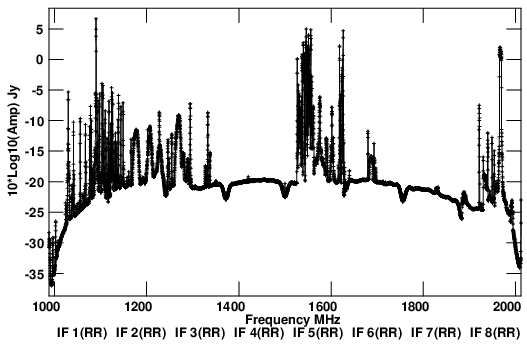
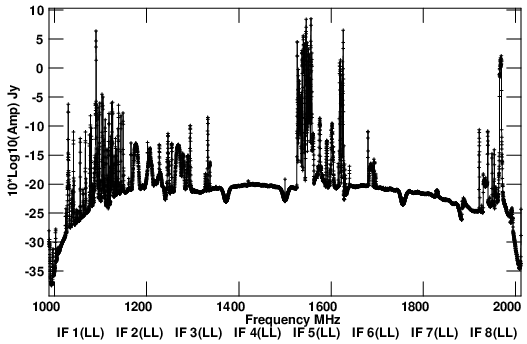
L-Band (1-2 GHz) 2025 January A-config
A listing of the various RFI in this frequency band is available here.
Also available are spectra per 128 MHz subband.
CSV files for RR and LL - 10/10
CSV files for RR and LL - 11/21
CSV files for RR and LL - 11/25
CSV files for RR and LL - 11/25
CSV files for RR and LL - 12/02
CSV files for RR and LL - 12/12
CSV files for RR and LL - 12/12
CSV files for RR and LL - 01/06
CSV files for RR and LL - 01/06
CSV files for RR and LL - 01/21
CSV files for RR and LL - 02/10
CSV files for RR and LL - 02/10
CSV files for RR and LL - 02/24
CSV files for RR and LL - 02/24


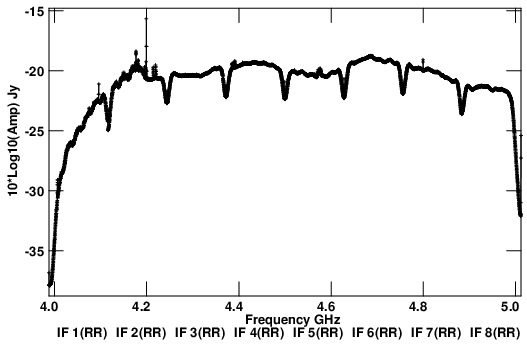
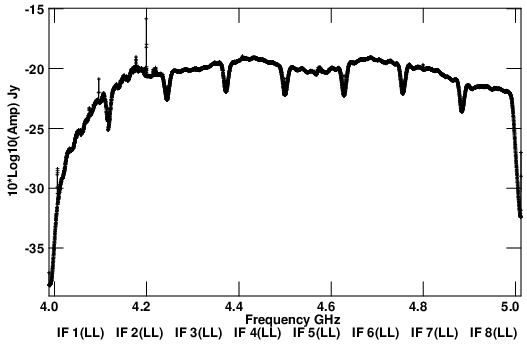
C-Band Spectra (4-8 GHz) 2025 January A-config
A listing of the various RFI in this frequency band is available here.
Also available are spectra per 128 MHz subband.
CSV files for RR and LL - 10/10
CSV files for RR and LL - 11/21
CSV files for RR and LL - 11/25
CSV files for RR and LL - 11/25
CSV files for RR and LL - 12/02
CSV files for RR and LL - 12/12
CSV files for RR and LL - 12/12
CSV files for RR and LL - 01/06
CSV files for RR and LL - 01/06
CSV files for RR and LL - 01/21
CSV files for RR and LL - 02/10
CSV files for RR and LL - 02/10
CSV files for RR and LL - 02/24
CSV files for RR and LL - 02/24
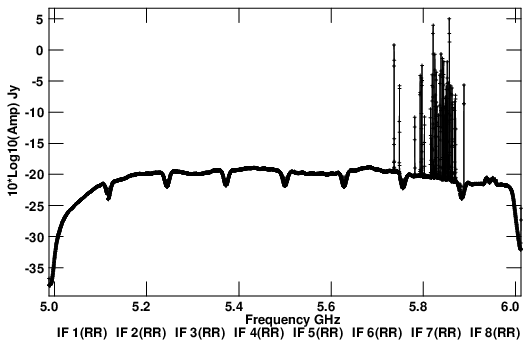
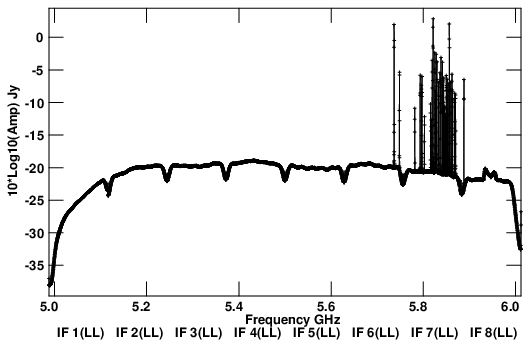
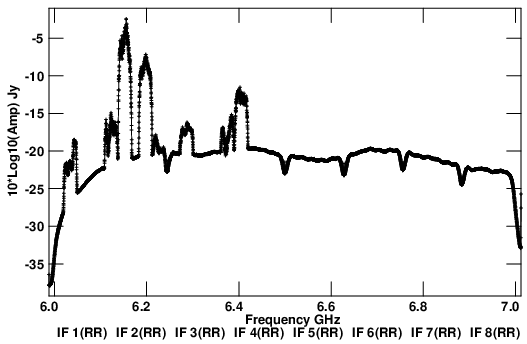
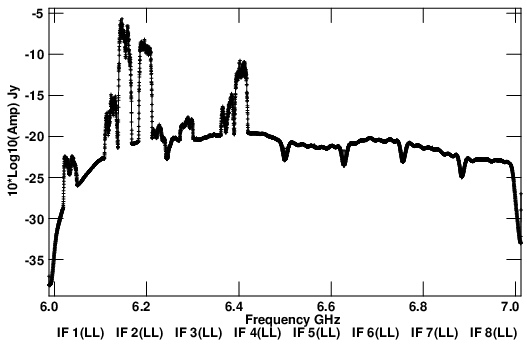
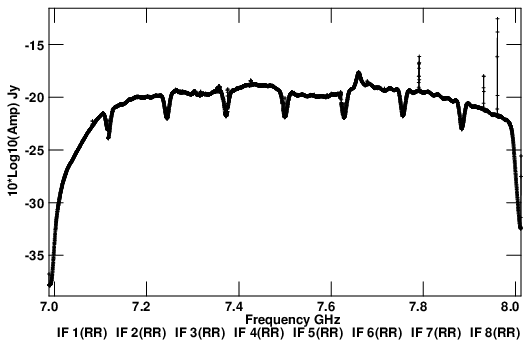
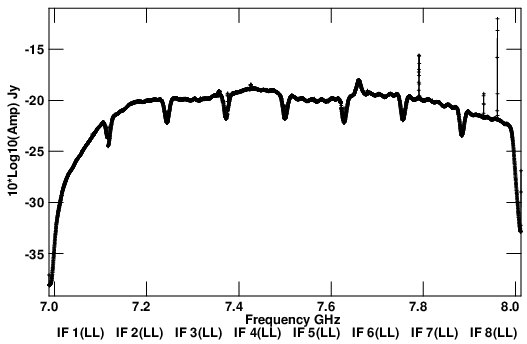
X-Band Spectra (8-12 GHz) 2025 March D-config
A listing of the various RFI in this frequency band is available here.
Also available are spectra per 128 MHz subband.
CSV files for RR and LL - 03/13
CSV files for RR and LL - 03/13
CSV files for RR and LL - 03/24
CSV files for RR and LL - 03/24
CSV files for RR and LL - 04/07
CSV files for RR and LL - 04/07
CSV files for RR and LL - 04/24
CSV files for RR and LL - 04/24
CSV files for RR and LL - 05/05
CSV files for RR and LL - 05/05
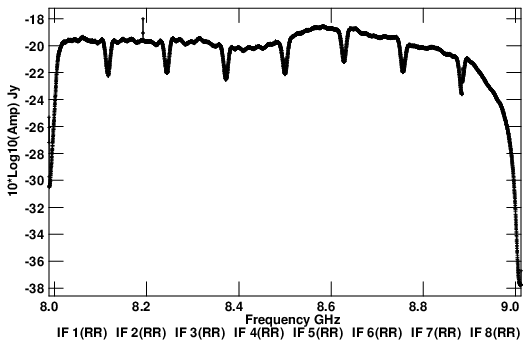
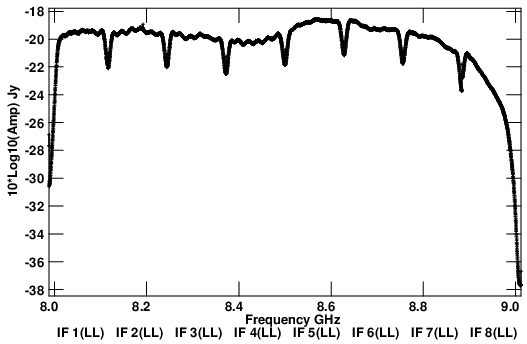
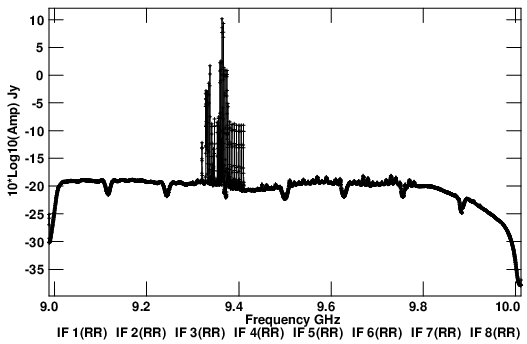
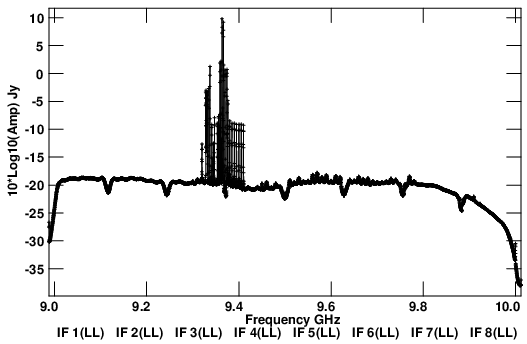
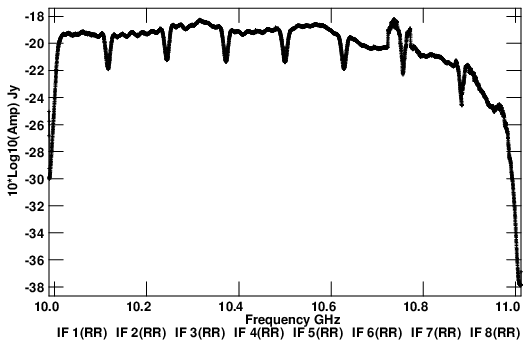
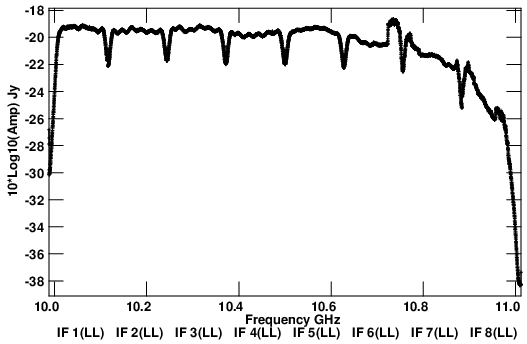
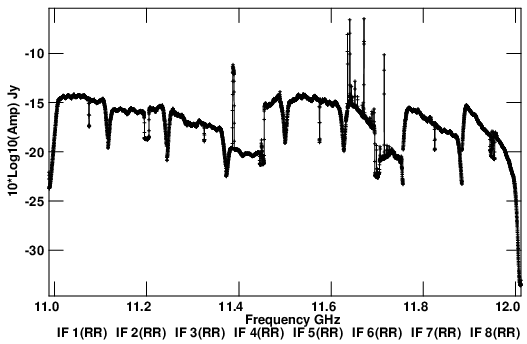
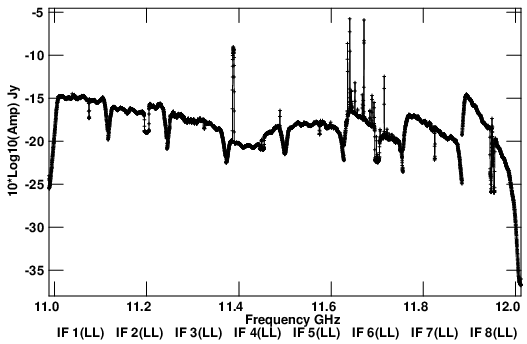
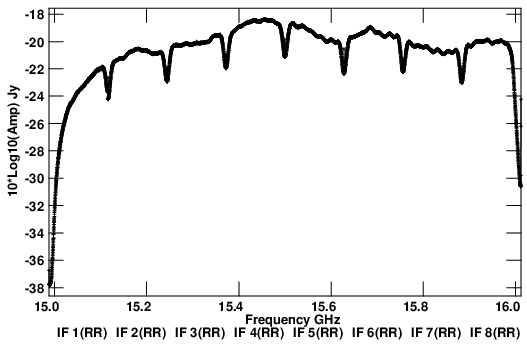
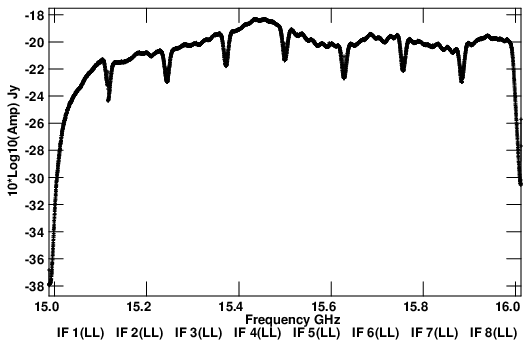
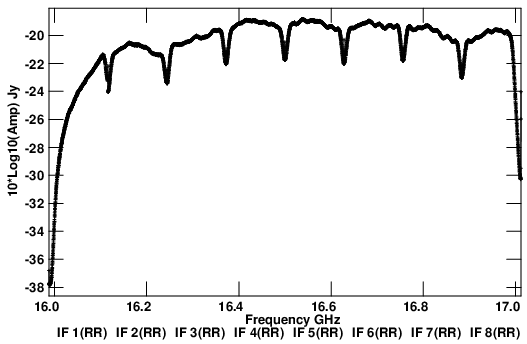
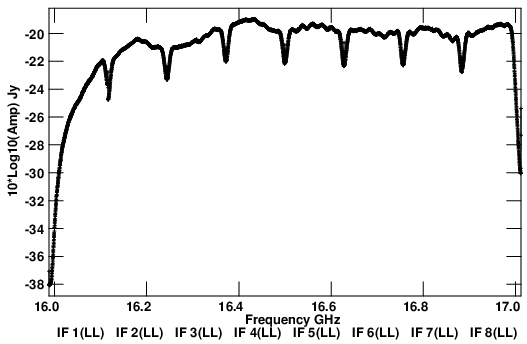
Ku-Band Spectra (12-18 GHz) 2025 March D-config
A listing of the various RFI in this frequency band is available here.
Also available are spectra per 128 MHz subband.
CSV files for RR and LL - 03/13
CSV files for RR and LL - 03/13
CSV files for RR and LL - 03/24
CSV files for RR and LL - 03/24
CSV files for RR and LL - 04/07
CSV files for RR and LL - 04/07
CSV files for RR and LL - 04/24
CSV files for RR and LL - 04/24
CSV files for RR and LL - 05/05
CSV files for RR and LL - 05/05
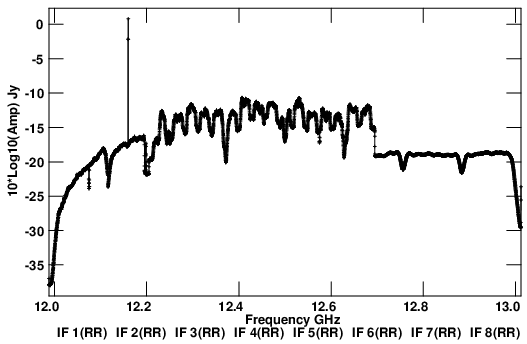
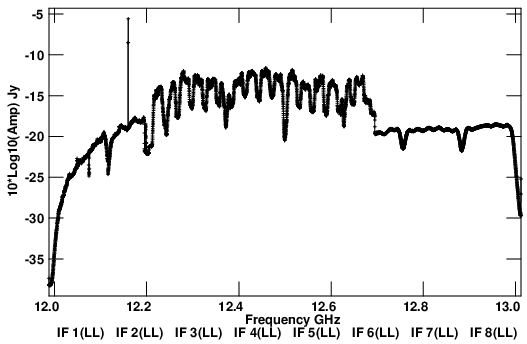
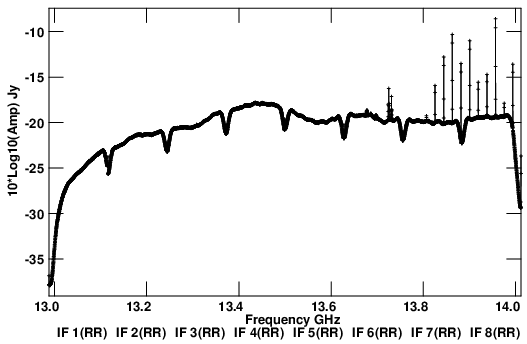
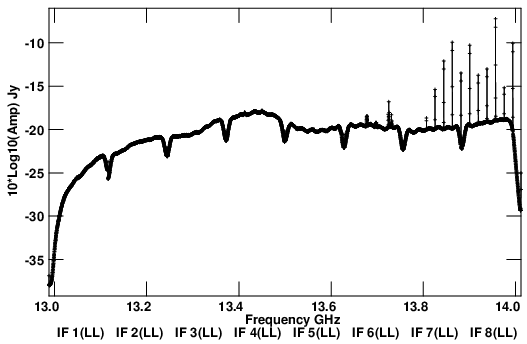
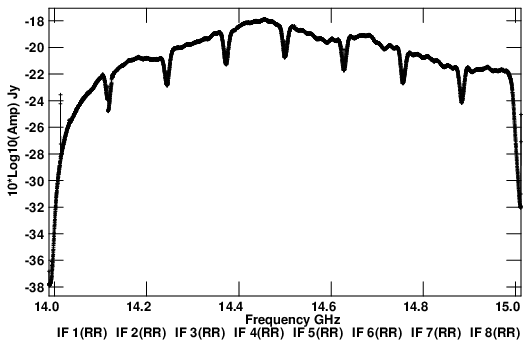
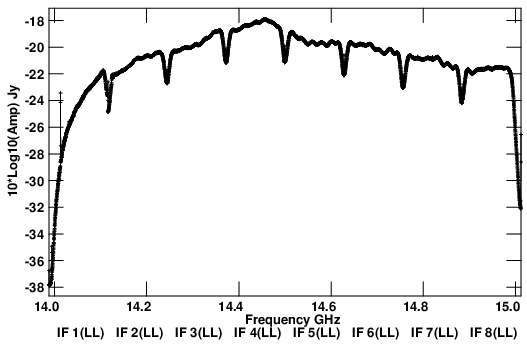
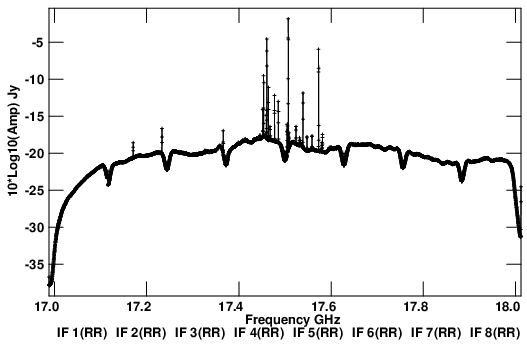
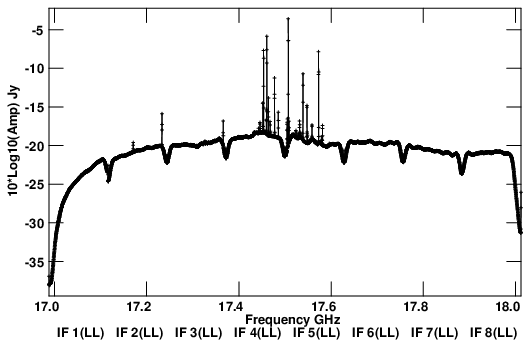
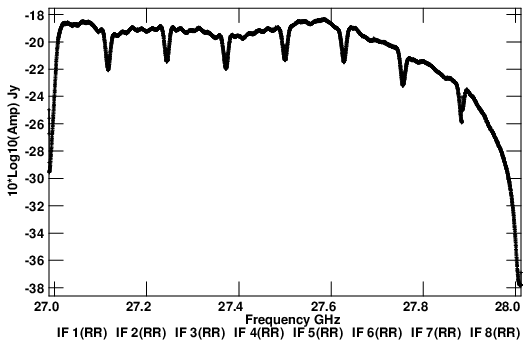
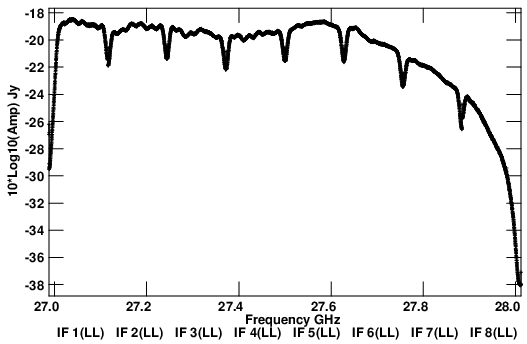
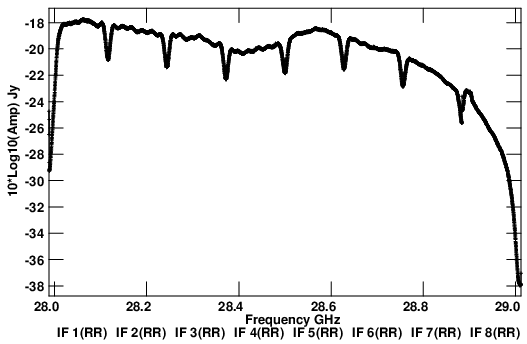
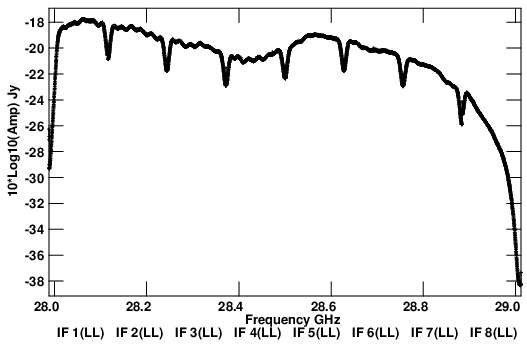
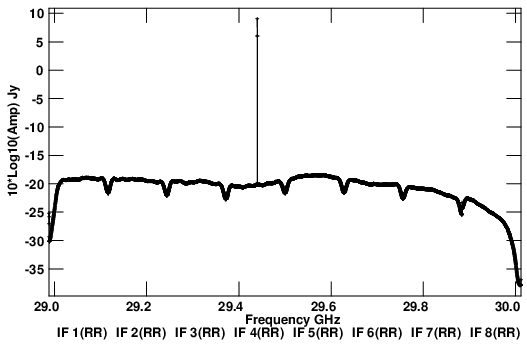
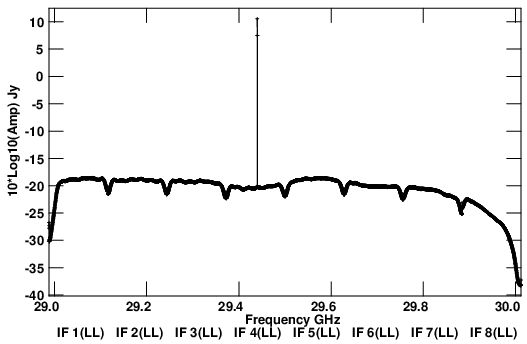
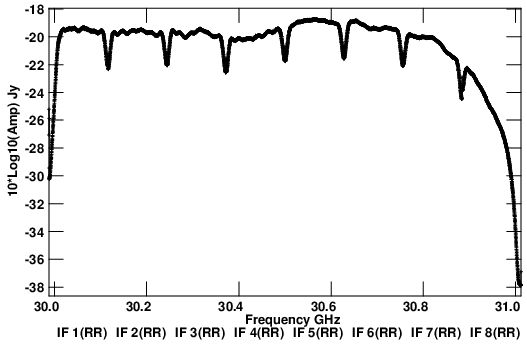
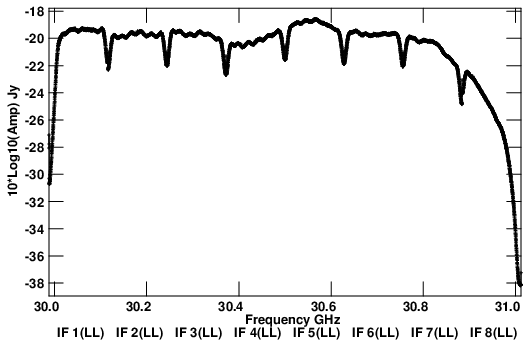
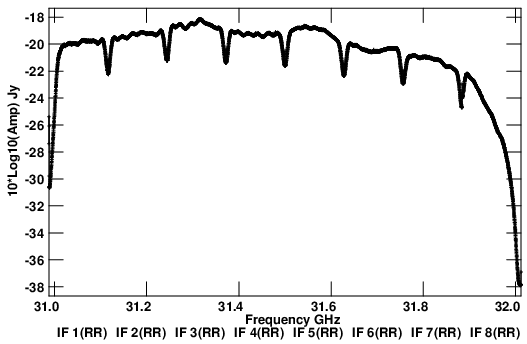
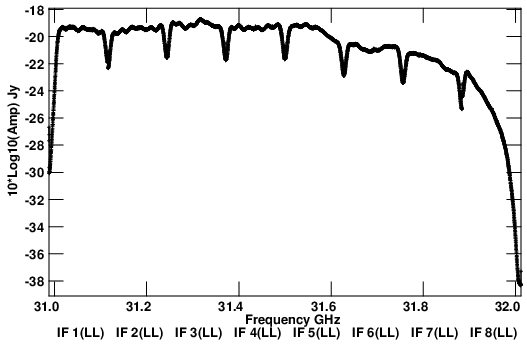
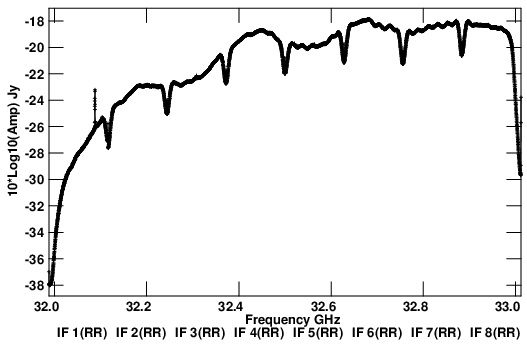
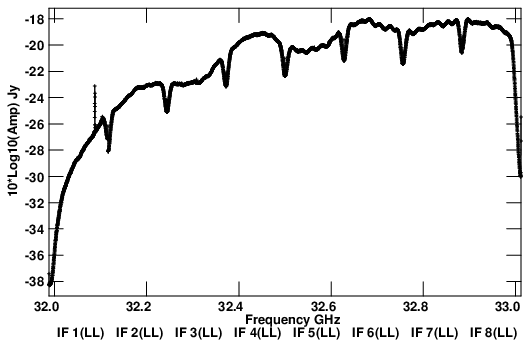
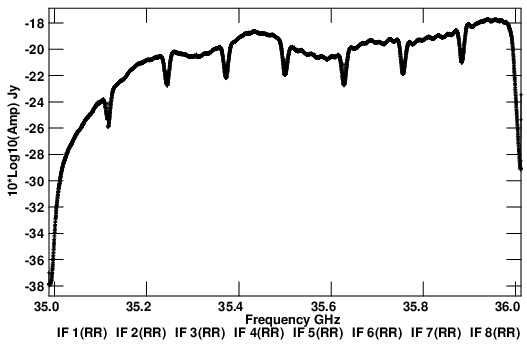
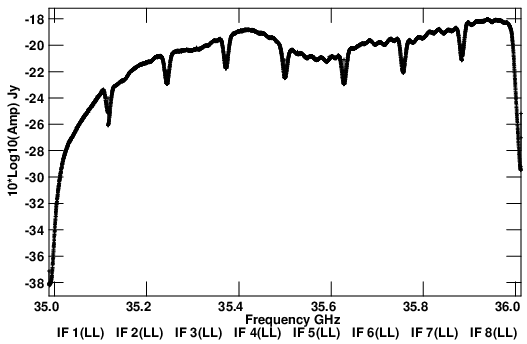
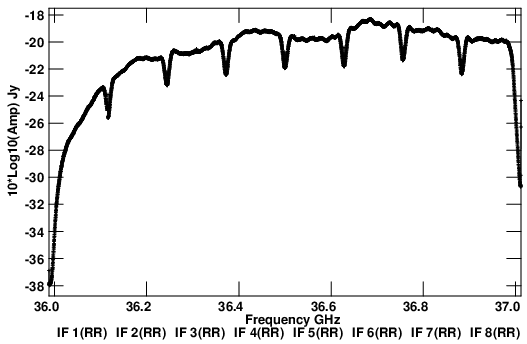
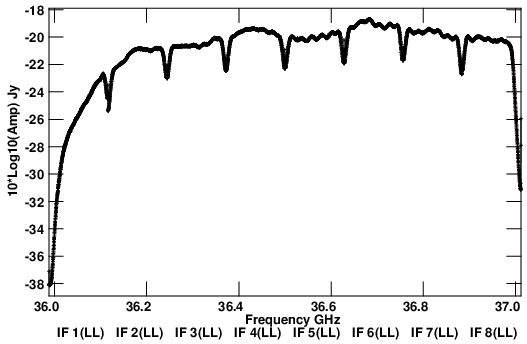
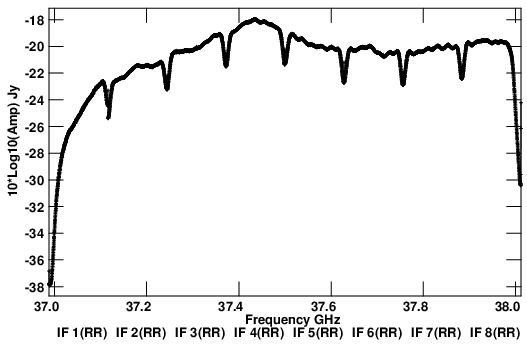
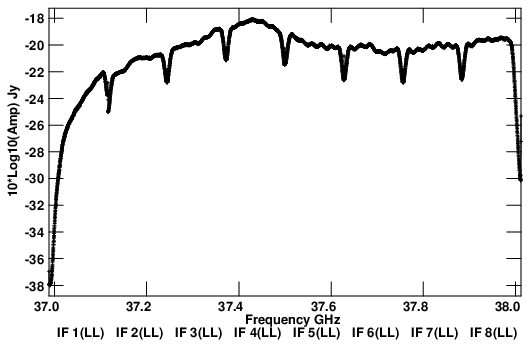
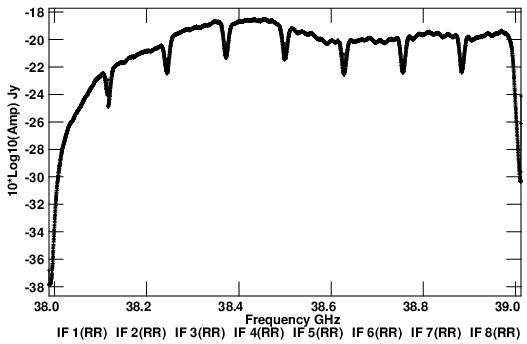
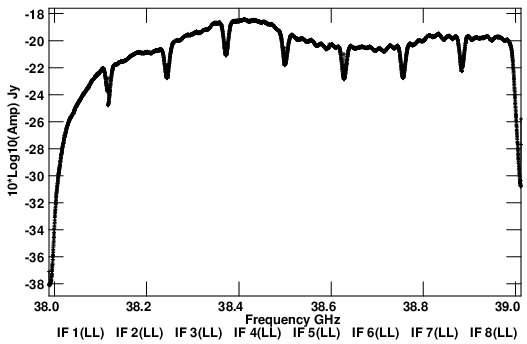
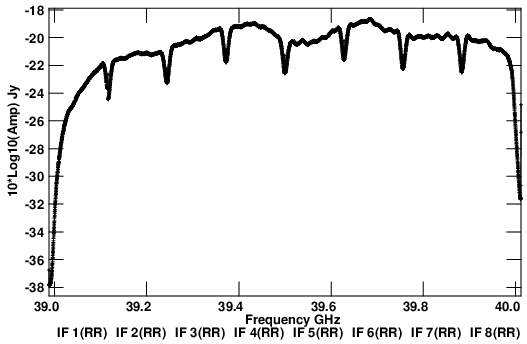
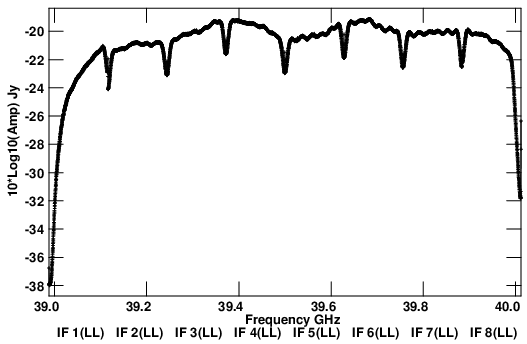
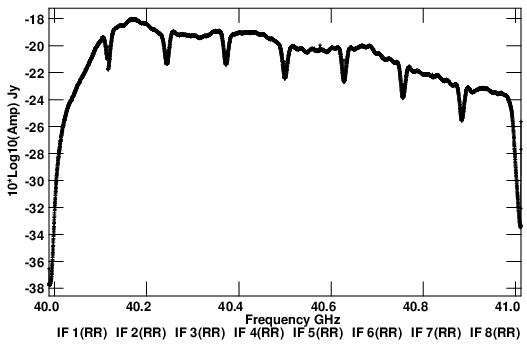
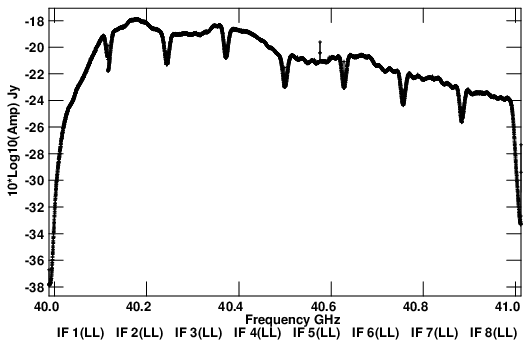
Ka-Band Spectra (26.5-40 GHz) 2025 March D-config
A listing of the various RFI in this frequency band is available here.
Also available are spectra per 128 MHz subband.
CSV files for RR and LL - 03/13
CSV files for RR and LL - 03/13
CSV files for RR and LL - 03/24
CSV files for RR and LL - 03/24
CSV files for RR and LL - 04/07
CSV files for RR and LL - 04/07
CSV files for RR and LL - 04/24
CSV files for RR and LL - 04/24
CSV files for RR and LL - 05/05
CSV files for RR and LL - 05/05
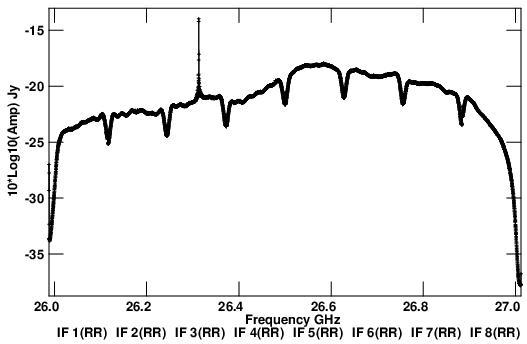
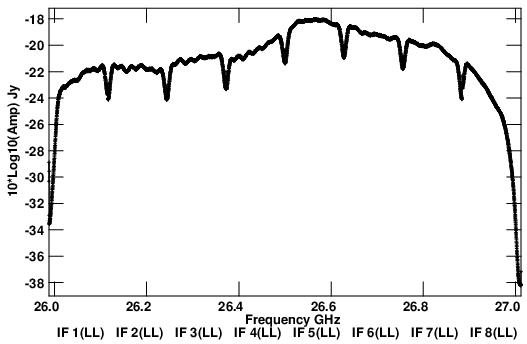
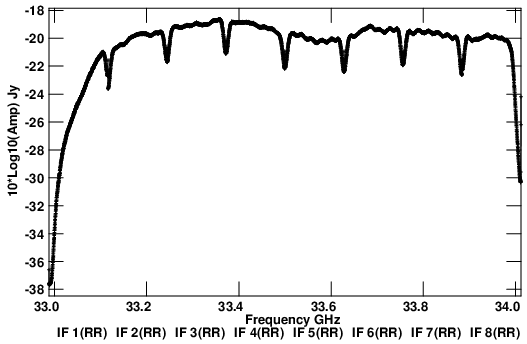
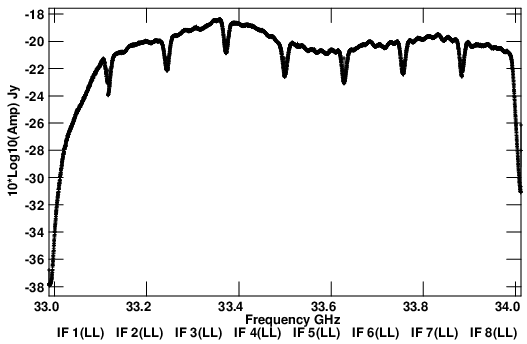
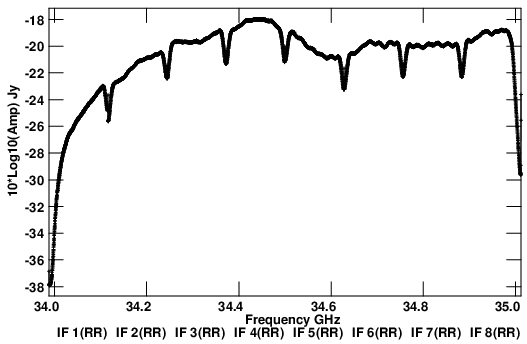
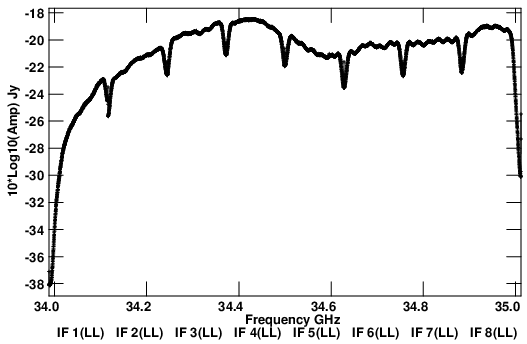
Colloquium Abstract - Harding - 2025May09
May 9, 2025
11:00am Mountain
Alice Harding (LANL)
Pulsars in the High-Energy Sky
Abstract
Of the several thousand pulsars that have been discovered by radio telescopes over the past fifty years, only a handful were known to emit gamma-ray pulsations before the launch in June, 2008 of the Fermi Gamma-Ray Space Telescope. After 17 years of operation, over 300 gamma-ray pulsars have been detected and a new population of radio-quiet pulsars has been discovered. Millisecond pulsars have been confirmed as powerful sources of gamma-ray emission, and a whole population of these objects is seen with Fermi both in the Galactic plane and in globular clusters. A gamma-ray pulsar timing array (PTA) using millisecond pulsars is now operating and may soon independently detect the gravitational wave background recently discovered by radio PTAs. Fermi has thus revolutionized the study of pulsars and allowed us to peer deeper into the inner workings of these incredibly efficient natural particle accelerators. These discoveries, together with recent progress in global simulation of pulsar magnetospheres, are changing our models of pulsar particle acceleration and high-energy as well as coherent radio emission..
Local Host: Dale Frail


 ResearchFacilitiesBrochure2025-01b-ALMA.pdf


Offered VLA Capabilities during the Next Semester
The Call for Proposals
The most recent Call for Proposals summarizes the General Observing (GO) capabilities being offered for the Karl G. Jansky Very Large Array (VLA).
In addition to these general capabilities, NRAO continues to offer shared risk observing options for those who would like to push the capabilities of the VLA beyond those offered for general use. These are the Shared Risk Observing (SRO) and Resident Shared Risk Observing (RSRO) programs.
Details about what is being offered for each program are given below. If you have any questions or problems with any link or tool, please submit a ticket through the NRAO Helpdesk.
Considering the lack of hybrid configurations after semester 2016A, guidelines on how to substitute such configurations with the use of principal array configurations are presented in the Array Configurations section of the Guide to Proposing for the VLA.
General Observing (GO) and Shared-Risk Observing (SRO)
Summary of Capabilities
As described in the Call for Proposals, the VLA offers continuous frequency coverage from 1–50 GHz in the following observing bands: 1–2 GHz (L-band); 2–4 GHz (S-band); 4–8 GHz (C-band); 8–12 GHz (X-band); 12–18 GHz (Ku-band); 18–26.5 GHz (K-band); 26.5–40 GHz (Ka-band); and 40–50 GHz (Q-band). Both single pointing and mosaics with discrete, multiple field centers will be supported under General Observing (GO). In addition to these, all VLA antennas are equipped with 224–480 MHz (P-band) and 54–86 MHz (4-band) receivers near the prime focus. Data rates of up to 60 MB/s (216 GB/hour) will be available to all users as GO, combined with correlator integration time limits per band and per configuration, as described in the Time Resolution and Data Rates section. Limitations on frequency settings and tuning ranges are described in the Frequency Bands and Tunability section.
The GO capabilities being offered are:
| Capability | Description |
| 8-bit samplers |
*Note: 4-band and dual 4/P-band observations are offered for Stokes I continuum only using standard full polarization default setups. Polarization, spectral-line, or the use of non-standard setups, should be submitted as a RSRO proposal. |
| 3-bit samplers |
|
| Mixed 3-bit and 8-bit samplers |
|
|
Subarrays |
|
| Y27 or Y1 for VLBI |
|
|
Solar observing |
|
|
On-The-Fly Mosaicking (OTF) |
|
|
Pulsar |
|
*Note: The VLA L-band (1-2 GHz) has a special signal path (the "reverse coupler" path) that allows coherent radio bursts to be observed without saturating the system, as the brightest of these solar bursts can exceed 105 solar flux units, or 109 Jy. This signal path has not yet been fully commissioned and is therefore not yet available under GO.
SRO capabilities can be set up via the Observing Preparation Tool (OPT) and run through the dynamic scheduler without intervention, but are not as well tested as GO capabilities. Data rates higher than 60 MB/s (216 GB/hour) and up to 100 MB/s (360 GB/hour) are considered SRO. A summary of the SRO capabilities being offered are:
- On-the-Fly (OTF) mosaicking for Ku-, K-, Ka-, and Q-bands (used when each pointing on the sky is on the order of several seconds or less), but not using subarrays.
- OTF observing is usually executed as linear interpolations in Equatorial Coordinates (i.e., RA/Dec). This is now also offered using interpolation linear in Galactic coordinates (l,b). Expansion in more complex patterns other than linear, such as Rosetta or Spiral patterns will remain RSRO items. Note that these must still adhere to the restrictions of the OTF mode under General Observing, i.e., using the full array below 8 GHz (up to C-band), and no subarrays.
- eLWA: Joint LWA and VLA 4-band observations using a single 8 MHz subband centered at 76 MHz, and 4-bit VDIF output. Note: During semester 2025A, the LWA is expected to be undergoing infrastructure upgrades and availability of the telescopes (LWA1 and LWA-SV) may be limited. Those interested in using this mode should contact Greg Taylor at gbtaylor@unm.edu for more details.
We expect that most SRO programs will have no or only minor problems that can be corrected quickly. If an SRO program fails, however, and it becomes clear that detailed testing with additional expertise is needed, then the project must make an experienced member from their team available to help troubleshoot the problem. In some cases, this may require the presence of that experienced member in Socorro. If adequate support from the project is not given, then the time on the telescope will be forfeited. The additional effort is to be determined based on discussions with the NRAO staff and management and the project team.
The guidelines for General and Shared Risk observing proposals, along with information about tools and other advice, can be found in the VLA Proposal Submission Guidelines.
Resident Shared Risk Observing (RSRO)
Summary of Capabilities
The VLA Resident Shared Risk Observing (RSRO) program provides users with early access to new capabilities in exchange for a period of residency in Socorro to help commission those capabilities.
RSRO proposals should be submitted using the NRAO Proposal Submission Tool in response to a regular proposal call. The proposal should include a scientific justification, as for normal proposals, which will be peer reviewed as part of NRAO's time allocation process. Selecting "VLA RSRO" from the "Observing Mode" menu on the Resources page makes an "RSRO Comments" text-entry facility available for describing the technical resources required. The text should describe the scope of the proposed RSRO work so that an accurate estimate of NRAO resources can be made by the Observatory. A description of the personnel who will be involved in the effort along with their expertise and availability should also be included in the technical justification.
We emphasize the "shared risk" nature of the RSRO program. Since observers will be attempting to use capabilities under development and in the process of being commissioned, NRAO can make no guarantee of the success of any observations made under this program, and no additional commitment is made beyond granting the hours actually assigned by the peer review process.
Proposals for any area of user interest bit offered under GO or SRO are welcome. Here, we provide some examples of capabilities that are being utilized in recent RSRO proposals.
- Correlator dump times shorter than 50 msec, including integration times as short as 5 msec for transient detection, or data rates above 100 MB/s. In order to reduce the data rate, frequency averaging in the correlator may be utilized in RSRO proposals;
- YUPPI pulsar mode combined with VLBI recording;
- Subarray observations with setups other than the default continuum setups, or observations with more than 3 subarrays.
The guidelines for Resident Shared Risk Observing proposing, along with requirements and considerations, can be found in the VLA Proposal Submission Guidelines.
Commensal Observing Systems at the VLA
There are three commensal systems on the VLA that may take data at the same time as your proposed observation. The first is the VLITE system, which will take data at P-band during regular observations that use bands other than P-band. Hence, VLITE is turned off by default during P-band or dual 4/P-band observations. The VLITE system is deployed on up to eighteen VLA antennas. Observers wishing to gain access to the commensal VLITE data taken during their VLA observations should follow the instructions on the VLITE web page for doing so. The second is the realfast system, which takes data at very fast dump rates in an effort to detect Fast Radio Bursts (FRBs). This system is fully commissioned for observing at L- through X-bands, in parallel with standard continuum correlator configurations. The third commensal system, COSMIC SETI, enables the search for extraterrestrial intelligence (SETI) using the VLA, and collects data during unconflicted PI science observations. For information about commensal observing see the Commensal Observing with NRAO Telescopes page.
To report errors or problems encountered in any link or while using any NRAO tool listed here, please submit a ticket through the NRAO Helpdesk.
Resolution
Resolution
The VLA's resolution is generally diffraction-limited, and thus is set by the array configuration and the observing frequency. Like all synthesis arrays, the VLA is sensitive only to structures on a range of angular scales between the diffraction limit (the smallest angular scale detectable) and a "Largest Angular Scale" (which depends on the fringe spacing formed by the shortest baselines in the configuration). For emission structures smaller than the diffraction limit (θ ∼ λ/Bmax), the VLA acts like a single-dish instrument—the resulting image is smoothed to the resolution of the array. For emission structures larger than the detectable range, the VLA is simply blind to the emission; this is a limitation unique to interferometers. No subsequent processing can fully recover the missing information from these large scales. It can only be obtained by observing in a more compact VLA array configuration or with data from an instrument that is sensitive to the missing angular scales, such as a large single dish or a compact array of smaller antennas.
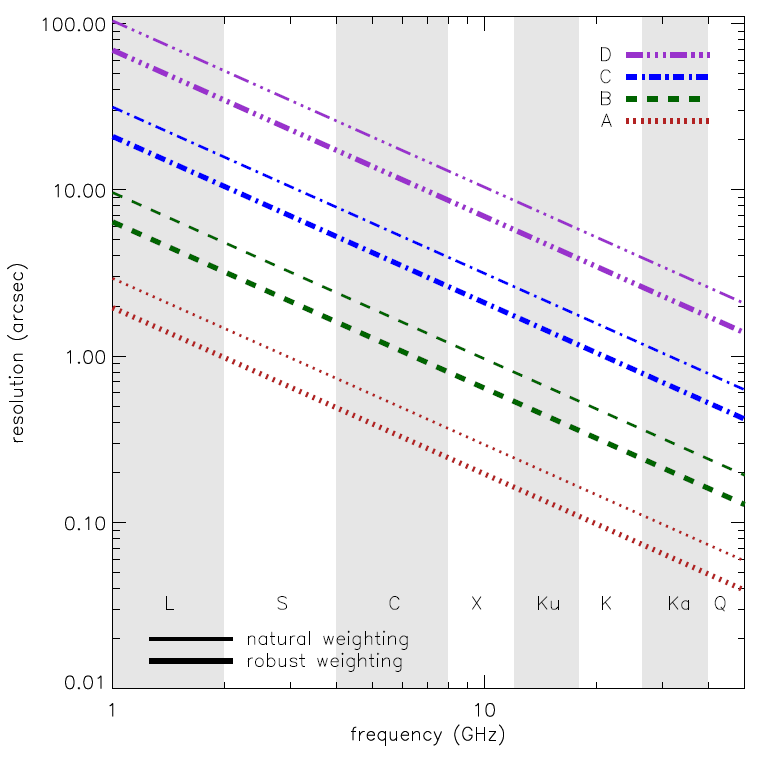
Table 3.1.1 displays the VLA's resolution and the scale at which severe attenuation of large-scale structure occurs. This table shows the maximum and minimum antenna separations, the approximate synthesized beam size (full width at half-power; the resolution element) for the central frequency for each band, and the largest angular scale of detectable emission.
| Configuration | A | B | C | D |
|---|---|---|---|---|
| Bmax (km1) | 36.4 | 11.1 | 3.4 | 1.03 |
| Bmin (km1) | 0.68 | 0.21 | 0.0355 | 0.035 |
| Band | Synthesized Beamwidth θHPBW(arcsec)1,2,3 | |||
| 74 MHz (4) | 24 | 80 | 260 | 850 |
| 350 MHz (P) | 5.6 | 18.5 | 60 | 200 |
| 1.5 GHz (L) | 1.3 | 4.3 | 14 | 46 |
| 3.0 GHz (S) | 0.65 | 2.1 | 7.0 | 23 |
| 6.0 GHz (C) | 0.33 | 1.0 | 3.5 | 12 |
| 10 GHz (X) | 0.20 | 0.60 | 2.1 | 7.2 |
| 15 GHz (Ku) | 0.13 | 0.42 | 1.4 | 4.6 |
| 22 GHz (K) | 0.089 | 0.28 | 0.95 | 3.1 |
| 33 GHz (Ka) | 0.059 | 0.19 | 0.63 | 2.1 |
| 45 GHz (Q) | 0.043 | 0.14 | 0.47 | 1.5 |
| Band | Largest Angular Scale θLAS(arcsec)1,4 | |||
| 74 MHz (4) | 800 | 2200 | 20000 | 20000 |
| 350 MHz (P) | 155 | 515 | 4150 | 4150 |
| 1.5 GHz (L) | 36 | 120 | 970 | 970 |
| 3.0 GHz (S) | 18 | 58 | 490 | 490 |
| 6.0 GHz (C) | 8.9 | 29 | 240 | 240 |
| 10 GHz (X) | 5.3 | 17 | 145 | 145 |
| 15 GHz (Ku) | 3.6 | 12 | 97 | 97 |
| 22 GHz (K) | 2.4 | 7.9 | 66 | 66 |
| 33 GHz (Ka) | 1.6 | 5.3 | 44 | 44 |
| 45 GHz (Q) | 1.2 | 3.9 | 32 | 32 |
- These estimates of the synthesized beamwidth are for a uniformly weighted, untapered map produced from a full 12 hour synthesis observation of a source which passes near the zenith.
- Notes:
- 1. Bmax is the maximum antenna separation, Bmin is the minimum antenna separation, θHPBW is the synthesized beam width (FWHM), and θLAS is the largest angular scale structure visible to the array.
- 2. The listed resolutions are appropriate for sources with declinations between −15 and +75 degrees.
- 3. The approximate resolution for a naturally weighted map is about 1.5 times the numbers listed for θHPBW. The values for snapshots are about 1.3 times the listed values.
- 4. The largest angular scale structure is that which can be imaged reasonably well in full synthesis observations. For single snapshot observations, the quoted numbers should be divided by two.
- 5. For the C configuration, an antenna from the middle of the north arm is moved to the central pad N1. This results in improved imaging for extended objects, but may slightly degrade snapshot performance. Note that although the minimum spacing is the same as in D configuration, the surface brightness sensitivity and image fidelity to extended structure is considerably inferior to that of the D configuration.
The following figure is a graphical representation of the synthesized beamwidths for natural and robust weighting for the four main array configurations between 1 and 50 GHz. Also available are synthesized beamwidth figures for the low frequency (1–12 GHz) and the high frequency (12–50 GHz) receiver bands.
(click image to enlarge)
Sensitivity
Sensitivity
The theoretical thermal noise expected for an image using natural weighting of the visibility data is given by:
| \[\Delta I_m = \frac{SEFD}{\eta_{\rm c}\sqrt{n_{\rm pol}N(N-1)t_{\rm int}\Delta\nu}}\] | (eq. 1) |
where:
- - SEFD is the system equivalent flux density (Jy), defined as the flux density of a radio source that doubles the system temperature. Lower values of the SEFD indicate more sensitive performance. For the VLA's 25–meter paraboloids, the SEFD is given by the equation SEFD = 5.62Tsys/ηA, where Tsys is the total system temperature (receiver plus antenna plus sky), and ηA is the antenna aperture efficiency in the given band.
- - ηc is the correlator efficiency (~0.93 with the use of the 8-bit samplers).
- - npol is the number of polarization products included in the image; npol = 2 for images in Stokes I, Q, U, or V, and npol = 1 for images in RCP or LCP.
- - N is the number of antennas.
- - tint is the total on-source integration time in seconds.
- - Δν is the bandwidth in Hz.
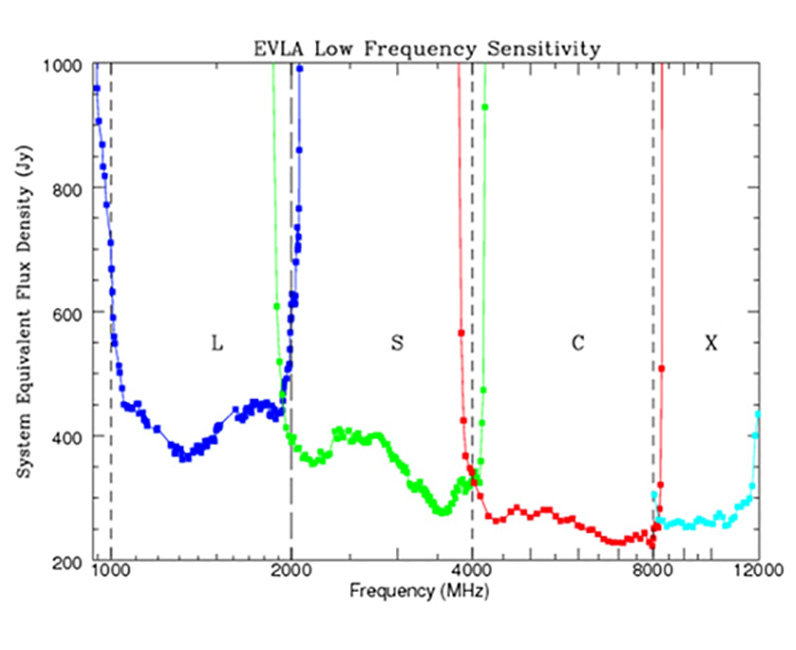
Figure 3.2.1 shows the SEFDs as a function of frequency used in the VLA exposure calculator for those Cassegrain bands currently installed on VLA antennas, and include the contribution to Tsys from atmospheric emission at the zenith. Figure 3.2.2 shows the SEFDs as a function of frequency for the P-band; these measurements are based on imaging of a field far from the galactic plane. Table 3.2.1 gives the SEFD at some fiducial VLA frequencies.
 |
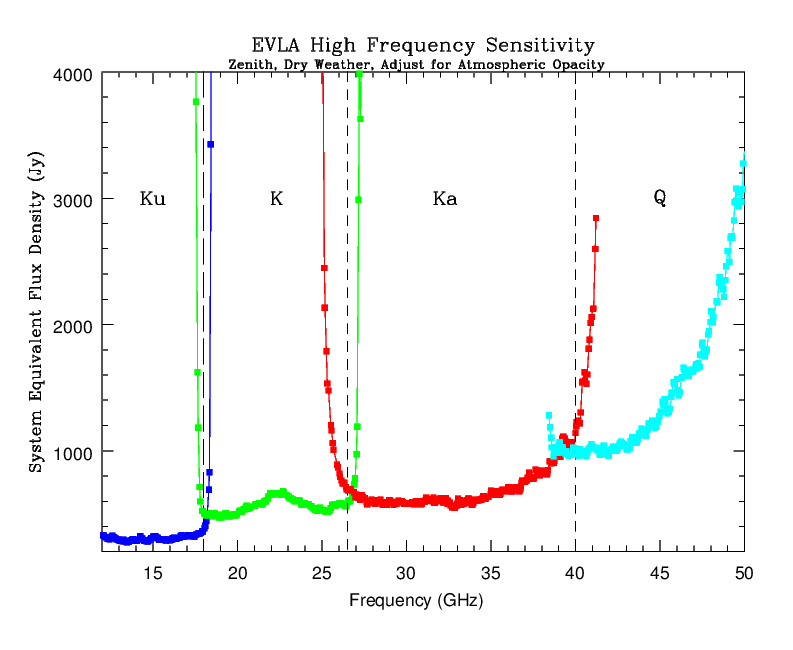 |
Figure 3.2.1: SEFD used in the Exposure Calculator for the VLA. Left: The system equivalent flux density as a function of frequency for the L, S, C and X-band receivers. Right: The system equivalent flux density as a function of frequency for the Ku, K, Ka, and Q-band receivers. SEFDs at Ku, K, Ka, and Q bands include contributions from Earth's atmosphere and were determined under good conditions.
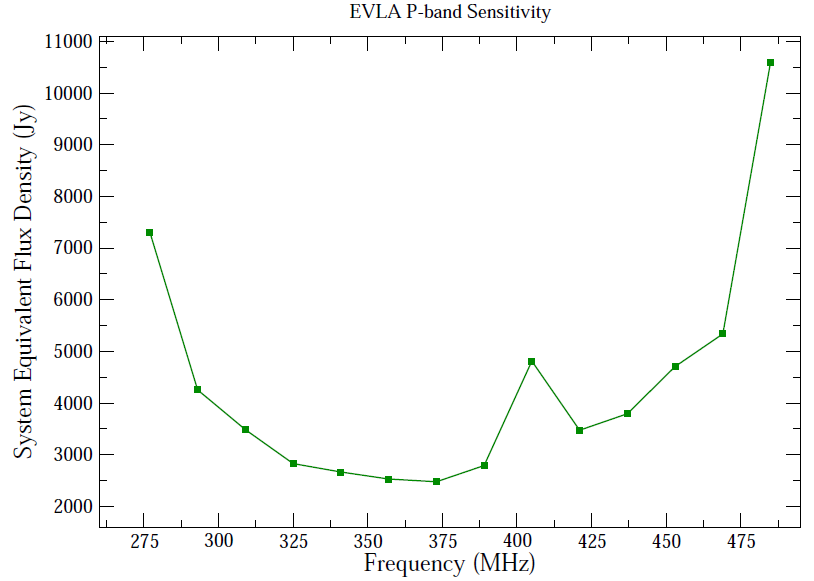
Figure 3.2.2: The SEFD used in the VLA Exposure Calculator as a function of frequency for the P-band receiver
Note that the theoretical rms noise calculated using equation 1 is the best limit possible. There are several factors that will tend to increase the noise compared with theoretical:
- For the more commonly used robust weighting scheme, intermediate between pure natural and pure uniform weightings (available in the AIPS task IMAGR and CASA task clean), typical parameters will result in the sensitivity being a factor of about 1.2 worse than the listed values.
- Confusion. There are two types of confusion: (i) that due to confusing sources within the synthesized beam, which affects low resolution observations the most. Table 3.2.1 shows the confusion noise in D configuration assuming robust weighting (see Condon et al. 2012, ApJ, 758), which should be added in quadrature to the thermal noise in estimating expected sensitivities. The confusion limits in C configuration are approximately a factor of 10 less than those in Table 3.2.1; (ii) confusion from the sidelobes of uncleaned sources lying outside the image, often from sources in the sidelobes of the primary beam. This confusion primarily affects low frequency observations.
- Weather. The sky and ground temperature contributions to the total system temperature increase with decreasing elevation. This effect is very strong at high frequencies, but is relatively unimportant at the other bands. The extra noise comes directly from atmospheric emission: primarily from water vapor at K-band, and from water vapor and the broad wings of the strong 60 GHz O2 transitions at Q-band.
- Losses from the 3-bit samplers. The VLA's 3-bit samplers incur an additional 10–15% loss in sensitivity above that expected—i.e., the efficiency factor ηc = 0.78 to 0.83.
| Frequency | SEFD (Jy) |
RMS confusion level |
||
|---|---|---|---|---|
| 0.39 GHz (P) | 2790 | 5330 | ||
| 1.5 GHz (L) | 420 | 74 | ||
| 3.0 GHz (S) | 370 | 12 | ||
| 6.0 GHz (C) | 310 | 2 | ||
| 10.0 GHz (X) | 250 | negligible | ||
| 15 GHz (Ku) | 320 | negligible | ||
| 20 GHz (K) | 500 | negligible | ||
| 33 GHz (Ka) | 600 | negligible | ||
| 45 GHz (Q) | 1300 | negligible |
In general, the zenith atmospheric opacity to microwave radiation is very low: typically less than 0.01 at L, C, and X-bands; 0.05 to 0.2 at K-band; and 0.05 to 0.1 at the lower half of Q-band, rising to 0.3 by 49 GHz. The opacity at K-band displays strong variations with time of day and season, primarily due to the 22 GHz water vapor line. Observing conditions are best at night and in the winter. Q-band opacity, dominated by atmospheric O2, is considerably less variable.
Observers should remember that clouds, especially clouds with large water droplets (thunderstorms), can add appreciable noise to the system temperature. Significant increases in system temperature can, in the worst conditions, be seen at frequencies as low as 5 GHz.
Tipping scans—which are currently unavailable but will be implemented at some time in the future—can be used for deriving the zenith opacity during an observation. In general, tipping scans should only be needed if the calibrator used to set the flux density scale is observed at a significantly different elevation than the range of elevations over which the complex gain calibrator (amplitude and phase) and target source are observed.
When the flux density calibrator observations are within the elevation range spanned by the science observing, elevation dependent effects (including both atmospheric opacity and antenna gain dependencies) can be accounted for by fitting an elevation-dependent gain term. See the following items:
- Antenna elevation-dependent gains. The antenna figure degrades at low elevations, leading to diminished forward gain at the shorter wavelengths. The gain-elevation effect is negligible at frequencies below 8 GHz. The antenna gains can be determined by direct measurement of the relative system gain using the AIPS task ELINT on data from a strong calibrator which has been observed over a wide range of elevation. If this is not possible, care should be taken to observe a primary flux calibrator at the same elevation as the target.
Both CASA and AIPS allow the application of elevation-dependent gains and an estimated opacity generated from ground-based weather through the CASA tasks gencal and plotweather, and AIPS task INDXR.
- Pointing. The SEFD quoted above assumes good pointing. Under calm, nighttime conditions, the antenna blind pointing is about 10 arcsec rms. The pointing accuracy in daytime can be much worse—occasionally exceeding 1 arcminte due to the effects of solar heating of the antenna structures. Moderate winds have a very strong effect on both pointing and antenna figure. The maximum wind speed recommended for high frequency observing is 11 mph (5 m/s). Wind speeds near the stow limit 45 mph (20 m/s) will have a similar negative effect at 8 and 15 GHz.
To achieve increased pointing accuracy, referenced pointing is recommended where a nearby calibrator is observed in interferometric pointing mode every hour or so. The local pointing corrections measured can then be applied to subsequent target observations. This reduces rms pointing errors to as little as 2–3 arcseconds (but more typically 5–7 arcseconds) if the reference source is within about 15 degrees in azimuth and elevation of the target source and the source elevation is less than 70 degrees. At source elevations greater than 80 degrees (zenith angle < 10 degrees), source tracking becomes difficult; it is recommended to avoid such source elevations during the observation preparation setup.
Use of referenced pointing is highly recommended for all Ku, K, Ka, and Q-band observations, and for lower frequency observations of objects whose total extent is a significant fraction of the antenna primary beam. It is usually recommended that the referenced pointing measurement be made at 8 GHz (X-band), regardless of what band your target observing is at, since X-band is the most sensitive and the closest calibrator is likely to be weak. Proximity of the reference calibrator to the target source is of paramount importance; ideally the pointing sources should precede the target by 20 or 30 minutes in Right Ascension (RA). The calibrator should have at least 0.3 Jy flux density at X-band and be unresolved on all baselines to ensure an accurate solution.
To aid VLA proposers there is an online guide to the exposure calculator; the exposure calculator provides a graphical user interface to these equations.
Special caveats apply for P-band (230–470 MHz) observing. The SEFD's in Figure 3.2.2 or that listed in table 3.1.2 are from an observation taken far from the Galactic plane, where the sky brightness is about 30K. At P-band, Galactic synchrotron emission is very bright in directions near the Galactic plane. The system temperature increase due to Galactic emission will degrade sensitivity by factors of two to three for observations in the plane, and by a factor of five or more at or near the Galactic center. Additionally, the antenna efficiency (currently about 0.31 for 300 MHz) will decline with both increasing and decreasing frequencies from the center of P-band.
The beam-averaged brightness temperature measured by a given array depends on the synthesized beam, and is related to the flux density per beam by:
| \[T_{\rm b} = \frac{S \lambda^2}{2k\Omega} = F \cdot S\] | (eq. 2) |
where Tb is the brightness temperature (Kelvins) and Ω is the beam solid angle. For natural weighting (where the angular size of the approximately Gaussian beam is ∼1.5λ/Bmax), and S in mJy per beam, the parameter F depends on the synthesized beam, therefore on the array configuration, and has the approximate value of F = 190, 18, 1.7, 0.16 for A, B, C, and D configurations, respectively. The brightness temperature sensitivity can be obtained by substituting the rms noise, ΔIm, for S. Note that Equation 2 is a beam-averaged surface brightness; if a source size can be measured, then the source size and integrated flux density should be used in Equation 2 and the appropriate value of F calculated. In general, the surface brightness sensitivity is also a function of the source structure and how much emission may be filtered out due to the sampling of the interferometer. A more detailed description of the relation between flux density and surface brightness is given in Chapter 6 of Reference 1, listed in Documentation.
For observers interested in HI in galaxies, a number of interest is the sensitivity of the observation to the HI mass. This is given by van Gorkom et al. (1986; AJ, 91, 791):
| \[M_{\rm HI} = 2.36 \times 10^5 D^2 \sum S \Delta V ~~~~M_\odot\] | (eq. 3) |
where D is the distance to the galaxy in Mpc, and SΔV is the HI line area in units of Jy km/s.
VLA Frequency Bands and Tunability
-
- 1. Listed here are the nominal band edges. For all bands, the receivers can be tuned to frequencies outside this range, but at the cost of diminished performance. Contact the NRAO Helpdesk for further information.
- 2. The 4-band system is currently under development. The default frequency range maximizes sensitivity of the system and provides a nominal bandwidth of 12 MHz and a channel resolution of 64 kHz.
- 3. The default setup for P-band will provide 16 subbands from the A0/C0 IF pair, each 16 MHz wide, to cover the frequency range 224–480 MHz. The channel resolution is 125 kHz.
- 4. The default frequency setup for L-band comprises two 512 MHz IF pairs (each comprising 8 contiguous subbands of 64 MHz) to cover the entire 1–2 GHz of the L-band receiver.
Tuning Restrictions
In general, for all frequency bands except Ka, if the total span of the two independent IF pairs of the 8-bit system (defined as the frequency difference between the lower edge of one IF pair and the upper edge of the other) is less than 8.0 GHz, there are no restrictions on the frequency placements of the two IF pairs. For K, Ka, and Q-bands—the only bands where a span greater than 8 GHz is possible—there are special rules:
- At Ka-band, the low frequency edge of the A0/C0 IF pair must be greater than 32.0 GHz. There is no restriction on the B0/D0 frequency, unless the B0/D0 band overlaps the A0/C0 band when the latter is tuned at or near the 32.0 GHz limit. In this case, the Observation Preparation Tool (OPT) may not allow the requested frequency setups. Users wanting to use such a frequency setup are encouraged to contact the NRAO Helpdesk for possible tuning options.
- At K and Q-bands, if the frequency span is greater than 8.0 GHz, the B0/D0 frequency must be lower than the A0/C0 frequency.
For the 3-bit system, the maximum frequency span permitted for the A1/C1 and A2/C2 IF pairs is about 5000 MHz. The same restriction applies to B1/D1 and B2/D2. The tuning restrictions given above for the separation and location of the 8-bit pairs A0/C0 and B0/D0 also apply to the 3-bit pairs, with A0/C0 replaced by A1/C1 and A2/C2, and B0/D0 replaced by B1/D1 and B2/D2.
VLA Samplers
The VLA is equipped with two different types of samplers, 8-bit with 1GHz bandwidth, and 3-bit with 2GHz bandwidth. The choice depends on your science goals and on technicalities described below.
The 8-bit Set consists of four 8-bit samplers running at 2.048 GSamp/sec. The four samplers are arranged in two pairs, each pair providing 1024 MHz bandwidth in both polarizations. The two pairs are denoted A0/C0 and B0/D0. Taken together, the four samplers offer a maximum of 2048 MHz coverage with full polarization. The frequency spans sampled by the two pairs need not be adjacent. Some restrictions apply, depending on band, as described in the section on Frequency Bands and Tunability.
The 3-bit Set consists of eight 3-bit samplers running at 4.096 GSamp/sec. The eight samplers are arranged as four pairs, each pair providing 2048 MHz bandwidth in both polarizations. Two of these pairs, denoted A1/C1 and A2/C2 cannot span more than 5000 MHz (lower edge of one to the higher edge of the other). The same limitation applies to the second pair, denoted B1/D1 and B2/D2. The tuning restrictions are described in the section on Frequency Bands and Tunability. Taken together, the eight 3-bit samplers offer a maximum of 8192 MHz coverage with full polarization.
Which set to use?
- S, L, and 4/P-band observations, whether line or continuum, should use the 8-bit sampler set.
- C and X-band continuum observations should use 3-bit samplers in order to exploit the full 4 GHz bandwidth: in spite of the 15% reduction in sensitivity that comes with 3-bit (at equal bandwidth to the 8-bit samplers—see below for details) and the reduced effective bandwidth after removing RFI, this still provides superior overall sensitivity. For more details we refer to EVLA memo 166.
- Note: C-band is impacted by strong RFI caused by microwave links near 6 GHz in the A and B configurations. As a result, 3-bit data obtained with the standard setup are corrupted. We advise observers to use mixed 3-bit and 8-bit samplers. For more details, refer to the VLA Observing Guide.
- Ku, K, Ka, and Q-band continuum observations should use the 3-bit samplers for maximum bandwidth.
- Wide-band spectral line searches requiring more than 2 GHz span should use the 3-bit samplers.
- Spectral-line observations which fit within two, possibly disjoint, 1 GHz bands should use the 8-bit set.
- Simultaneous continuum and high resolution spectral line observation can use mixed 3-bit and 8-bit samplers. The 3-bit samplers in this case will be set up to deliver the continuum data, while the 8-bit samplers will be for the spectral line data. This mix mode can be used in C-band and higher.
Major Characteristics of each Set
The 8-bit samplers are warranted for observations at 4/P, L, and S-bands. The full analog bandwidth from the receivers fits within the 2048 MHz span covered by the samplers.
For the 3-bit samplers, users need to be aware of the following issues:
- Sensitivity: compared to the 8-bit system, the sensitivity of the 3-bit samplers is worse by ~15% (at equal bandwidth). Alternatively, a given continuum noise level requiring on-source integration time T with the 8-bit (two bands of 1GHz), requires 0.33T with the 3-bit (4 bands of 2GHz, assuming the bandwidth is available from the front end).
- Resonances: each of the eight 3-bit samplers on an antenna has a resonance about 3 MHz wide. Each resonance is independent of all others, so there is no correlated signal between antennas. The resonance degrades the spectrum in its narrow frequency range, but has little effect on continuum observing. Bandpass solutions will be affected, but can be interpolated over. Spectral-line calibration and images at the affected frequencies will show significant loss in sensitivity. The resonances are easily seen in autocorrelation spectra, and it is recommended that users, especially spectral-line users, utilize these to locate the compromised frequencies.
- Amplitude Calibration: The traditional method for both 8- and 3-bit systems is to observe a flux-density calibrator, use self-cal to determine the antenna amplitude calibration factors (gains), and transfer the gains to the phase calibrator and target. For 3-bit samplers this procedure gives results good to 5% between elevations of 20–70 degrees. (Expect worse at the upper edge of Q-band and/or during bad weather.) The switched power data can be used to correct for system gain variations and works well for the 8-bit samplers. For 3-bit samplers, the Pdif depends on the Psum, i.e., Pdif is non-linear and its application will bias the resulting visibilities by 5–10%. The origin of this effect is understood, but we have not yet determined how best to compensate for it. Because of this, we do not recommend use of the Psum and Pdif data to calibrate visibilities from the 3-bit samplers. We do, however, recommend that the requantizer gains in the switched power data be applied to remove gain changes. For more information about the switched power, Psum, and Pdif, see EVLA memo 145.
Setting up the 8-bit or 3-bit Samplers
Either set requires an initial scan for each individual LO (frequency) tuning, during which power levels are optimized.
For the 8-bit system, a dummy scan of 1 minute duration is sufficient for each tuning. This is usually done while the antennas are slewing at the start of an observing file, as the pointing direction of the antennas is not critical.
For the 3-bit system, the requirements are more demanding, see the section on 3-bit setup within the Guide to Observing with the VLA. The minimum setup time is 1 minute for each tuning to adjust the power levels and bandpass slopes across the 2GHz samplers. These values are retained and applied if the tuning is re-encountered in the same observation. Additionally, every time the LO setup is changed—whether or not it is new (e.g., changing from 8-bit X-band reference pointing back to target)—a scan of 30 seconds is needed to reset the subband gains (requantizers) in the correlator. For better amplitude calibration at high frequencies, the 3-bit initial setup should be near the elevation of the target, so do it after the first 8-bit setup described above. For 3-bit observing without 8-bit (e.g., C or X-band without reference pointing), the power variation with elevation is small, so the 3-bit setup can be done at any elevation.
For settings that use a mix of 3-bit and 8-bit samplers, the guidelines to set up the 3-bit samplers should be followed.
Other issues
The overhead for setup of 3-bit samplers can eat into observing time, especially for projects with many different LO settings, and/or sources all over the sky accompanied by band change, reference pointing, and requantizer reset for each direction. The impact is most severe for short scheduling blocks.
Polarization testing conducted so far indicates no degradation of performance by using the 3-bit samplers.




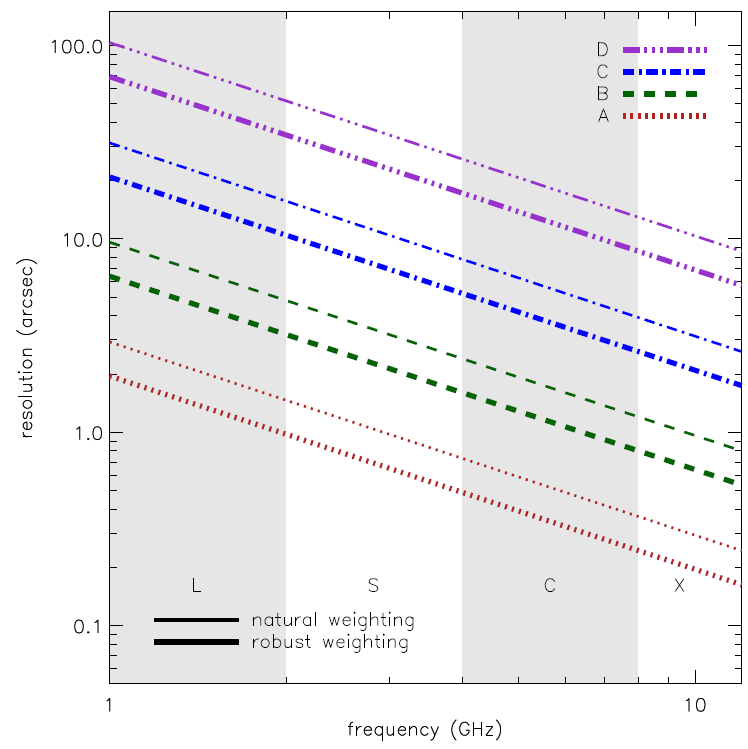
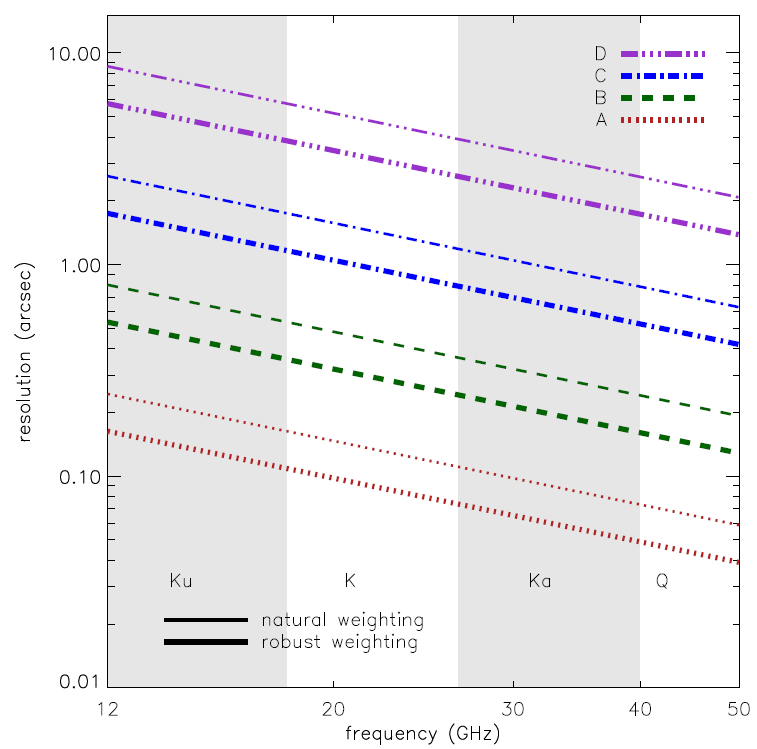
Connect with NRAO